What the Ground Remembers
Stones, seals, scrolls and inscriptions dug out of the ancient Near East — each one set beside the biblical passage it touches, with a plain statement of what it shows and what it does not.
Finds from the Old Testament world
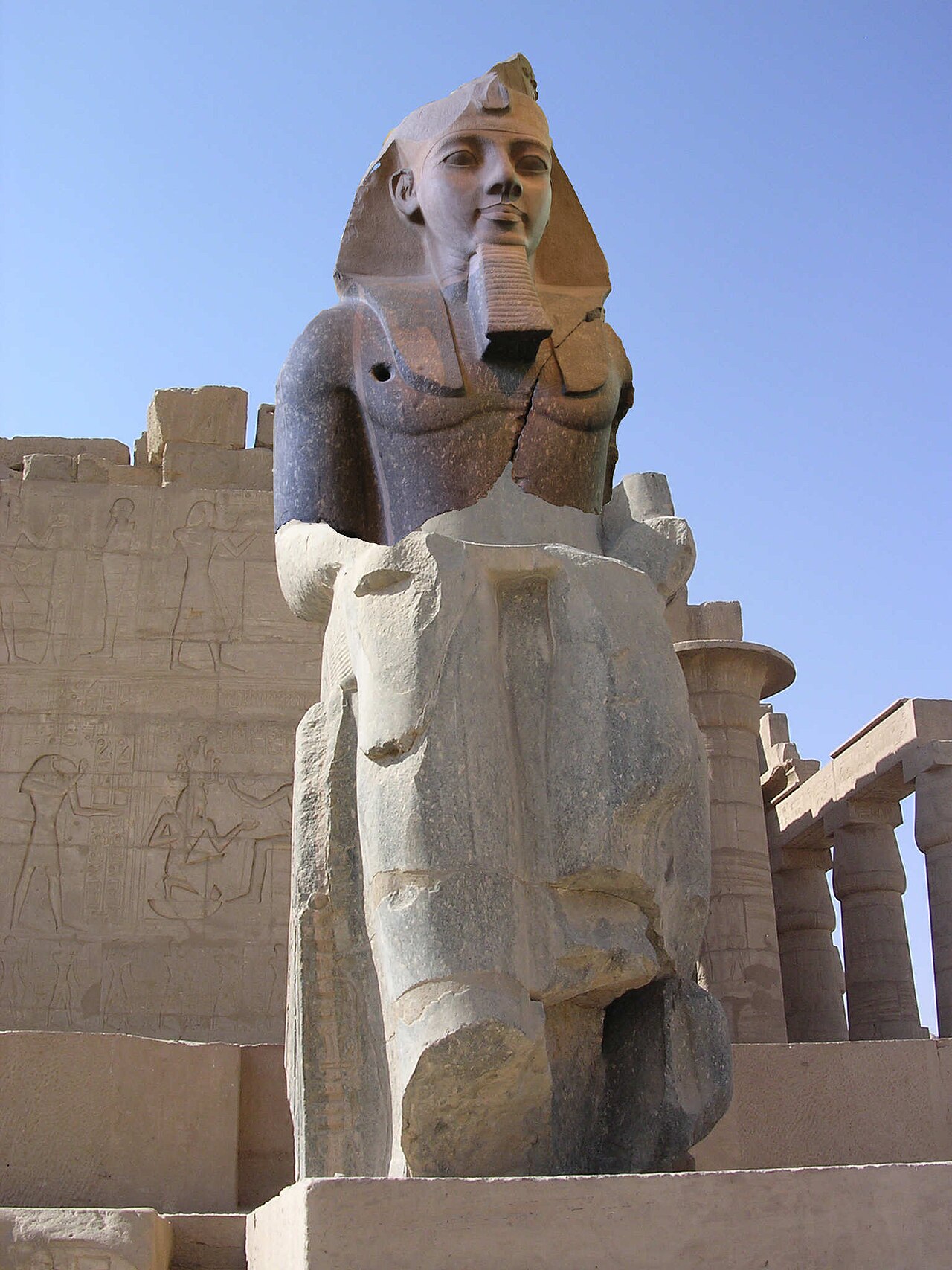 13th century BC
Pi-Ramesse — the Store-City of Raamses
The store-city “Raamses” that the enslaved Israelites are said to have built
Exodus 1:11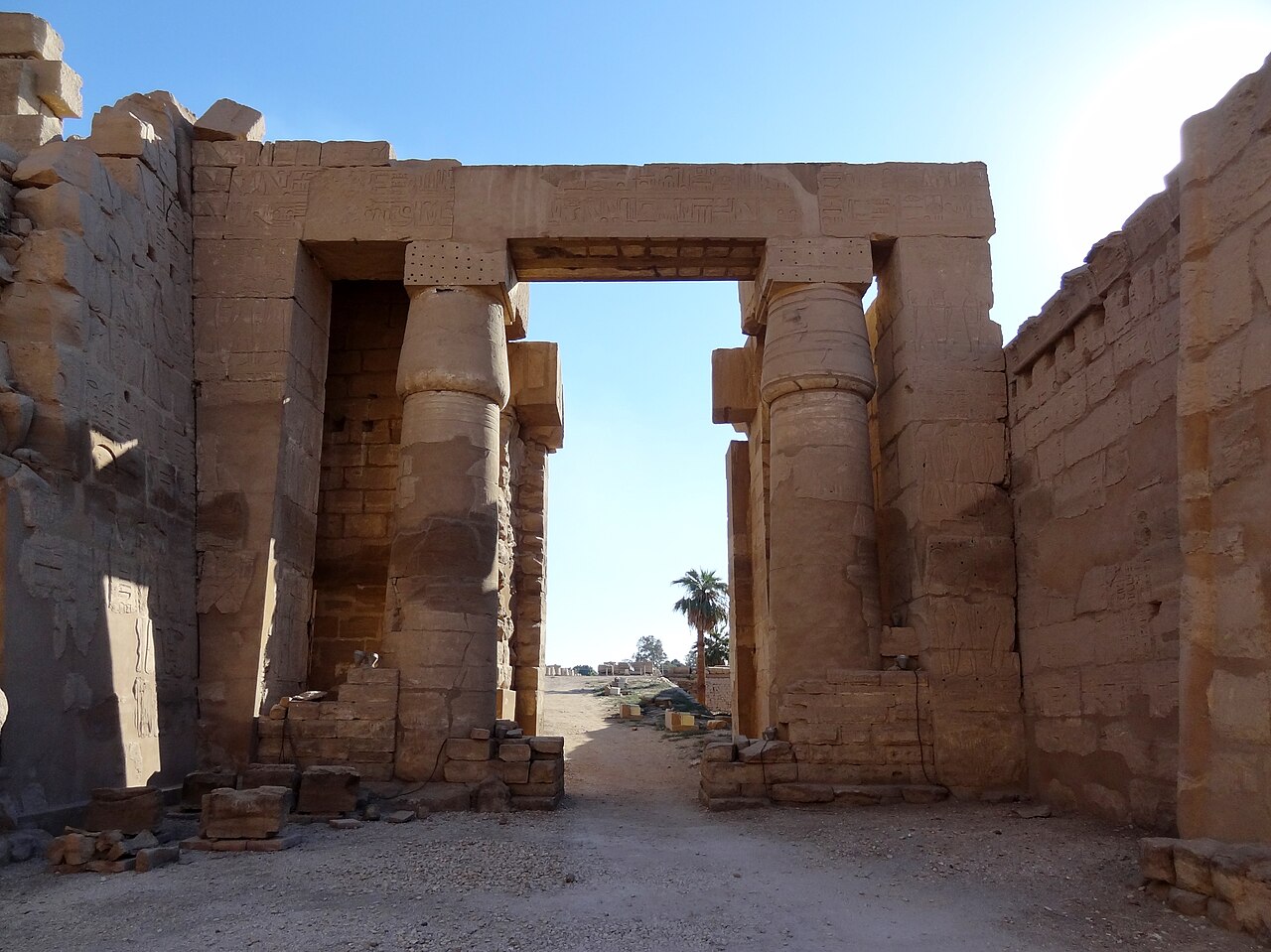 c. 925 BC
Shishak's Campaign Relief (Karnak)
Pharaoh Shishak's invasion of Judah in the reign of Rehoboam
1 Kings 14:25–26 · 2 Chronicles 12:1–9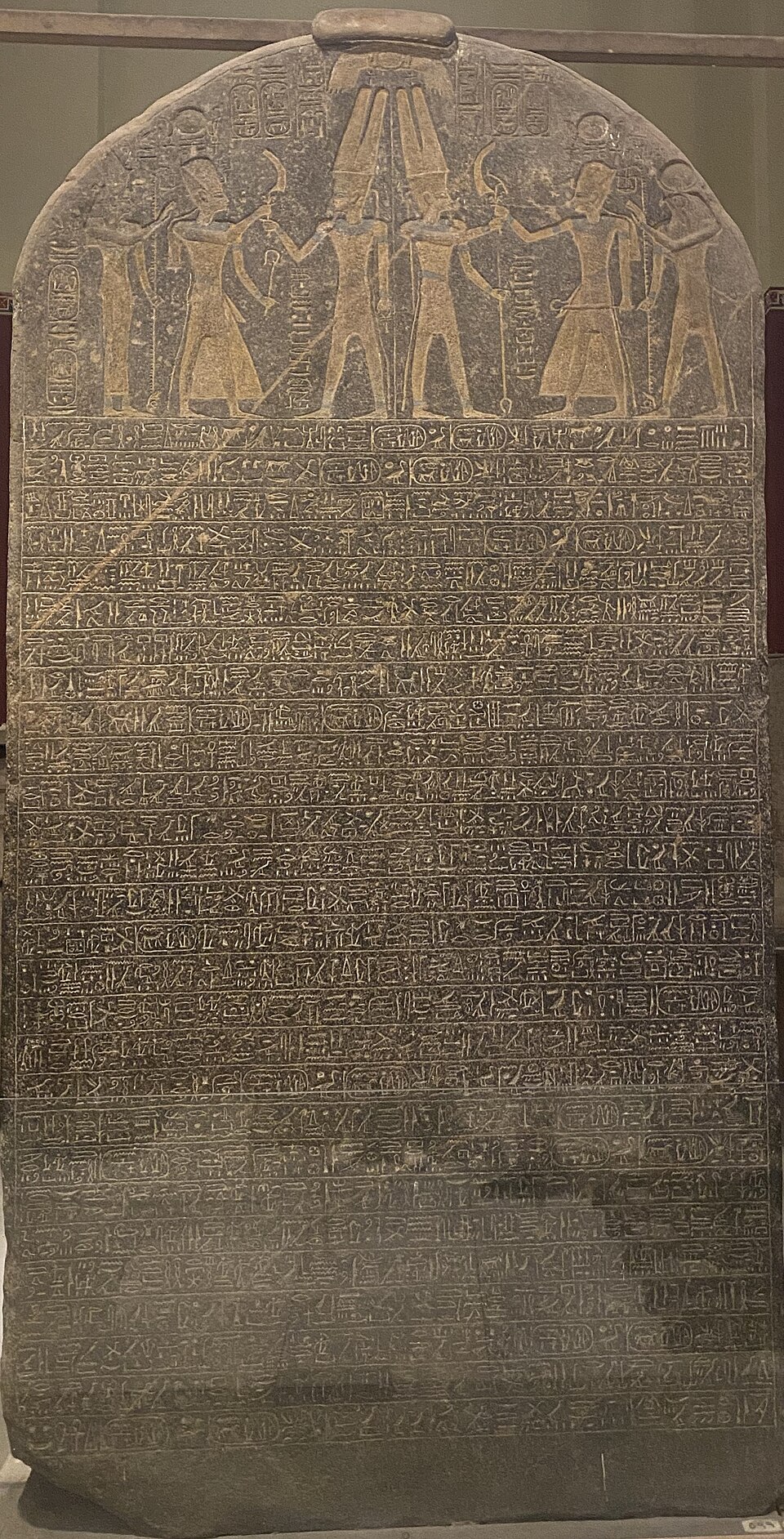 c. 1208 BC
Merneptah Stele
The earliest known mention of the name “Israel” outside the Bible
Judges 1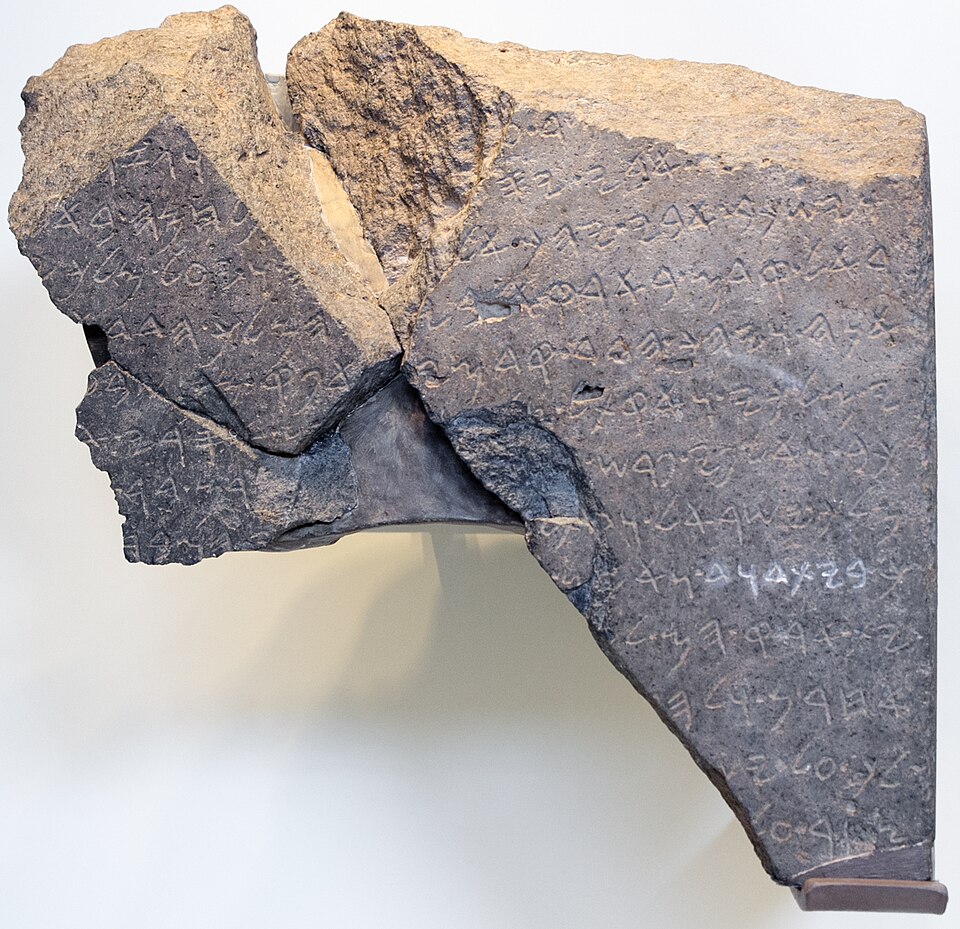 c. 840 BC
Tel Dan Stele
King David — his dynasty, called the “House of David”
2 Samuel 7 · 2 Kings 8–9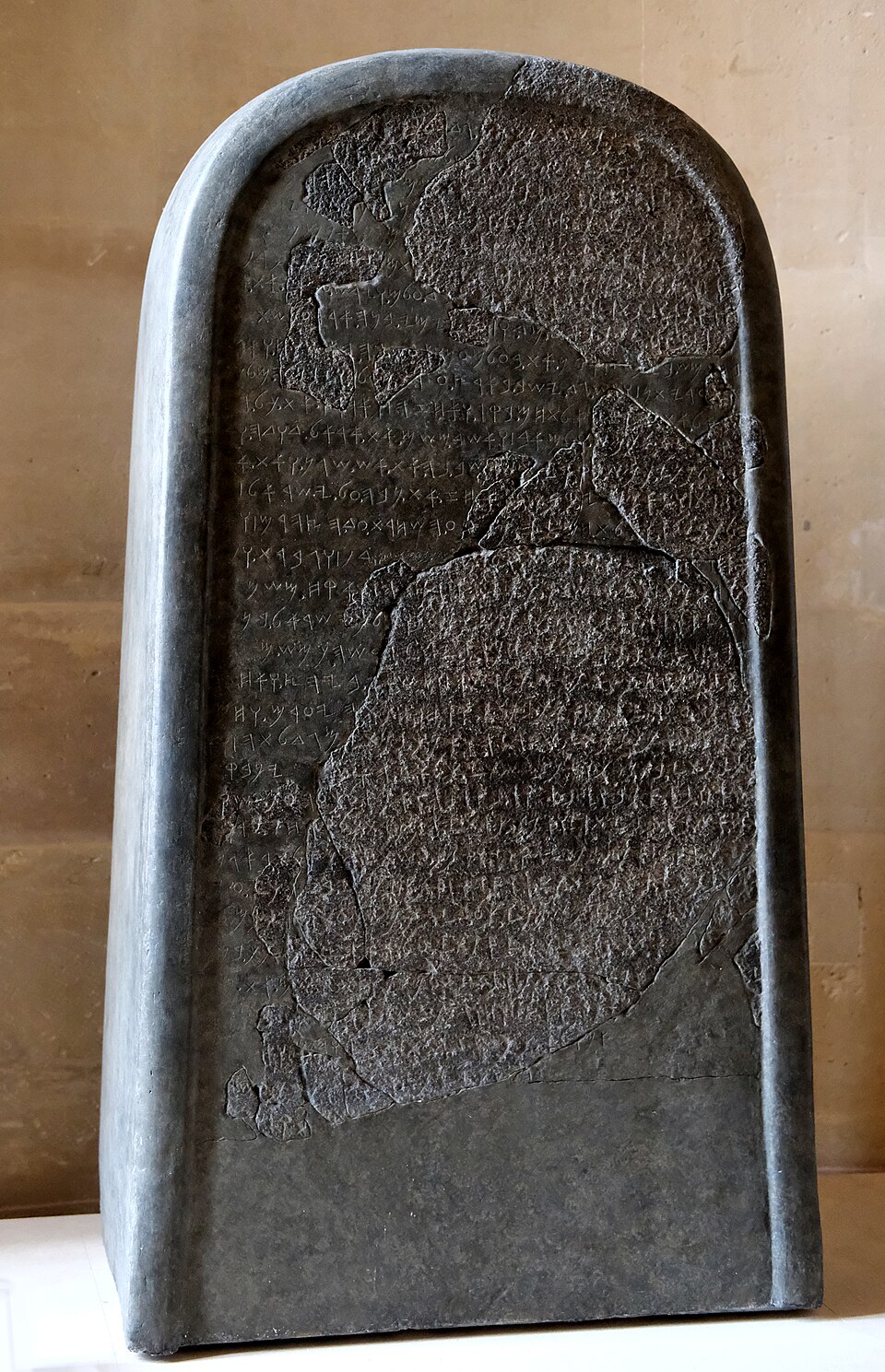 c. 840 BC
Mesha Stele (Moabite Stone)
King Mesha of Moab, King Omri of Israel, and Moab's rebellion against Israel
2 Kings 3:4–5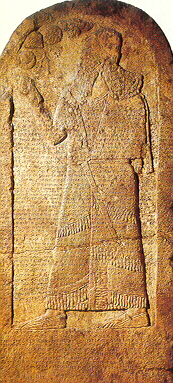 c. 852 BC
Kurkh Monolith
King Ahab of Israel, named as a member of the coalition that fought Assyria
1 Kings 16–22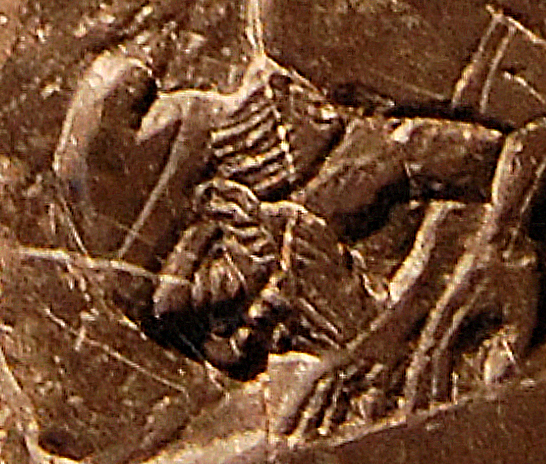 c. 825 BC
Black Obelisk of Shalmaneser III
King Jehu of Israel, shown bowing and paying tribute to Assyria
2 Kings 9–10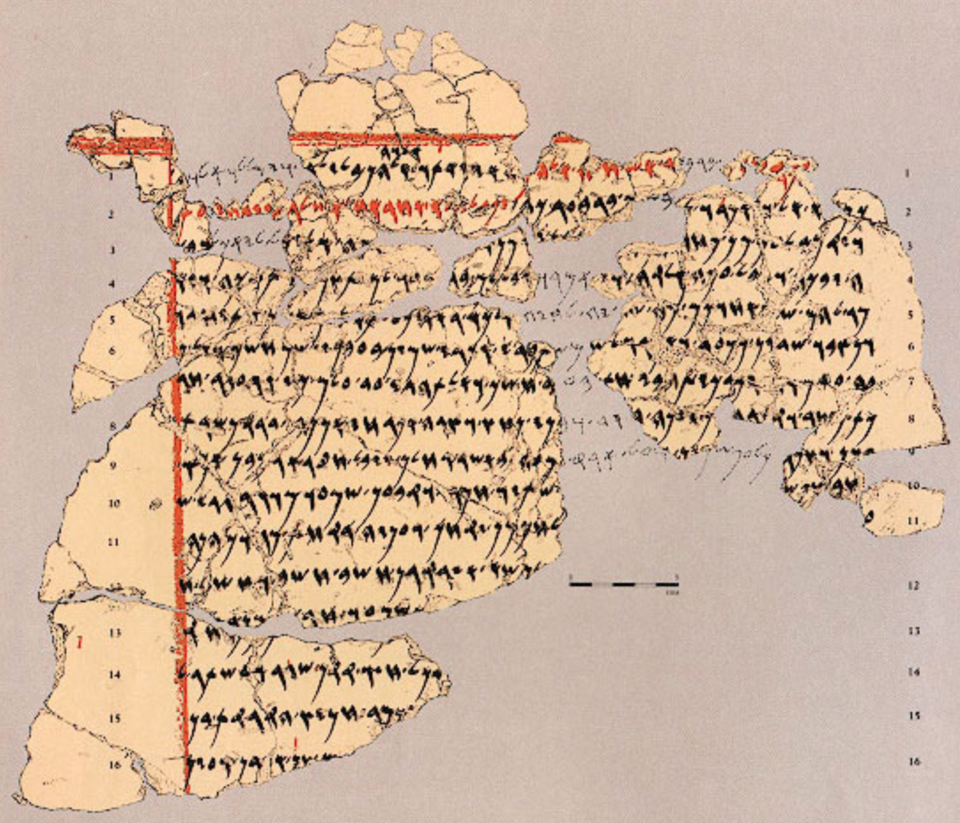 c. 840–760 BC
Deir Alla “Balaam” Inscription
Balaam son of Beor, the foreign seer of the book of Numbers
Numbers 22–24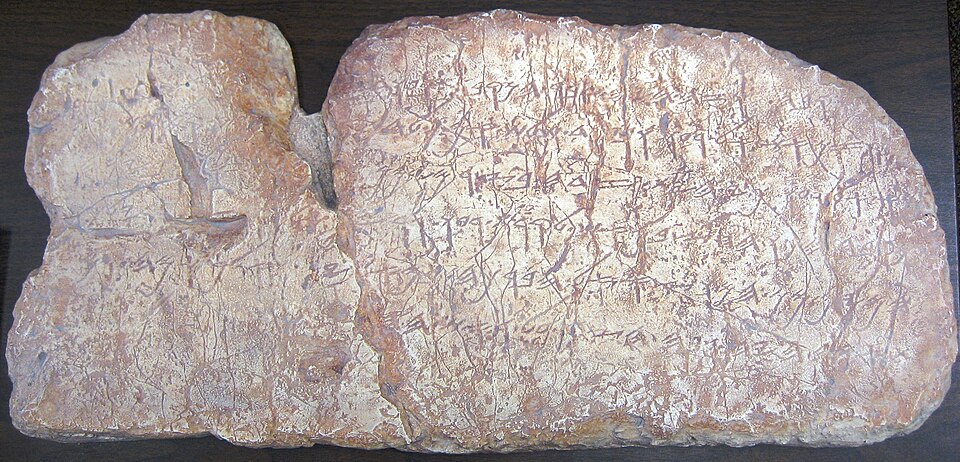 c. 701 BC
Hezekiah's Tunnel & the Siloam Inscription
King Hezekiah's water works before Sennacherib's siege of Jerusalem
2 Kings 20:20 · 2 Chronicles 32:30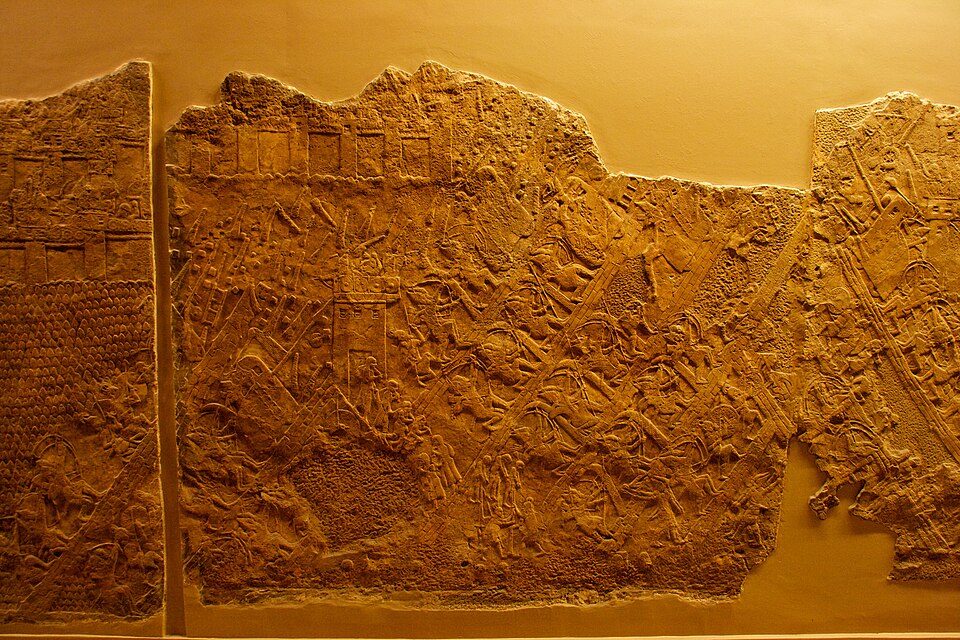 c. 700–681 BC
Lachish Reliefs
The Assyrian siege and capture of Lachish, Judah's second city, in 701 BC
2 Kings 18:13–14 · 2 Chronicles 32:9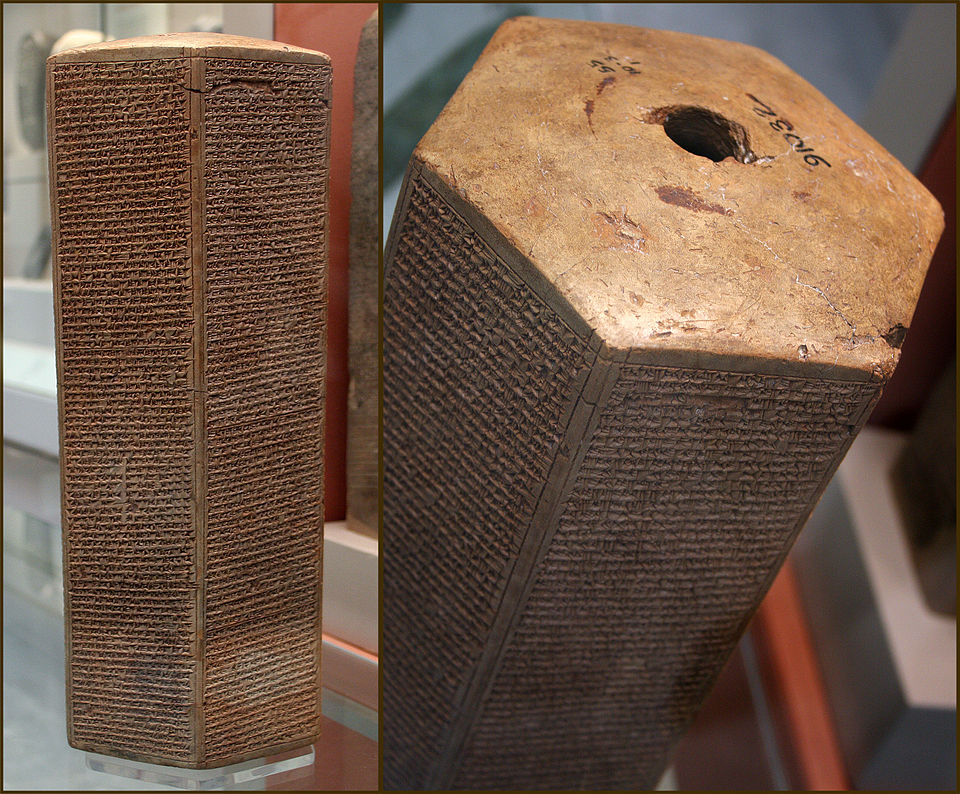 c. 691 BC
Taylor Prism (Sennacherib's Annals)
The siege of Jerusalem under King Hezekiah in 701 BC
2 Kings 18–19 · Isaiah 36–37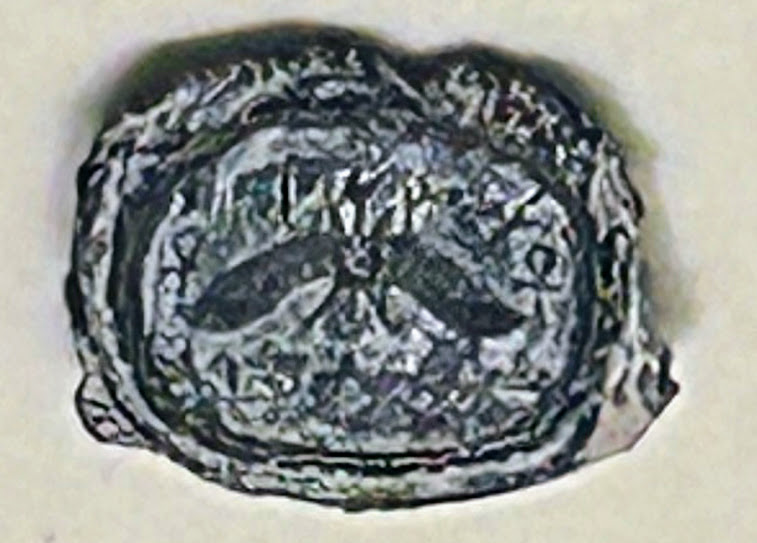 c. 727–698 BC
Bulla of King Hezekiah
King Hezekiah of Judah
2 Kings 18–20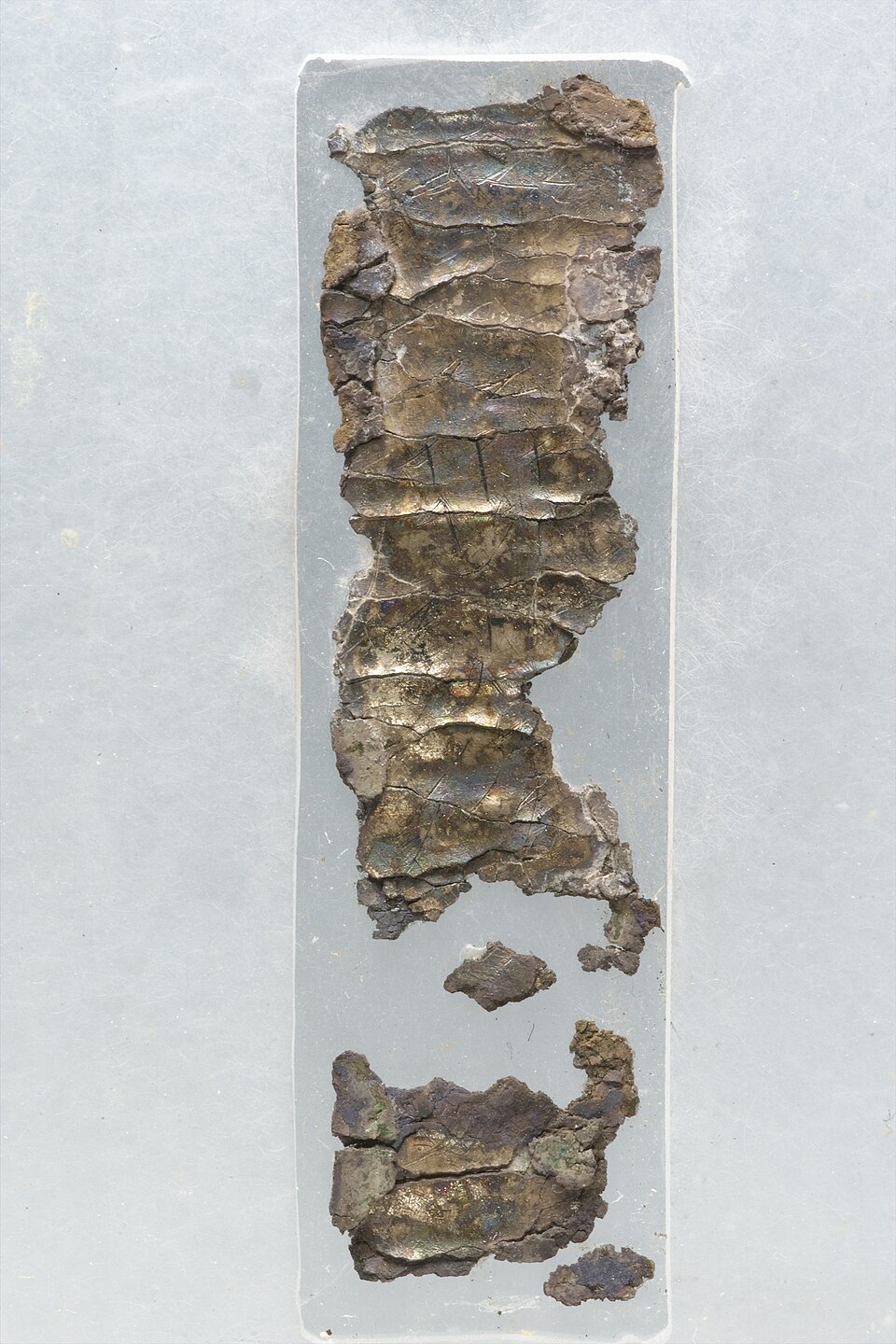 late 7th – early 6th century BC
Ketef Hinnom Silver Scrolls
The priestly blessing — the oldest known citation of words also found in the Bible
Numbers 6:24–26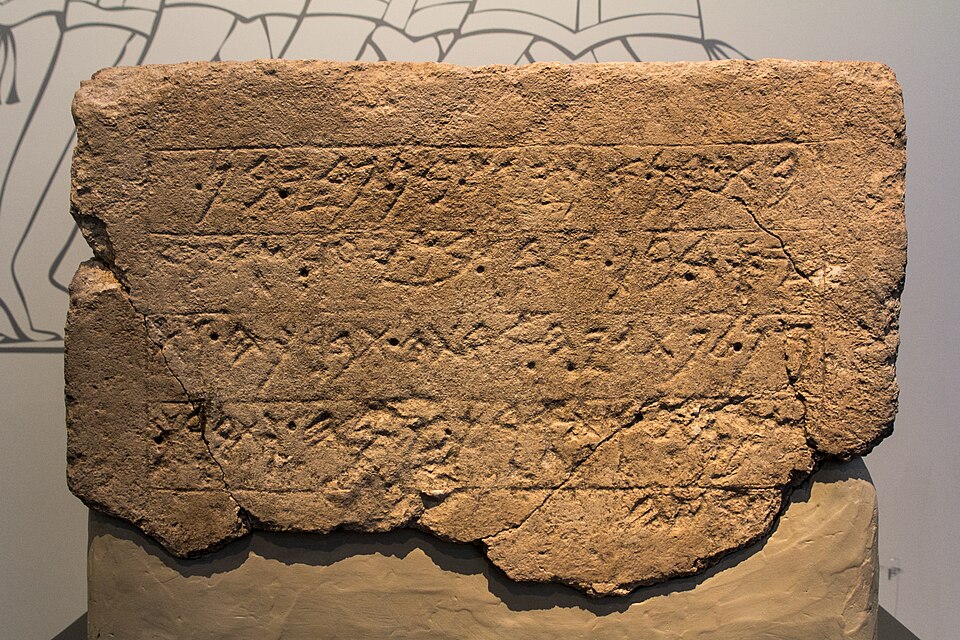 early 7th century BC
Ekron Royal Dedicatory Inscription
The Philistine city of Ekron and its royal line
1 Samuel 5–6 · Zephaniah 2:4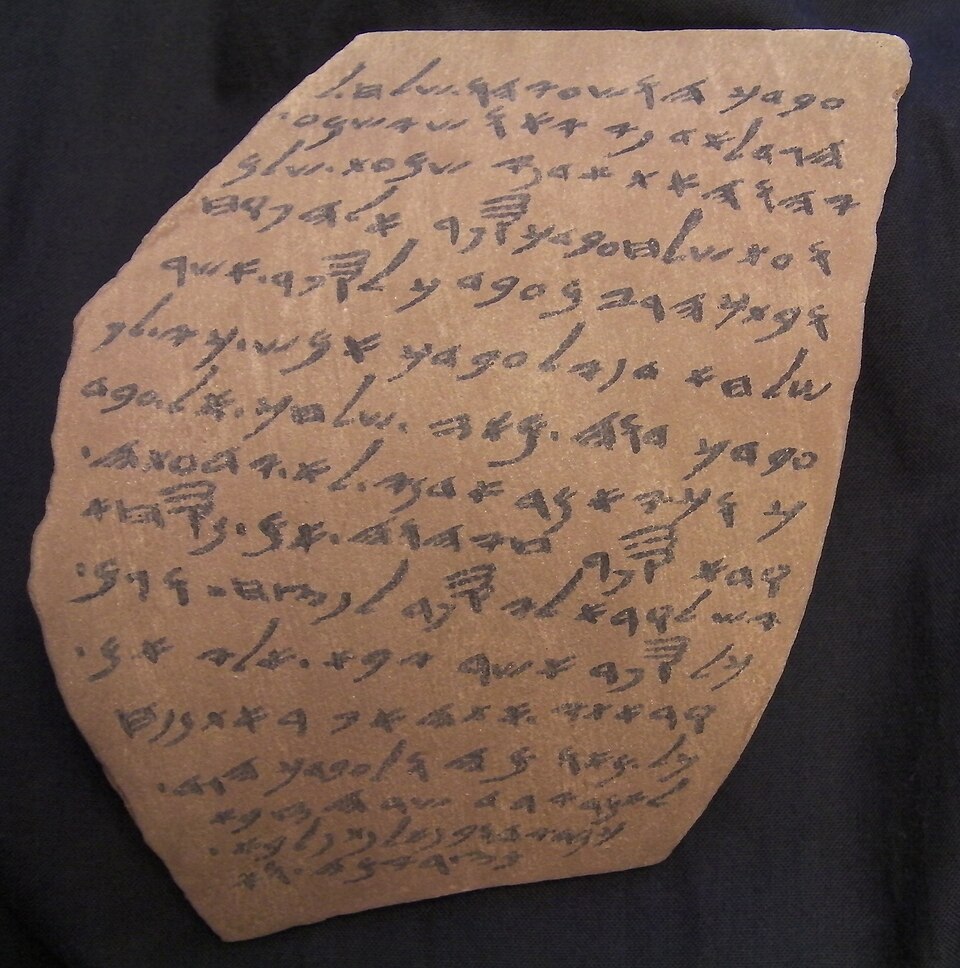 c. 588 BC
Lachish Letters
The last days of the kingdom of Judah before Babylon destroyed it — Jeremiah's generation
Jeremiah 34:6–7 early 6th century BCBullae of Jeremiah's Adversaries
Two royal officials who demanded the prophet Jeremiah's death
Jeremiah 38:1–6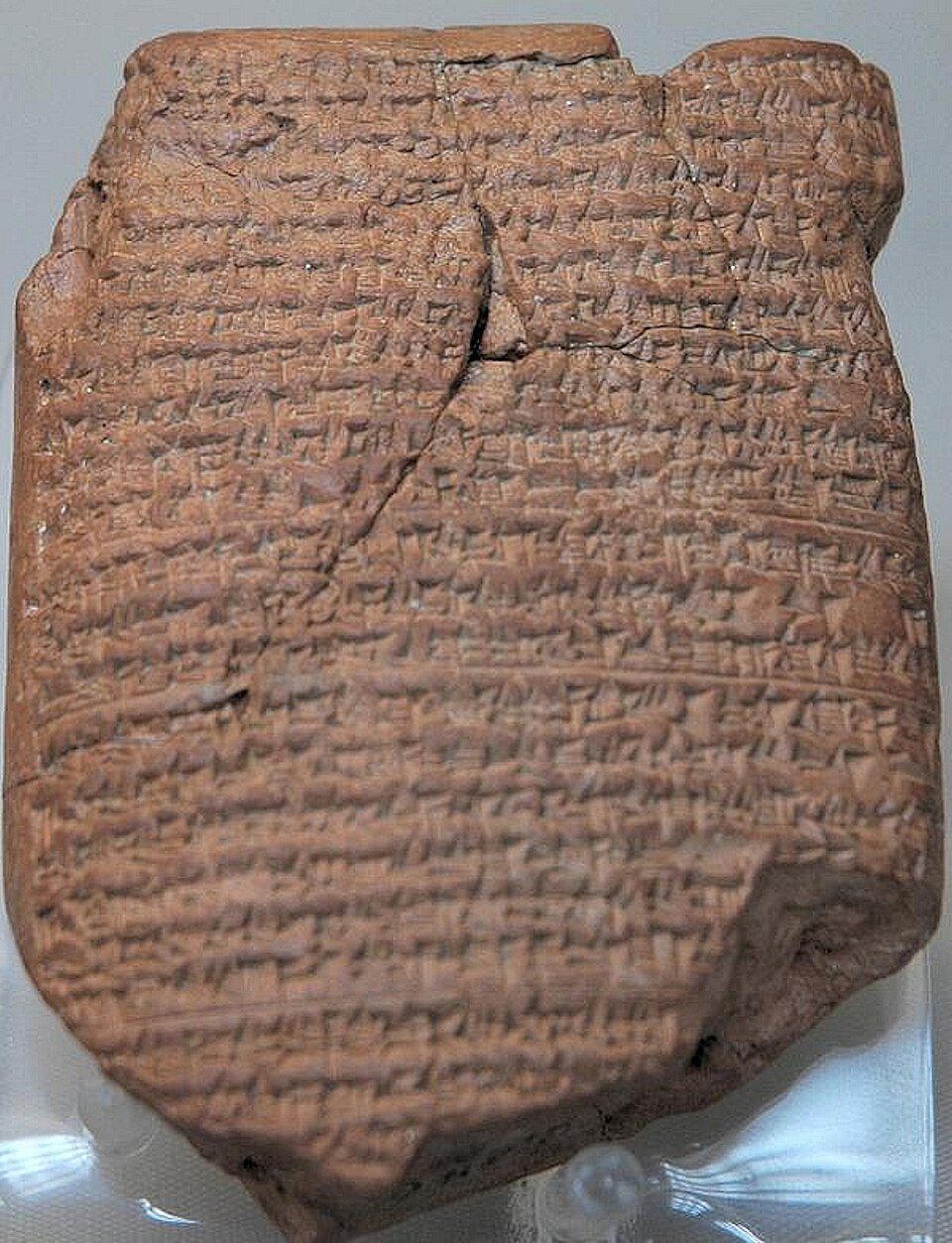 6th century BC
Babylonian Chronicle (597 BC)
Nebuchadnezzar's capture of Jerusalem and the exile of King Jehoiachin
2 Kings 24:8–17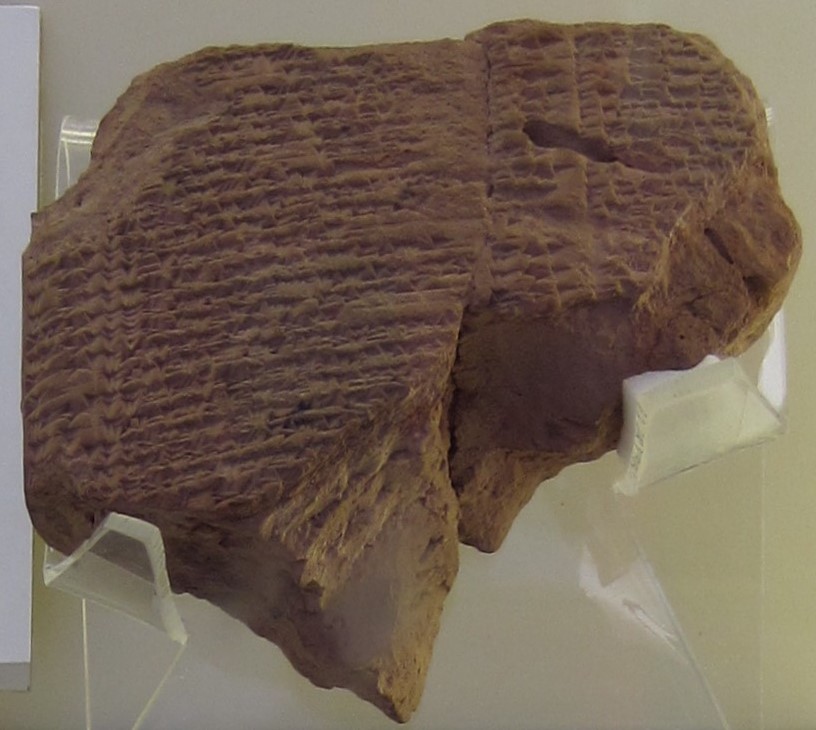 c. 592 BC
Jehoiachin Ration Tablets
The exiled King Jehoiachin of Judah, kept at the Babylonian court
2 Kings 25:27–30 · Jeremiah 52:31–34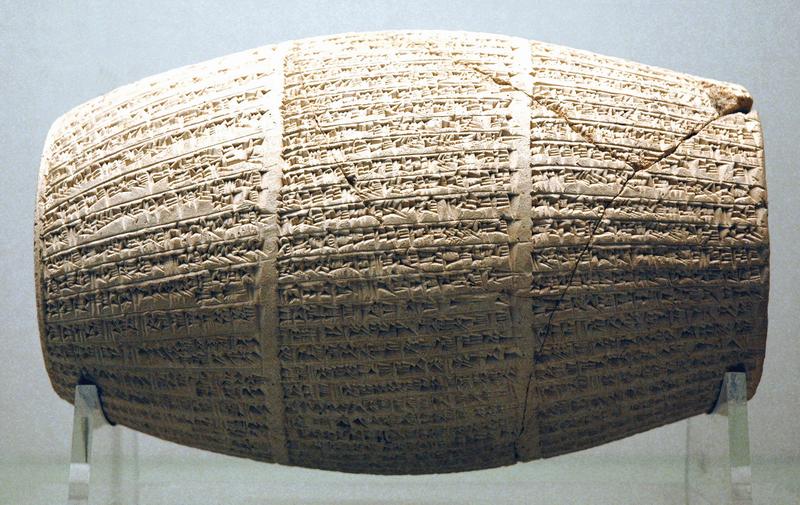 c. 550 BC
Nabonidus Cylinder (Belshazzar)
Belshazzar, the ruler at Babylon's fall in the book of Daniel
Daniel 5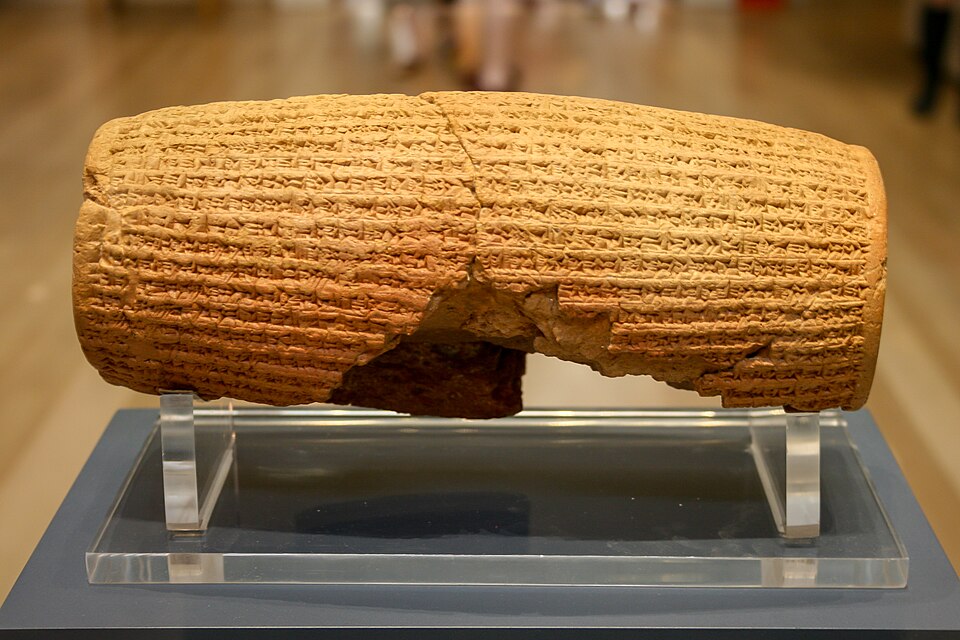 539–538 BC
Cyrus Cylinder
Cyrus's policy of sending captive peoples and their gods home — the setting of the return from exile
Ezra 1:1–4 · Isaiah 44:28–45:13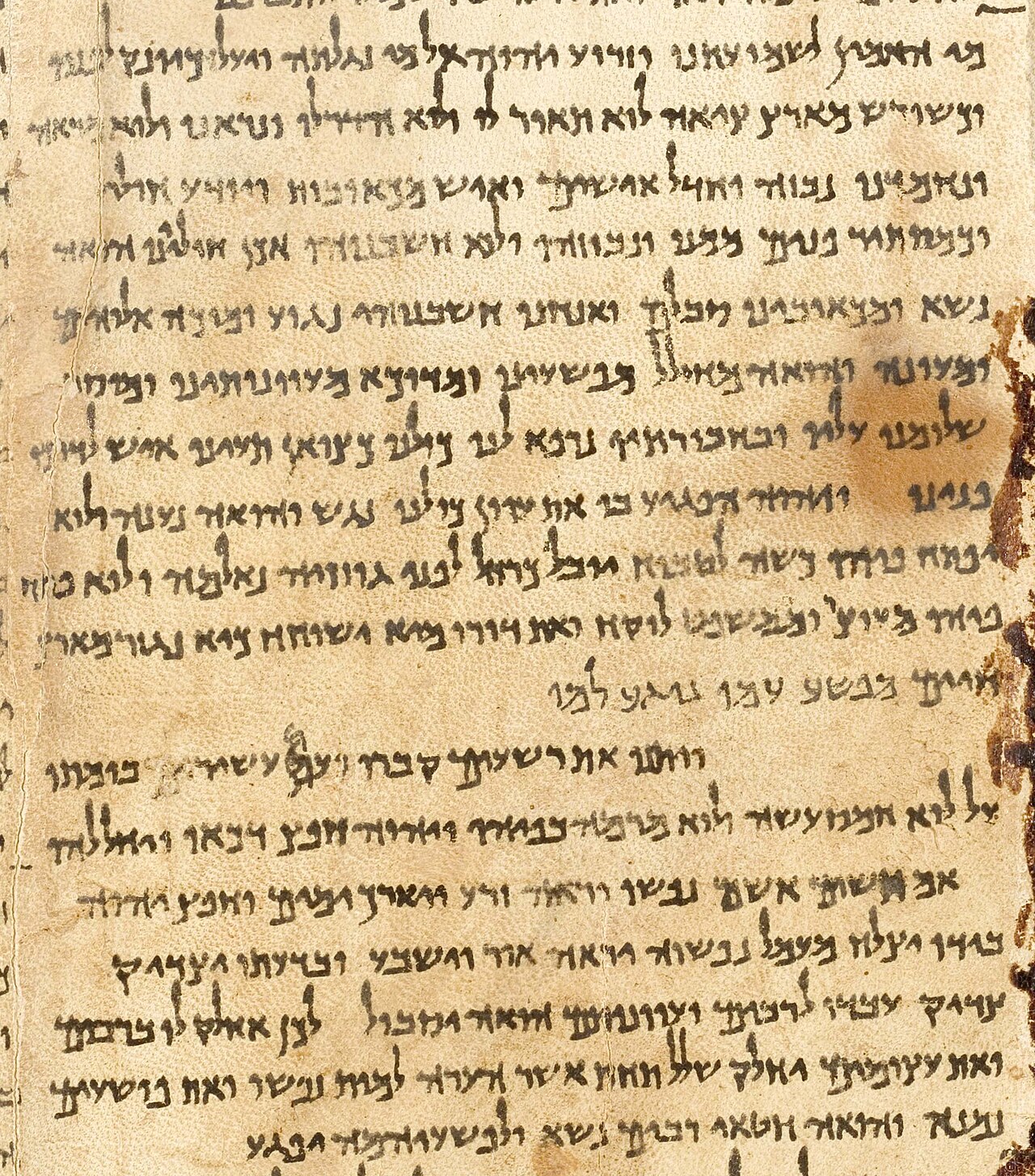 c. 125 BC
Great Isaiah Scroll (Dead Sea Scrolls)
How faithfully the text of the Hebrew Bible was copied across a thousand years
Isaiah 1–66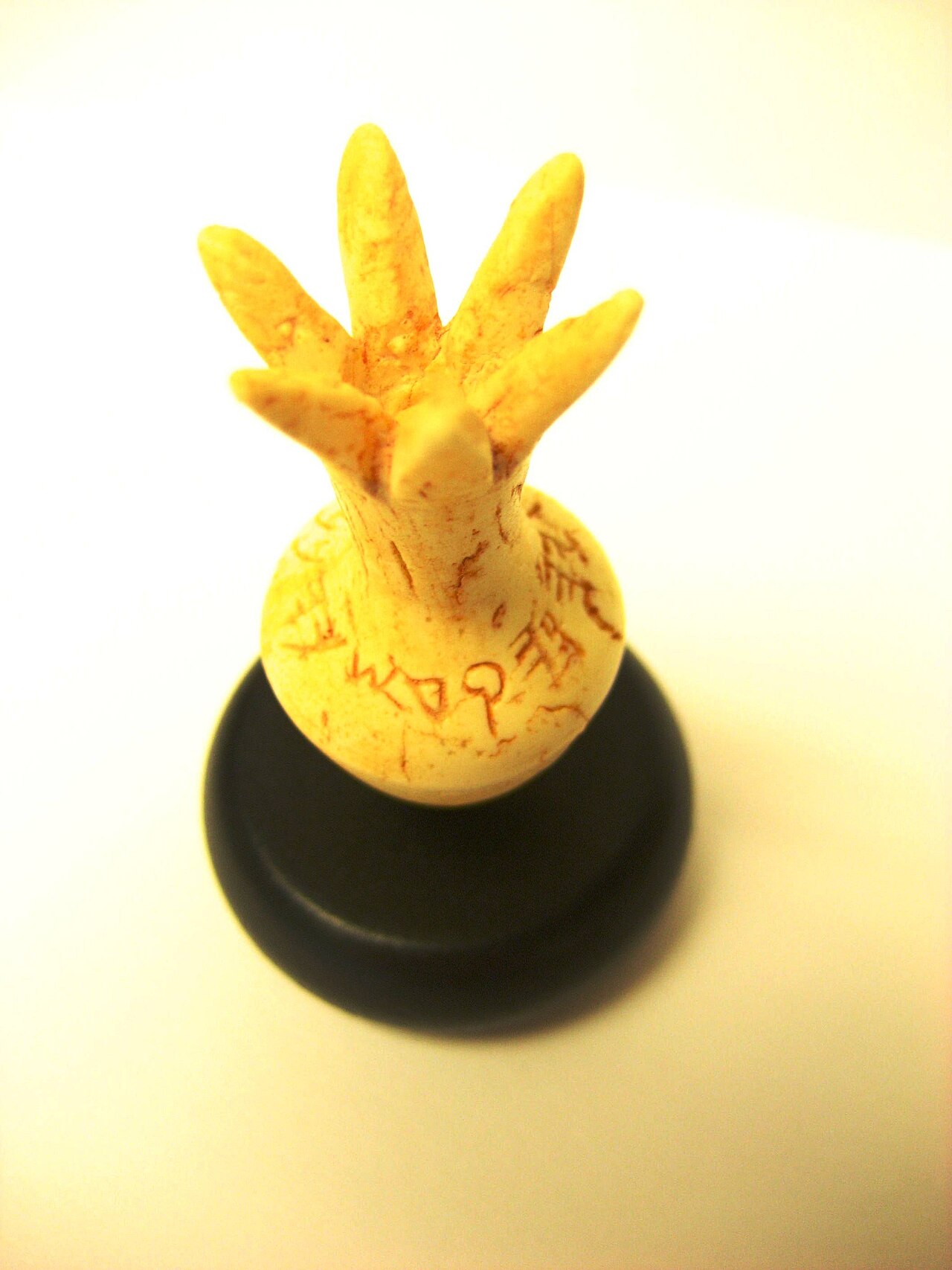 inscription claimed 8th century BC (authenticity disputed)
The Ivory Pomegranate (a disputed find)
Possibly a fitting from Solomon's Temple — read as “holy to the priests of the House of Yahweh”
1 Kings 6–7 · 2 Chronicles 3–4 inscription claimed 9th century BC (widely judged a modern forgery)The Jehoash Tablet (a suspected forgery)
King Jehoash's fund to repair the “House of the LORD”
2 Kings 12:4–16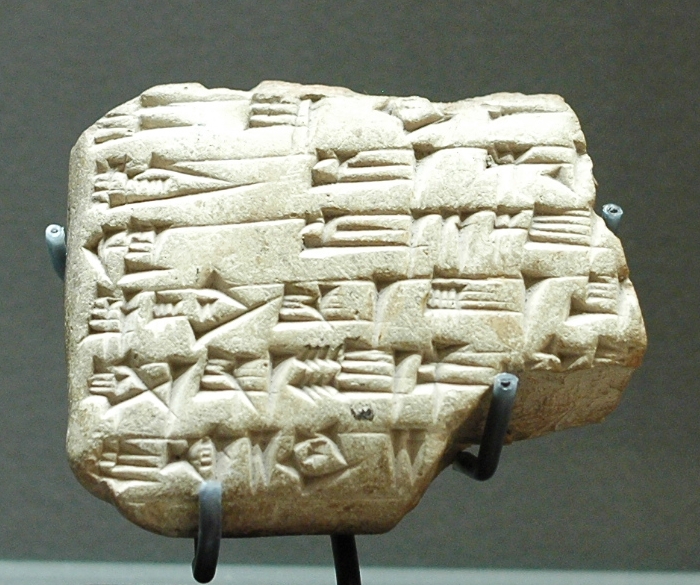 Ebla c. 2300 BC; Mari 18th century BC; Nuzi 15th century BC
The Patriarchal-Age Archives (Nuzi, Mari & Ebla)
The world and customs behind the Genesis patriarchs
Genesis 12–50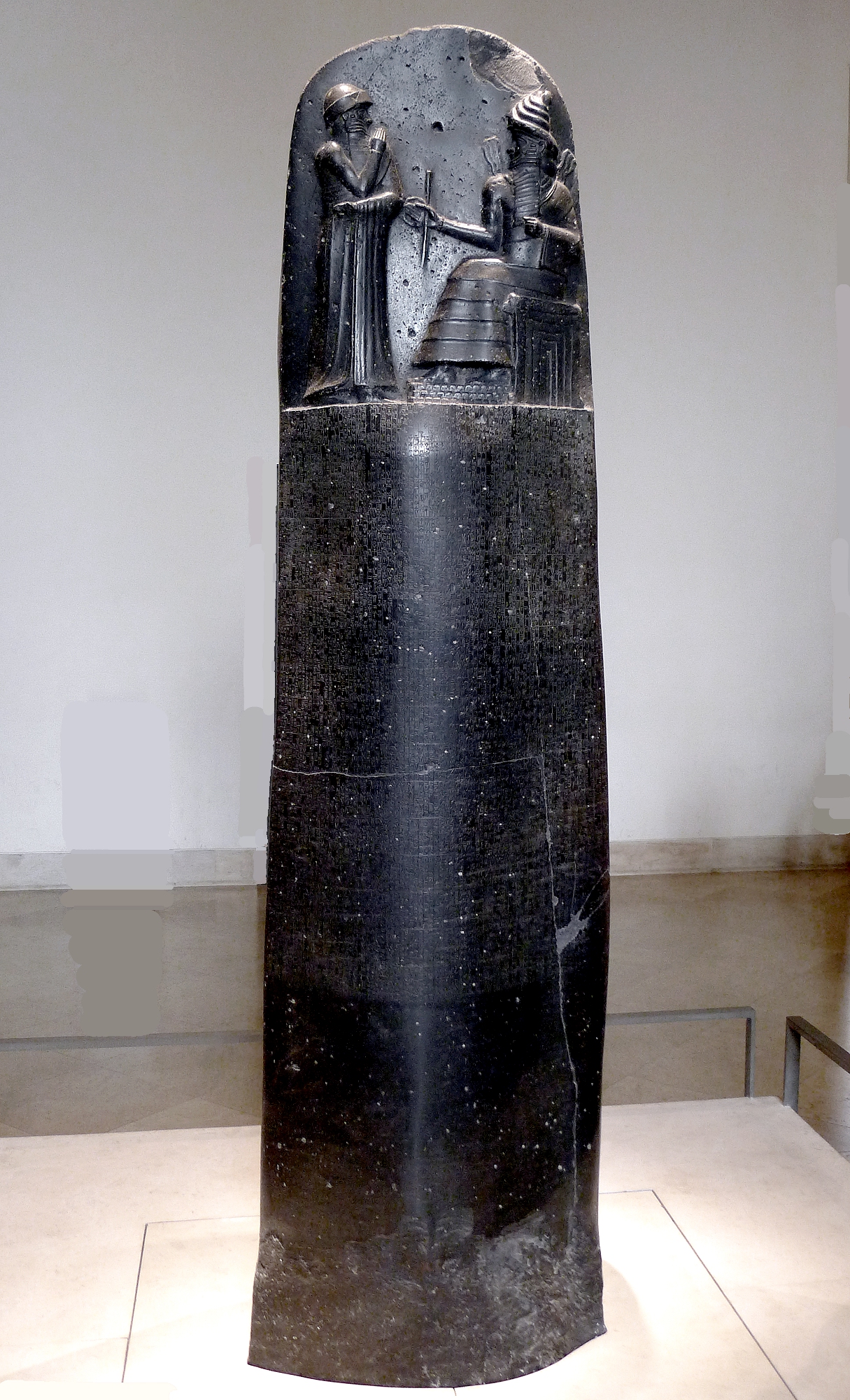 c. 1750 BC
Code of Hammurabi
The legal world that lies behind the laws of Moses
Exodus 21–23 · Deuteronomy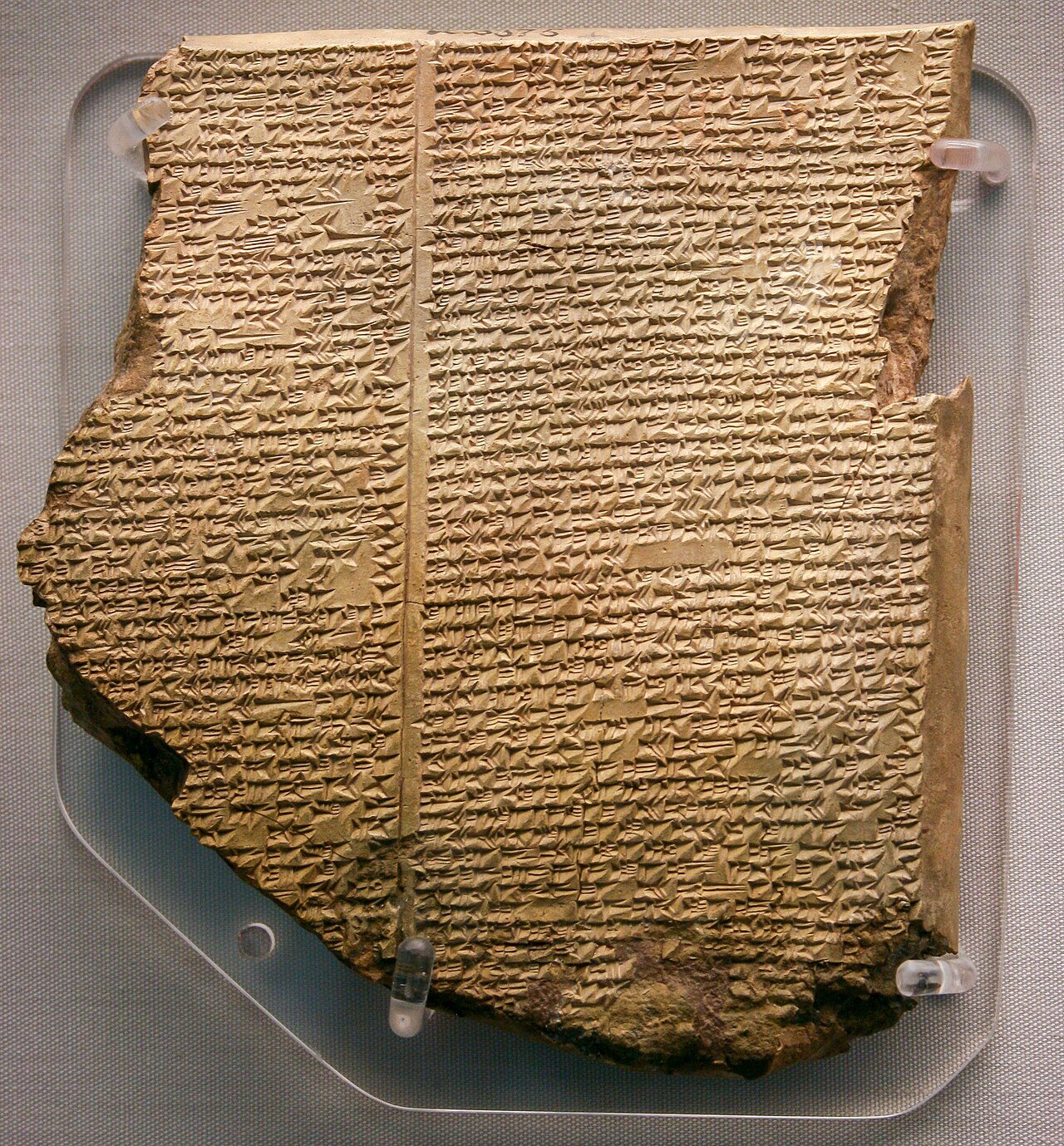 7th-century BC copy of a much older tradition
The Gilgamesh Flood Tablet
The flood of Noah
Genesis 6–9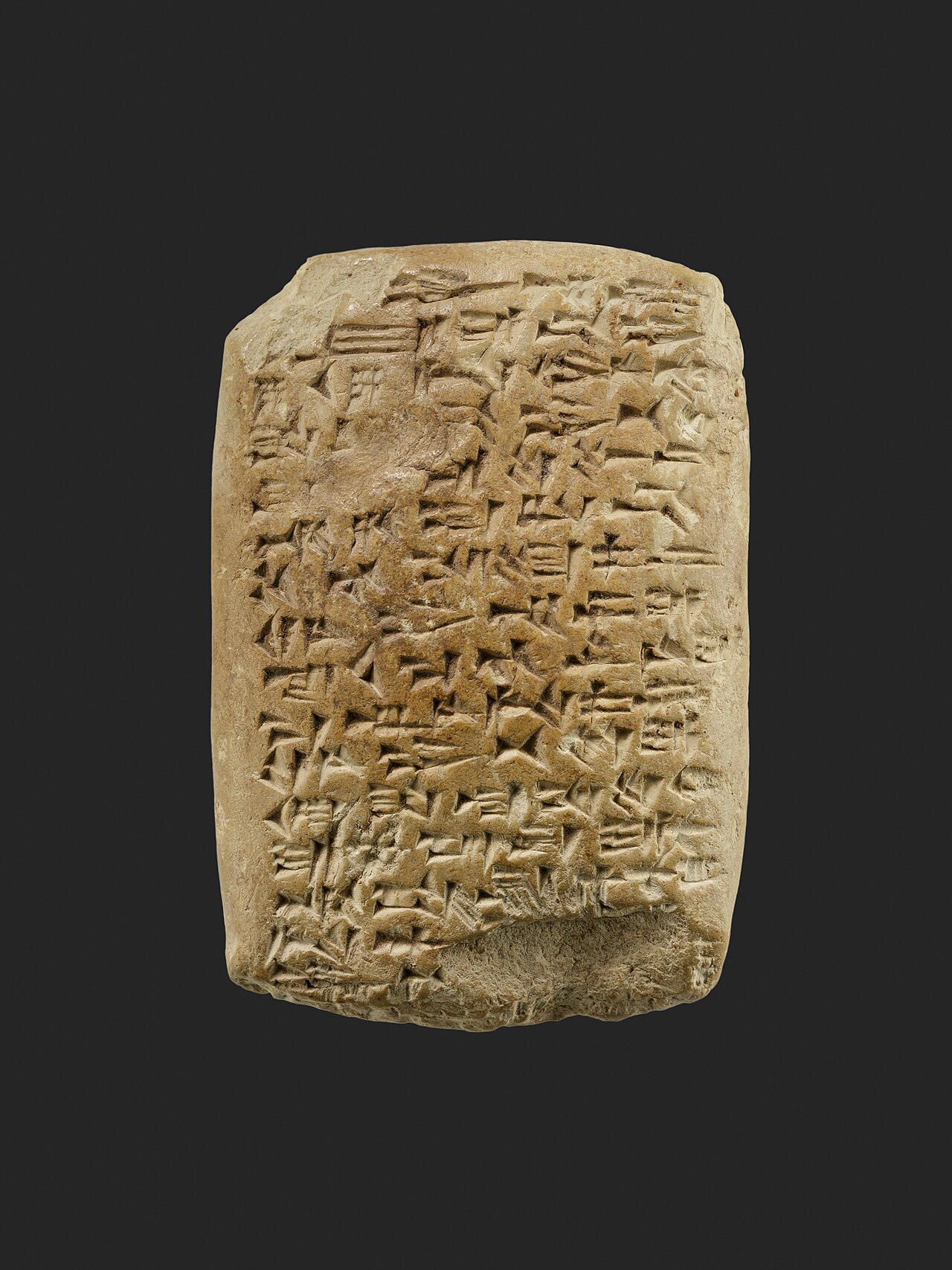 14th century BC
The Amarna Letters
The turbulent Canaan of the late Bronze Age, just before Israel emerges
Joshua–Judges (the settlement era)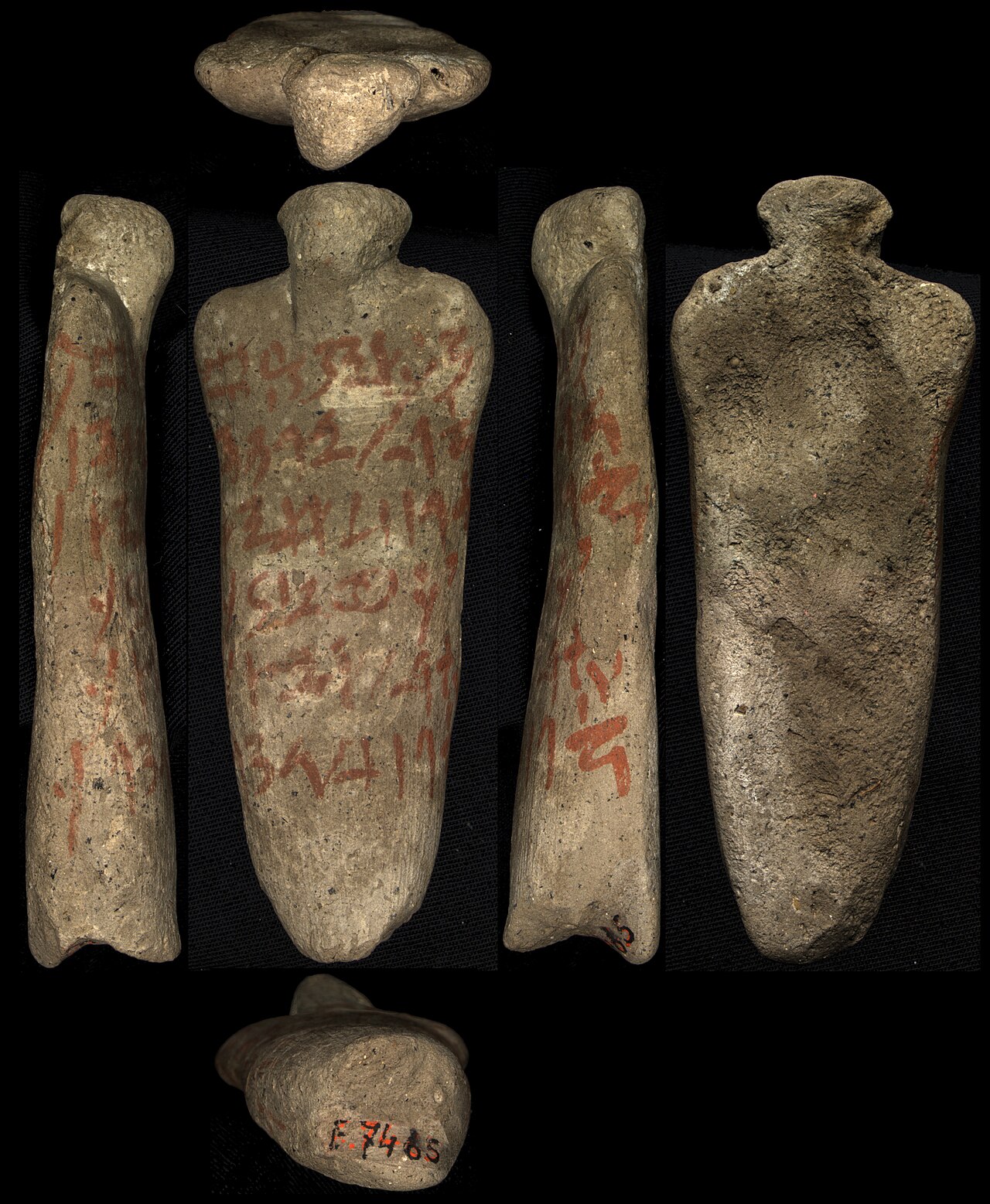 c. 20th–18th century BC
Egyptian Execration Texts
The earliest written mentions of cities later central to the biblical story
Genesis 14 · Joshua 10–11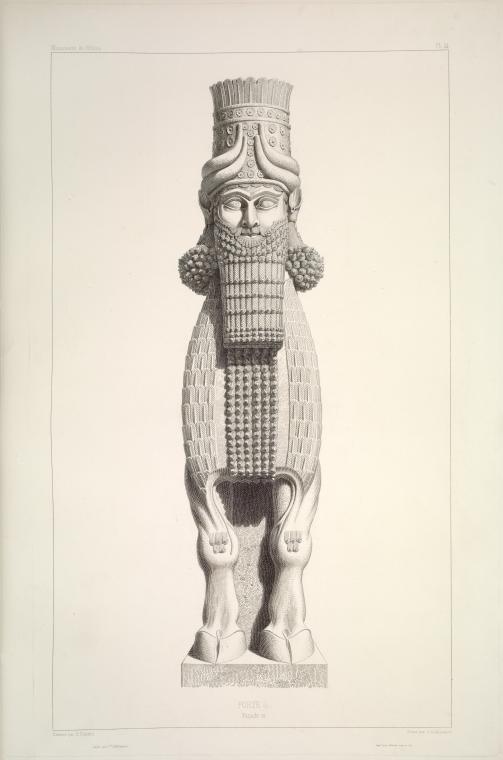 built c. 717–706 BC
Sargon II's Palace at Khorsabad
Sargon king of Assyria, and his campaign against Ashdod
Isaiah 20:1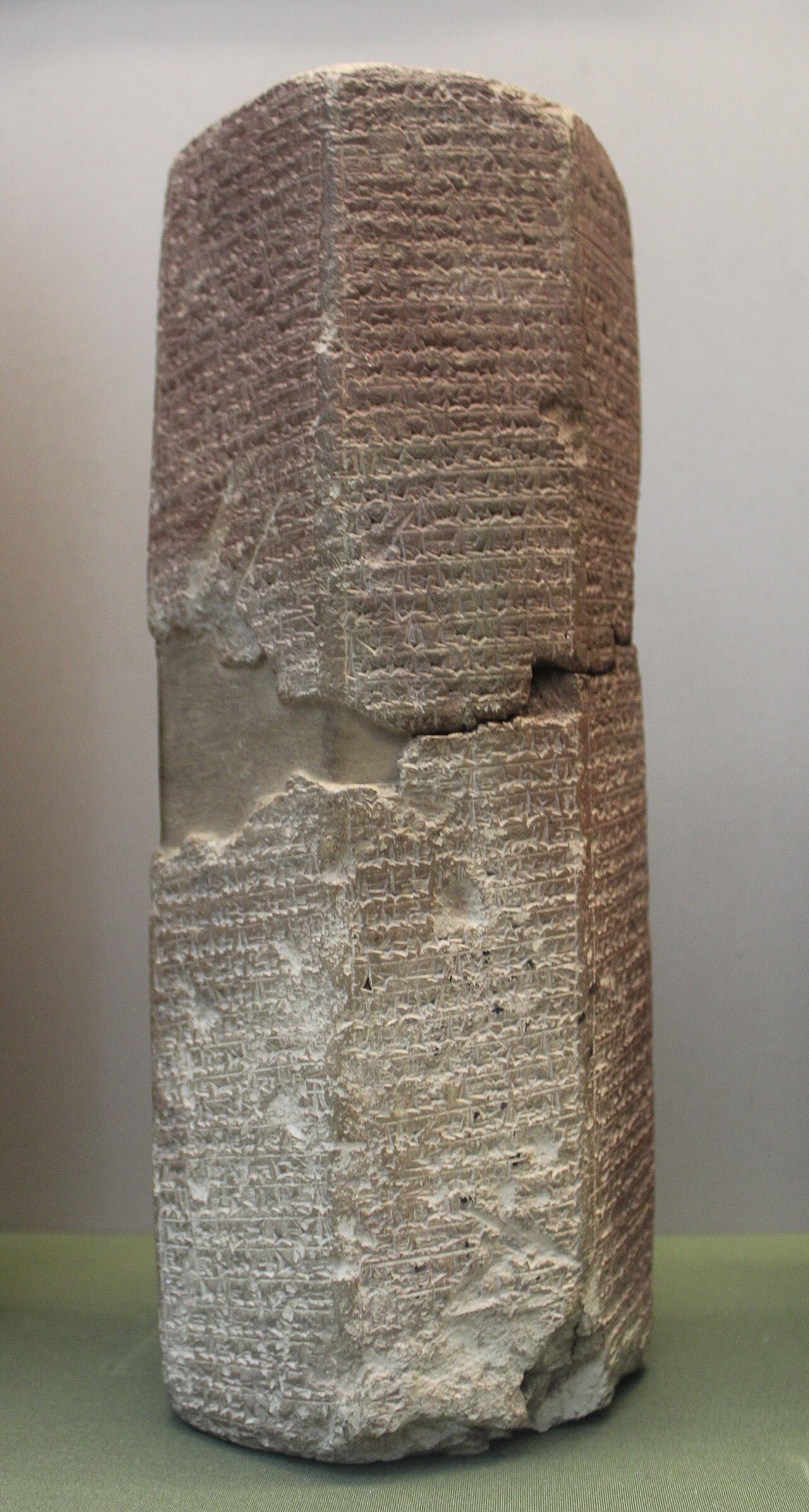 mid-7th century BC
Assyrian Prisms Naming Manasseh of Judah
King Manasseh of Judah, Assyria's vassal
2 Kings 21 · 2 Chronicles 33:11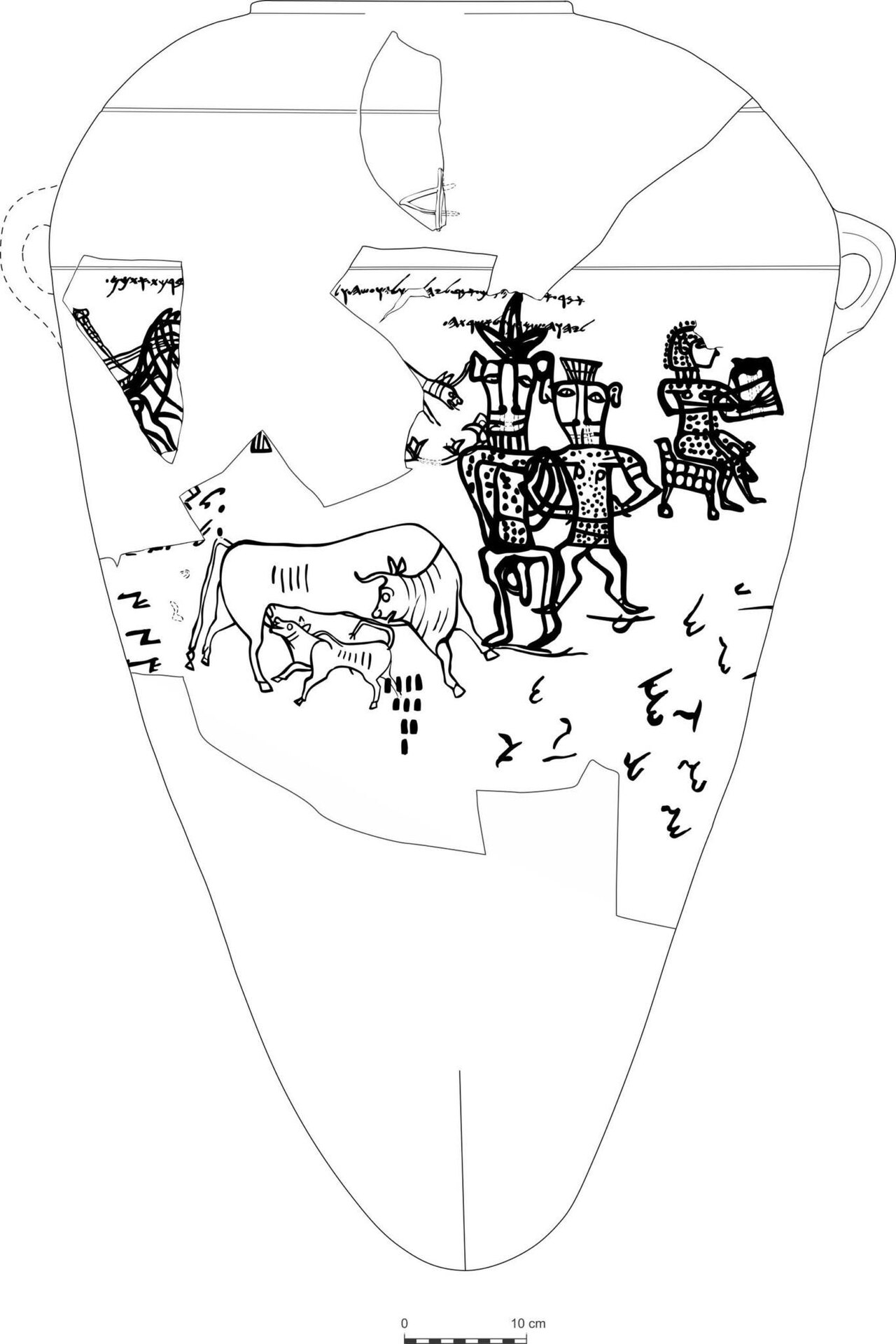 c. 800 BC
Kuntillet Ajrud Inscriptions
Popular Israelite religion — and its blessings “by Yahweh and his Asherah”
2 Kings 23 · Deuteronomy 16:21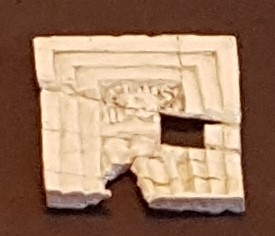 9th–8th century BC
Samaria: Ostraca & Ivories
The wealth and administration of the northern kingdom — Ahab's “house of ivory”
1 Kings 22:39 · Amos 3:15 · Amos 6:4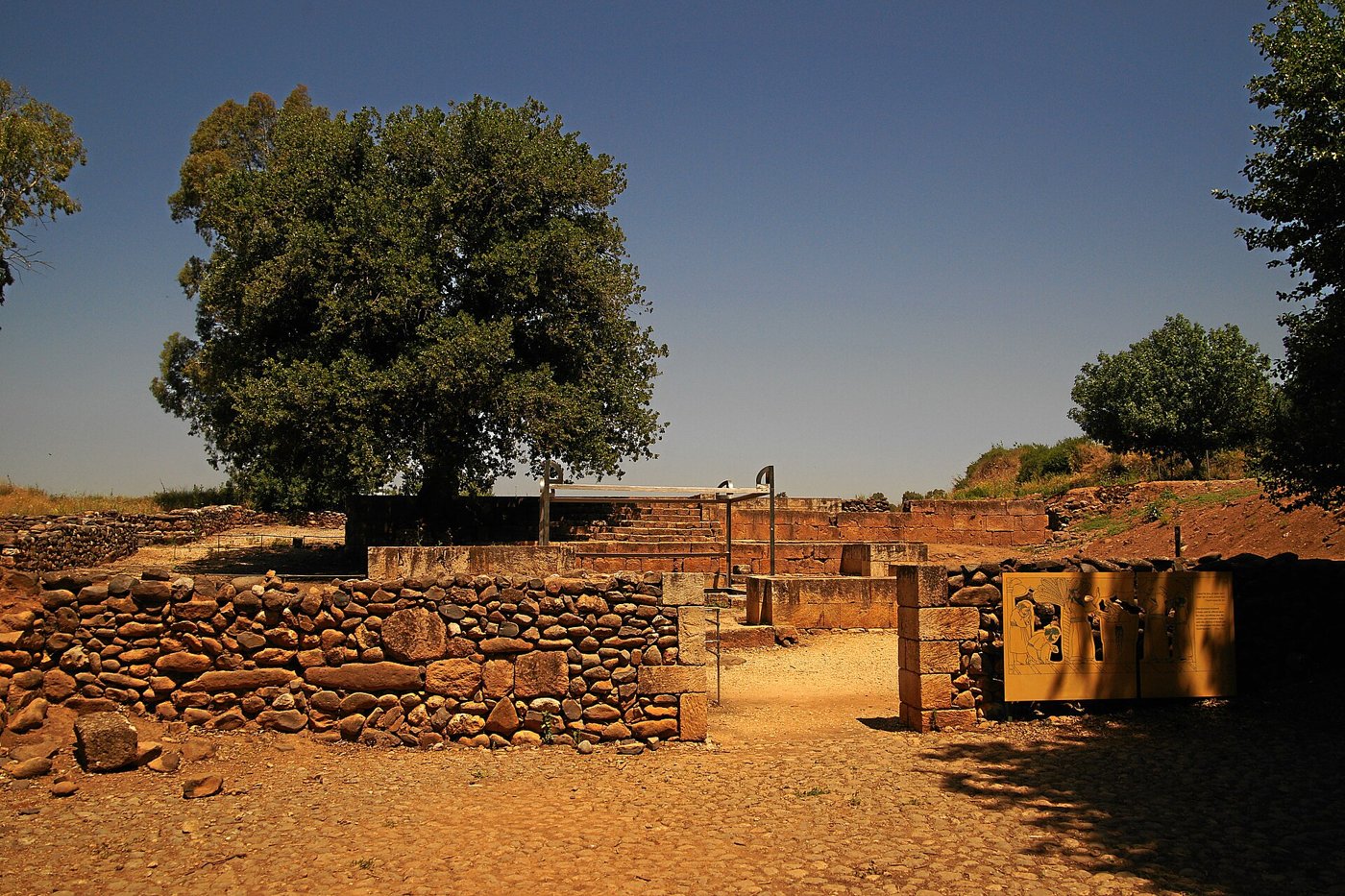 built late 10th century BC, enlarged in the 9th; destroyed 732 BC
The High Place at Tel Dan
The rival sanctuary Jeroboam set up at Dan
1 Kings 12:26–33 · Judges 18:30–31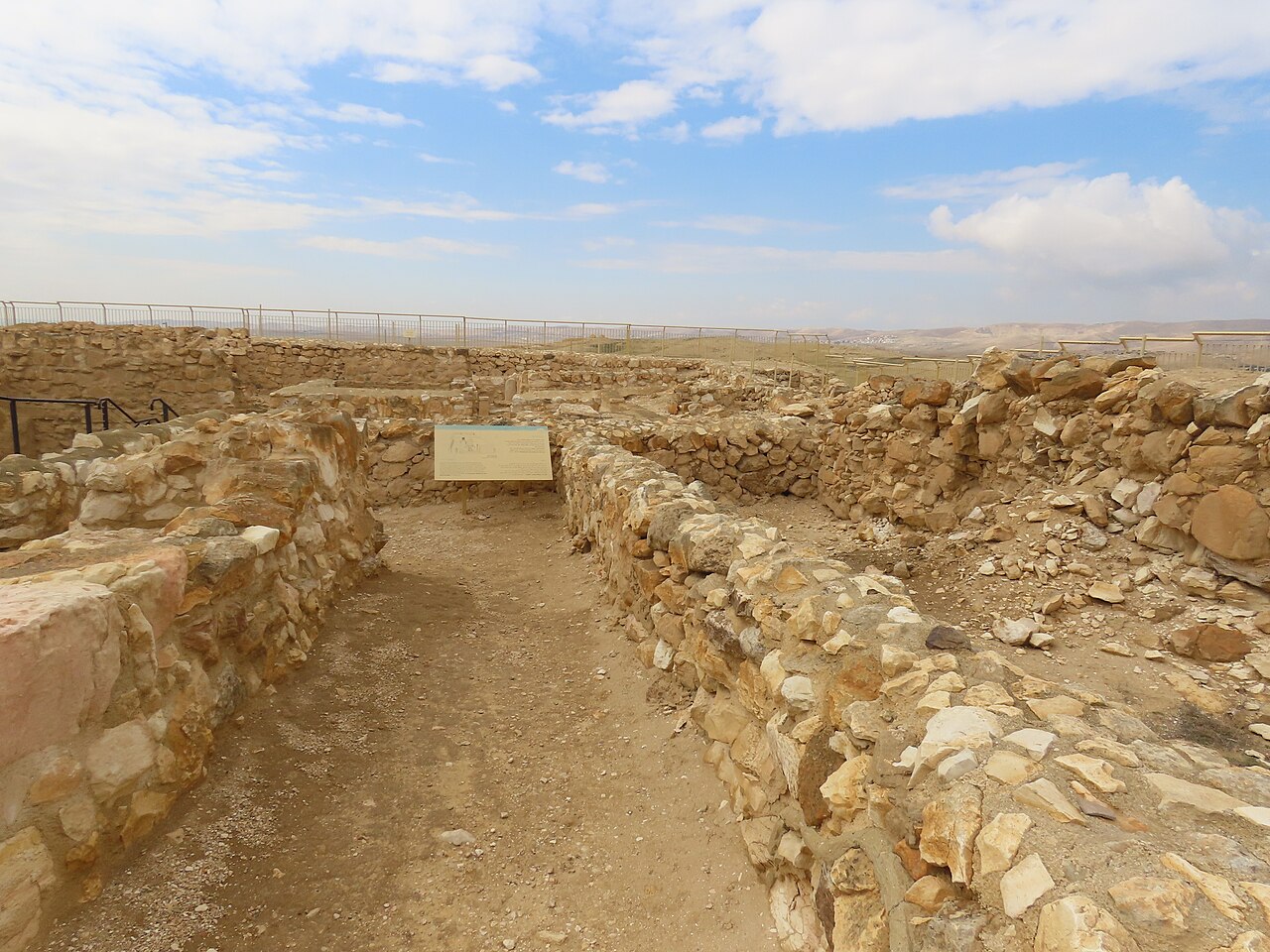 in use 9th–8th century BC; Beersheba altar dismantled late 8th century BC
Judahite Shrines: Arad & Beersheba
Local Judahite worship — and the cult reforms of Hezekiah and Josiah
2 Kings 18:4 · 2 Kings 18:22 · 2 Kings 23:8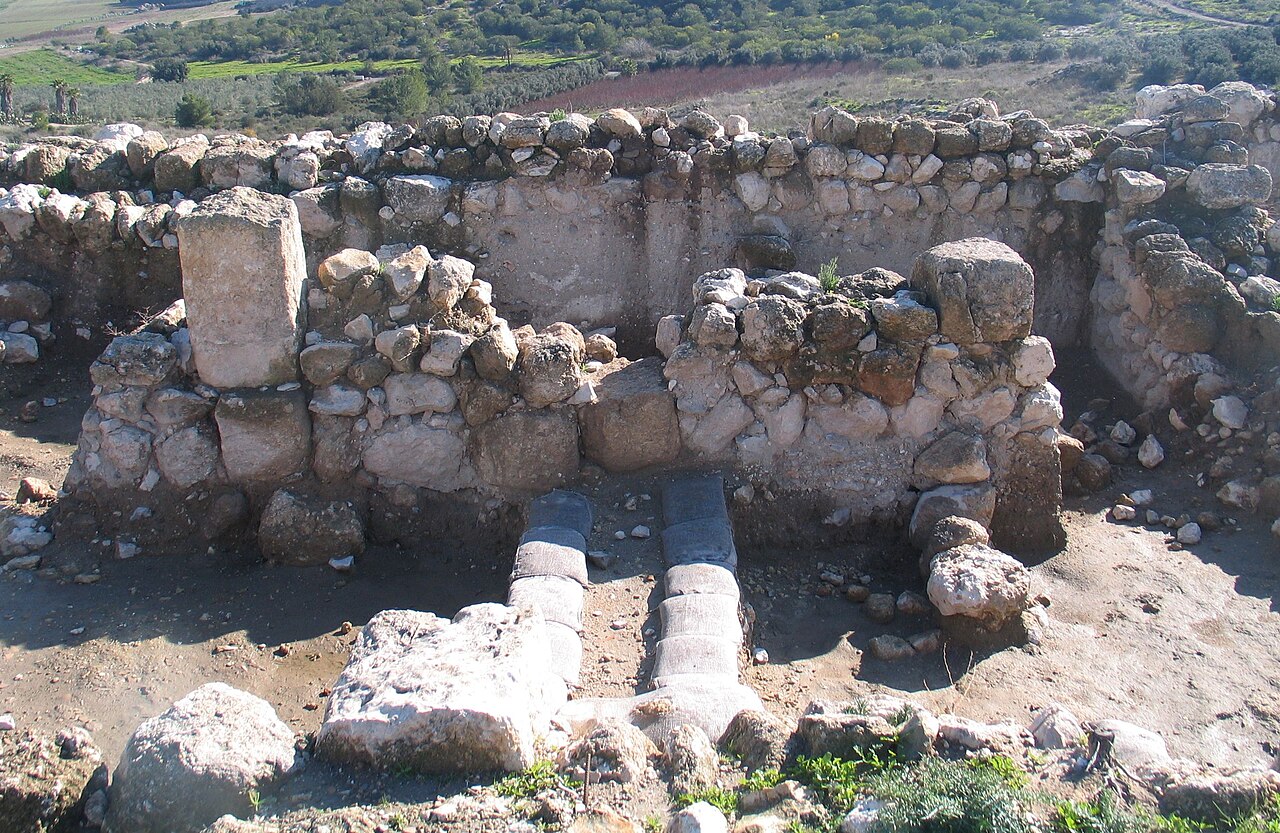 10th–9th century BC (the exact date is the whole debate)
The “Solomonic” City Gates (Hazor, Megiddo, Gezer)
Solomon's building program — and the fierce debate over the united monarchy
1 Kings 9:15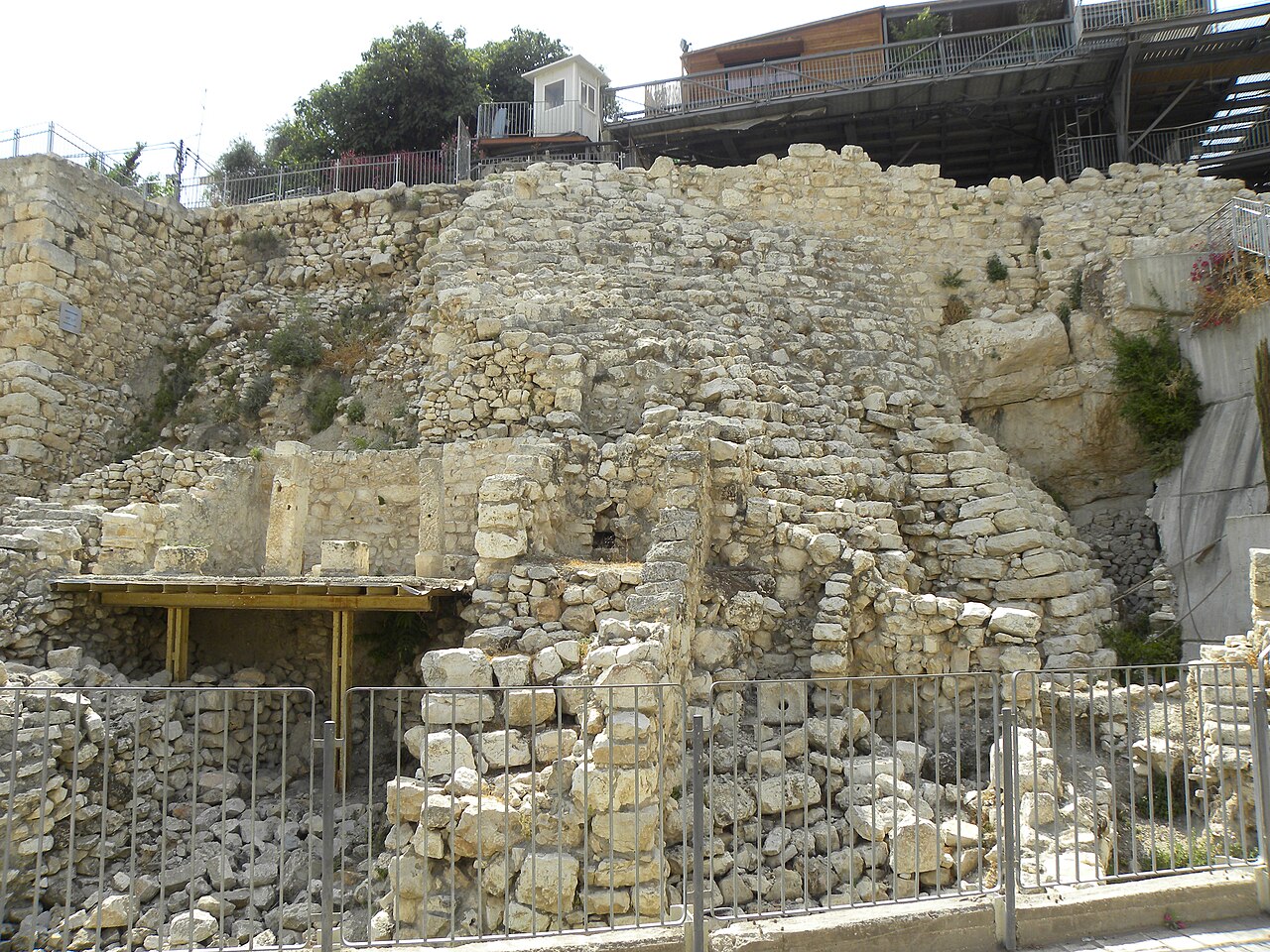 tentatively 10th century BC, over earlier terraces
The Stepped Stone Structure, City of David
David's Jerusalem — the “fortress of Zion”
2 Samuel 5:6–9 · 1 Chronicles 11:5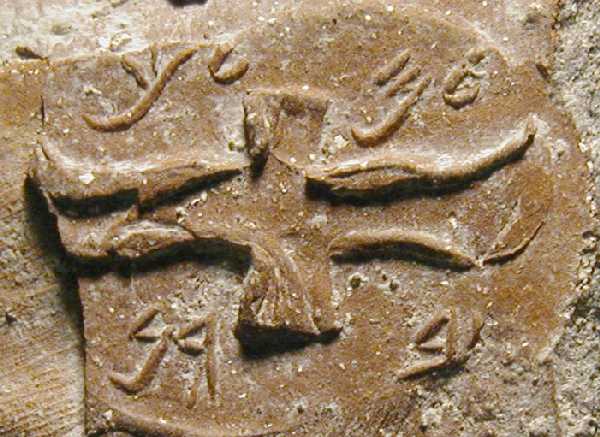 late 8th century BC
LMLK Royal Seal Impressions
King Hezekiah's preparations for the Assyrian onslaught of 701 BC
2 Chronicles 32:27–28 · 2 Kings 18–19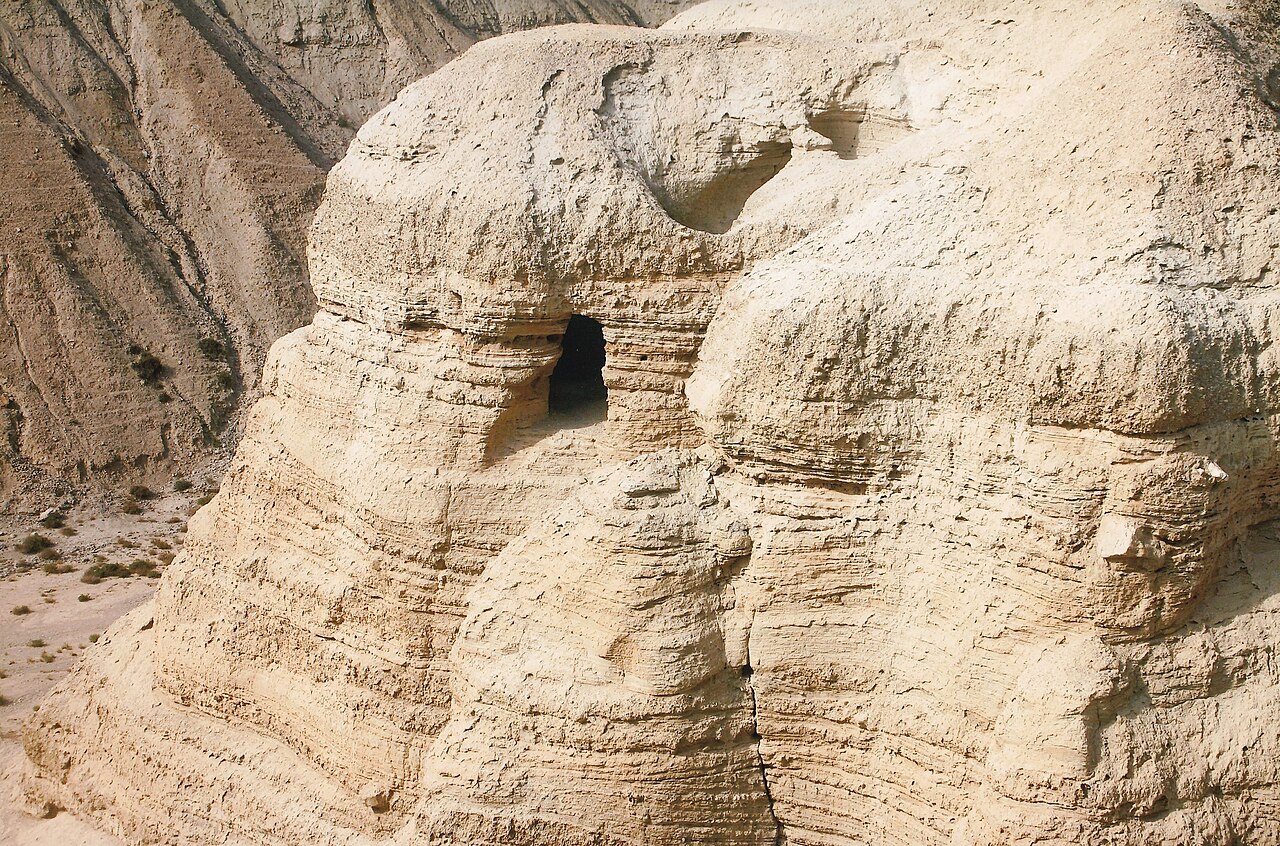 c. 3rd century BC – AD 68
The Dead Sea Scrolls & Qumran
The Jewish world into which Jesus and the earliest church were born
Isaiah 1–66 · Habakkuk 1–2 · Psalms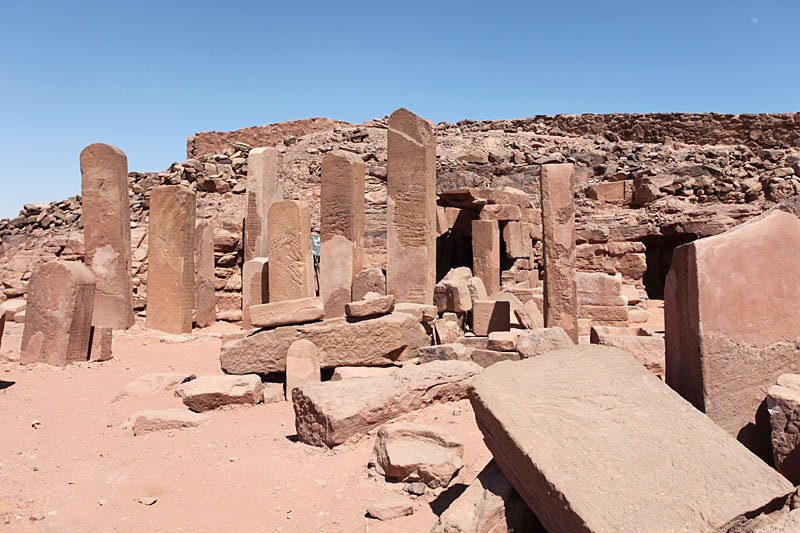 c. 1900–1500 BC
Serabit el-Khadim: Hathor's Mines & the First Alphabet
Semitic laborers in Egyptian service, and the birth of the alphabet behind the Hebrew script
Exodus 3:1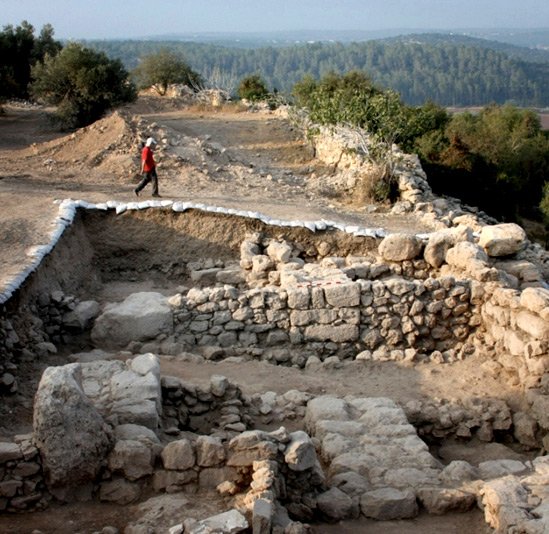 c. 1020–980 BC
Khirbet Qeiyafa: A Fortified Town from David's Time
The debate over whether a centralized Judahite kingdom existed in the time of David
1 Samuel 17:2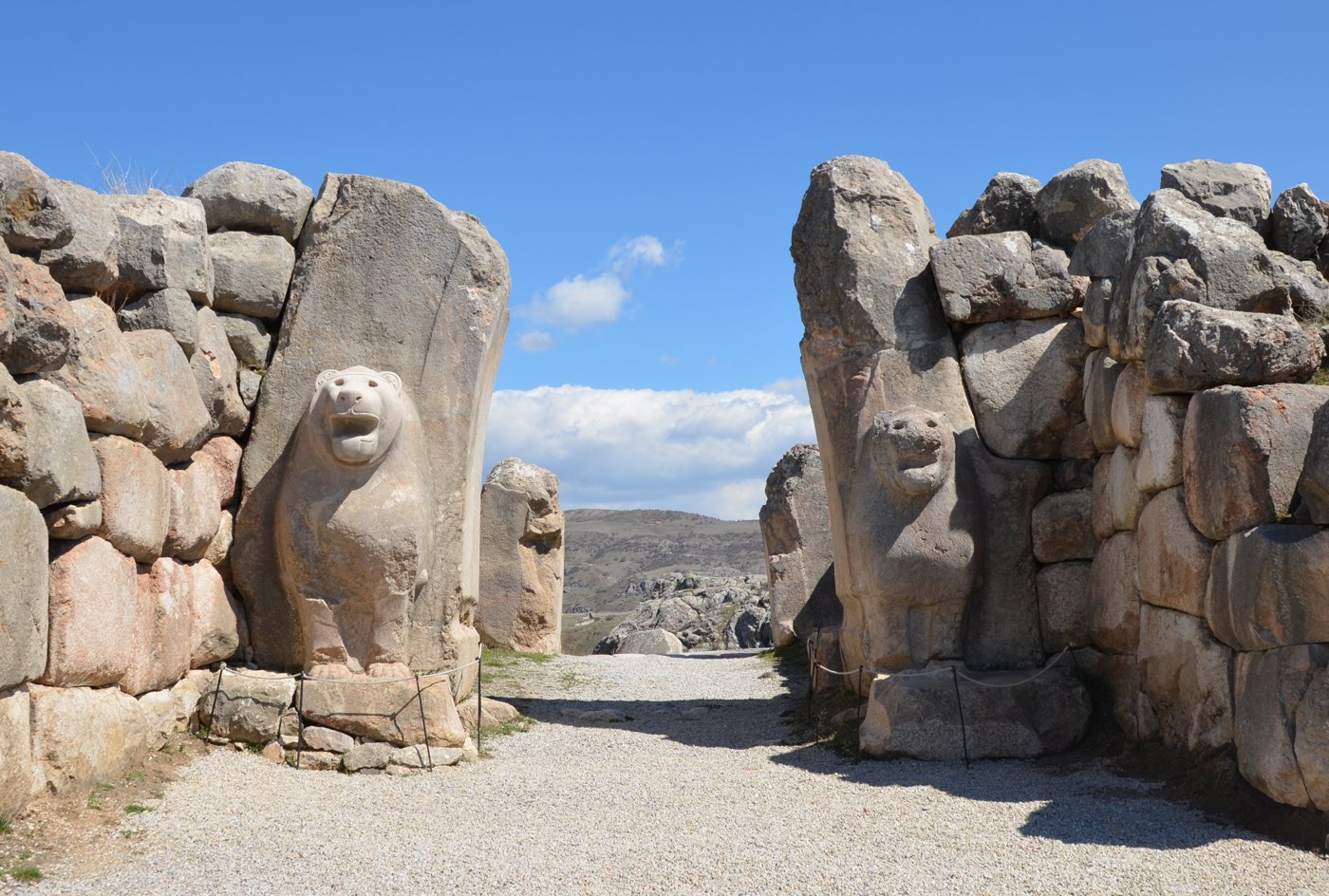 empire c. 1650–1180 BC (archives excavated from 1906)
Hattusa and the Hittites the Bible Named
The Hittites of Genesis and 2 Samuel — once dismissed, then unearthed
Genesis 23:10 · 2 Samuel 11:3Finds from the New Testament world
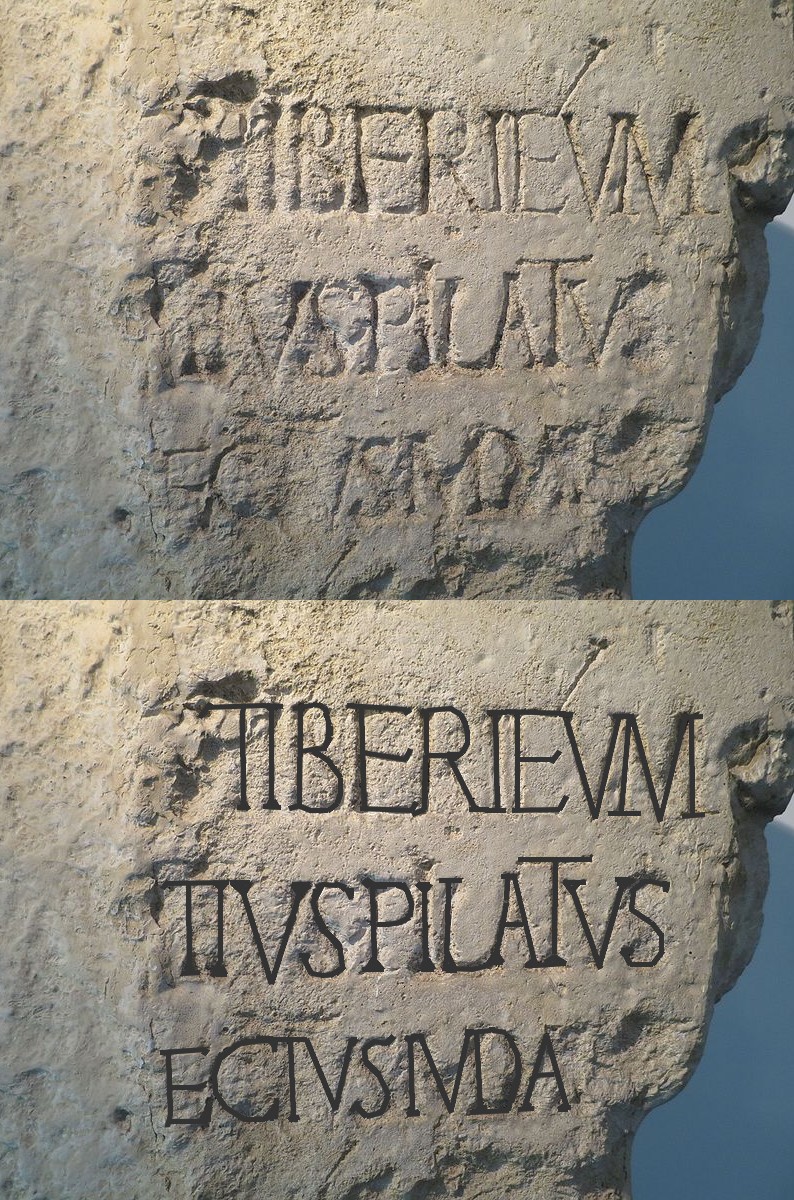 AD 26–36
Pilate Stone
Pontius Pilate, the Roman governor who sentenced Jesus
Matthew 27 · Luke 3:1 · John 18–19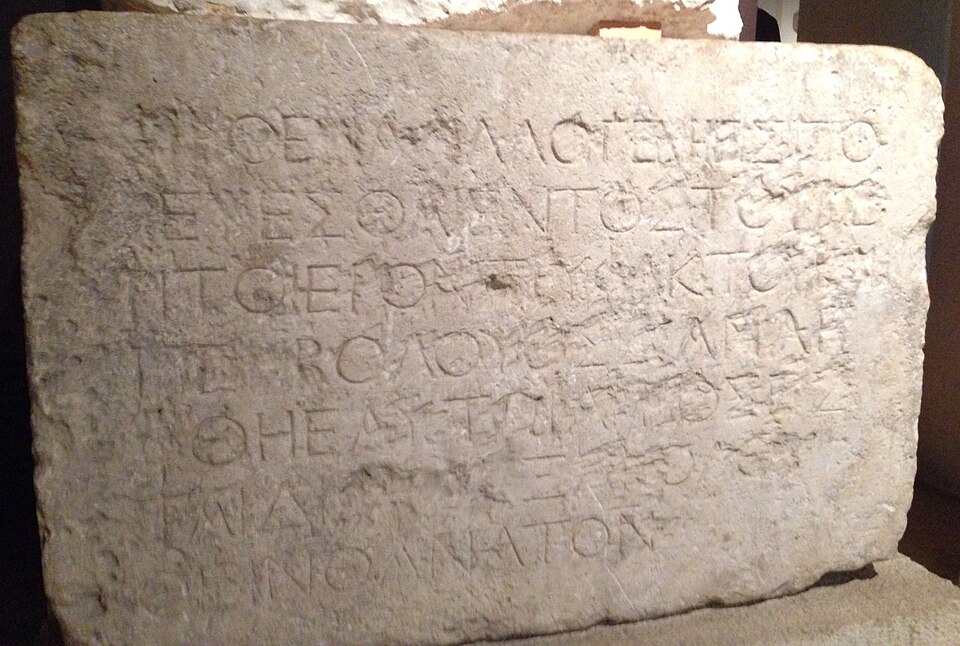 1st century AD (before AD 70)
Temple Warning Inscription
The riot over Paul allegedly bringing a Gentile past the temple barrier
Acts 21:27–31 · Ephesians 2:14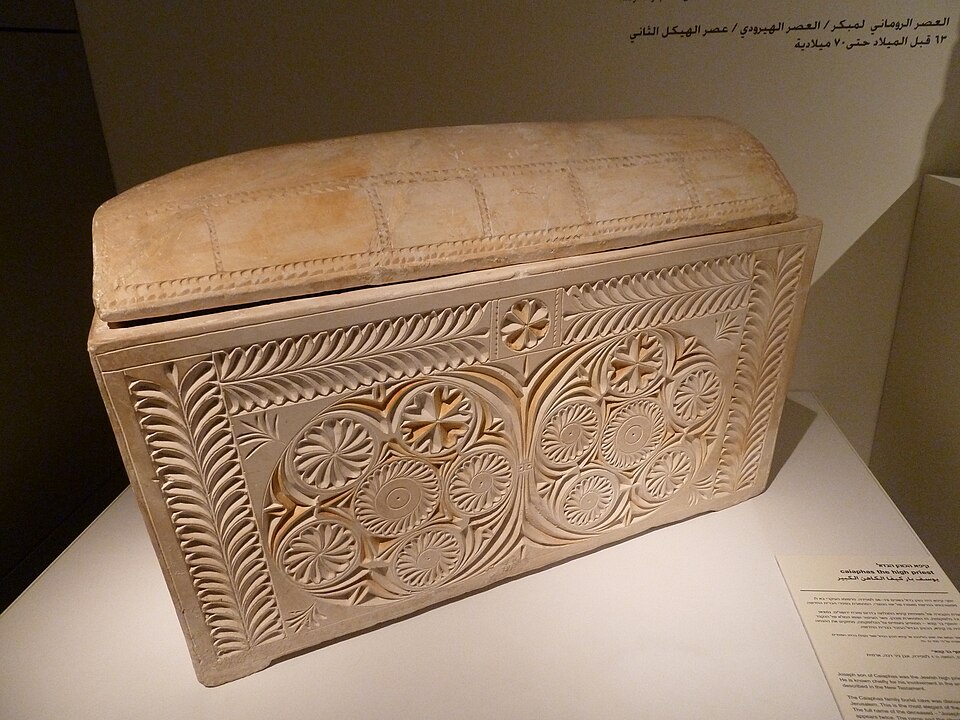 1st century AD
Caiaphas Ossuary
Caiaphas, the high priest at the trial of Jesus
Matthew 26:57 · John 11:49–50 · John 18:13–14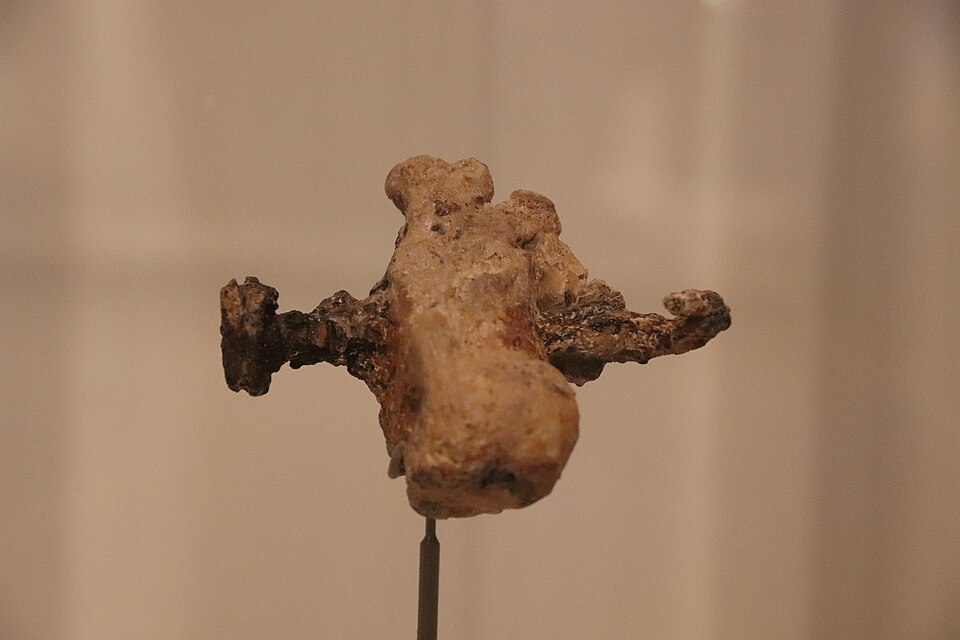 1st century AD
Heel Bone of a Crucified Man (Yehohanan)
Roman crucifixion as the Gospels describe it — nails, not just ropes
John 20:25 · Luke 24:39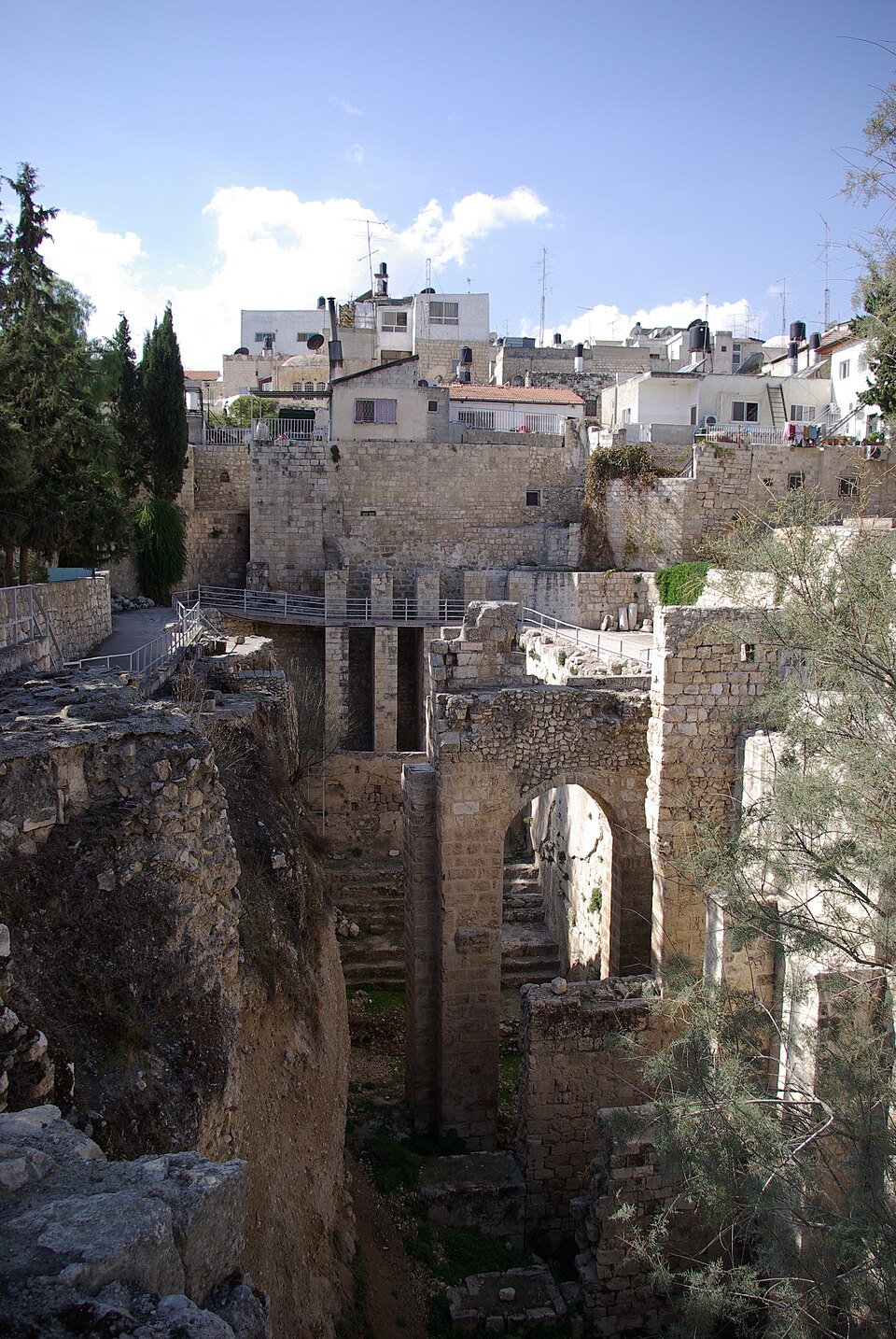 in use in the 1st century AD
Pool of Bethesda
The healing of the paralysed man at a pool “with five colonnades”
John 5:2–9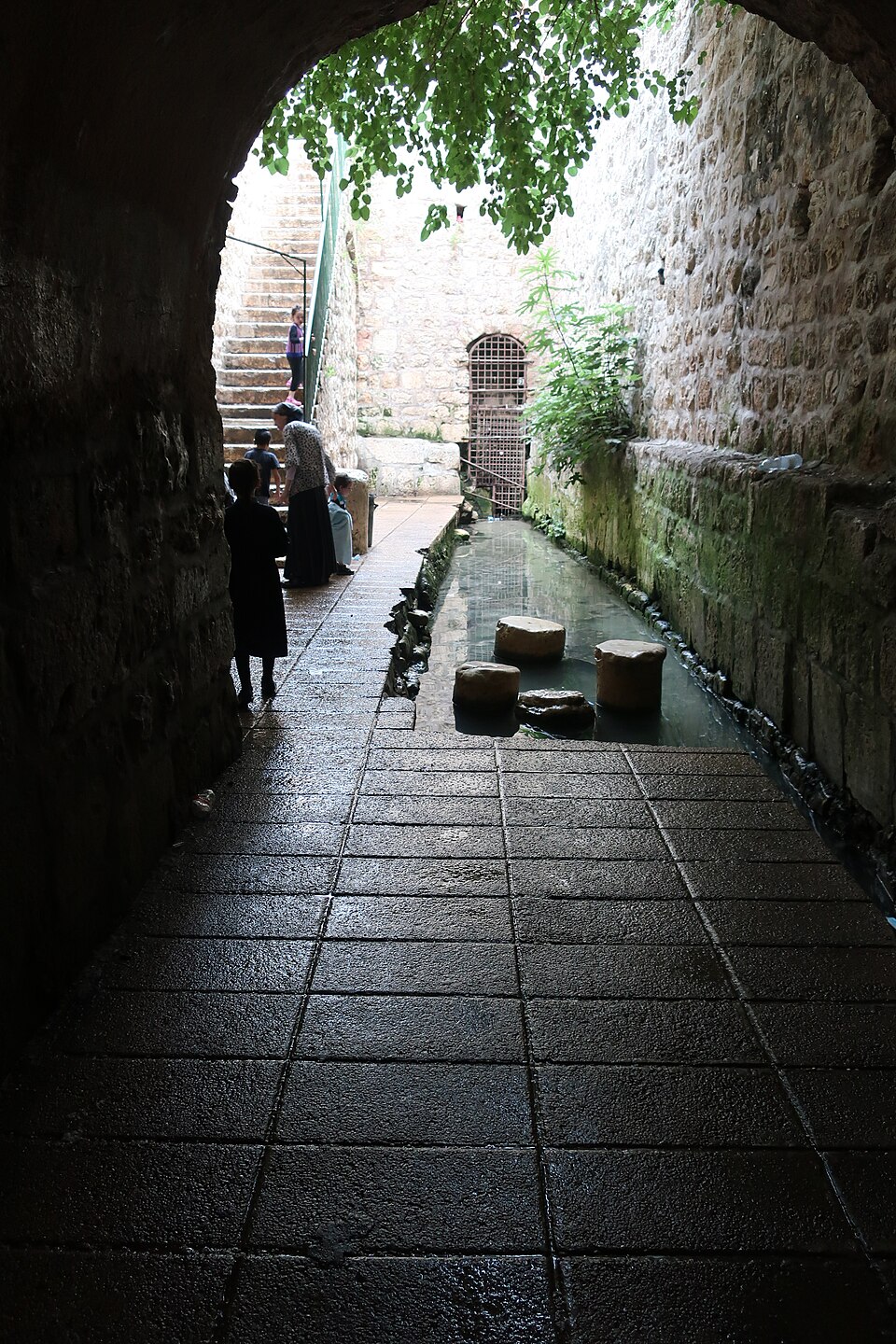 1st century BC – AD 70
Pool of Siloam (Second Temple)
The pool where Jesus sent the man born blind to wash
John 9:1–11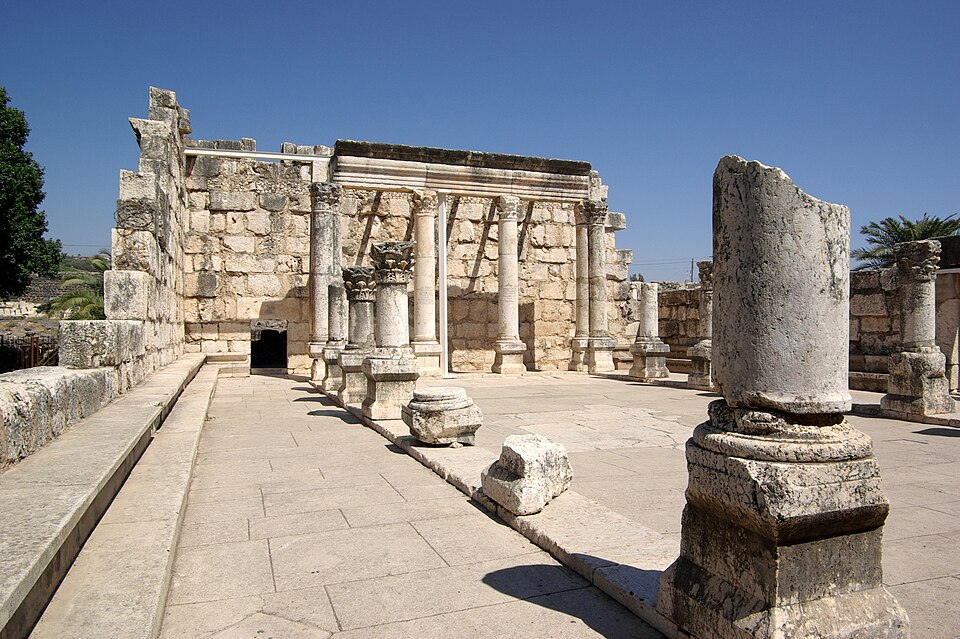 1st century AD (lower levels)
Capernaum: Synagogue & “Peter's House”
Jesus' home base during the Galilean ministry, and Simon Peter's household
Mark 1:21–34 · Matthew 4:13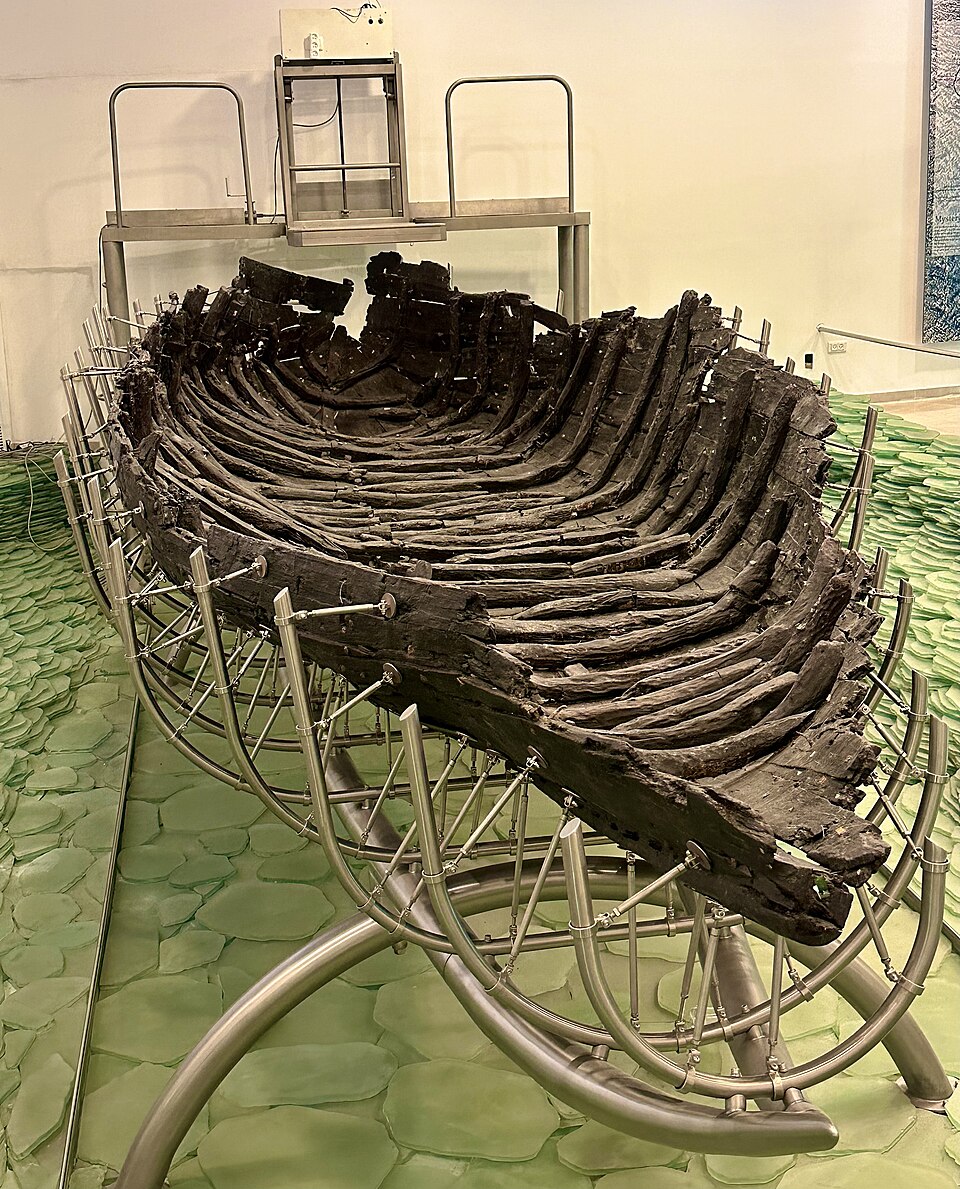 1st century BC – 1st century AD
Sea of Galilee Boat
The working boats of the Gospel fishermen
Mark 4:35–41 · John 21:1–14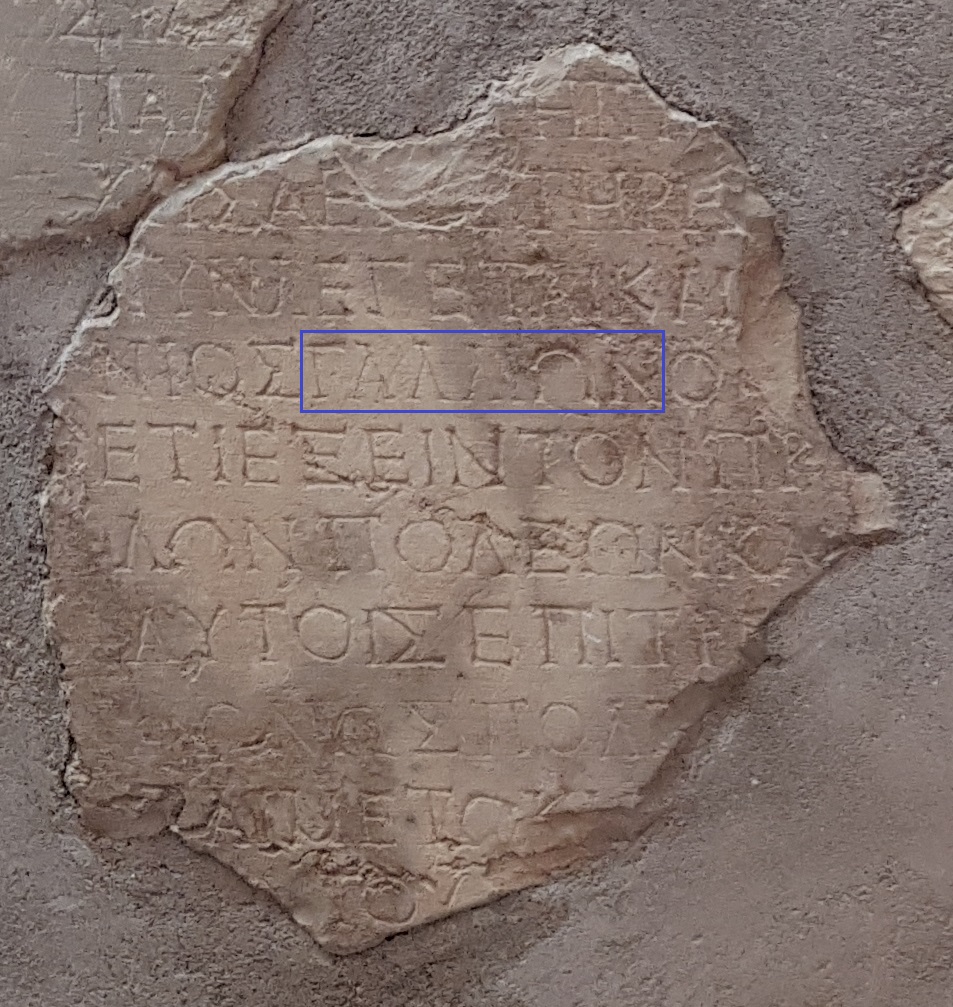 c. AD 52
Gallio Inscription at Delphi
Gallio, the Roman governor who dismissed the case against Paul in Corinth
Acts 18:12–17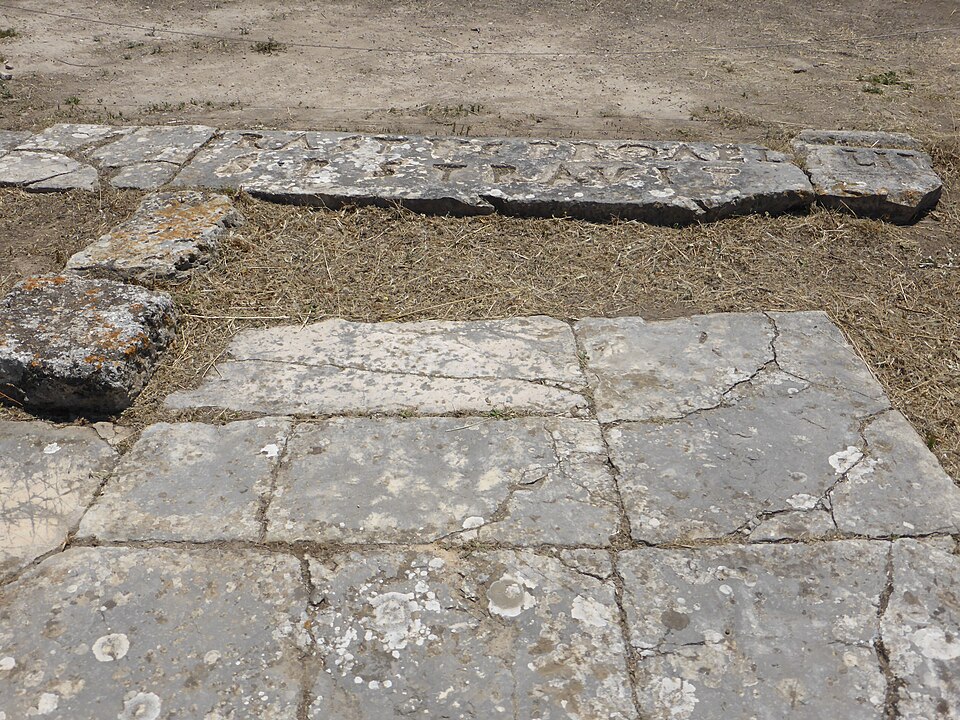 mid-1st century AD (dating debated)
Erastus Inscription at Corinth
Erastus, the city official of Corinth whom Paul greets
Romans 16:23 · 2 Timothy 4:20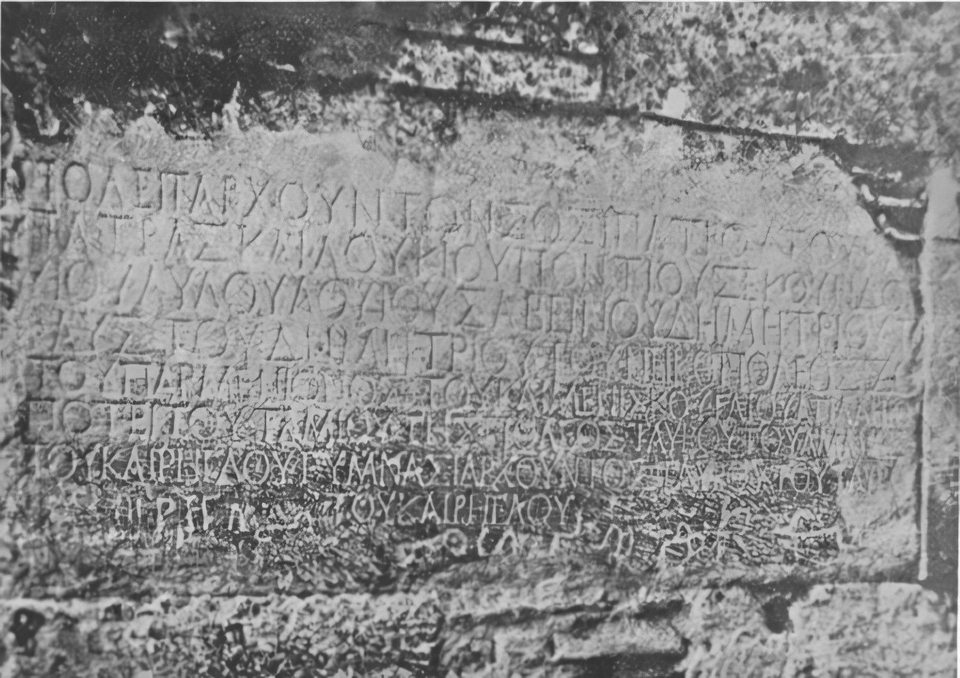 Roman period (the term is attested from the 1st century BC onward)
Politarch Inscription of Thessalonica
Luke's unusual word for the city rulers of Thessalonica
Acts 17:6–8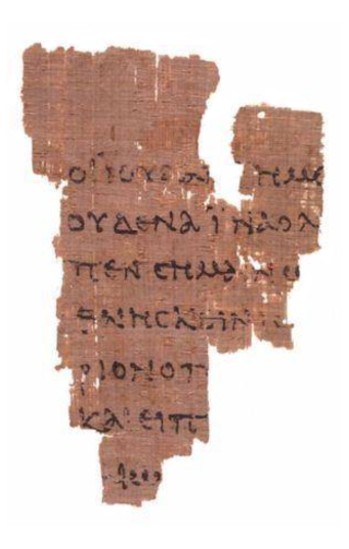 commonly dated c. AD 125–175
Papyrus P52 (Rylands Fragment of John)
The earliest surviving physical copy of any Gospel text — Jesus before Pilate
John 18:31–33 · John 18:37–38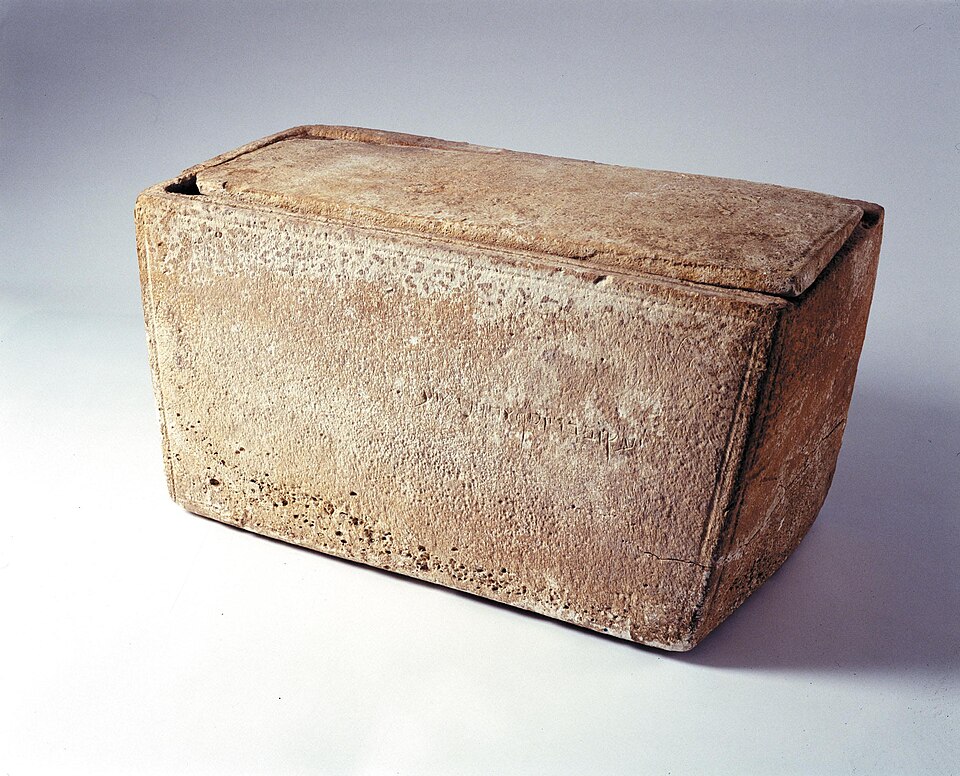 1st century AD (the box itself; the inscription's second half is the dispute)
James Ossuary (a disputed find)
James the brother of Jesus, leader of the Jerusalem church — if the inscription is authentic
Mark 6:3 · Galatians 1:19 · Acts 15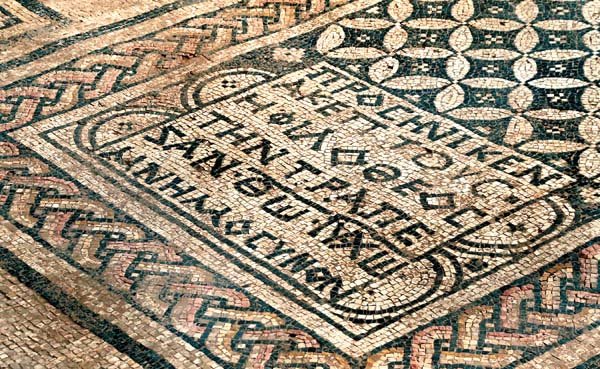 c. AD 230 (3rd century)
Megiddo Mosaic
Early Christian worship of Jesus as God, generations before the church was legal
John 20:28 · Titus 2:13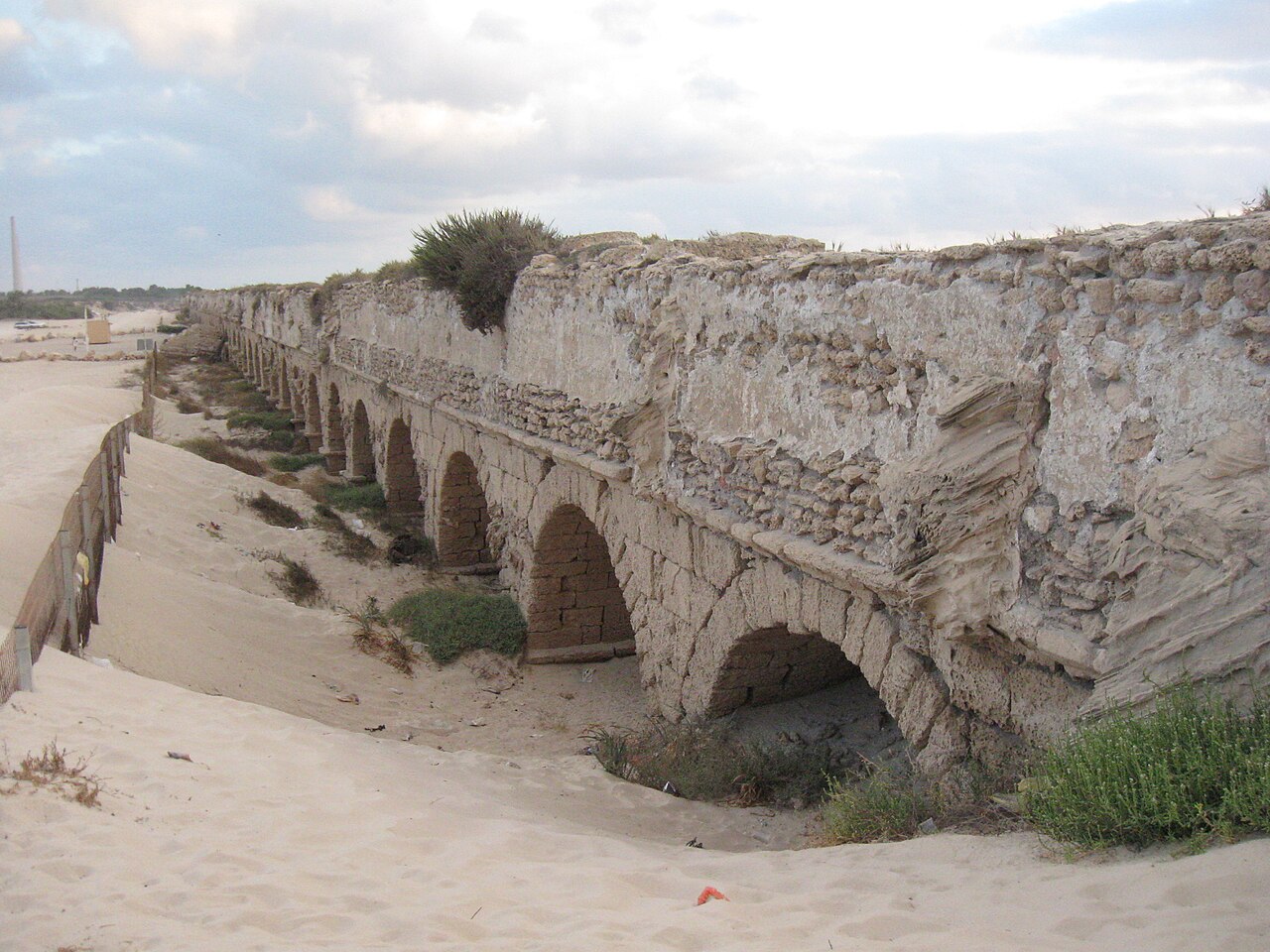 built c. 22–10 BC
Caesarea Maritima
The Roman capital of Judea — Pilate's seat, and a hub of the book of Acts
Acts 10 · Acts 23:23–35 · Acts 25:1–13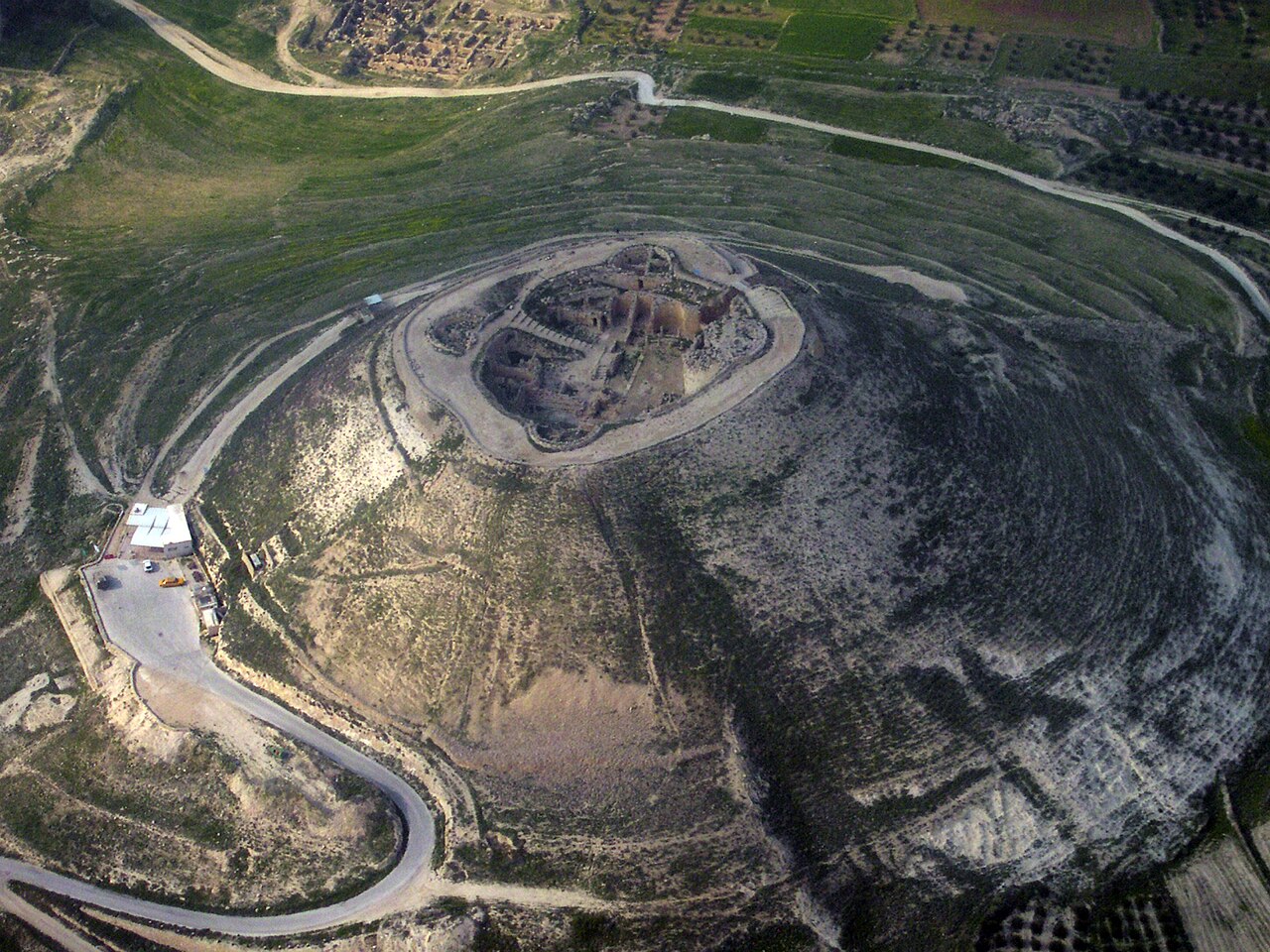 built c. 23 BC
Herodium — Herod's Fortress & Tomb
Herod the Great, the king of the nativity narrative
Matthew 2:1–19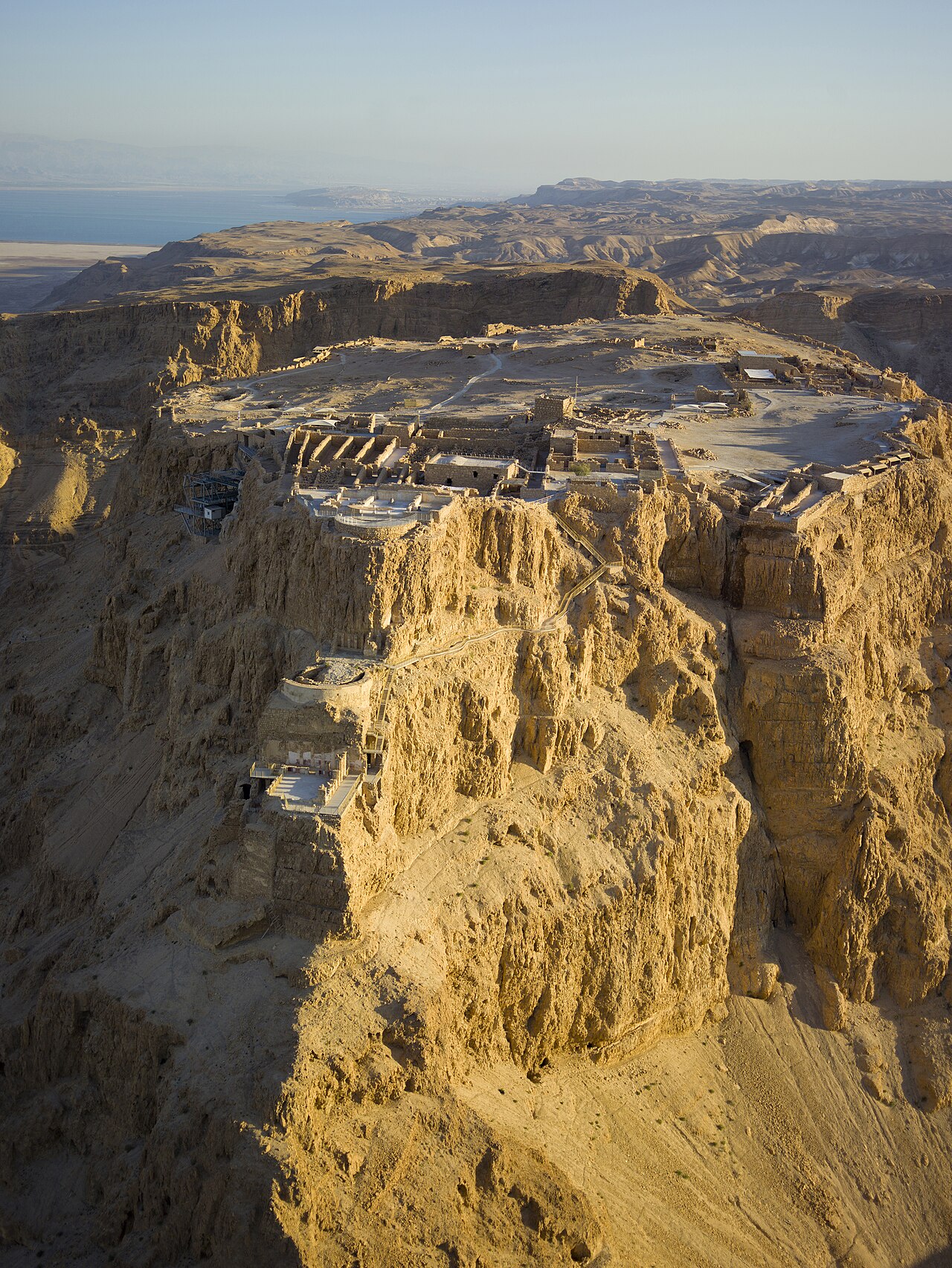 built c. 40–30 BC; Jewish revolt ended here AD 73
Masada
Herodian building and the Jewish War against Rome
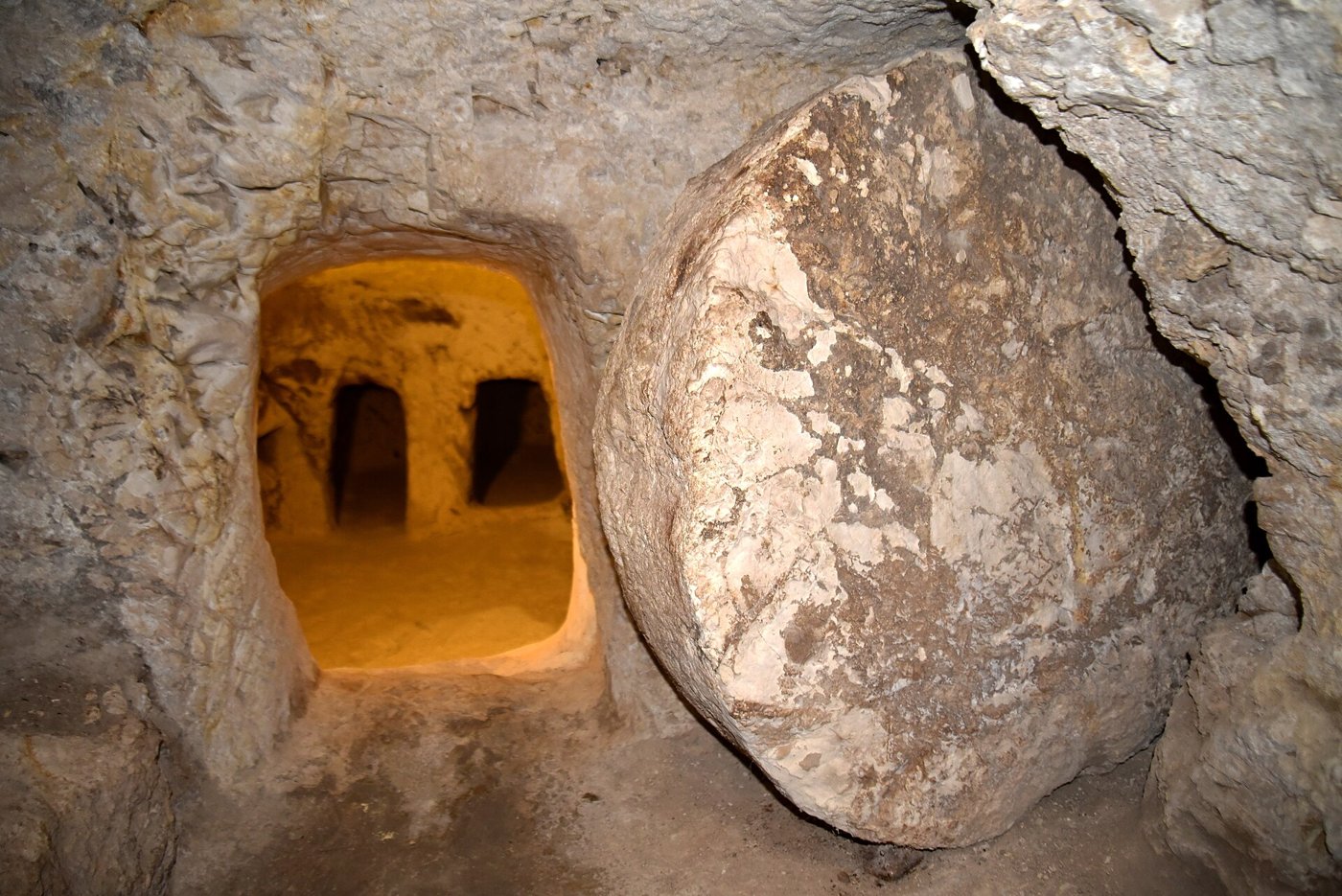 1st century AD (village); the priestly-course inscription is 3rd–4th century AD
First-Century Nazareth
The hometown of Jesus
Matthew 2:23 · Luke 4:16 · John 1:46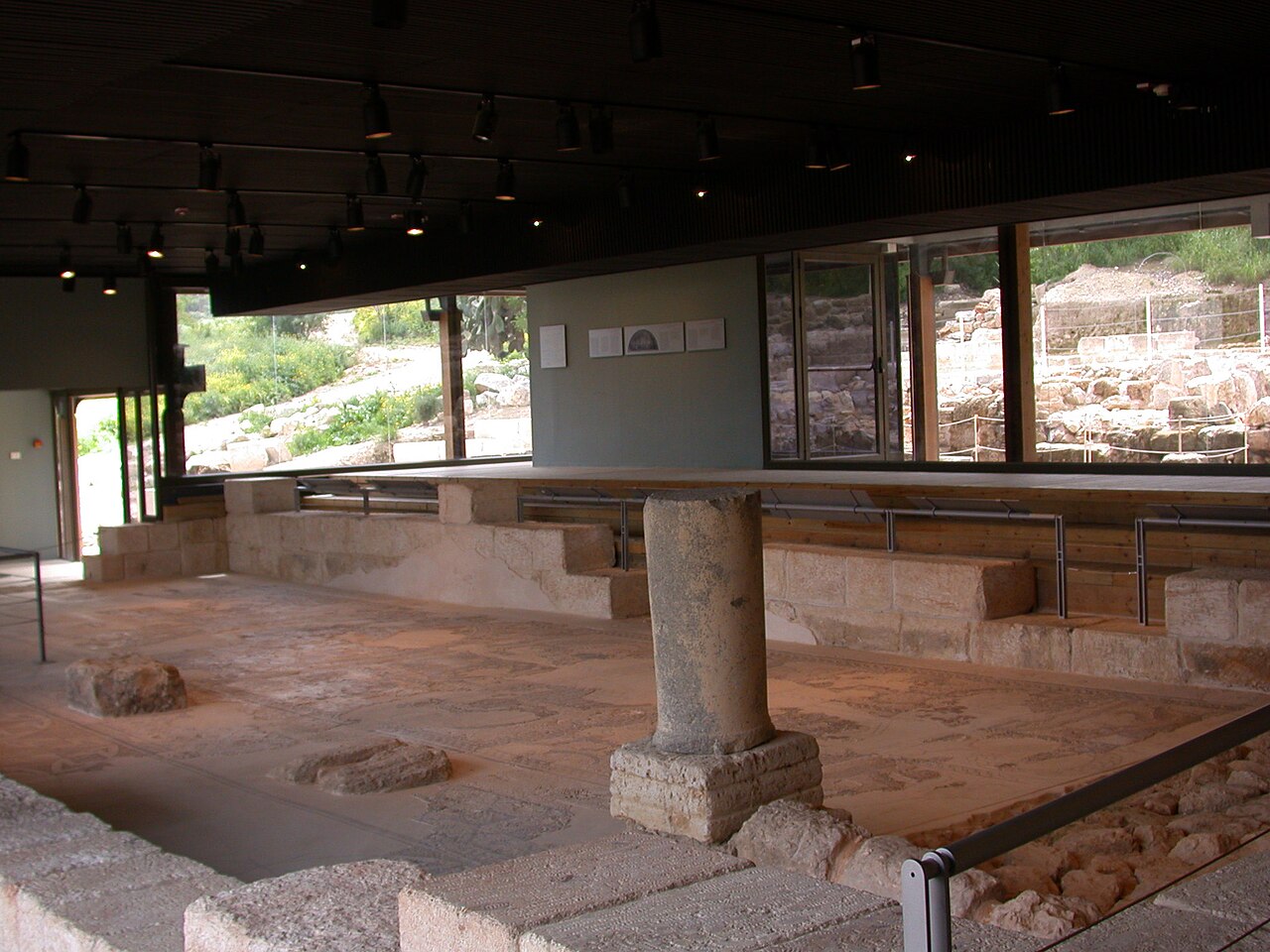 rebuilt from the early 1st century AD
Sepphoris
The city on Nazareth's doorstep — context for Jesus the builder
Matthew 13:55 · Mark 6:3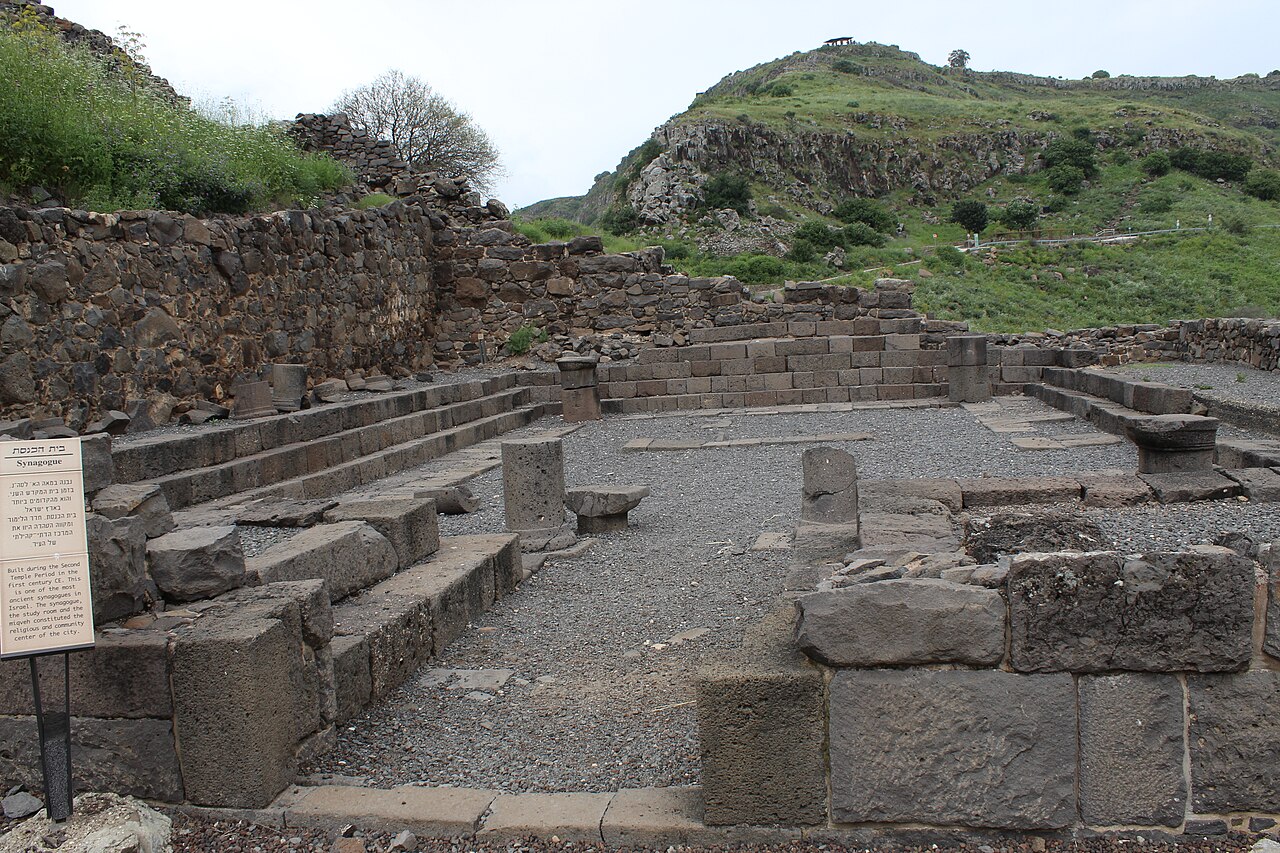 1st century BC – AD 70
First-Century Synagogues (Gamla, Magdala & the Theodotos Stone)
The synagogue buildings the Gospels and Acts assume Jesus and Paul taught in
Mark 1:21 · Luke 4:16 · Acts 15:21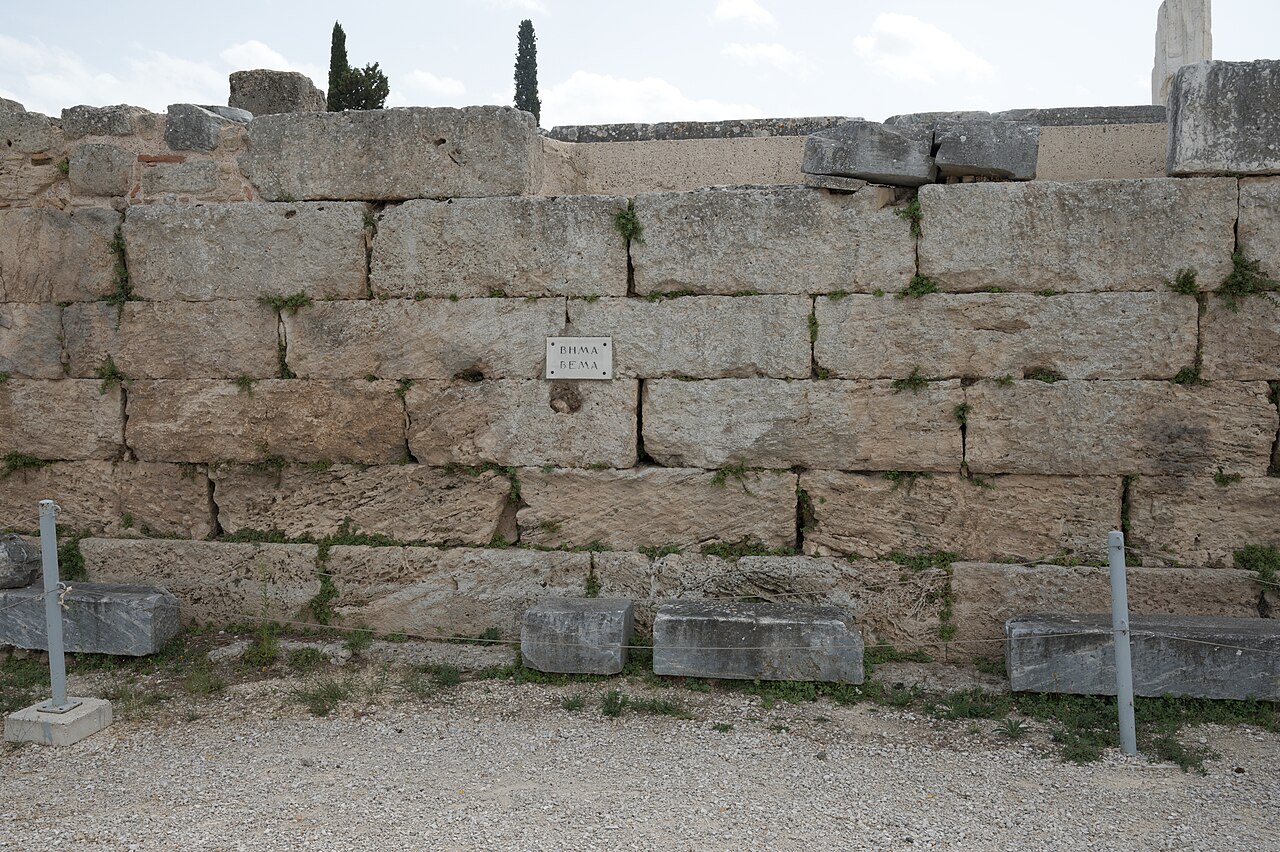 c. AD 25–50
The Bema (Judgment Seat) at Corinth
Where Paul was hauled before the proconsul Gallio
Acts 18:12–17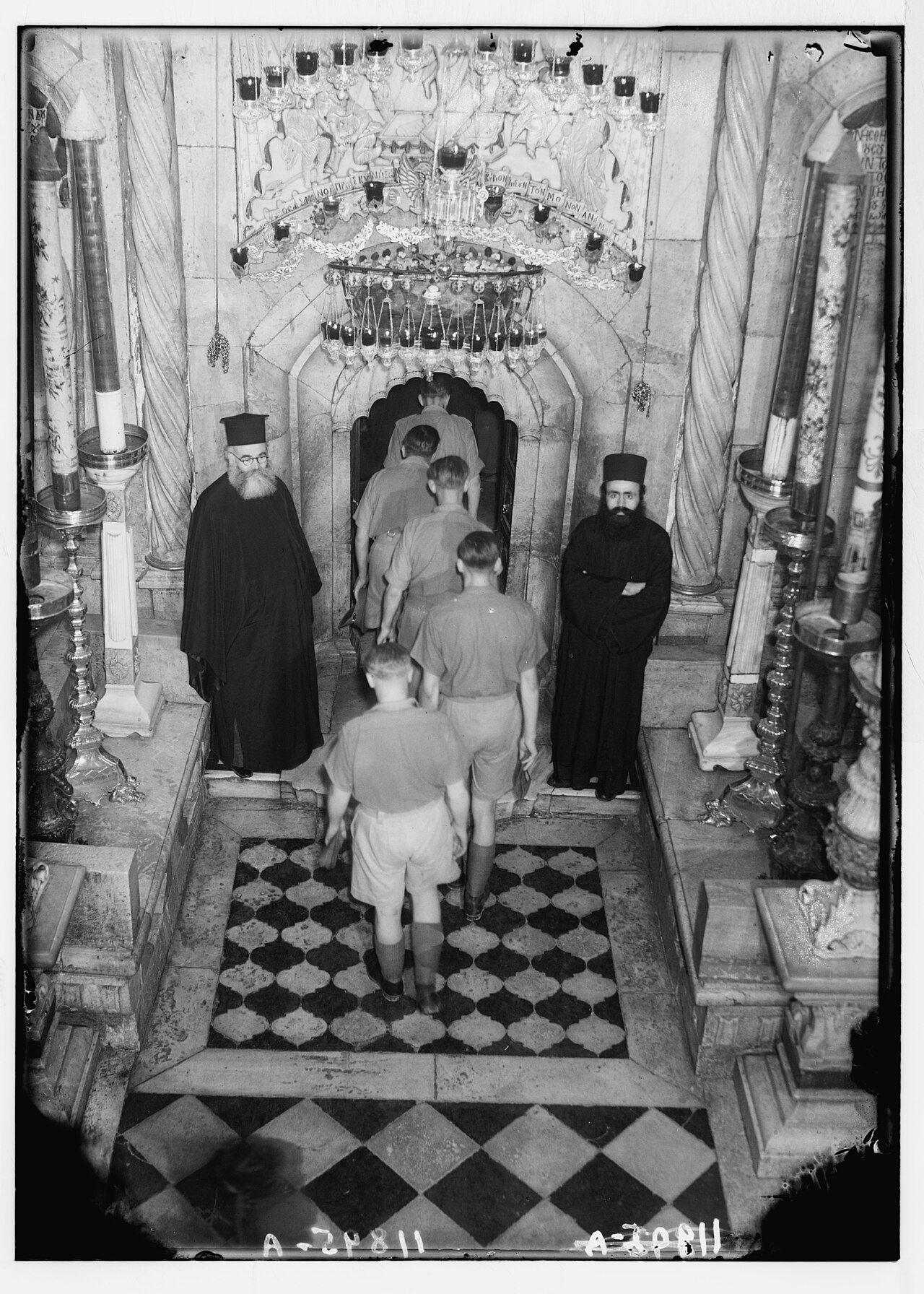 quarry and tombs of the 1st century BC–AD; the church begun in the 4th century
Golgotha & the Holy Sepulchre
The site of Jesus' crucifixion and burial
John 19:41–42 · Mark 15:22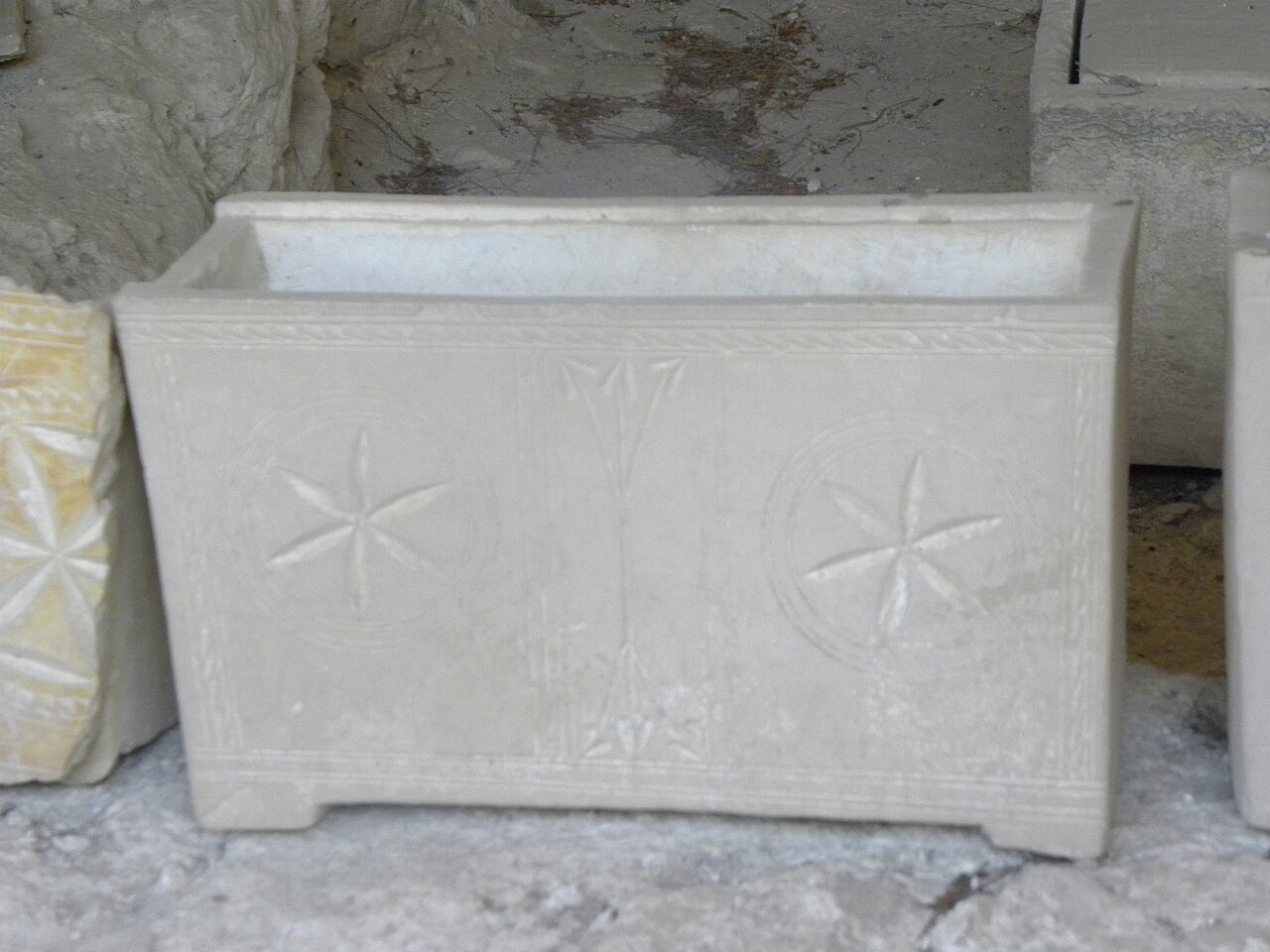 1st century AD (tomb found 1980)
The Talpiot “Jesus Family Tomb” (a cautionary case)
A test of how NOT to read an archaeological find
1 Corinthians 15:4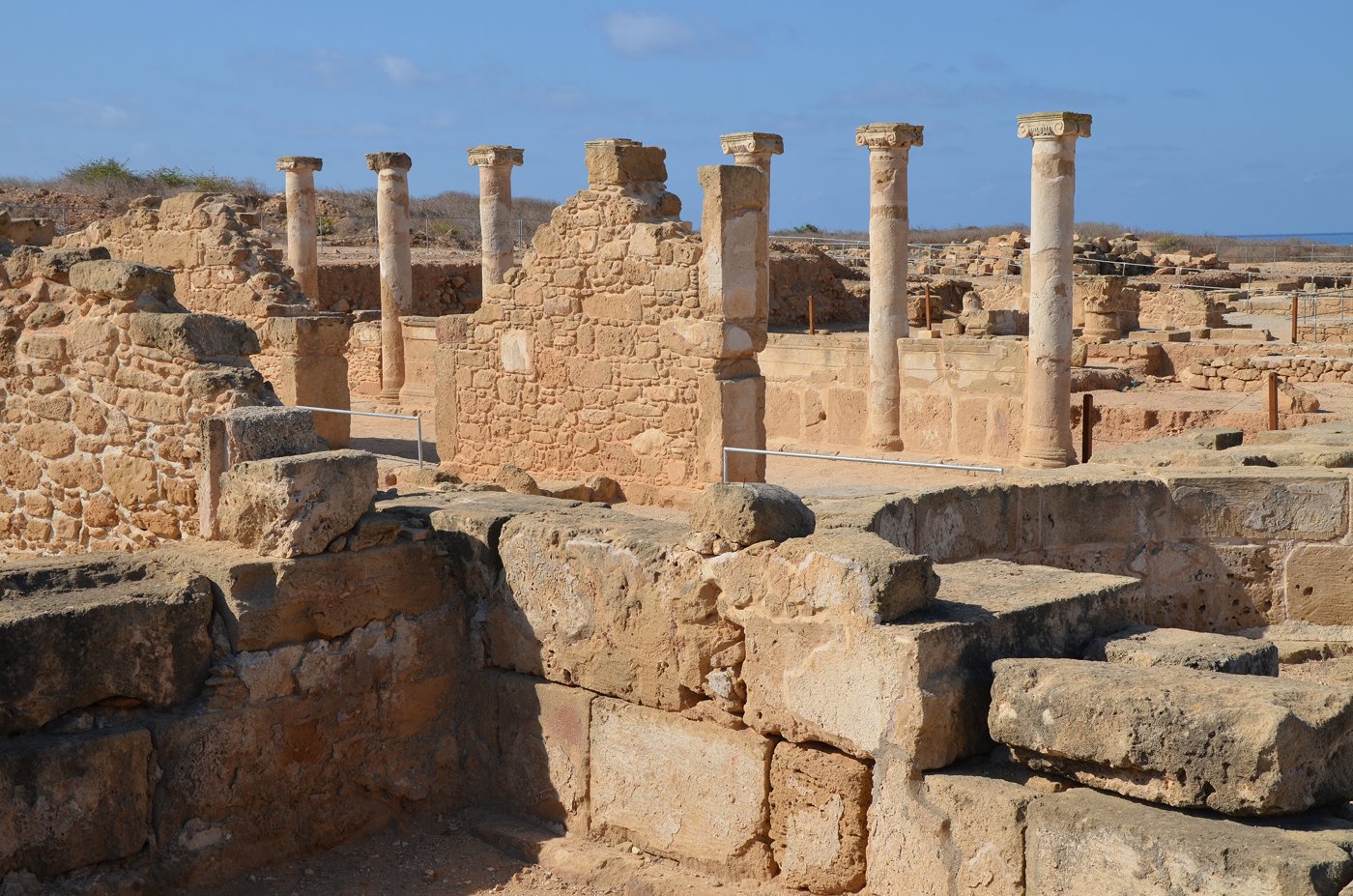 1st century AD
Sergius Paulus, Proconsul of Cyprus
Luke's precise title for the Roman governor Paul meets on Cyprus
Acts 13:7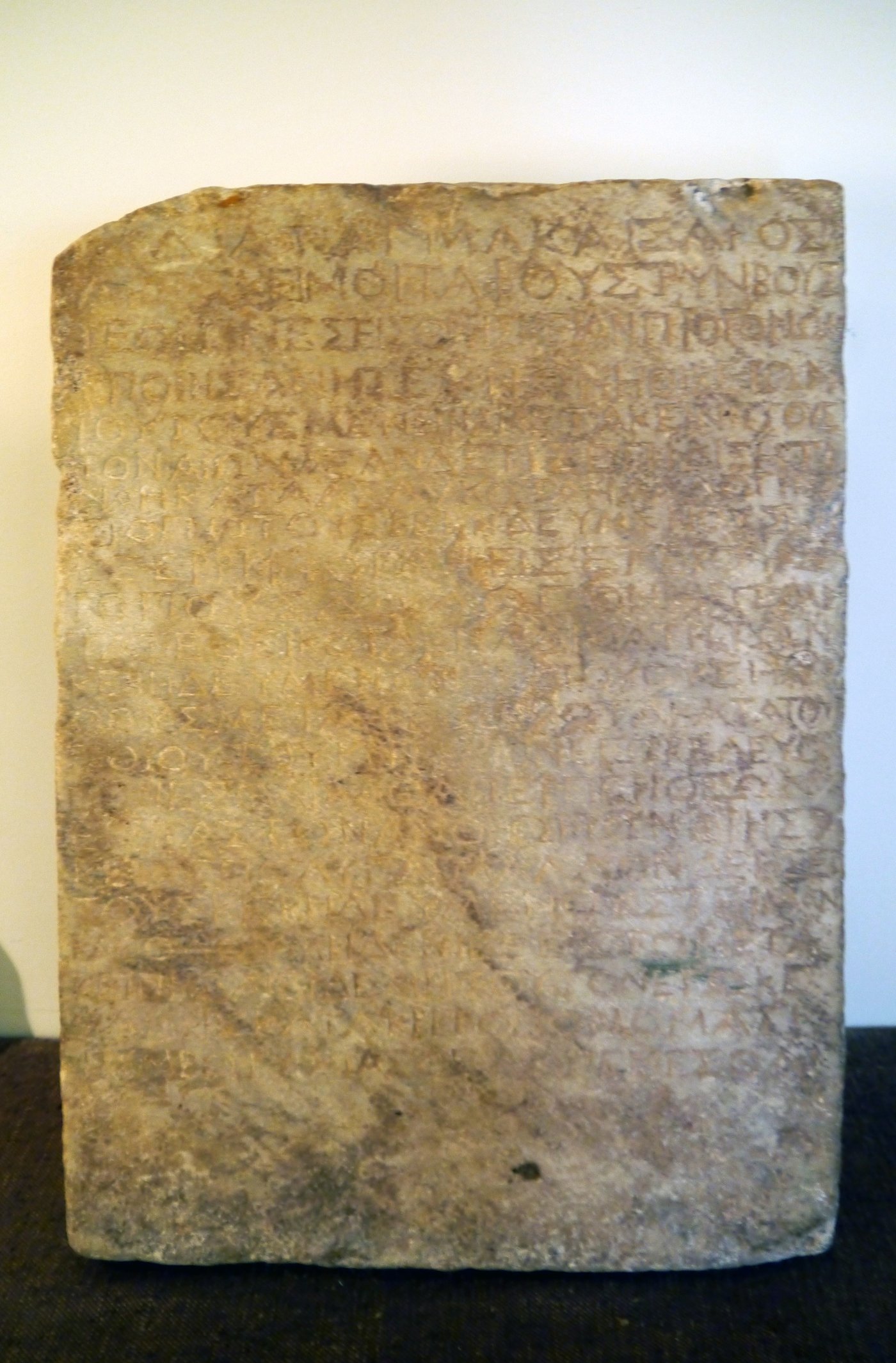 1st century AD (debated); acquired 1878
The Nazareth Inscription (a cautionary case)
How a promising-looking find can point the other way on closer study
Matthew 28:12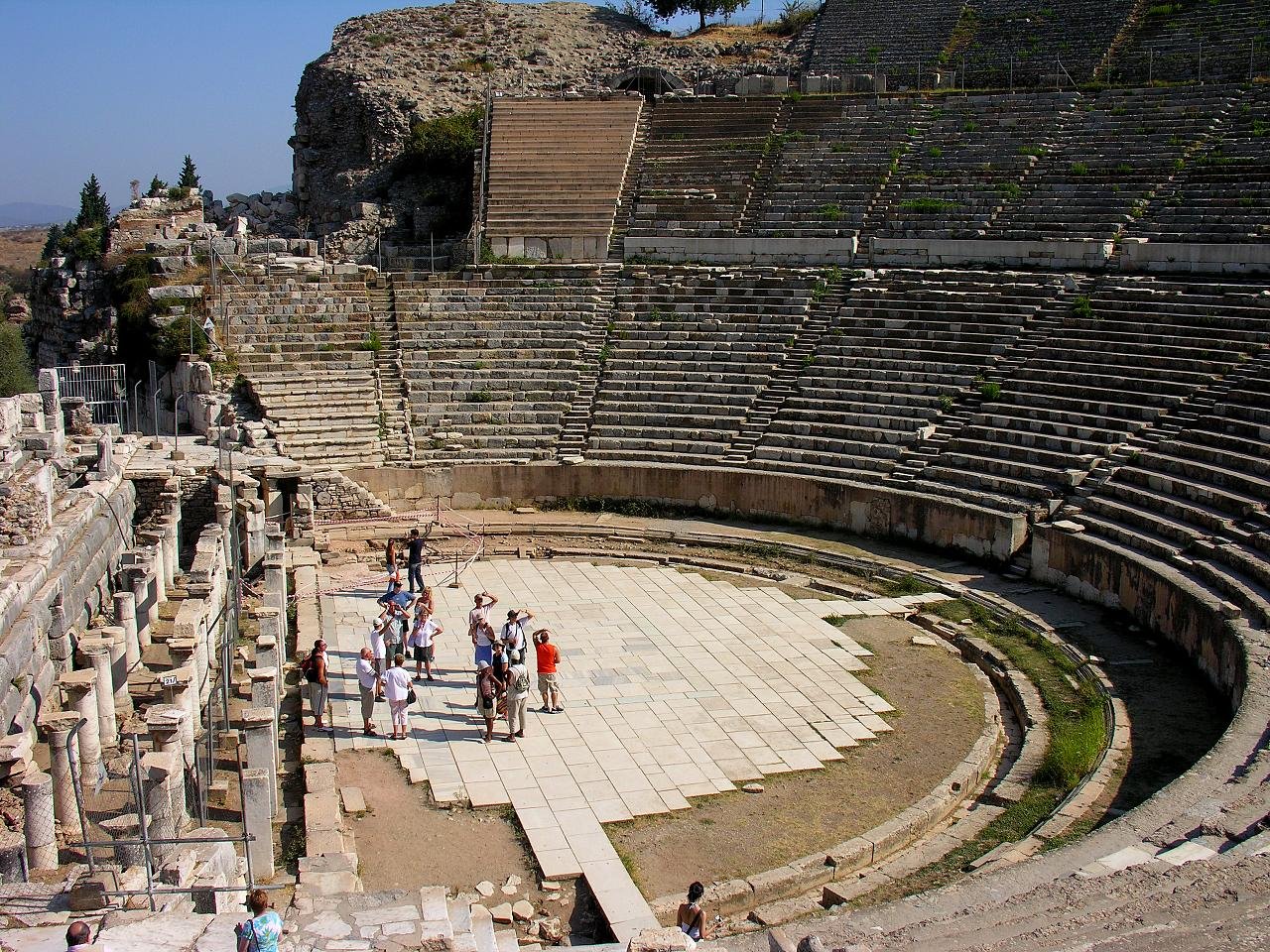 Roman period (city at its height, 1st–2nd century AD)
Ephesus — the Theatre and the Temple of Artemis
The city where Paul spent some three years, and the silversmiths' riot in the theatre over the Artemis trade
Acts 19:23–41 · 1 Corinthians 15:32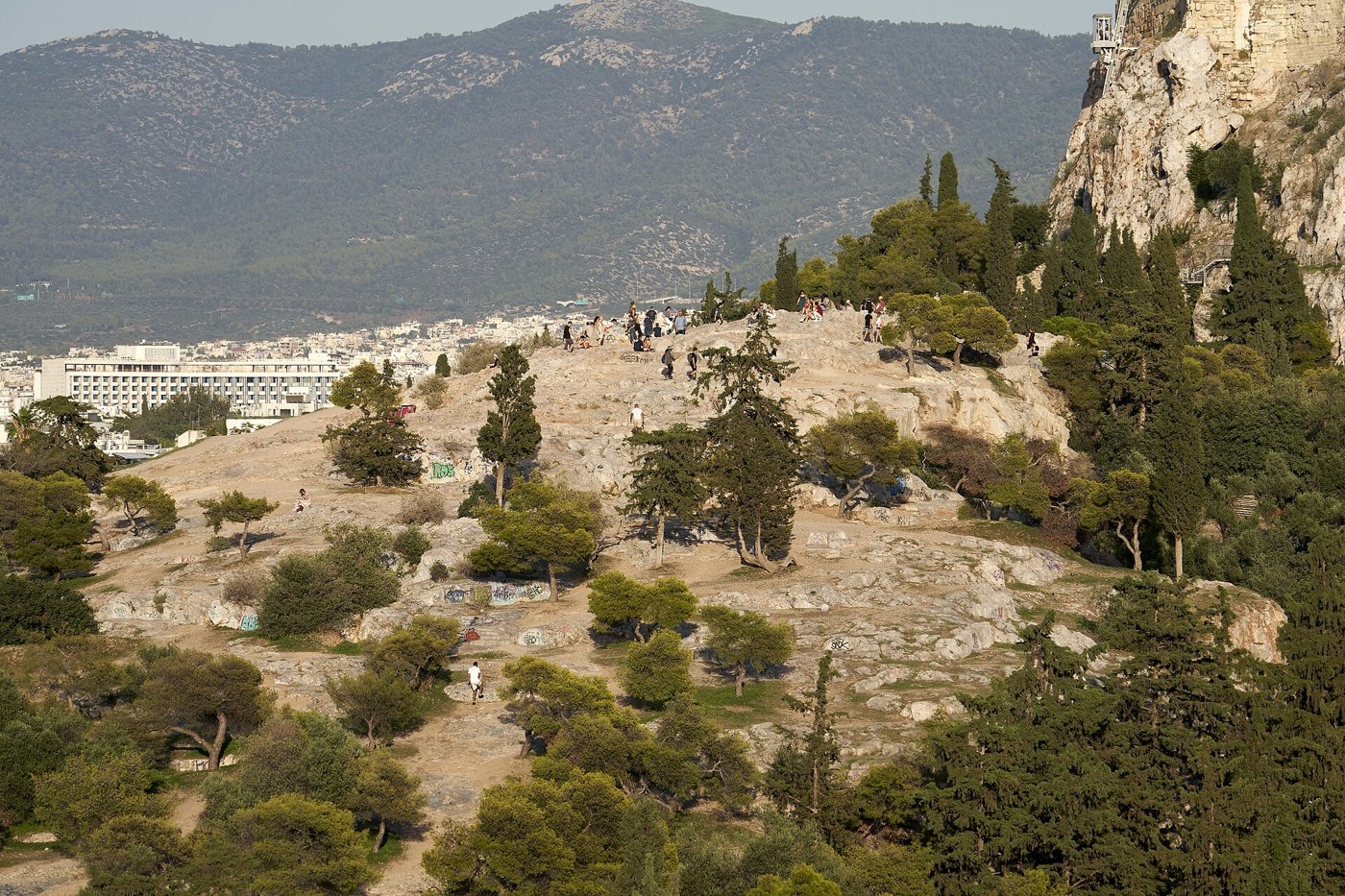 Classical–Roman Athens
The Areopagus at Athens (Mars Hill)
The council before which Paul preached, citing an altar “to an unknown god”
Acts 17:16–34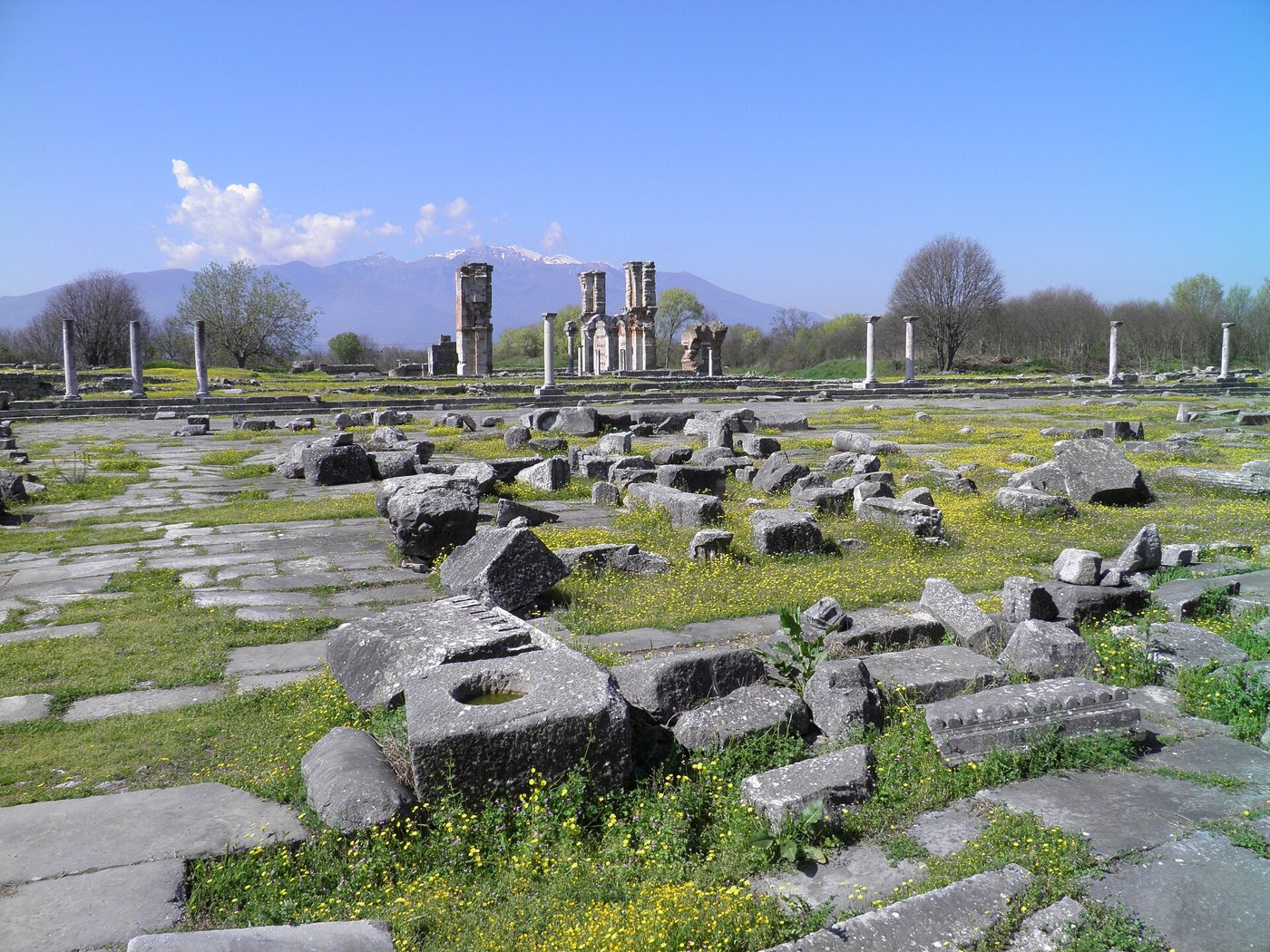 Roman colony from 42 BC
Philippi — Roman Colony on the Via Egnatia
Lydia, a “seller of purple” from Thyatira and Paul's first European convert, and Paul and Silas's imprisonment
Acts 16:11–40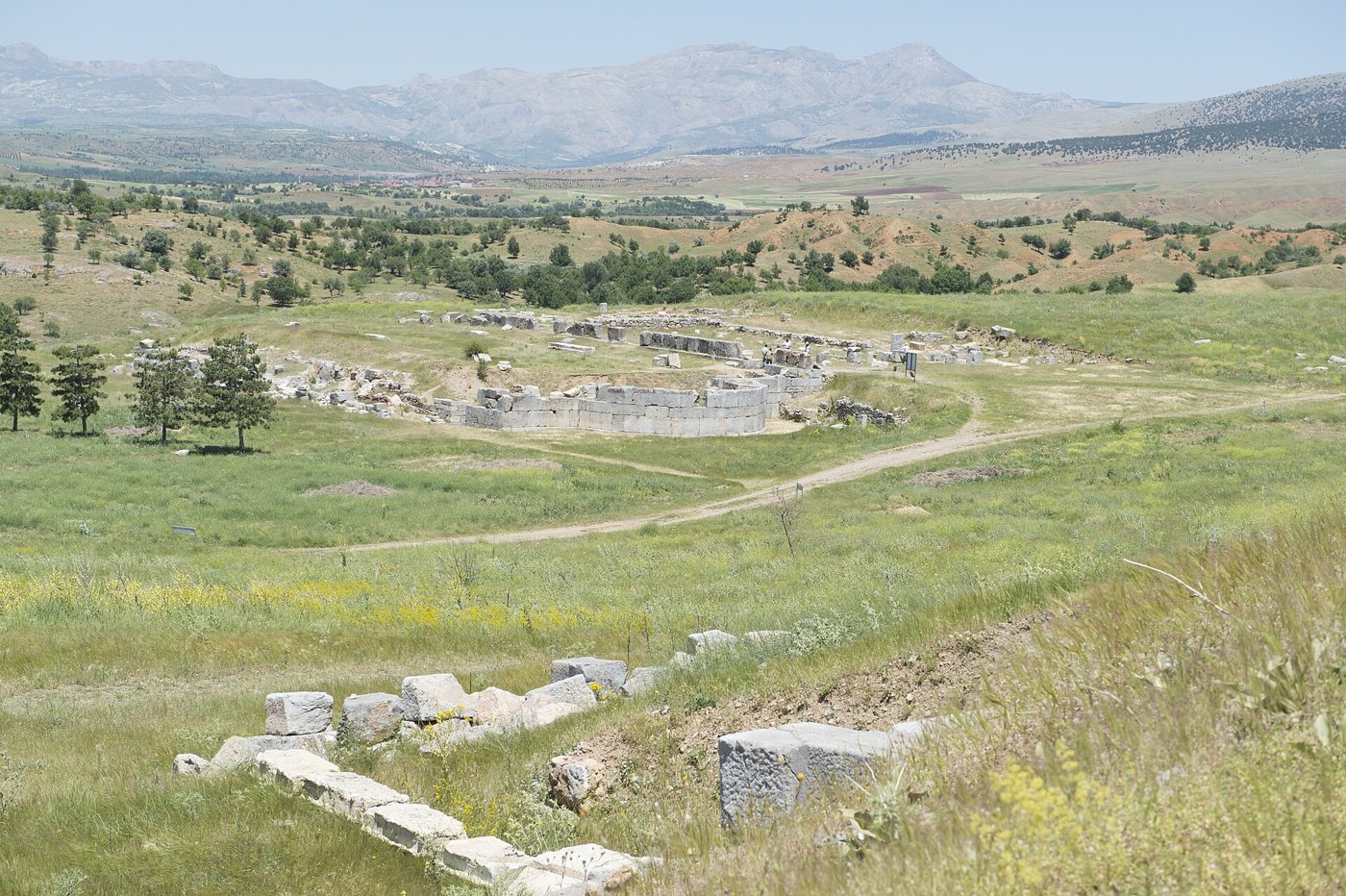 Roman city; church over an earlier synagogue
Pisidian Antioch — a Synagogue Beneath a Church
The synagogue where Paul preached on two successive Sabbaths
Acts 13:14–52 identifying inscriptions of the 2nd century ADDerbe — a Lost City Found by Inscription
The turning-point of Paul's first journey and home of his companion Gaius
Acts 14:20–21 · Acts 20:4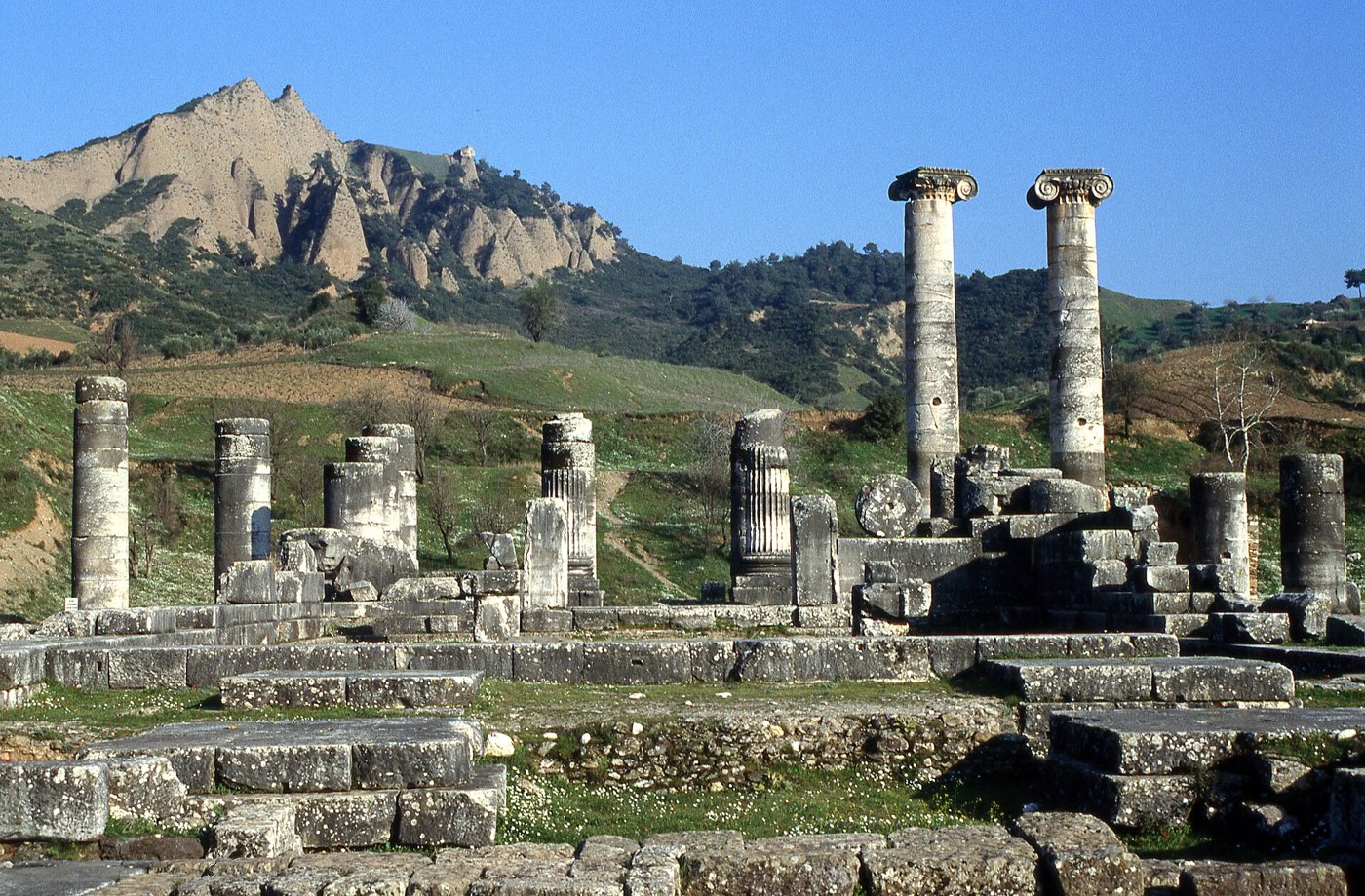 Roman period (the letters written late 1st century AD)
The Seven Churches of Revelation
The seven congregations addressed in John's Revelation
Revelation 1:11 · Revelation 2:1–3:22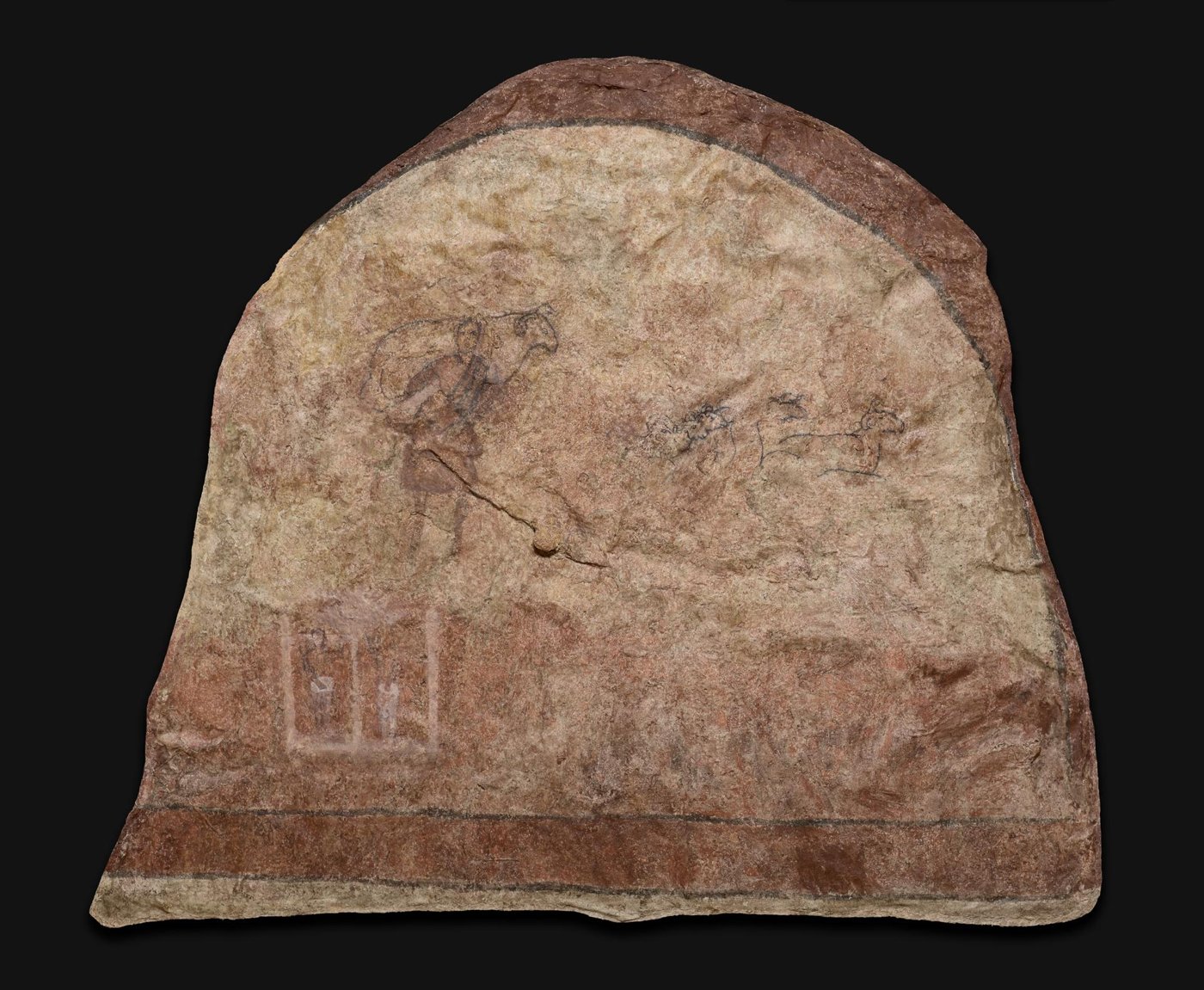 c. AD 233; the town fell c. 256
The Dura-Europos House Church
The material shape of Christian worship in the generations after the New Testament
Matthew 28:19 · Acts 2:42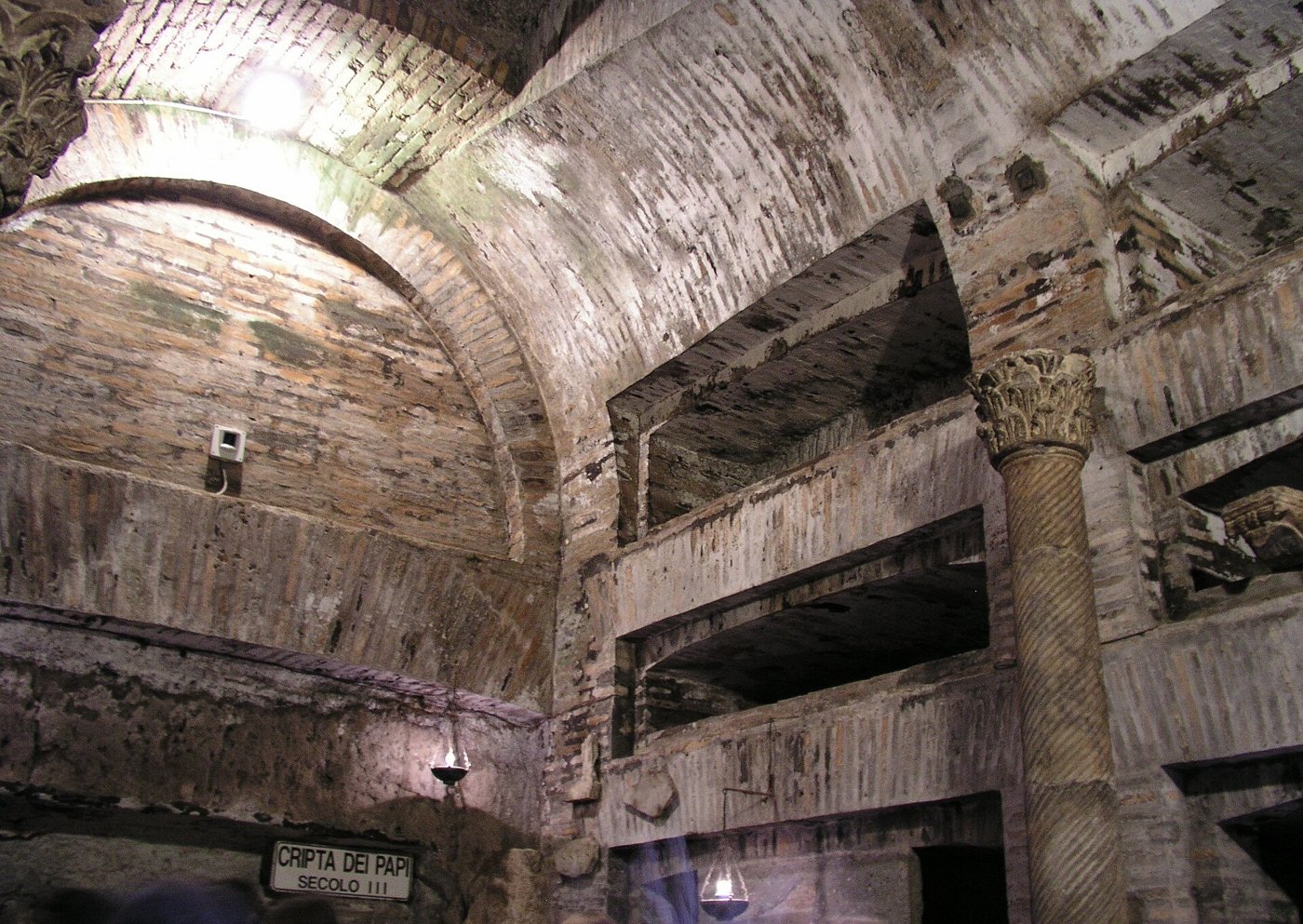 from the late 2nd century AD
The Catacombs of Rome
The early Roman church's practice of burial and its hope of resurrection
1 Corinthians 15:42–44 · 1 Thessalonians 4:13–14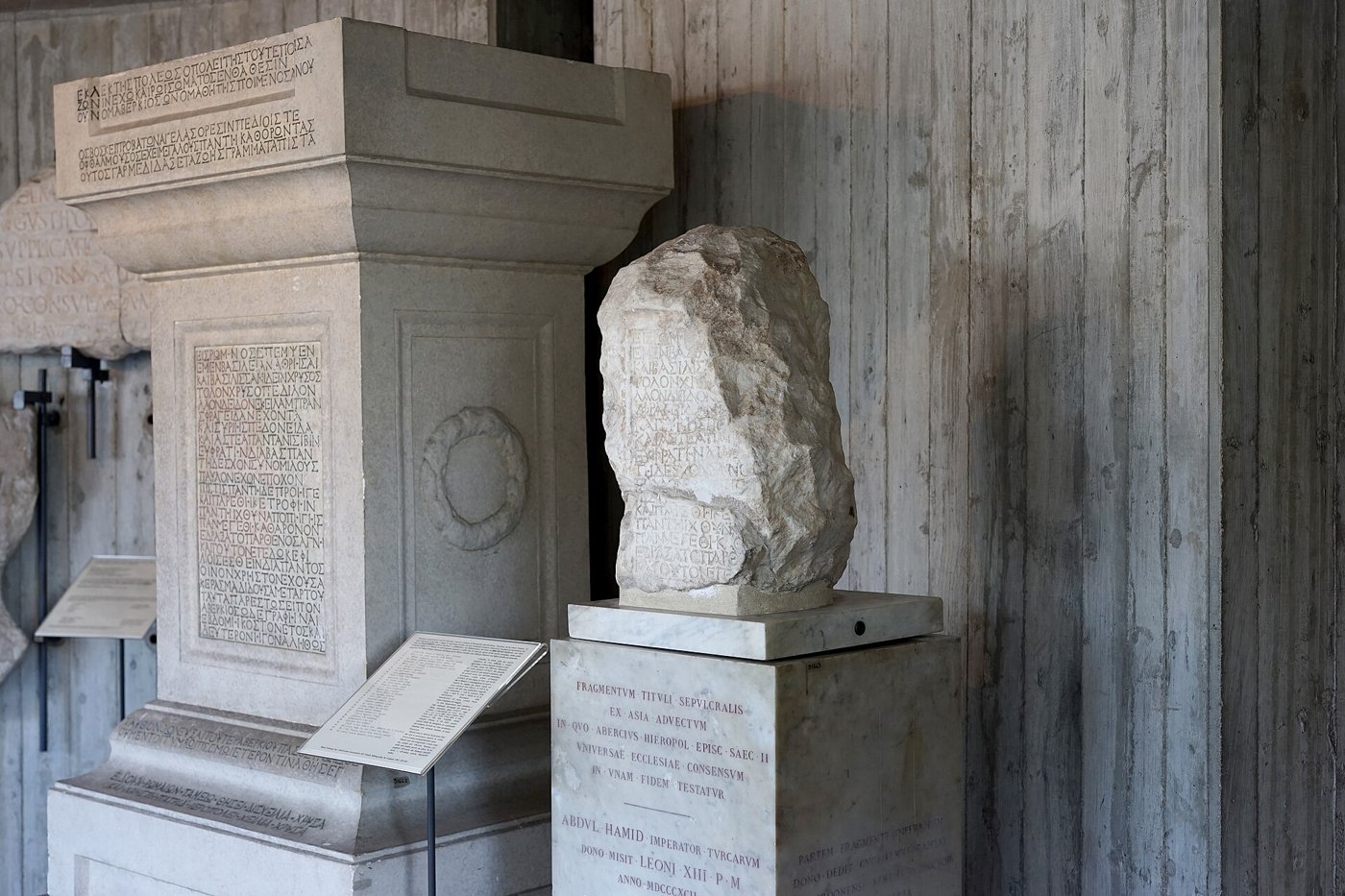 before AD 216
The Abercius Inscription
The self-understanding and networks of the early church in Asia Minor
Ephesians 4:5 · John 6:35Places you can stand today
 City of David ridge, Jerusalem
Jerusalem — the City of David
The oldest core of Jerusalem sits on a narrow ridge just south of the Temple Mount — the City of David. Excavations there have exposed a massive terraced 'Stepped Stone Structure' and an adjoining Iron-Age building, the Warren's Shaft water system, and Hezekiah's Tunnel, whose diggers left the Siloam Inscription describing the moment two teams met underground around 701 BC. Clusters of clay seal-impressions show a literate royal bureaucracy at work. It is, in stone, the fortified capital the Bible describes.
2 Samuel 5:6-9 · 2 Kings 20:20 Tel Megiddo, Jezreel Valley
Megiddo (Armageddon)
Tel Megiddo guards the pass into the Jezreel Valley, and its mound stacks up more than twenty superimposed cities. Archaeologists have uncovered a monumental six-chambered gate, rows of pillared buildings once called 'Solomon's stables,' and a deep rock-cut water system. The Bible lists Megiddo among Solomon's building projects, records King Josiah's death there, and lends its name to the last battle — 'Armageddon,' the hill (har) of Megiddo. The city is unmistakably real; the argument is about dates.
1 Kings 9:15 · 2 Kings 23:29-30 · Revelation 16:16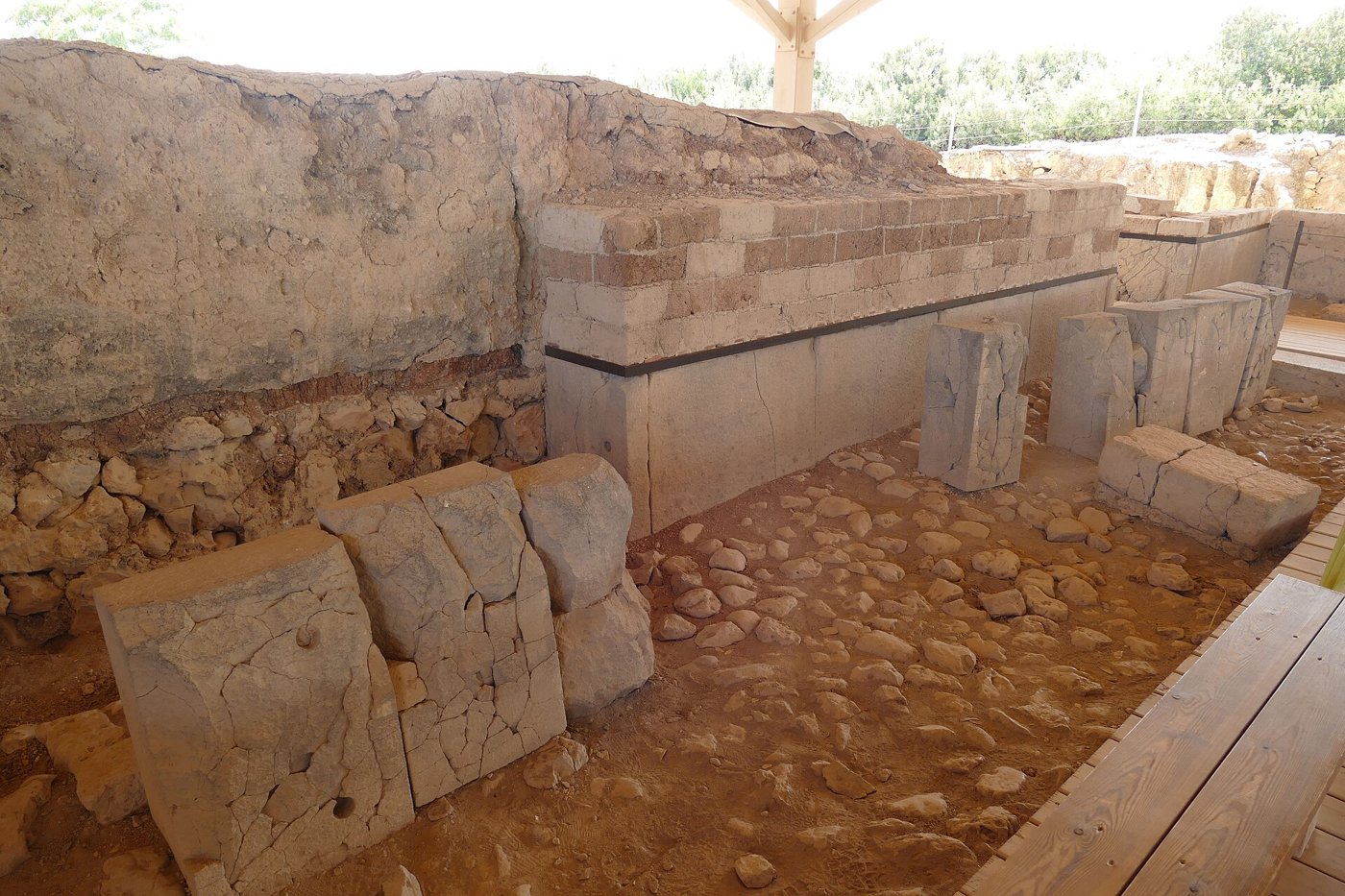 Tel Hazor, Upper Galilee
Hazor
Hazor was the giant of Canaan — an upper city and a vast lower city, which the Bible calls 'the head of all those kingdoms.' Excavators found that its Late Bronze city ended in a fierce fire in the thirteenth century BC, with Canaanite statues deliberately smashed and beheaded, and that a later Israelite six-chambered gate rose above the ruins. Joshua is said to have burned Hazor; the burning is certainly there. Who lit it is another matter.
Joshua 11:10-13 · 1 Kings 9:15 Tell es-Sultan, near modern Jericho
Jericho
Tell es-Sultan, ancient Jericho, is among the oldest walled towns on earth, with a stone tower from about 8000 BC. It also held a Bronze-Age city whose mudbrick walls collapsed and whose remains show a fiery destruction — strikingly like Joshua 6. But the date is the whole question. John Garstang put the fall around 1400 BC, matching a conquest; Kathleen Kenyon's careful re-excavation moved it to about 1550 BC and found the site largely deserted by 1400; Bryant Wood argued back for 1400, which most scholars reject. Mainstream archaeology follows Kenyon — which leaves no walled Jericho standing for Joshua to take.
Joshua 6 Kfar Nahum, Sea of Galilee
Capernaum
Capernaum, on the north shore of the Sea of Galilee, was Jesus's ministry headquarters. Its ruins include a gleaming white limestone synagogue of the fourth or fifth century built directly over the black basalt foundations of a first-century synagogue — very likely the one where he taught — and, nearby, an octagonal Byzantine church raised over a modest first-century house that Christians venerated from very early on, its plaster scratched with prayers. The village and its early Christian memory are solid history.
Matthew 4:13 · Mark 1:29-31 · Mark 2:1 Israeli coast, between Tel Aviv and Haifa
Caesarea Maritima
Herod the Great built Caesarea Maritima from nothing into a gleaming Roman port — an artificial harbor, a theater, a hippodrome and a long aqueduct, exactly as Josephus describes. In 1961, excavators of the theater turned up a reused limestone block dedicated by 'Pontius Pilatus, Prefect of Judaea': the only inscription anywhere that names Pilate. Caesarea is also where Paul was held and tried, and where Cornelius became the first Gentile convert.
Luke 3:1 · Acts 10 · Acts 23-26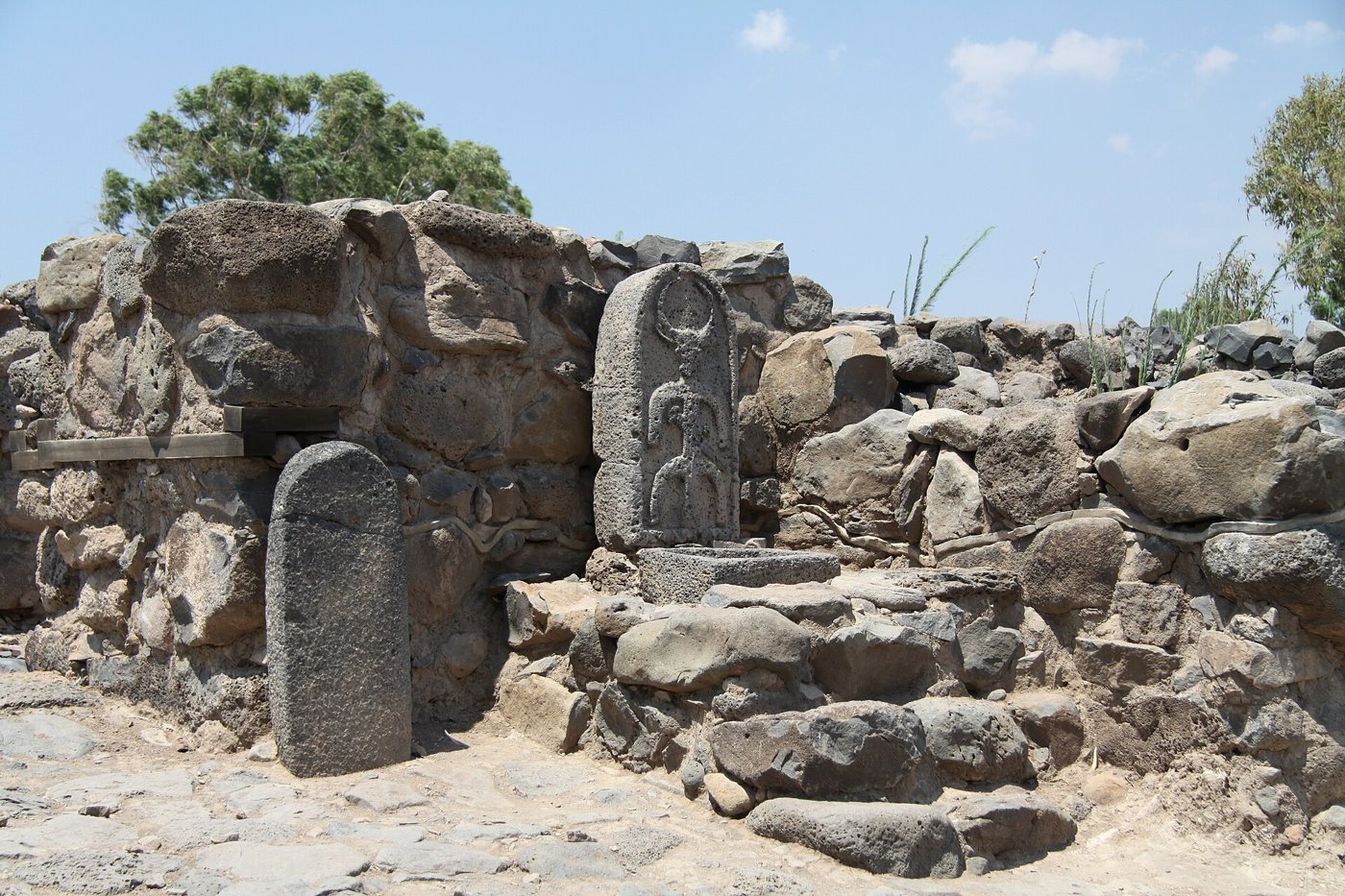 NE Sea of Galilee (et-Tell / el-Araj)
Bethsaida
Bethsaida was the hometown of Peter, Andrew and Philip — but no one is quite sure where it is. Two mounds compete. Et-Tell, dug for decades, has an Iron-Age gate and Roman remains, yet sits over a mile from the present shore. El-Araj, right at the water's edge, has yielded a Roman-era fishing village and a Byzantine church, and its backers argue it fits the Gospels better. Both hold genuine ancient remains; the identification is a live scholarly fight.
John 1:44 · Mark 8:22-26 Nazareth, Lower Galilee
Nazareth
Skeptics have sometimes claimed Nazareth did not exist in Jesus's day. The ground says otherwise. Beneath and around the town, archaeologists have found the remains of a small first-century farming village — rock-cut houses, storage pits, tombs, and agricultural terraces, reconstructed today at the Nazareth Village farm — together with the Church of the Annunciation, raised over dwellings venerated early. It was a modest place, easy to overlook ('Can anything good come from Nazareth?'), but it was certainly there.
Luke 2:39-40 · Matthew 2:23 · John 1:46 Upper Galilee, northern Israel (source of the Jordan)
Tel Dan
Tel Dan sits at the far north of ancient Israel, at one of the springs that feed the Jordan River. The Bible remembers it as the city the tribe of Dan seized and renamed, and later as the site where King Jeroboam set up one of his golden calves as a rival shrine to Jerusalem. Excavators have uncovered exactly the kind of place those texts describe: a large Iron Age cult platform with a horned altar and cultic paraphernalia, a monumental city gate with what may be a canopied seat for a ruler, and an even older Middle Bronze Age mud-brick arched gateway. But Dan is most famous for a broken basalt slab found near the outer gate in 1993 — the Tel Dan Stele — an Aramaic victory inscription, most likely by Hazael of Damascus, that contains the phrase 'BYTDWD,' read by the great majority of scholars as 'House of David.' It remains the earliest extrabiblical reference to David's dynasty.
Judges 18:29 · 1 Kings 12:28-30 Shephelah (Judean lowlands), southern Israel
Lachish (Tel Lachish)
Lachish was the second most important city of the kingdom of Judah after Jerusalem, guarding the lowland approaches from the coastal plain. In 701 BC the Assyrian king Sennacherib besieged and destroyed it — and this is one of the most fully documented events in all biblical archaeology. At the site itself archaeologists found the Assyrian siege ramp piled against the city wall (the oldest siege ramp known in the world), a matching counter-ramp, a burned destruction layer, and hundreds of arrowheads and human remains. Sennacherib was so proud of the victory that he lined a room of his Nineveh palace with carved reliefs depicting the assault in detail; those Lachish reliefs now sit in the British Museum. Decades later, on the eve of Babylon's final conquest of Judah, a Judean officer at Lachish left behind the 'Lachish Letters,' Hebrew ostraca that mention watching for the fire-signals of nearby towns.
2 Kings 18:13-17 · Jeremiah 34:7 Elah Valley, Judean Shephelah, near Beit Shemesh
Khirbet Qeiyafa
Khirbet Qeiyafa is a small, heavily fortified hilltop town overlooking the Elah Valley — the valley the Bible names as the setting of David and Goliath. Excavated from 2007, it has a massive casemate city wall of multi-ton stones, two gates, a pillared storehouse, hundreds of storage-jar handles, cult rooms with model shrines, and early alphabetic inscriptions including the Qeiyafa ostracon. Radiocarbon dates place its brief occupation around the late 11th to early 10th century BC — squarely in the era traditionally assigned to King David — and then it was abandoned. From here the honest picture splits. Lead excavator Yosef Garfinkel argues the site is a planned Judahite border fortress (he even proposes it is biblical Sha'arayim, 'Two Gates'), pointing to the absence of pig bones and of graven images. Others read the very same finds quite differently.
1 Samuel 17:1-2 · 1 Samuel 17:52 Central highlands, West Bank (biblical Ephraim)
Shiloh (Khirbet Seilun)
Shiloh sits on a low tell in the hill country north of Bethel, positively identified with Khirbet Seilun. Excavations since the 1920s — most influentially Israel Finkelstein's work in the 1980s — have exposed a substantial Iron Age I settlement (roughly the 12th–11th centuries BCE) with pillared public buildings, collared-rim storage jars, and animal-bone deposits that point to organized cultic activity. That makes Shiloh one of the best-attested early Israelite worship centers, matching the Bible's memory of it as the place where the tabernacle stood before the monarchy. The site appears to have been violently destroyed or abandoned around 1050 BCE, a date many link to the Philistine wars of 1 Samuel. Centuries later Jeremiah still invoked Shiloh's ruin as a warning to Jerusalem.
Joshua 18:1 · 1 Samuel 1:3 · Jeremiah 7:12 Northern Negev, southern Israel
Beersheba (Tel Be'er Sheva)
Tel Be'er Sheva is a small, meticulously planned Iron Age II town on the northern edge of the Negev, a UNESCO World Heritage site. Excavations revealed a fortified oval settlement with a ring road, a four-chamber gate, storehouses, a deep well, and an elaborate rock-cut water system — a textbook example of Judahite town planning. Its most famous find is a large four-horned altar built of dressed ashlar blocks: the stones were discovered reused as building material in a later storehouse wall, showing the altar had been deliberately dismantled, and it has been reconstructed on site and in the Israel Museum. The biblical Beersheba is tied to the patriarchs Abraham and Isaac and marked the traditional southern limit of the land, 'from Dan to Beersheba.' The reused altar stones fit a picture of a local sacrificial cult that was later suppressed.
Genesis 21:31 · Genesis 26:23-25 · Amos 5:5 Northern West Bank (biblical kingdom of Israel)
Samaria (Sebastia)
Samaria was the royal capital of the northern kingdom of Israel, founded by King Omri on a commanding hill and later the site of Herod's Roman city of Sebaste. On the acropolis, excavators uncovered a large ashlar-built royal palace complex, raised on bedrock and enclosed by a casemate wall — attributed to Omri and his son Ahab and among the finest Iron Age masonry in the region. From the ruins came the Samaria ivories, hundreds of finely carved ivory inlays of Phoenician style, and the Samaria ostraca, inscribed potsherds recording deliveries of wine and oil. The ivories are often connected to the 'house of ivory' the Bible ascribes to Ahab. Together they attest a wealthy, administratively organized Omride court exactly where scripture places it.
1 Kings 16:24 · 1 Kings 22:39 · Amos 6:4 Judean foothills (Shephelah), central Israel
Gezer (Tel Gezer)
Tel Gezer guards a strategic pass between the coastal plain and the hill country, and it is one of the most thoroughly excavated mounds in the region. Its Iron Age monumental six-chambered gate and casemate wall closely match similar gates at Megiddo and Hazor, and 1 Kings 9:15 lists all three as cities Solomon fortified. The site also yielded the tenth-century Gezer Calendar, one of the oldest known Hebrew inscriptions, and a set of boundary stones inscribed 'boundary of Gezer' that physically fix the ancient city's name. What the gate does not settle is its exact date: Yigael Yadin read it as Solomonic tenth-century work, while Israel Finkelstein's 'Low Chronology' reassigns it to the ninth-century Omride kingdom. Recent radiocarbon work has been used to argue for the earlier date, but the dispute is genuine and unresolved. The stones are real and important; the crown they belong to is still debated.
Joshua 10:33 · 1 Kings 9:15-17 · Judges 1:29 Negev desert, southern Israel
Arad (Tel Arad)
Tel Arad has two parts: a large Early Bronze Age lower city and, on the hill above it, a series of Iron Age Judean fortresses. The most striking find is a small temple built inside the fortress, laid out with a courtyard, a sacrificial altar, and an inner 'holy of holies' reached by steps, where two incense altars and standing stones (massebot) were found. This is the only Israelite sanctuary of its kind yet excavated, and its plan loosely echoes the biblical tabernacle. The fortress also produced the Arad ostraca, roughly a hundred inked potsherds in early Hebrew script recording military and supply orders, several of which name 'the house of YHWH.' Together the temple and the ostraca give rare physical evidence of Yahwistic worship and a functioning Judahite garrison outside Jerusalem. The Bible's Arad appears mainly as a Canaanite adversary in the wilderness accounts; the excavated Israelite fortress belongs to a later, well-attested period.
Numbers 21:1 · Numbers 33:40 · Joshua 12:14 Jordan Valley / Jezreel Valley junction, northern Israel
Beth Shean (Beit She'an)
Beth Shean is a towering multi-period tell with about six thousand years of settlement, sitting where the Jezreel and Jordan valleys meet. During Egypt's New Kingdom it served as an imperial administrative center, and excavators uncovered a governor's residence and temples with Egyptian inscriptions and reliefs that document Egypt's presence there. In the Bible, after Saul's defeat at nearby Mount Gilboa the Philistines fastened his body to the wall of Beth Shean (1 Samuel 31), one of the site's most memorable associations. At the foot of the mound lies a grand Roman and Byzantine city, Scythopolis, with a colonnaded main street, theater, and bathhouses among the best preserved in the country. The Egyptian governor's complex and the Greco-Roman city are solidly excavated and dated. The specific event of Saul's body on the wall, however, is a narrative the archaeology cannot confirm or deny.
1 Samuel 31:10-12 · Joshua 17:11 · Judges 1:27 Judaean Desert, northwestern shore of the Dead Sea (West Bank)
Qumran
Qumran is a ruined settlement on a marl plateau above the Dead Sea, excavated by Roland de Vaux across the 1950s. Its buildings, water channels, ritual baths, cemetery, and a room de Vaux called a 'scriptorium' sit beside the eleven nearby caves where, between 1946 and 1956, roughly 900 manuscripts — the Dead Sea Scrolls — were found. Those scrolls are the site's world-changing legacy: among them is a nearly complete copy of Isaiah about a thousand years older than any Hebrew Bible manuscript previously known. The settlement itself is solidly documented; what people did there is not settled. De Vaux read it as a monastic community of the Essenes who copied the scrolls, but other archaeologists have read the same walls very differently.
Isaiah 40:3 · Habakkuk 2:4 · Psalm 119 Judaean Desert, western shore of the Dead Sea, Israel
Masada
Masada is an isolated desert mesa rising above the Dead Sea, where Herod the Great built a fortified refuge — including a dramatic three-tiered 'hanging' palace on the northern cliff, storehouses, cisterns, and a bathhouse — in the decades before Jesus' birth. After the fall of Jerusalem in 70 CE, Jewish rebels (Sicarii) held the summit until the Romans besieged it around 73/74 CE, building an enormous assault ramp up the western slope. Yigael Yadin's 1963–65 excavations exposed Herod's palaces, the rebels' occupation, and the Roman siege works, which survive with rare clarity in the dry air. According to Josephus, the defenders chose mass suicide rather than capture — a haunting story that archaeology can only partly touch. The stones confirm a palace and a siege; the final night is known mostly from a single ancient author.
 Judaean Desert, about 12 km south of Jerusalem (West Bank)
Herodium (Herodion)
Herodium is a cone-shaped hill, partly artificial, crowned by a fortified palace that Herod the Great built for himself between roughly 23 and 15 BCE. Excavations have revealed a round upper fortress with towers, a luxurious lower palace with a large pool and gardens, bathhouses, and a small theater — a private royal complex Josephus says Herod also chose as his burial place. In 2007, after decades of searching, archaeologist Ehud Netzer announced he had found, on the northeastern slope, a mausoleum and fragments of ornate sarcophagi that he identified as Herod's tomb. The palace-fortress itself is thoroughly documented; the tomb identification is more debated. It stands as one of the most vivid physical traces of the Herod who ruled Judaea at the time the Gospels open.
Matthew 2:1 · Luke 1:5 Western shore, Sea of Galilee, Israel
Magdala (Migdal)
On the western shore of the Sea of Galilee lie the excavated remains of a first-century Jewish town — called Magdala in the Gospels, Migdal in Hebrew, and Taricheae by Greek and Roman writers. When ground was cleared for a guesthouse in 2009, archaeologists uncovered a small synagogue dating to the Second Temple period, one of only a handful of first-century synagogues ever found in the Galilee. At its center lay a carved basalt block, the 'Magdala Stone,' bearing one of the earliest known reliefs of the seven-branched menorah and imagery apparently modeled on the Jerusalem Temple that still stood when it was made. A market, ritual baths, and a paved street have also been exposed, and a second synagogue of the same era was reported in 2021. This is a real town of Jesus's world, preserved under centuries of landslide debris.
Matthew 15:39 · Luke 8:2 · Mark 16:9 Foot of Mount Hermon, Golan / Upper Galilee
Caesarea Philippi (Banias)
At the foot of Mount Hermon, where one of the main springs of the Jordan River gushes from a cliff, sit the ruins of the city the Gospels call Caesarea Philippi — known earlier as Paneas or Banias for its sanctuary to the Greek god Pan. A great rock face beside the spring is cut with niches that once held statues; three carry Greek inscriptions naming Pan and his companions. Excavations since 1967 have cleared the cave-shrine of Pan and the remains of a Herodian-era palace and Roman city, confirming a thriving pagan cult center rebuilt and renamed by Herod Philip. This was the setting for Peter's confession, 'You are the Messiah,' and Jesus's reply, 'on this rock I will build my church.' The city, the spring, and the shrine to Pan are all solidly attested in stone.
Matthew 16:13-18 · Mark 8:27-29 Bethlehem, West Bank
Bethlehem — Church of the Nativity
In the heart of Bethlehem stands one of the oldest churches in continuous use anywhere in Christianity, built over a limestone grotto long venerated as the place where Jesus was born. The emperor Constantine raised the first basilica here around 326-339, after his mother Helena's visit; when that structure was lost, Justinian rebuilt it in the sixth century, and its worn stone core survives today. What history can actually track is the veneration: as early as the mid-third century, Origen wrote that people were shown 'the cave' where Jesus was born, and the site was important enough that Hadrian reportedly planted a pagan shrine over it around 135. That unbroken chain of memory is real and documented. The birthplace itself, however, is a tradition honored across many centuries, not a fact archaeology can confirm.
Micah 5:2 · Matthew 2:1-11 · Luke 2:1-20 Lower Galilee, Israel (near Nazareth)
Sepphoris (Zippori)
Sepphoris — Zippori in Hebrew — was a major Galilean city just about six kilometers from Nazareth, close enough that a first-century laborer could have walked there and back in a day. Herod Antipas rebuilt it in the early first century as the 'Ornament of the Galilee,' and it became one of the most thoroughly excavated sites in Israel, yielding streets, a theater, and more than sixty richly detailed Roman-era mosaics. Among them is the delicate portrait of a woman nicknamed the 'Mona Lisa of the Galilee.' Because Jesus and Joseph are remembered as a tekton — a craftsman or builder — writers often note that they may have found work at this booming nearby city. That is a reasonable inference from geography and trade, not something any text or artifact records.
Matthew 13:55 · Mark 6:3 Nablus / biblical Shechem, West Bank
Jacob's Well (Bir Ya'qub)
At the foot of Mount Gerizim, a short walk from Tell Balata — the mound identified with biblical Shechem — sits a genuinely ancient, deep well cut through soil and rock to roughly forty meters. It is a real feature of the landscape, and its use reaches far back into antiquity. Christians have venerated it as the well of John 4, where Jesus asked a Samaritan woman for a drink, since at least the fourth century: Jerome mentions a cross-shaped church here by 384, later rebuilt under Justinian, again by the Crusaders in 1175, and finally as the Greek Orthodox church that shelters it today. The well's antiquity is beyond doubt. Its link to the patriarch Jacob, and to the specific Gospel encounter, rests on long tradition rather than on any inscription or text tying it to those events.
John 4:5-6 · John 4:12 · Genesis 33:18-19 Dhi Qar Province, southern Iraq
Ur (Tell el-Muqayyar)
Ur was one of the great cities of ancient Sumer, a walled metropolis on the lower Euphrates whose ruins still rise from the plain as the mud-brick Ziggurat of Ur, built by King Ur-Nammu around 2100 BC. Leonard Woolley's excavations in the 1920s and 1930s uncovered temples, houses, and the astonishing Royal Cemetery, with its gold, lyres, and evidence of mass burial. That Ur was a real, wealthy, deeply organized city is beyond dispute. The Bible names Ur as the home Abraham's family left on its way to Canaan, calling it 'Ur of the Chaldees.' It is a genuine place, richly documented in stone and clay — but whether this particular southern Ur was Abraham's birthplace is a separate and more contested question.
Genesis 11:28 · Genesis 11:31 · Genesis 15:7 · Nehemiah 9:7 Şanlıurfa Province, southeastern Turkey
Harran
Harran is an ancient city on the caravan routes of upper Mesopotamia, occupied for thousands of years and famous throughout antiquity for its great temple of the moon-god Sin. Assyrian records, later Roman history, and standing ruins — including the remains of one of the world's oldest university-mosque complexes and the region's distinctive conical mud-brick 'beehive' houses — attest to a real, long-lived settlement. The Bible places Abraham's family here: Terah settled in Harran and died there, and Abraham set out from Harran for Canaan. Generations later, Jacob fled to this same region, Paddan-Aram, to his relatives. The city itself is solidly historical; its role as the patriarchs' resting place is biblical tradition that fits the geography and trade world the texts describe.
Genesis 11:31 · Genesis 12:4 · Genesis 28:10 Muthanna Province, southern Iraq
Uruk (Warka)
Uruk, modern Warka, was among the world's first true cities — a vast walled center that at its height may have held tens of thousands of people, the setting of the Gilgamesh epic and a birthplace of writing itself, where some of the earliest cuneiform tablets were found. Rediscovered by William Loftus in 1849 and excavated on a huge scale by German expeditions from the early 1900s onward, its ruins include monumental temple platforms such as the Anu ziggurat and the remains of the White Temple. As a documented cornerstone of early civilization, Uruk needs no biblical footnote. Scripture mentions it only once, as 'Erech' in the Table of Nations' list of cities founded in Shinar. That single reference is the whole of the connection, and it should be stated plainly as such.
Genesis 10:10 Hillah, Babil Province, Iraq (Mesopotamia)
Babylon
Babylon stands on the Euphrates about 85 km south of Baghdad, and its ruins are real and vast — mud-brick walls, temple foundations, and the base of the great ziggurat Etemenanki still trace the city Nebuchadnezzar II rebuilt in the sixth century BC. Its most famous monument, the glazed-brick Ishtar Gate with its striding lions, dragons, and bulls, was excavated by Robert Koldewey's German team in the early 1900s; the surviving original bricks were reassembled into the reconstruction now standing in Berlin's Pergamon Museum. For the Bible this is the city of the Exile: Jerusalem's fall (2 Kings 25), the tears of Psalm 137, and the court of Daniel are all set here. Babylon is the empire that carried Judah away and, in prophecy, the archetype of a doomed worldly power. The physical remains confirm a metropolis whose scale and splendor match the biblical memory of it.
2 Kings 25:1-21 · Psalm 137:1 · Daniel 1-5 · Revelation 18 Opposite Mosul, Nineveh Province, Iraq (Mesopotamia)
Nineveh
Nineveh was the last great capital of the Assyrian Empire, its walled mounds — Kuyunjik and Nabi Yunus — lying across the Tigris from modern Mosul. Nineteenth-century excavations by Austen Henry Layard and Hormuzd Rassam uncovered Sennacherib's 'Palace Without Rival' and the library of Ashurbanipal, tens of thousands of cuneiform tablets that included the Flood account of the Epic of Gilgamesh. From the same palace came the Lachish reliefs, a carved narrative of Assyria's siege of a Judean city; these treasures are now in the British Museum. For the Bible, Nineveh is the city Jonah is sent to warn, the target of Nahum's oracle of doom, and the seat of Sennacherib, whose army pressed against Hezekiah's Jerusalem. Its excavated palaces and archives make it one of the best-documented cities of the ancient Near East.
Jonah 1:2 · Jonah 3 · Nahum 1-3 · 2 Kings 19:36 Shush, Khuzestan Province, Iran (ancient Elam / Persia)
Susa (Shushan)
Susa, the biblical Shushan, was an ancient Elamite city that became one of the royal capitals of the Achaemenid Persian Empire. On its raised platform Darius I built a great palace complex with a columned audience hall, the apadana, whose towering columns were crowned by paired-bull capitals — one of which now stands in the Louvre in Paris. French archaeological teams working at Susa from the 1880s also unearthed the famous Code of Hammurabi stele and the statue of Darius, carried off in antiquity from other cities and later recovered here. For the Bible, Susa is the stage of the book of Esther, the winter residence where Nehemiah served the Persian king (Nehemiah 1:1), and the setting of one of Daniel's visions (Daniel 8:2). The connection between text and place is direct and well attested.
Esther 1:2 · Nehemiah 1:1 · Daniel 8:2 · Ezra 4:9 Selçuk, İzmir Province, western Turkey (Aegean coast)
Ephesus
Ephesus is one of the best-preserved ancient cities anywhere, excavated since the 1860s and still worked by the Austrian Archaeological Institute. Its reconstructed Library of Celsus, its great theater seating roughly 25,000, and the marble streets and terraced houses give a vivid picture of a major Greco-Roman port and provincial capital. Nearby stood the Temple of Artemis, one of the Seven Wonders of the ancient world, of which only fragments and a single reassembled column now remain. The New Testament places the apostle Paul here for about three years, and Acts 19 sets a riot of Artemis silversmiths in this very theater; Ephesus is also the first of the seven churches addressed in Revelation. Archaeology confirms the city, its theater, and the Artemis cult that the biblical account presupposes.
Acts 19 · 1 Corinthians 15:32 · Ephesians 1:1 · Revelation 2:1-7 İzmir, western Turkey (Aegean coast)
Smyrna (Izmir)
Smyrna is modern İzmir, a large Turkish city that has been continuously inhabited for millennia — which means the ancient city lies mostly buried beneath a living metropolis rather than exposed like Ephesus. The main excavated remnant is the Roman agora at the foot of Pagos Hill, a marketplace and civic center rebuilt under Marcus Aurelius after a destructive earthquake in 178 AD, with its columned basilica, arches, and vaulted lower level still standing. Inscriptions found there even record cities across the empire sending earthquake relief. In Revelation 2:8-11 Smyrna is the church told to 'be faithful unto death,' and Christian tradition remembers the later martyrdom of its bishop Polycarp. Archaeology confirms that ancient Smyrna was a real, prosperous seaport whose civic core can still be visited.
Revelation 2:8-11 Bergama, İzmir Province, western Turkey
Pergamon (Bergama)
Pergamon crowns a steep andesite mesa above the modern town of Bergama, its acropolis terraced up more than 300 meters of hillside. Its most dramatic monument is the theater — one of the steepest in the world, cut into the slope with 78 rows for roughly 10,000 spectators. Here too stood the Great Altar, commonly associated with Zeus and Athena and famous for its Gigantomachy frieze; excavated in the 1880s, it was carried off and reconstructed in Berlin's Pergamon Museum. The city also held the Asclepieion healing sanctuary, where the physician Galen worked, and was an early center of the Roman imperial cult. Revelation 2:12-17 addresses the church at Pergamon as living 'where Satan's throne is' — a phrase interpreters have variously linked to the towering Zeus altar or to the imperial cult. Archaeology richly confirms the altar, the theater, and the imperial cult.
Revelation 2:12-17 Manisa Province, western Türkiye
Thyatira (Akhisar)
Thyatira was a Greco-Roman city on the Lydia–Mysia border, now buried beneath the modern town of Akhisar. It was known in antiquity for its trade guilds, especially dyers and a purple-cloth trade — the same craft as Lydia, the God-fearing 'seller of purple' from Thyatira whom Paul met at Philippi in Acts 16. In Revelation it is one of the seven churches addressed by John, receiving both praise and a sharp rebuke. What survives today is modest: a partly excavated archaeological park in the middle of Akhisar with a colonnaded street and a large apsidal building often called a basilica, alongside the town's museum. Excavations began under Turkish archaeologists in the 1960s and resumed in 2011, but only a small fraction of the ancient city is exposed. The site is genuine, but visitors should keep expectations modest — the ruins are sparse and hemmed in by the modern town.
Revelation 2:18-29 · Acts 16:14 Manisa Province, western Türkiye
Sardis (Sart)
Sardis was the capital of ancient Lydia and the city of King Croesus, legendary for its wealth and among the first places to mint coined money. It is one of the most richly excavated sites of Asia Minor: the enormous, unfinished Temple of Artemis still stands with towering columns, and a Roman bath-gymnasium complex has been substantially reconstructed. Its most celebrated find is the synagogue — discovered by chance in 1962 during Harvard-Cornell excavations — one of the largest and best-preserved ancient synagogues ever found, over 90 meters long with mosaic floors and dozens of Greek inscriptions. In Revelation, Sardis is the church warned that it has 'a name that it is alive, but it is dead.' The archaeology here is genuinely magnificent and abundant. But the standing monuments are civic and religious buildings of the pagan and Jewish city; the Revelation letter itself speaks to a Christian congregation, not to any building that has been dug up.
Revelation 3:1-6 Manisa Province, western Türkiye
Philadelphia (Alaşehir)
Philadelphia was a Hellenistic-founded city on a major road through Lydia, an earthquake-prone region whose people repeatedly rebuilt after the ground shook. It survives today as the modern town of Alaşehir, and little of the ancient city is visible. In Revelation it is one of only two of the seven churches to receive praise and no rebuke, promised an 'open door' and told that the faithful will be made 'a pillar in the temple of my God.' Fittingly, the most conspicuous ruin is a set of massive brick-and-stone pillars — three surviving supports of a Byzantine basilica traditionally called the Church of St. John, built centuries after the New Testament in the late 6th or early 7th century. The ancient city is well attested in history, but on the ground it is sparsely visible: mostly these towering pillars rather than an extensive excavated cityscape.
Revelation 3:7-13 Lycus Valley, near Denizli, Turkey
Laodicea on the Lycus
Laodicea was a wealthy Roman city in the Lycus Valley of Phrygia, and it is the last of the seven churches addressed in Revelation, famously rebuked as 'lukewarm... neither hot nor cold.' Decades of excavation, led in recent years by Celal Şimşek, have uncovered a remarkably complete city: two theaters, a large stadium, monumental colonnaded avenues, agoras, bath complexes, temples, and several early churches. Archaeologists have also traced its water infrastructure, including an aqueduct and a pressurized siphon system that piped water into the city. A common devotional reading ties the 'lukewarm' image to tepid piped water, imagined as arriving between the hot springs of nearby Hierapolis and colder sources elsewhere. The ruins and the water system are unmistakably real and well documented. The specific hot-cold-lukewarm water explanation, however, is an interpretation rather than an established fact.
Revelation 3:14-22 · Colossians 4:16 Dodecanese, Aegean Sea, Greece
Patmos and the Cave of the Apocalypse
Patmos is a small, rocky island in the Aegean where, according to Revelation 1:9, John was 'on the island called Patmos because of the word of God' and received the visions recorded in the book. The island itself is real, and Roman-era relegation (exile) to Aegean islands is a documented historical practice, making a first-century exile there entirely plausible. On the slope between the harbor and the hilltop town of Chora, the 'Cave of the Apocalypse' is venerated as the very spot where John received his vision. Crowning the island is the fortress-like Monastery of Saint John the Theologian, founded in 1088, whose library preserves manuscripts going back centuries. Together the cave, monastery, and historic town form a UNESCO World Heritage Site. The island and the possibility of exile are historically credible; the identification of one specific cave rests on later Byzantine and medieval tradition rather than physical evidence.
Revelation 1:9 Athens, Attica, Greece
The Areopagus in Athens
Athens is where Acts 17 places Paul's address to the philosophers, prompted by an altar he saw inscribed 'to an unknown god.' The city of that era is superbly documented: the Acropolis with the Parthenon, the sprawling Agora where Paul is said to have debated daily, and the Areopagus, a bare rock outcrop just below the Acropolis. The name Areopagus ('Hill of Ares,' rendered 'Mars Hill' in older translations) belonged both to the rock and to the venerable Athenian council that met in connection with it. Ancient Athens was indeed saturated with shrines, statues, and altars to many gods, and altars to unnamed or 'unknown' deities are attested in Greek religious practice. The city, its dense religious landscape, and the Areopagus are all genuine and well attested. Paul's speech itself is Acts' narrative, set convincingly against that real backdrop.
Acts 17:16-34 Peloponnese, Greece
Ancient Corinth
Corinth was a wealthy Roman colonial city on the isthmus linking mainland Greece to the Peloponnese, and Acts 18 says Paul stayed here about eighteen months, working as a tentmaker and founding the church he later wrote 1 and 2 Corinthians to. The site has been excavated since 1896 (chiefly by the American School), exposing the sixth-century-BC Temple of Apollo with its surviving Doric columns, the sprawling forum, and the bema, a raised public platform later marked as a church of the Apostle Paul. Two inscriptions give Corinth unusual evidential weight. The Gallio Inscription from Delphi names Lucius Junius Gallio as proconsul of Achaia and, by tying his term to Emperor Claudius's reign, fixes it to roughly AD 51-52, which anchors Paul's trial before Gallio (Acts 18:12) and with it much of Pauline chronology. A separate Latin paving inscription found near the theater names an Erastus who funded work in return for his aedileship, which some connect to Erastus the city treasurer in Romans 16:23.
Acts 18:1-18 · 1 Corinthians 1:1-2 · Romans 16:23 Eastern Macedonia, Greece
Philippi
Philippi was a Roman colony astride the Via Egnatia in eastern Macedonia, and Acts 16 records it as the setting of Paul's first recorded preaching in Europe, including the conversion of Lydia the cloth-dealer and the jailer, and it is the community Paul addresses in his letter to the Philippians. Excavations by the French School (from 1914) and later Greek archaeologists have uncovered the terraced Roman forum built between the reigns of Claudius and Antoninus Pius, an enlarged theater, and several grand early-Christian basilicas, one of whose mosaic floors names Paul. The archaeological site was inscribed as a UNESCO World Heritage Site in 2016 for its Roman architecture and early-Christian importance. Visitors are also shown a crypt venerated as the place of Paul's imprisonment and a riverside spot commemorated as where Lydia was baptized. The Roman colony and its public buildings are solidly attested by excavation; the specific devotional sites rest on later tradition rather than proof.
Acts 16:11-40 · Philippians 1:1 Central Macedonia, Greece
Thessalonica
Thessalonica, the modern city of Thessaloniki, was a major Roman port on the Via Egnatia and the capital of the province of Macedonia, and Acts 17 describes Paul preaching in its synagogue before a riot forced him out; it received two of his letters, 1 and 2 Thessalonians. Because a large living city has grown continuously on the ancient site, the classical remains are only partly exposed, but the Roman-era forum (ancient agora), the fourth-century Rotunda built under Galerius, and the nearby Arch of Galerius still survive above ground. A notable accuracy point concerns terminology: Acts 17:6 calls the city's magistrates 'politarchs,' a title once thought unattested and even doubted by some critics. Inscriptions from Thessalonica and Macedonia, however, have since documented that 'politarch' was a genuine local civic title, matching Luke's usage precisely. The ancient city is unquestionably real; much of it simply lies beneath the modern one.
Acts 17:1-9 · 1 Thessalonians 1:1 · 2 Thessalonians 1:1 Central Macedonia, Greece
Berea (Veria)
Berea is modern Veria, a living city in northern Greece continuously inhabited since antiquity. In Acts 17 Paul, Silas and Timothy came here by night after leaving Thessalonica, and Luke praises the Bereans as 'noble' or fair-minded because they 'examined the Scriptures daily' to test what Paul taught. The city is genuinely ancient — settlement traces reach back roughly three thousand years — but because the modern town sits directly on top of it, very little of the classical and Roman town has been excavated or exposed. In the city today there is a commemorative monument known as the Bema of the Apostle Paul, decorated with mosaics and marking where tradition says he preached. It is worth being plain: that monument is a modern devotional shrine built by the Greek Orthodox Church, not an excavated first-century site, and the exact location of the synagogue Paul visited is not archaeologically known. What is well founded is simply that Berea was a real Macedonian city and a documented stop on Paul's journey.
Acts 17:10-12 · Acts 20:4 Italy
Italy
Rome
Rome was the capital of the empire and the destination of Paul's final recorded journey: Acts 28 describes him arriving as a prisoner and spending two years under guard, preaching freely in his own rented lodging. Christian tradition holds that both Paul and Peter were martyred in Rome, and the city preserves an extraordinary wealth of documented first-century remains — the Forum, the streets and monuments Paul would have known, and later the catacombs used by the early Christian community. Two sites carry strong tradition but weaker proof. The Mamertine Prison is venerated as the place Peter and Paul were held, though there is no evidence either apostle was actually imprisoned there. Beneath St. Peter's Basilica, the 1940s Vatican excavations uncovered a genuine Roman necropolis and a small second-century shrine with graffiti, which the Church has identified as the tomb of Peter. That Rome had a real, early Christian presence is richly attested; the specific identification of Peter's bones and the Mamertine imprisonment remain traditions supported by early testimony rather than settled fact.
Acts 28:14-31 · Romans 1:7 · 2 Timothy 1:16-17 Malta (central Mediterranean)
Malta
Acts 28 recounts how Paul, being taken to Rome as a prisoner, was shipwrecked on an island the text names Melita, where the islanders showed the survivors unusual kindness and Paul healed the sick during a three-month stay. Malta is the island most widely accepted as that Melita, and the tradition is woven deeply into the nation's identity, celebrated each year in the Feast of St. Paul's Shipwreck. The area around St. Paul's Bay, together with the small St. Paul's Islands offshore, is the place local tradition marks as the landfall, and beneath Rabat lies St. Paul's Grotto, venerated as where the apostle lodged and preached. Honesty requires distinguishing the account from the sites: the shipwreck narrative is in Acts and Malta's identification is reasonable and long-standing, but the exact bay, the specific islands, and the grotto are traditional commemorations, not points fixed by archaeology. The oldest hard evidence of Christianity on the island — the Roman-era catacombs near Rabat — dates to centuries after Paul and attests an early community rather than the shipwreck itself.
Acts 28:1-10 West Bank, near Deir Dibwan (approx. 3 km east of Bethel)
Ai (et-Tell)
Joshua 7-8 describes Israel destroying Ai in a fortified assault after an initial defeat. The site traditionally identified as Ai, et-Tell, was excavated by Judith Marquet-Krause in the 1930s and by Joseph Callaway in the 1960s. Both concluded that the mound, though a large fortified town in the Early Bronze Age, lay abandoned for roughly a thousand years and was unoccupied during the Late Bronze Age, the period usually associated with a conquest. Fittingly, the Hebrew name 'Ai' itself means 'the ruin' or 'the heap.' This is one of the best-known archaeological problems for reading the conquest narratives as literal history. A minority of scholars (notably Bryant Wood and Associates for Biblical Research) argue for an alternative site, Khirbet el-Maqatir, but that identification is not accepted by mainstream archaeology.
Joshua 7:2-5 · Joshua 8:1-29 Jordan Valley, Jordan (northeast of the Dead Sea)
Sodom (the Tall el-Hammam claim)
Genesis describes Sodom as a city of the Jordan plain destroyed by fire from the sky. Archaeologist Steven Collins argues that Tall el-Hammam, a large Bronze Age site in the Jordan Valley, is Sodom, and a 2021 paper in Scientific Reports claimed the city was leveled around 1650 BC by a Tunguska-scale cosmic airburst. Both claims are heavily contested. Most biblical archaeologists reject the identification of Tall el-Hammam with Sodom, in part because its location and dating fit poorly with the biblical geography and timeframe. The airburst paper drew sustained methodological criticism over its imagery and its geochemical evidence, and Scientific Reports formally retracted it in April 2025. What is not in dispute is that Tall el-Hammam is a genuine, sizeable Middle Bronze Age city that suffered destruction and a long occupation gap.
Genesis 19:24-25 · Genesis 13:10-12 Southern coast of Lebanon
Tyre
Tyre was a great Phoenician maritime city, famed for seafaring and for founding colonies such as Carthage and Cadiz. Its original core was an offshore island fortress. In 332 BC Alexander the Great besieged it and built a causeway out to the island; over the centuries silt built up around that mole, turning it into the isthmus that joins Tyre to the mainland today. The city is a UNESCO World Heritage Site, with substantial Roman and Byzantine remains including the Al-Bass necropolis, a colonnaded avenue, a triumphal arch, an aqueduct, and one of the largest surviving Roman hippodromes. Ezekiel 26-28 pronounces judgment oracles against Tyre. The city, Alexander's siege and causeway, and the surviving ruins are all well attested historically and archaeologically.
Ezekiel 26:1-14 · Ezekiel 27-28 Saida, South Governorate, Lebanon
Sidon
Sidon (modern Saida) was one of the great Phoenician city-states, settled continuously from the Early Bronze Age and famed in antiquity for its purple dye and glassmaking. Excavations have traced an unbroken occupation sequence and, just north of the city, the Temple of Eshmun — a sanctuary to the Phoenician god of healing begun in the 7th century BC — still stands as excavated stone. On the seafront, the Crusader Sea Castle (built c. 1228) marks the medieval Lordship of Sidon. Scripture names Sidon as an ancient Canaanite center marking a boundary of Canaan (Genesis 10:19) and records that Jesus travelled into the region of Tyre and Sidon (Mark 7:24-31). The city, its long history, and its sanctuaries are firmly attested by archaeology; the Gospel journey is the New Testament's own account.
Genesis 10:19 · Mark 7:24-31 · Matthew 15:21 Sea of Galilee (western shore), Israel
Tiberias
Tiberias was founded around 20 AD by Herod Antipas on the western shore of the Sea of Galilee and named in honor of the Roman emperor Tiberius. Excavations have uncovered a large Roman theater that seated thousands, a monumental city gate, and — at nearby Hammat Tiberias — a Late Antique synagogue whose floor bears a famous zodiac mosaic centered on the sun figure Helios. After the fall of Jerusalem the city became a leading center of Judaism: the Sanhedrin relocated here, the Jerusalem Talmud was compiled by its schools, and the Masoretes later fixed the vowel-pointing of the Hebrew Bible in Tiberias. The Gospels mention the city in passing, noting boats that came from Tiberias (John 6:23) and calling the lake the 'Sea of Tiberias' (John 21:1). The Roman foundation and its later Jewish scholarship are richly documented in stone and text.
John 6:23 · John 21:1 Amman, Jordan
Rabbath-Ammon (Amman Citadel)
The Amman Citadel (Jabal al-Qal'a) crowns a hill at the heart of modern Amman and was Rabbath-Ammon, the royal capital of the ancient Ammonites. Excavations have found the hill fortified from the Bronze Age and yielded the Amman Citadel Inscription, the oldest known text in the Ammonite language. Later monuments still stand on the summit: the Roman Temple of Hercules with its towering columns, a Byzantine church, and an Umayyad palace complex. In Scripture, Rabbah of the Ammonites is the city besieged by David's army, before whose walls Uriah the Hittite was sent to die (2 Samuel 11-12), and it is denounced by the prophets (Amos 1:14; Ezekiel 25:5). The Ammonite capital and its long, layered occupation are securely attested by archaeology; the David-and-Uriah episode is the biblical narrative.
2 Samuel 11-12 · Amos 1:14 · Ezekiel 25:5 Eastern Nile Delta, Egypt (modern Qantir)
Rameses (Pi-Ramesses / Qantir)
Exodus 1:11 says the enslaved Israelites built the store-cities of Pithom and Raamses for Pharaoh. The great delta capital named for Ramesses II — Pi-Ramesses — was located by Manfred Bietak and others in the 1960s at Qantir, not at Tanis where its reused stones were long assumed to originate. Excavations have uncovered palace foundations, colossal Ramesses II statuary, workshops, stables, and a planned mansion district covering roughly 18 square kilometers, confirming a vast Nineteenth-Dynasty royal city. When the Nile branch beside it silted up, later pharaohs dismantled its temples, obelisks, and statues and hauled them to Tanis, which is why Tanis was long mistaken for it. The city itself is real, excavated, and well attested. But the archaeology shows a Ramesside capital, not a workforce of enslaved Israelites, and the date and historicity of the Exodus remain heavily debated among scholars.
Exodus 1:11 · Exodus 12:37 · Genesis 47:11 Wadi Tumilat, eastern Nile Delta, Egypt
Pithom
Pithom is the other store-city that Exodus 1:11 names alongside Raamses as built by the enslaved Israelites. The name likely renders the Egyptian 'Per-Atum' — the House (or Temple) of the god Atum — pointing to a genuine delta location in the Wadi Tumilat. Two mounds compete for the identification: Tell el-Retaba and Tell el-Maskhuta, which lie only about 18 kilometers apart along the same valley. Excavations complicate matters: Tell el-Maskhuta shows a long occupation gap before a re-founding near the end of the seventh century BC, and scholars such as John Van Seters have argued Tell el-Retaba was unoccupied when 'Pithom' monuments appear — leading some to propose the temple and its name simply migrated between the two sites over time. Real Ramesside remains and Atum-temple inscriptions exist in the region. But which mound was 'Pithom,' and how its occupation lines up with any Exodus chronology, remains genuinely unresolved.
Exodus 1:11 Near Mit Rahina, ~20 km south of Cairo, Egypt
Memphis (Noph / Moph)
Memphis was one of the great capitals of ancient Egypt, founded near the apex of the Nile Delta and known to the Egyptians first as Ineb-hedj, 'the White Walls.' The Hebrew prophets knew it as Noph or Moph and named it in oracles against Egypt — Isaiah, Jeremiah, Ezekiel, and Hosea all invoke it as a real center of Egyptian power. Its ruins survive today around the village of Mit Rahina as an open-air museum, including the precinct of the great temple of Ptah, a colossal fallen limestone statue of Ramesses II, and an Eighteenth-Dynasty alabaster sphinx still resting near its original spot. Stretching west along the desert edge is the vast Memphite necropolis at Saqqara, home to Djoser's Step Pyramid and the Serapeum where the sacred Apis bulls were buried. Memphis and its necropolis were named a UNESCO World Heritage Site in 1979. Here the biblical text and the archaeology sit comfortably together: the prophets speak of a real, richly documented city.
Isaiah 19:13 · Jeremiah 46:19 · Ezekiel 30:13 · Hosea 9:6 Upper Egypt (modern Luxor), on the Nile
Thebes (No-Amon)
Thebes was the great capital of Upper Egypt and, at the height of the New Kingdom (roughly 1550–1070 BC), the religious and political heart of the whole country. The Hebrew prophets knew it as No or No-Amon, meaning 'the City of Amun,' after the god whose colossal temple at Karnak grew over two thousand years into one of the largest religious complexes ever built. Across the river lie the Luxor Temple, the Valley of the Kings, and the mortuary temples of the pharaohs — among the best-preserved monuments of the ancient world. In 663 BC the Assyrian king Ashurbanipal captured and plundered the city, an event so famous that Nahum threw it in Nineveh's face: if mighty No-Amon could fall, so could Assyria's own capital. The biblical references are oracles about a real, richly documented city whose ruins still stand today.
Nahum 3:8 · Jeremiah 46:25 · Ezekiel 30:14-16 Sinai Peninsula, Egypt (traditional site: Jebel Musa)
Mount Sinai
Mount Sinai is the mountain where, in Exodus 19–20, Moses is said to have received the Law amid thunder, smoke, and fire. The catch is that no one actually knows which peak it was. The oldest and best-known candidate is Jebel Musa ('the Mountain of Moses'), a 2,285-meter granite summit in the southern Sinai Peninsula, at whose foot stands Saint Catherine's Monastery — a Greek Orthodox community founded in the 6th century, home to a celebrated library and the traditional site of the burning bush. That tradition has been venerated continuously for about 1,500 years, and the monastery is a genuine, UNESCO-listed ancient landmark. But other locations have serious proponents too, including Jebel al-Lawz in northwestern Arabia and Har Karkom in the Negev, and scholars remain divided. The plain fact is that there is no archaeological evidence tying any particular mountain to the biblical event.
Exodus 19:1-25 · Exodus 20:1-21 Vatican City / Rome, Italy
Tomb of St Peter (Vatican Necropolis, Rome)
Beneath the high altar of St Peter's Basilica lies a genuine 1st-century Roman necropolis, uncovered in excavations from 1940 to 1949. Directly under Bernini's baldacchino, archaeologists found a modest 2nd-century shrine, the Tropaion or Aedicula, built around AD 160 against a 'Red Wall' over an earlier grave that early Christians clearly venerated. That much is solid archaeology: a burial that Roman-era Christians treated as Peter's, marked by a monument the ancient writer Gaius may already have described around AD 200. In 1968 Pope Paul VI announced that bones recovered from a niche in the adjacent 'graffiti wall' had been identified as Peter's, following study by Margherita Guarducci. But that identification rests on disputed reconstruction and cannot be scientifically proven. What is documented is the necropolis and the early shrine over a venerated grave; the specific bones remain an act of faith, not a demonstrated fact.
John 21:18-19 · Matthew 16:18 · 2 Peter 1:14 Rome, Italy
Tomb of St Paul (San Paolo fuori le Mura, Rome)
Beneath the papal altar of the Basilica of Saint Paul Outside the Walls stands a stone sarcophagus, hidden by later masonry until an excavation between 2002 and 2006 partly reopened it. Above it lies a 4th-century marble slab inscribed PAULO APOSTOLO MART — 'to Paul, apostle and martyr' — marking a grave venerated on this Ostian Way site since antiquity, over which Constantine built the first altar. In 2006-2009 a small probe drew out bone fragments, and in 2009 Pope Benedict XVI announced that radiocarbon dating placed them in the 1st or 2nd century. Grains of incense, purple and blue linen, and a gold-laminated cloth were also recovered. The dating is consistent with a burial from Paul's era, which is a striking result. But consistency is not proof: the tests confirm an ancient burial under a long-venerated shrine, not that the man in the sarcophagus is Paul.
2 Timothy 4:6-7 · Acts 28:16 · Romans 15:24-28 Selçuk (Ephesus), Türkiye
Tomb of St John (Basilica of St John, Ephesus)
On Ayasuluk Hill above ancient Ephesus, Emperor Justinian raised a vast domed basilica in the 6th century over a site long revered as the burial place of the apostle John. The archaeology of the church itself is rich and well documented: its ruined foundations, marble-clad walls, and the tomb platform beneath the former central dome still stand near Selçuk. But the tomb is essentially an empty venerated site, not an authenticated grave. Even ancient tradition was uneasy about it: some early accounts held that John had not truly died, and pilgrims spoke of a fine dust or 'manna' rising from the tomb that was believed to heal. No remains have ever been recovered to confirm the apostle rests here. What history secures is centuries of devotion and a magnificent basilica; who, if anyone, lies beneath remains a matter of tradition alone.
John 21:22-24 · Revelation 1:9 · John 19:26-27 Hierapolis (Pamukkale), Denizli Province, Turkey
Tomb & Martyrium of St Philip (Hierapolis)
On a hill above the ruins of Hierapolis, near the white travertine terraces of Pamukkale, stands a large octagonal building known since antiquity as the Martyrium of St Philip, built in the 5th century as the focus of a pilgrimage cult honoring the apostle. Excavation here is real and substantial: archaeologists have uncovered a whole martyrdom complex — the octagon, a bath and hostel for pilgrims, and a monumental stairway road climbing the slope. In 2011 the Italian excavation director Francesco D'Andria announced that the apostle's actual tomb had been found not in the octagon but in a newly excavated church about 40 meters away, arguing from a 1st-century Roman tomb at the church's center, its position on the pilgrimage road, and worn marble steps polished by centuries of visitors. This is among the best-attested apostolic martyrdom sites anywhere. But the leap from 'a venerated tomb church dedicated to Philip' to 'the grave that physically held the apostle' rests on context and tradition, not forensic proof. Complicating matters, the relics were said to have been moved to Constantinople and later to Rome, so the tomb was in any case reported empty.
John 1:43-46 · John 12:20-22 · Acts 1:13 Santiago de Compostela, Galicia, Spain
Santiago de Compostela (St James the Great)
Santiago de Compostela is one of Christendom's greatest pilgrimage destinations, the goal of the Camino de Santiago, and a magnificent Romanesque cathedral fronted by the Baroque Obradoiro facade. Its origin story is medieval legend: in the early 9th century a hermit named Pelayo was said to be guided by strange lights or a star to a forgotten tomb, which the local bishop declared to be that of the apostle James the Great — the place-name Compostela is popularly read as Campus Stellae, 'field of the star.' Tradition claims James preached in Spain and that after his execution his body was carried by ship back to Galicia. Historians treat this as historically very doubtful: the New Testament explicitly places James's death in Jerusalem under Herod Agrippa around AD 44, the Spain connection appears only centuries later, and the logistics of the sea journey strain belief. Excavations under the cathedral in 1879 found a burial that reaffirmed local devotion, but scholars have proposed the bones belong to an ordinary Roman-era cemetery or even to the executed bishop Priscillian. What is beyond dispute is the shrine's immense real-world importance as a medieval and modern pilgrimage center.
Acts 12:1-2 · Mark 3:17 · Matthew 4:21-22 Patras, Achaea, Greece
St Andrew at Patras
Patras, on the northern coast of the Peloponnese, is where tradition holds that the apostle Andrew — the 'first-called' of the disciples — was crucified, according to later legend on an X-shaped 'saltire' cross that became his emblem. The city has been the center of an Andrew cult for many centuries and today is home to the large modern Cathedral of St Andrew, completed in 1974, which enshrines venerated relics. The history of those relics is itself a story of dispersal and return: they were moved to Constantinople in the 4th century, scattered after the medieval sack of the city (with portions reaching Amalfi in Italy and, by tradition, St Andrews in Scotland), and the skull was carried to Rome in the 15th century for safekeeping in St Peter's. In 1964 Pope Paul VI returned the skull to Patras in a major ceremony, and part of the cross followed in 1980. The documented cult and the movement of relics are well recorded. Whether the bones are genuinely the apostle's cannot be shown, and the vivid martyrdom details — the saltire cross especially — are late tradition rather than early evidence.
John 1:40-42 · Mark 1:16-18 · John 6:8-9 Venice, Italy
St Mark's Basilica, Venice (relics of Mark)
By tradition Mark the Evangelist preached in Alexandria and was martyred there, becoming the first bishop of the Egyptian church. In AD 828, Venetian merchants carried a body they identified as Mark's away from Alexandria and brought it to Venice; a popular medieval legend claims they smuggled the relics past Muslim customs inspectors by hiding them under layers of pork. The city built a great basilica beside the Doge's palace to house them, and the present church — begun around 1063 and consecrated in 1094 — became one of the most magnificent shrines in Christendom. Venice adopted Mark and his winged lion as its patron and civic emblem. Alexandria, however, never stopped venerating Mark, and in 1968 a portion of the relics was returned to the Coptic Church there. The building and its centuries-old relic cult are solid history; that these particular bones are the evangelist's is a claim tradition asserts but cannot verify.
Acts 12:12 · 1 Peter 5:13 · 2 Timothy 4:11 Salerno, Italy
Salerno Cathedral (relics of Matthew)
Salerno Cathedral, dedicated to Matthew the apostle and evangelist, claims to hold his relics in its crypt. Tradition says the remains were brought to the city — by way of a wandering journey that medieval accounts trace through Ethiopia and the nearby ruined city of Paestum — and enshrined at Salerno in the 10th century. The Norman-era cathedral was built under Robert Guiscard and consecrated by Pope Gregory VII in 1084, with the crypt rebuilt in Baroque splendor in the early 1600s. Matthew became and remains the patron saint of Salerno, honored with a major annual feast. The relics are still shown in a cavity beneath the crypt's main altar, once said to exude a liquid called the 'Manna of St Matthew.' The shrine and its cult are well documented; the relics' path across the centuries is legend that no historian can trace or confirm.
Matthew 9:9 · Luke 5:27-28 · Acts 1:13 Rome, Italy
St Bartholomew on the Island, Rome (relics of Bartholomew)
The Basilica of San Bartolomeo all'Isola stands on Tiber Island in Rome, founded around AD 998-1000 by Emperor Otto III over the ruins of an ancient temple of Aesculapius. It claims to hold the relics of the apostle Bartholomew in a Roman porphyry sarcophagus beneath the main altar. By tradition these bones traveled from Bartholomew's martyrdom in Armenia to the island of Lipari, then to Benevento, and finally to Rome in the late 10th century. But the claim is contested: Benevento Cathedral also asserts it keeps Bartholomew's relics, and in the Middle Ages Canterbury claimed to possess his arm — a textbook case of rival relic claims. The Roman basilica and its long-venerated Bartholomew cult are real history; which church, if any, actually holds the apostle's remains cannot be settled.
Matthew 10:3 · John 1:45-51 · Acts 1:13 Mylapore, Chennai, Tamil Nadu, India
Tomb of St Thomas (San Thome Basilica, Mylapore)
San Thome Basilica in Mylapore stands over the traditional tomb of the apostle Thomas, who by strong and ancient tradition carried the gospel to India and was martyred near here around AD 72. The tradition is genuinely old: the Acts of Thomas describes his Indian mission, and the St Thomas Christians of Kerala have claimed him as their founder for many centuries. But the tomb itself is essentially empty. Tradition holds his relics were carried west to Edessa in the 3rd century, later to Chios, and finally to Ortona, Italy, where they are venerated today. The present white neo-Gothic basilica (built 1893 by the British over an earlier Portuguese church) preserves an underground tomb-chapel and a few small relics, but no verified remains of the apostle. It is a continuously venerated holy place resting on a real early-Christian tradition — not on physical proof that Thomas lies beneath it.
John 20:24-29 · John 11:16 · Acts 1:13 Near Salamis, Famagusta district, Cyprus
Tomb of St Barnabas (Monastery of St Barnabas, Salamis)
The Monastery of St Barnabas near ancient Salamis marks the spot where, in AD 478, Archbishop Anthemios of Cyprus is said to have found the apostle's tomb after a vision — reportedly with a copy of the Gospel of Matthew resting on the saint's chest. The timing was convenient: the 'discovery' was presented to Emperor Zeno and used to win the Church of Cyprus its independence (autocephaly) from the Patriarchate of Antioch. A basilica funded by Zeno rose near the site, and the present monastery buildings date largely to an 18th-century rebuilding; a small chapel still stands over the reputed tomb. The Byzantine cult of Barnabas, the monastery, and the tomb-chapel are all well documented as historical realities. But the miraculous discovery — and the identity of any remains — rests on tradition with obvious ecclesiastical-political usefulness rather than on independent verification.
Acts 4:36-37 · Acts 13:1-3 · Acts 15:36-39 Unknown provenance; Jerusalem-area attribution, held in Israel
The James Ossuary (James the Just)
The James Ossuary is a 1st-century limestone bone-box carved in Aramaic 'Ya'akov bar Yosef akhui di Yeshua' — 'James, son of Joseph, brother of Jesus.' It surfaced around 2002 from the private collection of antiquities dealer Oded Golan, with no archaeological provenance whatsoever — no known tomb, no excavation record. Israel's Antiquities Authority declared the inscription a modern forgery and indicted Golan; a marathon trial ran from 2004 to 2012 and ended in acquittal, the judge ruling that forgery had not been proven beyond reasonable doubt while explicitly declining to certify the inscription as genuine. Experts still divide sharply, with some epigraphers arguing the 'brother of Jesus' clause was added later. Even if fully authentic, all three names were extremely common in 1st-century Judea, so the box cannot be tied to Jesus of Nazareth's family. It remains a genuinely contested artifact, not a place one can visit or stand at.
Matthew 13:55 · Galatians 1:19 · Acts 15:13 Al-Maghtas, Jordan / Qasr al-Yahud, West Bank — the lower Jordan River
Jesus's Baptism Site (Bethany beyond the Jordan)
The Gospels place Jesus's baptism by John on the lower Jordan, at 'Bethany beyond the Jordan.' Two sites face each other across the river today: Al-Maghtas on the Jordanian side — inscribed by UNESCO in 2015, with the remains of Byzantine churches, chapels and baptismal pools built to mark the tradition — and Qasr al-Yahud on the western bank. Christian pilgrims have come to this stretch of river since at least the Byzantine period, so the memory is early; the exact spot is not certain.
Matthew 3:13-17 · John 1:28 Lake Kinneret, northern Israel
The Sea of Galilee
The freshwater lake at the heart of Jesus's Galilean ministry — where he called fishermen to follow him, taught from a boat, and where the Gospels set the stilling of the storm and the walking on the water. Its shores ring with the towns of that ministry (Capernaum, Bethsaida, Magdala, Tiberias). In 1986 a drought exposed a genuine first-century fishing boat in the mud near Ginosar — the 'Galilee Boat' — of exactly the kind the Gospels describe.
Matthew 4:18 · Mark 4:39 · John 21:1 The rift valley, from the Sea of Galilee to the Dead Sea
The Jordan River
The river that runs the length of the biblical heartland, and a boundary charged with meaning: Israel crosses it to enter the Promised Land under Joshua; Elijah and Elisha part its waters; Naaman the Syrian is healed by bathing in it; and John baptises in it, Jesus among the crowds. The river itself is real, traceable geography, still flowing (though much reduced) today.
Joshua 3:17 · 2 Kings 5:14 · Matthew 3:6 Foot of the Mount of Olives, Jerusalem
Gethsemane
The olive grove where, the Gospels say, Jesus prayed in anguish and was arrested. The name means 'oil press,' fitting a working olive garden on the Mount of Olives' lower slope. The traditional site, beside the Church of All Nations, holds olive trees of great age. The general location — an olive grove at the foot of the Mount of Olives, across the Kidron from the Temple — fits the Gospels well; the exact garden is traditional.
Matthew 26:36 · Luke 22:44 Ridge east of Jerusalem's Old City
The Mount of Olives
The ridge rising directly east of the Temple Mount, across the Kidron Valley — a fixed, unmistakable place in the Passion-week geography. From it Jesus made the Palm Sunday descent and gave the Olivet discourse; Acts sets the Ascension here. Its slopes carry churches marking the memories (Dominus Flevit, Pater Noster, the Ascension) and the vast ancient Jewish cemetery.
Zechariah 14:4 · Luke 19:37 · Acts 1:12 Hillside above Tabgha, north-west Sea of Galilee
The Mount of Beatitudes
The traditional hillside of the Sermon on the Mount, rising gently above the north-west shore of the Sea of Galilee near Capernaum. A church built in 1938 crowns it, and the natural slope forms a kind of amphitheatre facing the lake. The Gospels give no precise location — Matthew simply says 'he went up on a mountainside' — so this is a fitting, long-honoured setting rather than an identified spot.
Matthew 5:1 North-west shore, Sea of Galilee
Tabgha
A spot on the lake's north-west shore honoured since the Byzantine period as the place of the feeding of the five thousand, and of the risen Jesus's breakfast with his disciples and the restoration of Peter. The Church of the Multiplication preserves a famous fifth-century mosaic of a basket of loaves flanked by two fish. The tradition here is genuinely ancient; the tie to the exact shore remains traditional.
Mark 6:41 · John 21:9 Lower Galilee, west of the Sea of Galilee
Mount Tabor
A dome-shaped hill rising abruptly from the Jezreel Valley, honoured since Byzantine times as the mountain of the Transfiguration, where Jesus appeared in glory with Moses and Elijah. Churches have crowned it for centuries. But the Gospels do not name the mountain, and a number of scholars prefer Mount Hermon — far higher, and nearer Caesarea Philippi, the scene just before — so the identification is genuinely disputed.
Matthew 17:1-2 Old City, Jerusalem
The Temple Mount (Second Temple)
The vast raised platform Herod the Great built for the Second Temple — the beating heart of Jewish worship in Jesus's day, where he taught and overturned the money-changers' tables. Rome destroyed the Temple in AD 70; the platform survives as the Haram al-Sharif, and its Herodian retaining walls (including the Western Wall), monumental stairs and gates are among the most solidly attested structures in Jerusalem.
Luke 21:5 · John 2:14-16 Christian Quarter, Old City, Jerusalem
Golgotha & the Church of the Holy Sepulchre
The traditional place of the crucifixion, burial and resurrection, enclosed since Constantine (from AD 326) in the Church of the Holy Sepulchre. Excavation has shown the site was a disused limestone quarry with rock-cut tombs, just outside the city wall of Jesus's day — exactly the kind of setting the Gospels describe — and it has been venerated continuously since the fourth century. (The Garden Tomb is a nineteenth-century alternative, not the ancient tradition.)
John 19:17-18 · Matthew 28:6 Mount Zion, Jerusalem
The Upper Room (Cenacle)
The room remembered as the setting of the Last Supper and of Pentecost, on Mount Zion. The present hall is a Crusader-era structure raised over a spot venerated far earlier. The Gospels and Acts do not fix its exact location, so the site is a long-honoured tradition rather than an identified room.
Luke 22:12 · Acts 2:1-4 Galilee (Kafr Kanna / Khirbet Qana)
Cana of Galilee
The Galilean village of Jesus's first miracle, turning water into wine at a wedding. Two sites compete for the honour: Kafr Kanna, the traditional pilgrimage village, and Khirbet Qana, an abandoned mound many archaeologists favour because of its first-century remains and the pilgrim routes that once led to it.
John 2:1-11 Eastern slope of the Mount of Olives
Bethany (al-Eizariya)
The village of Mary, Martha and Lazarus, where the Gospels place the raising of Lazarus and a supper before the last week. The Arabic name of the modern town, al-Eizariya, preserves 'Lazarus,' and a traditional Tomb of Lazarus has been venerated here since the fourth century, with churches built and rebuilt over it.
John 11:1 · John 12:1 Near Jerusalem (location debated)
Emmaus
The village on the road where, Luke says, the risen Jesus walked unrecognised with two disciples and was known to them in the breaking of bread. Its exact site is genuinely uncertain — several candidates (Emmaus Nicopolis, Abu Ghosh, el-Qubeibeh, Motza) each carry old churches — and even the distance from Jerusalem varies between the manuscripts of Luke.
Luke 24:13-31 Syria
Syria
Damascus (Paul's Conversion)
One of the oldest continuously inhabited cities on earth, and the road to it was where Saul the persecutor was struck blind and converted. The Roman 'Straight Street' (Via Recta) still runs through the old city, and traditional sites mark the house of Ananias and the window in the wall through which Paul was let down in a basket.
Acts 9:3-8 · Acts 9:11 Southern Turkey (ancient Syria)
Antioch on the Orontes (Antakya)
The great Roman metropolis where, Acts says, the disciples were first called 'Christians,' and the base from which Paul and Barnabas were sent out. It was one of the largest cities of the empire and a cradle of the Gentile church. Excavations have uncovered the Roman city and its famous mosaics; the cave 'Church of St Peter' on its edge is a traditional site.
Acts 11:26 · Acts 13:1-3 Northern Israel (Haifa)
Mount Carmel
The coastal ridge where the prophet Elijah challenged the prophets of Baal to call down fire, and won. Carmel is a real, prominent range running to the sea by Haifa; the traditional spot of the contest, el-Muhraqa ('the burning'), is marked today by a Carmelite monastery with a sweeping view over the Jezreel Valley.
1 Kings 18:20-39 Jordan, opposite Jericho
Mount Nebo
The height from which Moses, at the end of his life, looked across at the Promised Land he would not enter. Nebo is a real summit in Jordan with exactly the sweeping view Deuteronomy describes — over the Jordan Valley to Jericho and, on a clear day, toward Jerusalem. A Byzantine church and mosaics crown it, marking the memory since ancient times.
Deuteronomy 34:1-5 Near Jericho
The Mount of Temptation & the Judean Wilderness
The stark desert above Jericho, remembered as the place of Jesus's forty days of fasting and temptation. The Judean wilderness is a real, harsh landscape of bare hills and ravines dropping toward the Dead Sea; the specific hill, Jabal Quruntul, with a monastery clinging to its cliff, is the traditional Mount of Temptation.
Matthew 4:1-11 · Luke 4:1-2 Central Turkey
Antioch in Pisidia (Yalvaç)
A Roman colony in the highlands of Asia Minor where Paul preached a landmark synagogue sermon on his first journey — not to be confused with Syrian Antioch. The Roman city has been extensively excavated, including a temple of Augustus and a great aqueduct.
Acts 13:14-50 Central Turkey
Iconium (Konya)
A city Paul and Barnabas evangelised, where the preaching divided the town. The ancient site lies beneath modern Konya, so it is less excavated, but its existence and Roman-era importance are well attested.
Acts 14:1-6 Central Turkey (near Konya)Lystra
Where Paul healed a man lame from birth and the crowd took him and Barnabas for the gods Hermes and Zeus — then, swayed, stoned Paul. Lystra was the hometown of Timothy. The mound was identified by an inscribed Roman altar naming the colony.
Acts 14:8-20 Central Turkey
Derbe
The farthest point of Paul's first missionary journey before he retraced his steps. Its location was fixed by an inscribed stone (the 'Derbe stone') found in the region, which names the city.
Acts 14:20-21 Southern Turkey (Pamphylia)
Perga (Perge)
A city of the coastal plain of Pamphylia where John Mark left Paul and turned back to Jerusalem. Perga is one of the best-preserved Roman cities in Turkey, with a colonnaded main street, a great theatre and a stadium.
Acts 13:13-14 Western Turkey (near Denizli)
Colossae
The town addressed in Paul's letter to the Colossians, in the Lycus valley near Laodicea and Hierapolis. Its mound is confidently identified but, unusually for such a famous name, remains essentially unexcavated — so what we know of its church comes from the letter rather than the ground.
Colossians 1:2 Cyprus
Paphos (Cyprus)
Where, on his first journey, Paul confronted a sorcerer and the Roman proconsul Sergius Paulus came to faith. Roman Paphos was a grand provincial capital, famous today for its extraordinary floor mosaics; 'St Paul's Pillar' is a traditional site of the apostle's flogging.
Acts 13:6-12 Greece (island)
Crete (Fair Havens & Titus)
The island where Paul's ship sheltered at 'Fair Havens' on the storm-tossed voyage to Rome, and where he later left Titus to appoint elders in the churches. Fair Havens (Kaloi Limenes) is still identifiable on the south coast, and the sailing details of Acts 27 fit the real Cretan shore closely.
Acts 27:8 · Titus 1:5