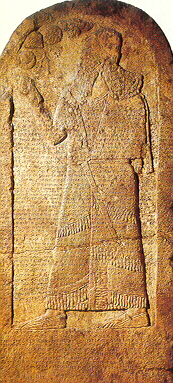

In 853 BC a dozen Levantine kings banded together to stop the Assyrian army at Qarqar in Syria. Shalmaneser's scribes, listing the enemy line-up, record “Ahab the Israelite” fielding one of the largest chariot forces in the coalition. The Bible never mentions this battle — and Assyria never mentions Ahab's wars with Aram that the Bible does describe — yet the two portraits agree: a wealthy, militarily serious northern kingdom in exactly these decades.
- What it is
- Assyrian stele of Shalmaneser III recording the battle of Qarqar, in cuneiform
- Date of artifact
- c. 852 BC
- Discovered
- Kurkh (Üçtepe), southeastern Turkey, 1861 (John George Taylor)
- Where it is now
- British Museum, London
- Related to
- King Ahab of Israel, named as a member of the coalition that fought Assyria
- Scripture
- 1 Kings 16–22
What this find showsAhab was a real king of Israel in the mid-ninth century BC, powerful enough to matter in international war — independent confirmation of the Bible's chronology for his reign.
What it does not proveIt does not verify any biblical episode about Ahab — Jezebel, Elijah, Naboth's vineyard — and the chariot count (2,000) is widely suspected of exaggeration or scribal error.
Sources & further reading