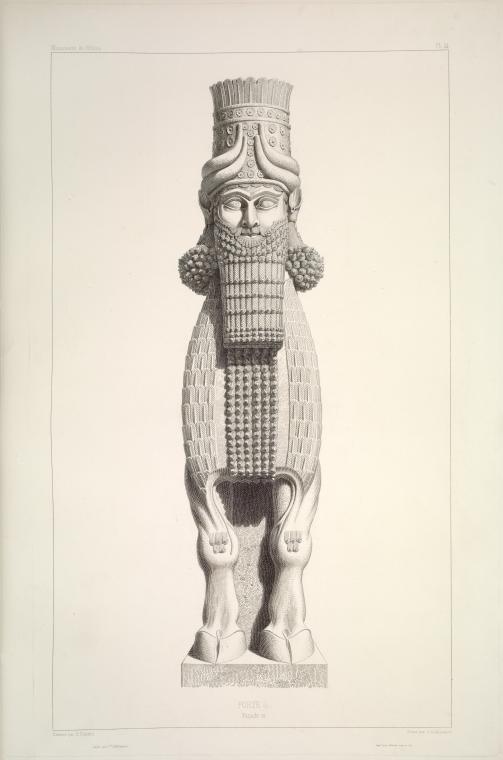

Isaiah 20 names an Assyrian king, Sargon, who sent his commander against the Philistine city of Ashdod — and for a long time Sargon appeared in no other record, so sceptics doubted he existed. Then French excavators uncovered an entire Assyrian capital built by him, its walls inscribed with his conquests, including the taking of Ashdod. A king known from a single biblical verse turned out to be one of the best-attested rulers of the ancient world.
- What it is
- The palace-city of the Assyrian king Sargon II, with colossal winged-bull gate guardians, wall reliefs, and royal inscriptions
- Date of artifact
- built c. 717–706 BC
- Discovered
- Khorsabad (ancient Dur-Sharrukin), near Nineveh, Iraq, 1843 (Paul-Émile Botta; later the Oriental Institute of Chicago)
- Where it is now
- Louvre; Oriental Institute, Chicago; Iraq Museum
- Related to
- Sargon king of Assyria, and his campaign against Ashdod
- Scripture
- Isaiah 20:1
What this find showsThe historicity of Sargon II and his Ashdod campaign, matching the one verse that names him (Isaiah 20:1); Judah appears among the states he lists.
What it does not proveIt confirms the political events and the king's existence, not the theological message Isaiah attaches to them.
Sources & further reading