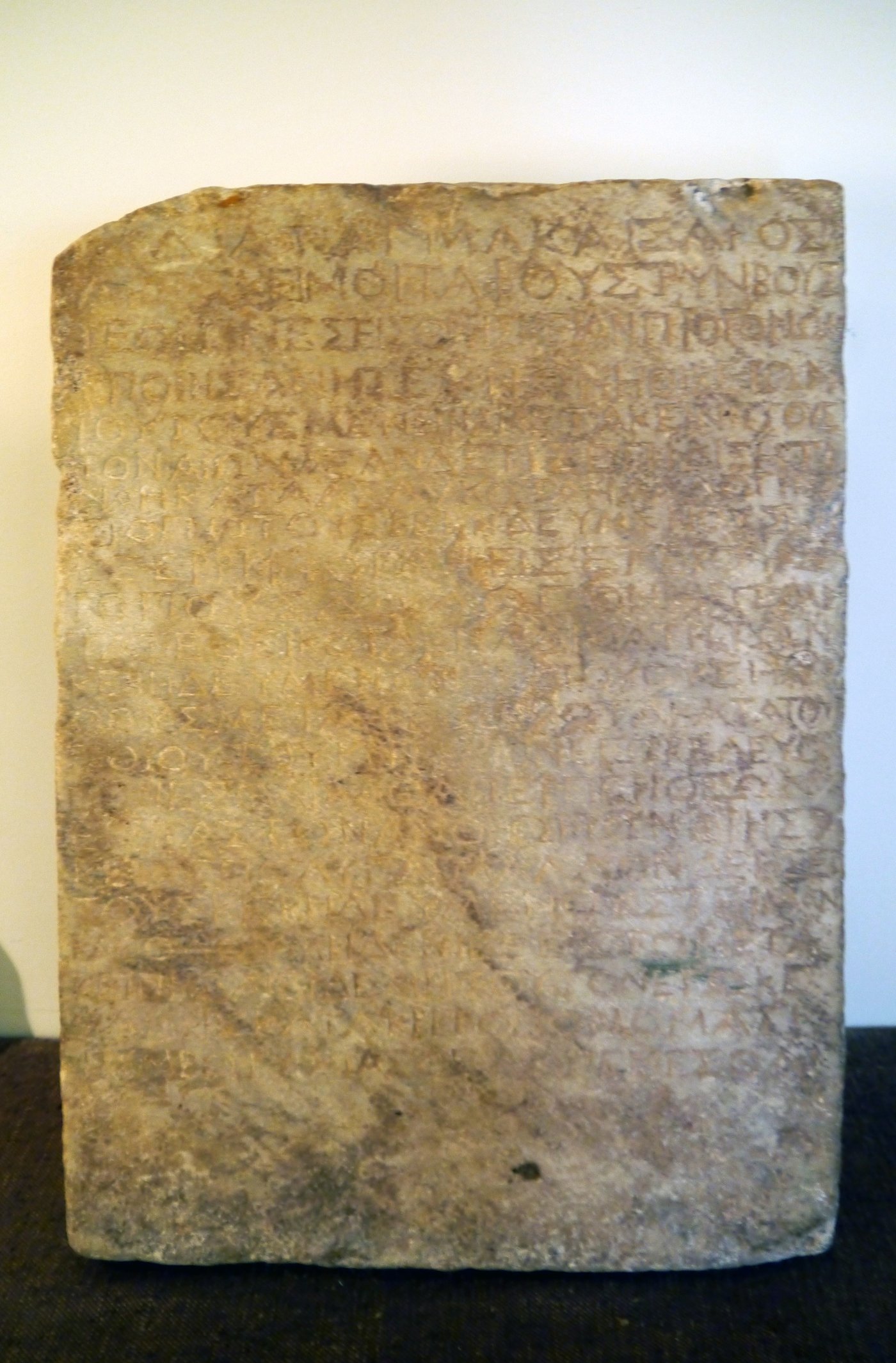

A slab of marble carries a Greek 'ordinance of Caesar' imposing the death penalty for disturbing graves or moving bodies. Because it was said to come from Nazareth and sounded like a Roman reaction to a missing body, some linked it to the empty-tomb reports and the guards of Matthew 28. But the stone's history is murky — no one recorded where it was actually dug up — and a 2020 isotope study of the marble pointed to the island of Kos, most likely connecting the edict to the desecration of a local ruler's tomb, not to Jesus. We include it as an honest example: a find that looked like strong evidence and, on scrutiny, largely dissolved.
- What it is
- A Greek marble edict against tomb-robbing, once tied to the resurrection reports — and, on closer study, doubted
- Date of artifact
- 1st century AD (debated); acquired 1878
- Discovered
- Said to come from Nazareth; acquired in Paris, 1878 (acquired by Wilhelm Froehner)
- Where it is now
- Bibliothèque nationale de France, Paris
- Related to
- How a promising-looking find can point the other way on closer study
- Scripture
- Matthew 28:12
What this find showsRoman authorities did legislate sternly against tomb violation in the early imperial period — that general background is real.
What it does not proveNothing ties the edict to Nazareth, to Jesus, or to the resurrection accounts; the once-popular connection is not supported.
Contested: Its provenance, date and meaning are all disputed; recent analysis argues the marble is from Kos and the edict concerns a local case.
Sources & further reading