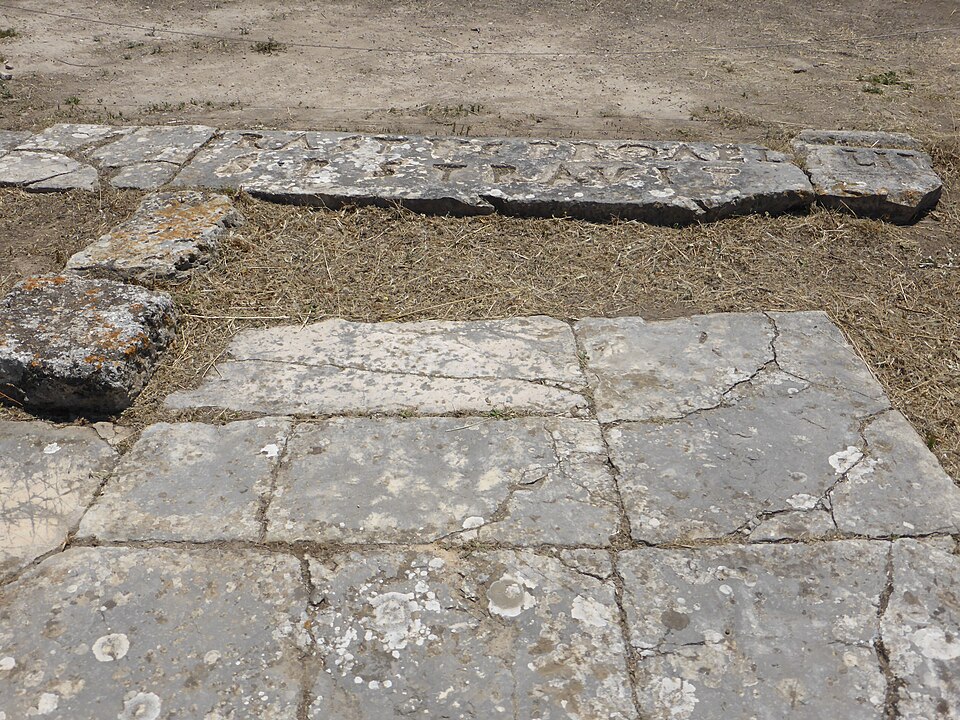

Writing from Corinth, Paul passes on greetings from “Erastus, the city treasurer” — a Christian holding municipal office. In the pavement by Corinth's theatre, excavators found a donor inscription of one Erastus who paid for the paving out of his own pocket when elected aedile, a city magistracy. Same rare-ish name, same city, same generation, same civic wealth. It may well be the same man — and it may not.
- What it is
- A Latin inscription in a paving slab: Erastus laid this pavement at his own expense, in return for the aedileship
- Date of artifact
- mid-1st century AD (dating debated)
- Discovered
- beside the theatre at Corinth, Greece, 1929 (American School (ASCSA) excavations)
- Where it is now
- In situ, Corinth
- Related to
- Erastus, the city official of Corinth whom Paul greets
- Scripture
- Romans 16:23 · 2 Timothy 4:20
What this find showsAt minimum, that a wealthy office-holding Erastus existed in first-century Corinth, making Paul's greeting exactly the kind of detail a real letter from Corinth would contain.
What it does not proveThe identification is genuinely uncertain: Paul's Greek title (oikonomos) and the Latin aedile may be different offices, the slab's precise date is debated, and the name was not unique.
Contested: Scholars are split on whether this is Paul's Erastus; treat the match as attractive but unproven.
Sources & further reading