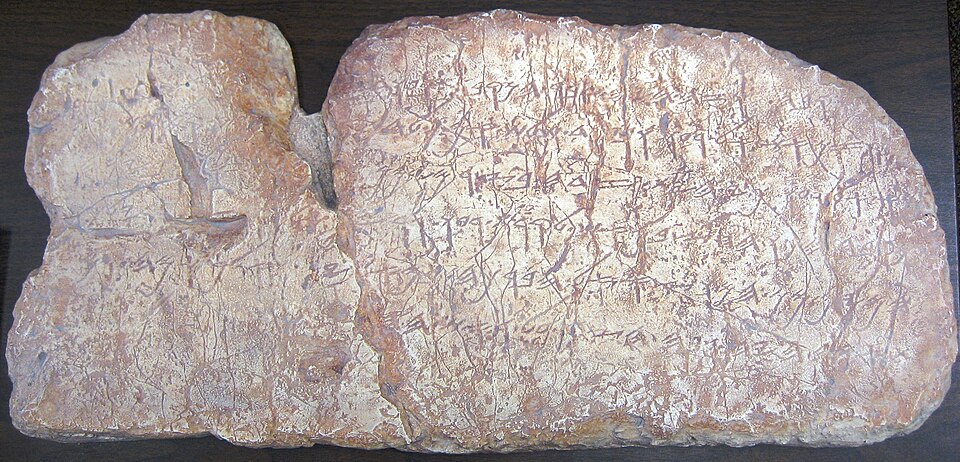

Kings ends its account of Hezekiah with an engineer's footnote: he made the pool and the conduit that brought water into the city. The conduit is still there — a winding tunnel chiselled through bedrock from the Gihon spring, which you can wade through today. Deep inside, workers left a short Hebrew text describing the moment the two digging crews, tunnelling from opposite ends, heard each other's picks through the rock and broke through. No king is named; the workmen told their own story.
- What it is
- A 533-metre rock-cut water tunnel under Jerusalem, and the six-line Hebrew inscription that celebrated its completion
- Date of artifact
- c. 701 BC
- Discovered
- the tunnel has always been known; the inscription was noticed in 1880 by a boy wading inside it
- Where it is now
- Tunnel in situ, City of David, Jerusalem; inscription in the Istanbul Archaeology Museums
- Related to
- King Hezekiah's water works before Sennacherib's siege of Jerusalem
- Scripture
- 2 Kings 20:20 · 2 Chronicles 32:30
What this find showsA major eighth-century royal engineering project exactly matching the biblical notice, with a contemporary Hebrew inscription — one of the most secure text-and-spade matches in the entire field.
What it does not proveThe inscription itself names no king, so the attribution to Hezekiah rests on the biblical text plus the dating of the tunnel — a very strong but still inferential chain.
Sources & further reading