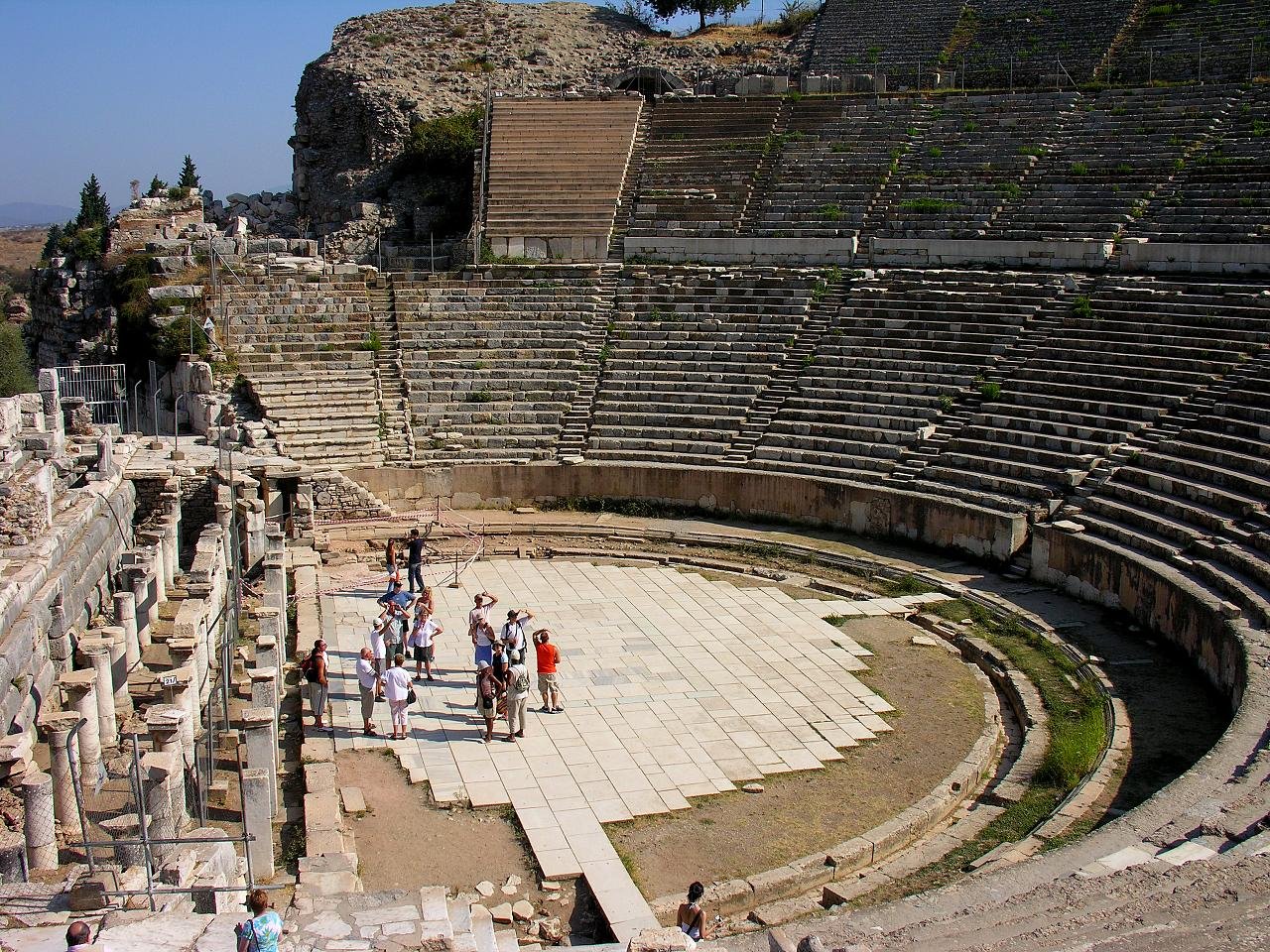

Acts describes Paul's long stay in Ephesus ending in an uproar: the silversmith Demetrius, seeing his trade in Artemis shrines threatened, gathers a crowd that pours into the theatre chanting “Great is Artemis of the Ephesians!” Excavation has laid bare exactly that stage — a theatre cut into the hillside seating some twenty-four thousand — along with the marble streets and the foundations of the vast temple of Artemis, once counted among the seven wonders of the world. The city, its goddess, and the guild economy built on her cult are precisely the world the riot narrative assumes.
- What it is
- The excavated remains of the great port-city of Roman Asia — its huge hillside theatre, colonnaded streets, and the site of the temple of Artemis (Diana)
- Date of artifact
- Roman period (city at its height, 1st–2nd century AD)
- Discovered
- Selçuk, near the Aegean coast of Turkey (excavated since the 19th century, chiefly by Austrian expeditions)
- Where it is now
- In situ; recovered objects in the Ephesus and British Museums
- Related to
- The city where Paul spent some three years, and the silversmiths' riot in the theatre over the Artemis trade
- Scripture
- Acts 19:23–41 · 1 Corinthians 15:32
What this find showsThe city, its enormous theatre, and the Artemis cult and silversmith trade that the riot presupposes are all excavated and well attested.
What it does not proveThe stones fix the setting, not the event: they do not verify the riot itself or Paul's presence, which rest on Acts' own account.
Sources & further reading