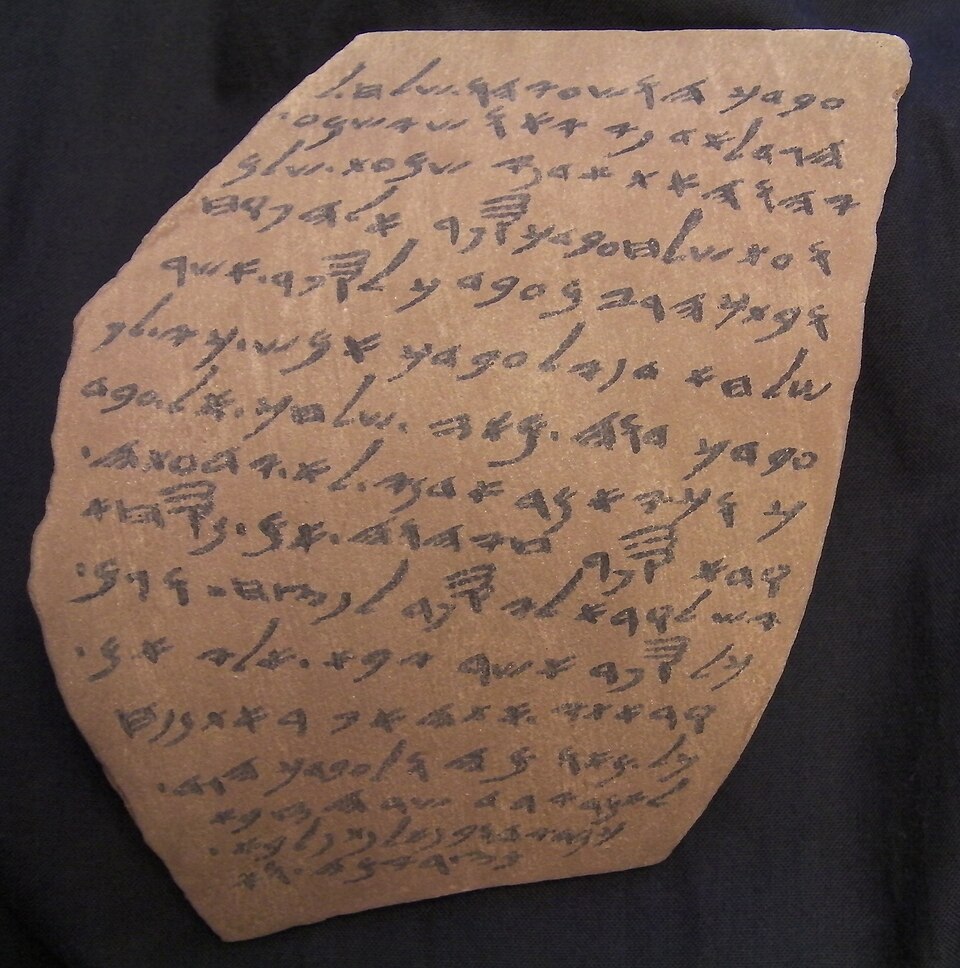

Jeremiah dates one oracle to the moment when only two fortified towns in Judah still held out against Nebuchadnezzar: Lachish and Azekah. In the ash of Lachish's gatehouse, excavators found the garrison's mail — hurried notes from an outpost officer. One letter reports that the signal fires of Azekah can no longer be seen. These are the voices of men inside the Bible's final chapter of Judah, written days or weeks before the wall came down.
- What it is
- Military correspondence written in ink on pottery sherds (ostraca) in Hebrew
- Date of artifact
- c. 588 BC
- Discovered
- the burnt gate-room of Lachish, Israel, 1935 (James Leslie Starkey's excavation)
- Where it is now
- British Museum, London; some in the Israel Museum
- Related to
- The last days of the kingdom of Judah before Babylon destroyed it — Jeremiah's generation
- Scripture
- Jeremiah 34:6–7
What this find showsThe military situation of Jeremiah 34 — a Babylonian invasion closing in on precisely these two fortresses — is documented in real time, in the Hebrew of Jeremiah's own generation.
What it does not proveA tantalising mention of “the prophet” in one letter cannot be shown to mean Jeremiah; the reading and the identification are both uncertain.
Sources & further reading