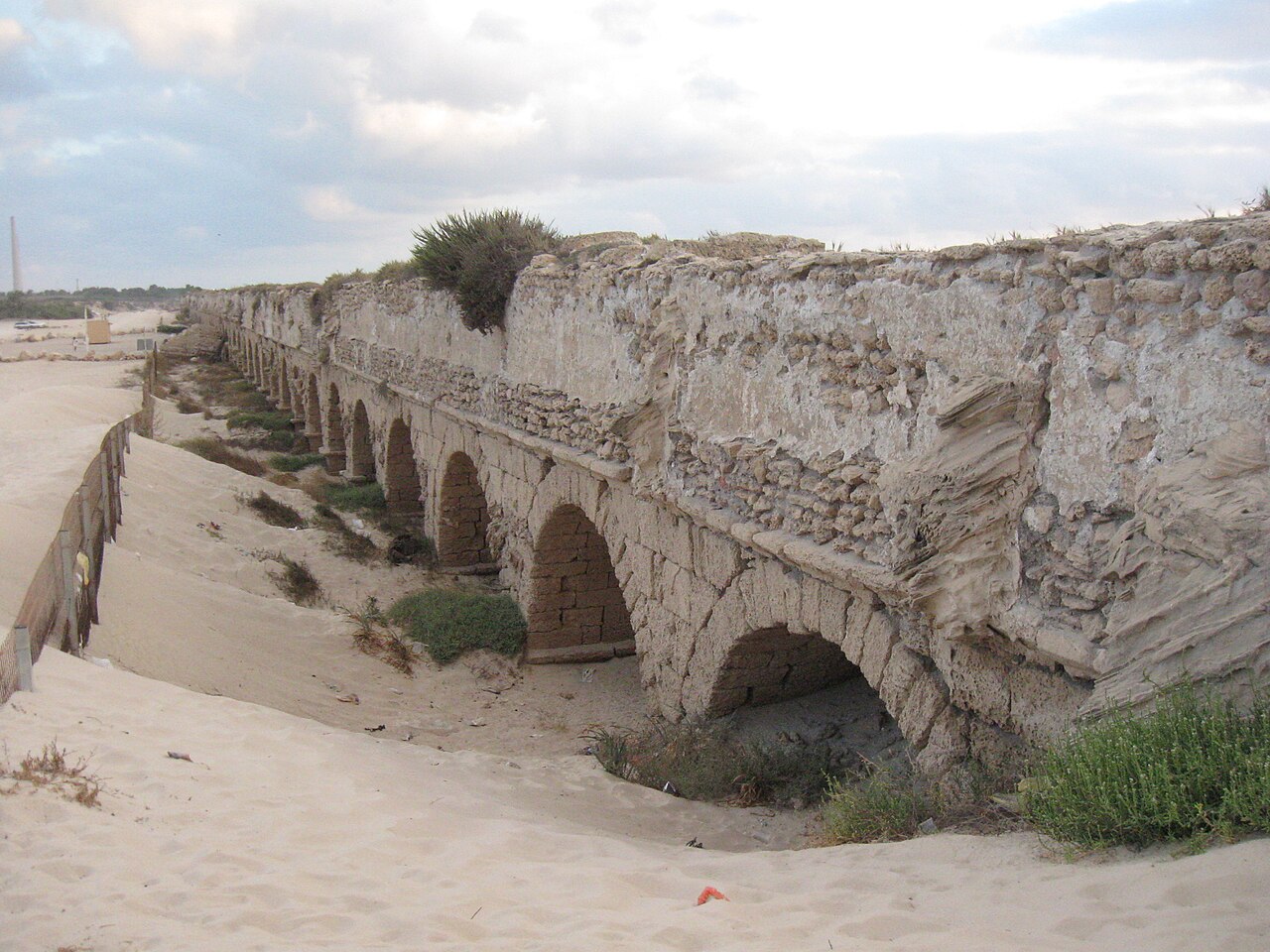

Herod poured an entire harbour into the open sea, sinking hydraulic concrete that set underwater to build a port where there was no natural bay, and around it a gleaming Roman city. It became the administrative capital of Roman Judea — where Pilate actually lived (his inscription was found in its theatre), where Peter baptised the centurion Cornelius, and where Paul was imprisoned and made his defence before governors and a king.
- What it is
- Herod the Great's artificial deep-water harbour and Roman port city — breakwaters, warehouses, a temple to Augustus and an aqueduct
- Date of artifact
- built c. 22–10 BC
- Discovered
- the Mediterranean coast of Israel, between Tel Aviv and Haifa (land and underwater excavations from the 1960s–70s)
- Where it is now
- Caesarea National Park and the submerged harbour offshore
- Related to
- The Roman capital of Judea — Pilate's seat, and a hub of the book of Acts
- Scripture
- Acts 10 · Acts 23:23–35 · Acts 25:1–13
What this find showsThat Herod's great port-capital existed as described, the built stage for a large share of Acts — and the home base of the Pilate who tried Jesus.
What it does not proveThe city sets the scene; it does not by itself verify any single episode narrated there.
Sources & further reading