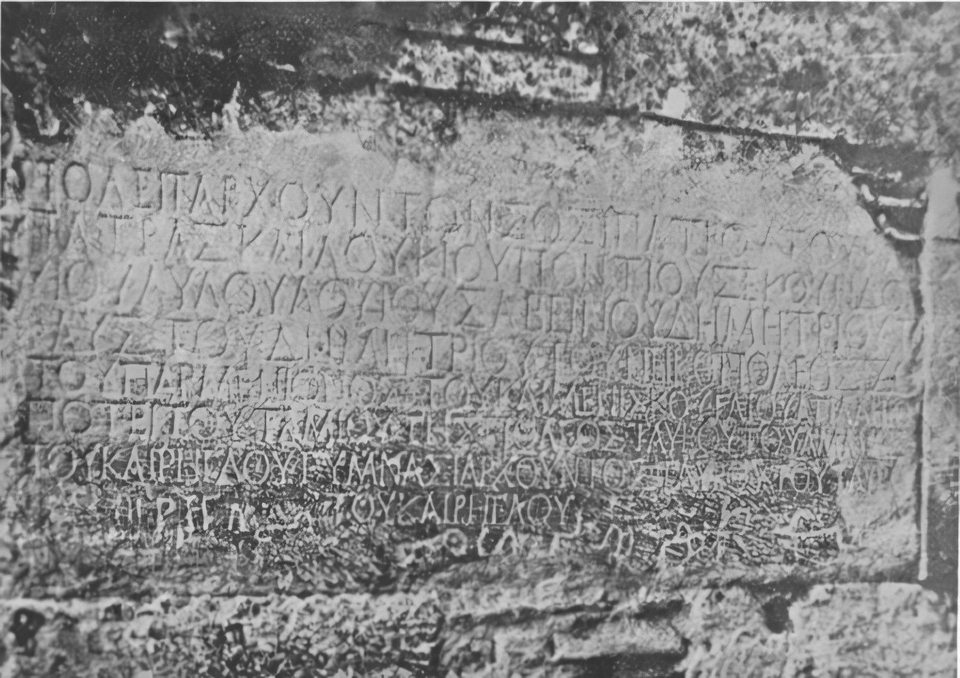

When the mob in Thessalonica dragged Paul's host Jason before “the politarchs,” Luke used a title found nowhere in surviving classical literature — and nineteenth-century critics scored it as an invented word betraying a careless author. Then the city's own Roman gate, taken down in 1876, yielded an inscription listing six officials under exactly that title. Dozens more politarch inscriptions from Macedonia have surfaced since. The word was not invented; it was local.
- What it is
- A Greek inscription from the city's Vardar Gate listing its magistrates — “politarchs”
- Date of artifact
- Roman period (the term is attested from the 1st century BC onward)
- Discovered
- the Vardar Gate, Thessalonica, Greece (dismantled 1876)
- Where it is now
- British Museum, London
- Related to
- Luke's unusual word for the city rulers of Thessalonica
- Scripture
- Acts 17:6–8
What this find showsLuke used the correct, locally specific title for Thessalonica's magistrates — small-bore evidence, but exactly the kind that separates a writer with real sources from one making scenes up.
What it does not proveA right title does not verify the riot, the charges, or anything else in the episode — it verifies the author's knowledge of the setting.
Sources & further reading