How We Got the Bible
The Bible did not drop from the sky. It was written over centuries, copied by hand, gathered into a canon, and translated. Here is what the surviving evidence actually shows about that long journey — and, just as honestly, where the evidence runs out and scholars still argue.
- Documented
- Established by manuscripts, inscriptions, or records that scholars broadly accept.
- Debated
- A point where the evidence is genuinely disputed — a date, a reading, or how much a difference matters.
Who Wrote It
The Bible is not one author's book but a library — roughly forty writers across some 1,500 years. Here is what is known about them, what rests on tradition, and where authorship is genuinely disputed.
A Library of Forty Hands
The Bible is often called a book, but it behaves like a library: roughly forty writers across some 1,500 years, on three continents, in three languages — Hebrew, Aramaic and Greek. Among them are kings (David, Solomon), a herdsman (Amos), a physician (Luke), fishermen (Peter, John) and a trained Pharisee (Paul). They wrote independently, mostly never meeting, yet the church came to read their work as a single unfolding story.
traditionally 2nd millennium BCMoses and the Five Books
Jewish and Christian tradition credits the first five books — the Torah, or Pentateuch — to Moses. From the nineteenth century many scholars proposed instead the Documentary Hypothesis: that the Torah interweaves several older sources (labelled J, E, D and P), edited together over centuries. Conservative scholars still defend a substantial Mosaic core; the question is one of the oldest live debates in biblical studies.
written c. AD 65–100The Four Gospels: Anonymous, Then Named
The four gospels are, strictly speaking, anonymous — none names its author within the text. The names Matthew, Mark, Luke and John were attached by early tradition: Papias around AD 125 (preserved by Eusebius) links Mark to Peter's preaching, and Irenaeus around AD 180 names all four. Scholars divide over whether those traditions preserve the real authors or later, best-guess attributions.
c. AD 48–65Paul: The Earliest Christian Writings
Paul's letters are the oldest documents in the New Testament — written before the gospels, some within about twenty years of the crucifixion. Scholars broadly accept seven as undisputedly his: Romans, 1 and 2 Corinthians, Galatians, Philippians, 1 Thessalonians and Philemon. Six others (Ephesians, Colossians, 2 Thessalonians, 1–2 Timothy and Titus) are disputed — attributed to Paul but questioned on grounds of style and setting.
c. AD 80–90Luke: A Doctor Writing History
The Gospel of Luke and the Acts of the Apostles are two volumes by one author — together about a quarter of the New Testament. Tradition identifies him as Luke, the physician and travelling companion of Paul. He writes deliberately as a historian: naming emperors, governors and officials, and opening with a statement of method (Luke 1:1–4) about investigating everything carefully.
8th–5th century BCProphets, Poets and Scribes
Much of the Old Testament reached the page through prophets and the scribes who recorded them. Jeremiah dictates to Baruch, who writes it on a scroll (Jeremiah 36). The Psalms are gathered under David's name, though many are anonymous or ascribed to others (the sons of Korah, Asaph). Wisdom books are linked to Solomon. The Book of Isaiah is a classic case: one eighth-century prophet, or a tradition carried on by later hands ('Second' and 'Third' Isaiah)?
The Manuscript Witnesses
The physical evidence itself: the oldest fragments, the great codices, and the sheer weight of surviving copies.
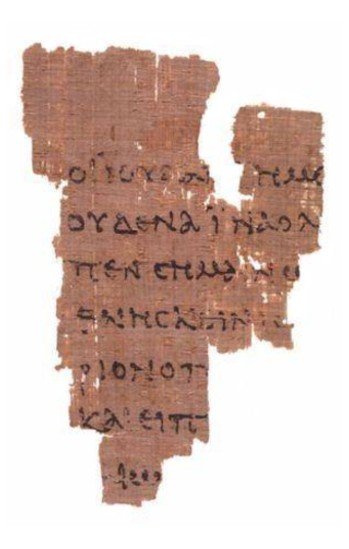 2nd century
The Rylands Fragment (P52)
The oldest identified scrap of the New Testament is P52, a credit-card-sized fragment of John 18 held in Manchester. For decades it was confidently dated to about AD 125 — which would place a copy of John within a generation of its writing. More recent palaeographers are more cautious, spreading the honest range across the second century. Either way it is early; exactly how early is genuinely argued.
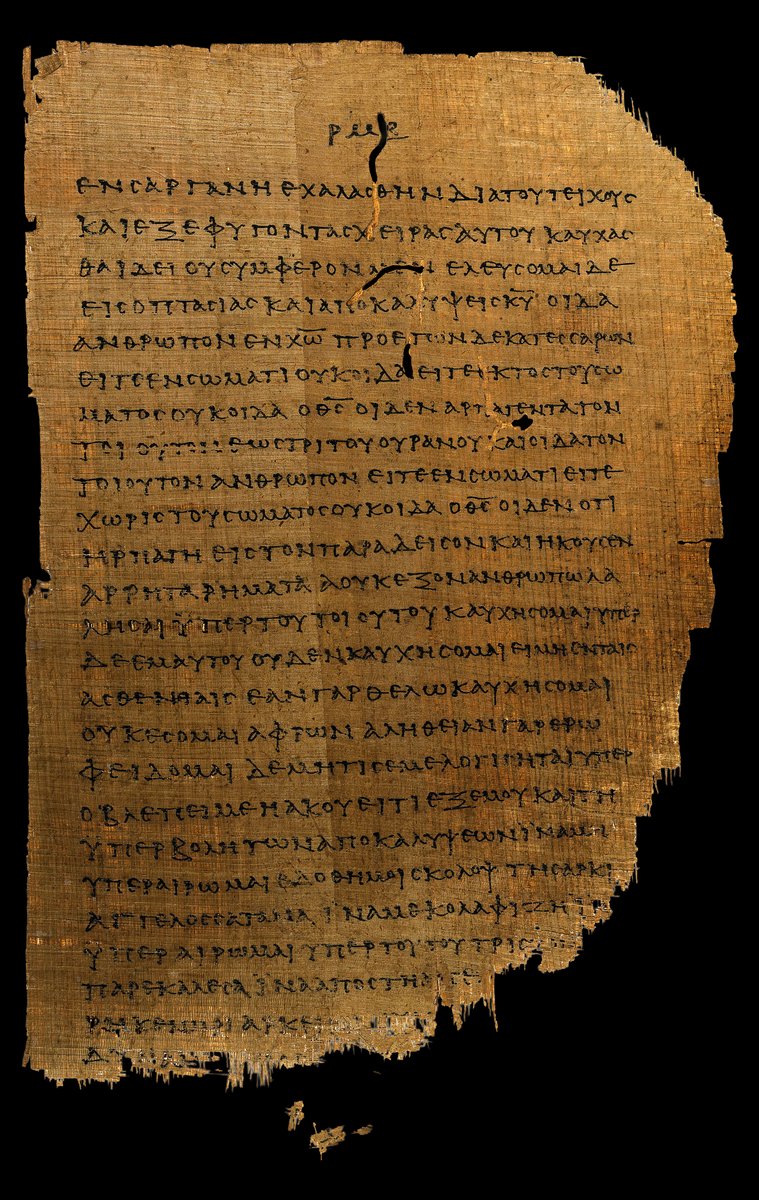 c. AD 175–300
The Early Papyri
After P52 come the great early papyrus codices — the Chester Beatty and Bodmer collections. P46, from about AD 200, carries most of Paul's letters; P66 and P75, from around AD 175–225, preserve long stretches of John and Luke. They are damaged and incomplete, but they let scholars read the New Testament text as it stood only a century or so after it was first written.
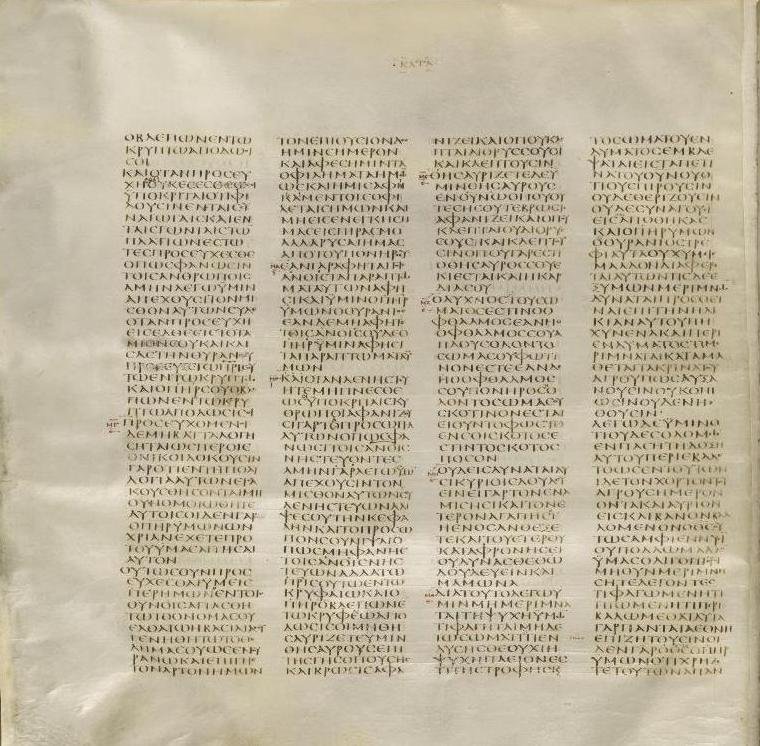 4th century
Codex Sinaiticus & Vaticanus
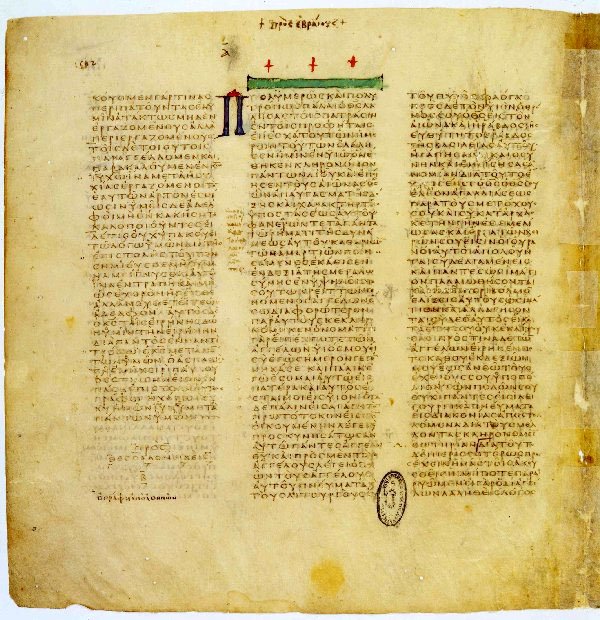
The oldest near-complete Greek Bibles are two magnificent fourth-century manuscripts: Codex Sinaiticus and Codex Vaticanus, both from around AD 325–360. Between them they preserve almost the whole Bible in one place for the first time. They are also honest witnesses to the messiness of copying: Sinaiticus even includes two early works — the Epistle of Barnabas and the Shepherd of Hermas — that did not make the final canon, and the two codices differ from each other in thousands of small details.
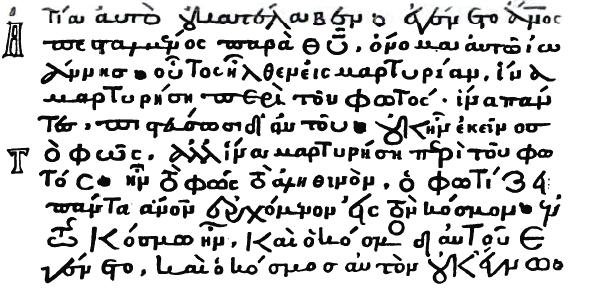 the tally
The Sheer Number of Copies
The New Testament survives in an unusually large number of copies — roughly 5,800 catalogued Greek manuscripts, plus around 10,000 in Latin and thousands more in Syriac, Coptic and other languages. No other work of the ancient world comes close in sheer volume. Apologists often lean hard on this number, so it is worth stating carefully what it does and does not establish.
 c. 3rd c. BC – AD 1
The Dead Sea Scrolls
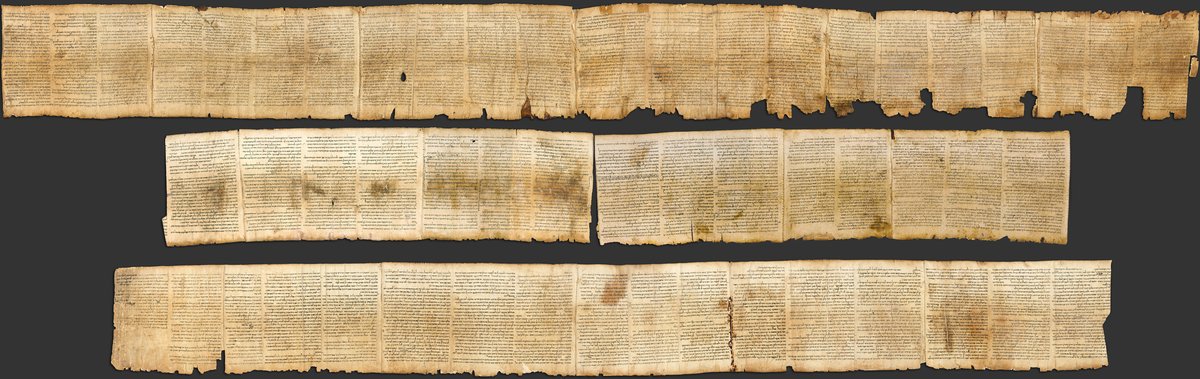
On the Old Testament side, the Dead Sea Scrolls transformed the picture. Found near Qumran from 1947, they include the Great Isaiah Scroll, from about 125 BC — pushing the oldest Hebrew copies of Scripture roughly a thousand years earlier than anything scholars had before. Compared with the medieval text, the stability was remarkable, though far from perfect: the scrolls also reveal genuine variants and more than one version of some books circulating side by side.
Reading the Text
How scholars work back toward the original wording — and how honest they have to be about the gaps.
 the method
What Textual Criticism Is
When ancient copies disagree — and thousands do — how does anyone decide what the original said? That is the work of textual criticism: comparing manuscripts, weighing their age and geographic spread, and recognizing the typical slips scribes made, in order to reconstruct the most probable wording. It is careful, disciplined detective work, and it is the same method applied to every ancient text — not a special pleading for the Bible.
the argumentThe Variants, Honestly
Across all those manuscripts, scholars count something like 400,000 textual variants — famously, more differences than there are words in the Greek New Testament. The skeptic Bart Ehrman made that number widely known. But Ehrman and his conservative critics, such as Daniel Wallace, agree on the crucial next fact: the overwhelming majority of those variants are utterly trivial — spelling, word order, obvious slips. The real disagreement is over what remains.
 known additions
The Passages Scholars Question
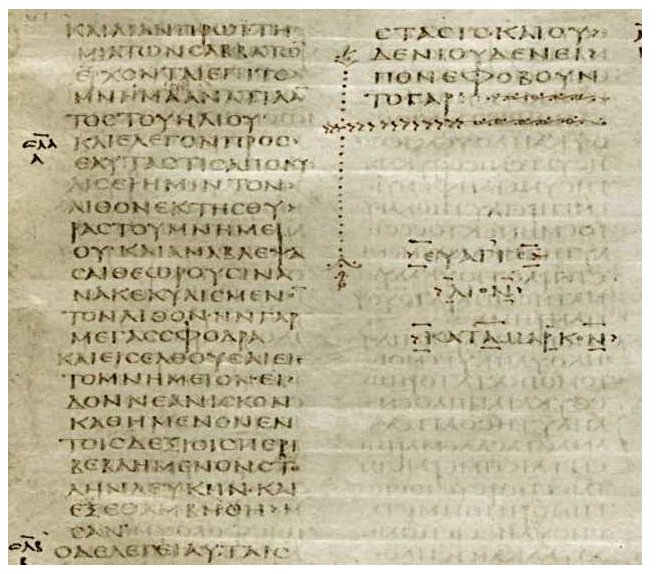
A handful of familiar passages are missing from the earliest and best manuscripts, and textual scholars broadly agree they were added later: the long ending of Mark (16:9–20), the moving story of the woman caught in adultery (John 7:53–8:11), and the explicitly Trinitarian 'Comma Johanneum' (1 John 5:7–8). This is no secret — open almost any modern Bible and you will find these passages footnoted or bracketed. Honesty here is a strength, not an embarrassment.
How the Books Were Chosen
The slow, contested process by which the church settled which books belonged.
 2nd–4th century
How the New Testament Was Gathered
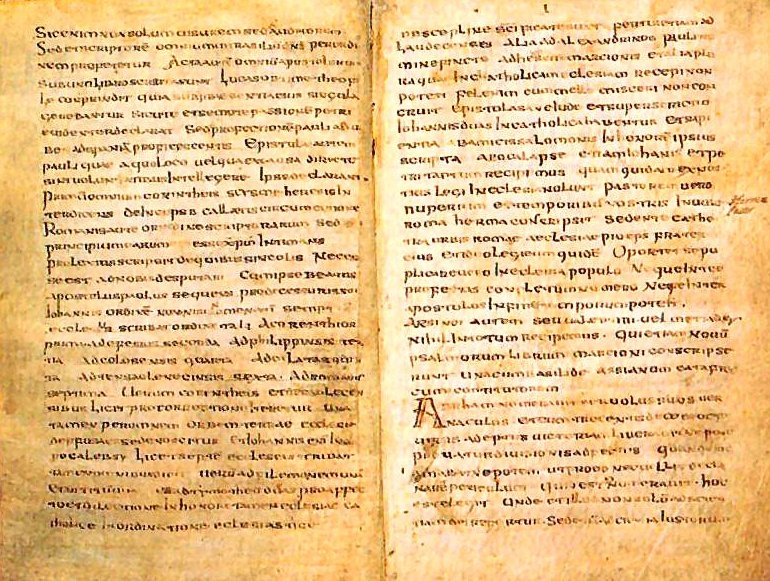
There was never a single dramatic council that voted the New Testament into being. The canon emerged slowly. The Muratorian Fragment, from around AD 170–200, already lists most of the books; Athanasius, in a festival letter of AD 367, is the first to name exactly the 27 we now have; and regional councils at Hippo (393) and Carthage (397) ratified that list. For a long time several books — Hebrews, James, 2 Peter, Jude, Revelation — were argued over before being accepted.
the testsWhat Made a Book “Canonical”
How did the early church actually decide? Broadly, three tests were applied. Apostolic origin: was the book written by, or closely tied to, an apostle? Catholicity: was it used widely across the churches, not just in one corner? And orthodoxy: did it agree with the received 'rule of faith'? These describe how books won lasting acceptance; they are a historical description, not a mathematical proof of inspiration.
 the disputed books
The Apocrypha & the Deuterocanon
Catholic and Orthodox Bibles contain books — Tobit, Judith, Wisdom, Sirach, 1–2 Maccabees and others — that Protestant Bibles either omit or set apart as 'the Apocrypha.' The difference is old and honest: these books were part of the Greek Septuagint the early church used, but not of the later Hebrew canon. Protestants followed the Hebrew list; the Catholic Church, at the Council of Trent in 1546, formally affirmed the wider set. It is less a story of tampering than of which ancient tradition each church chose to follow.