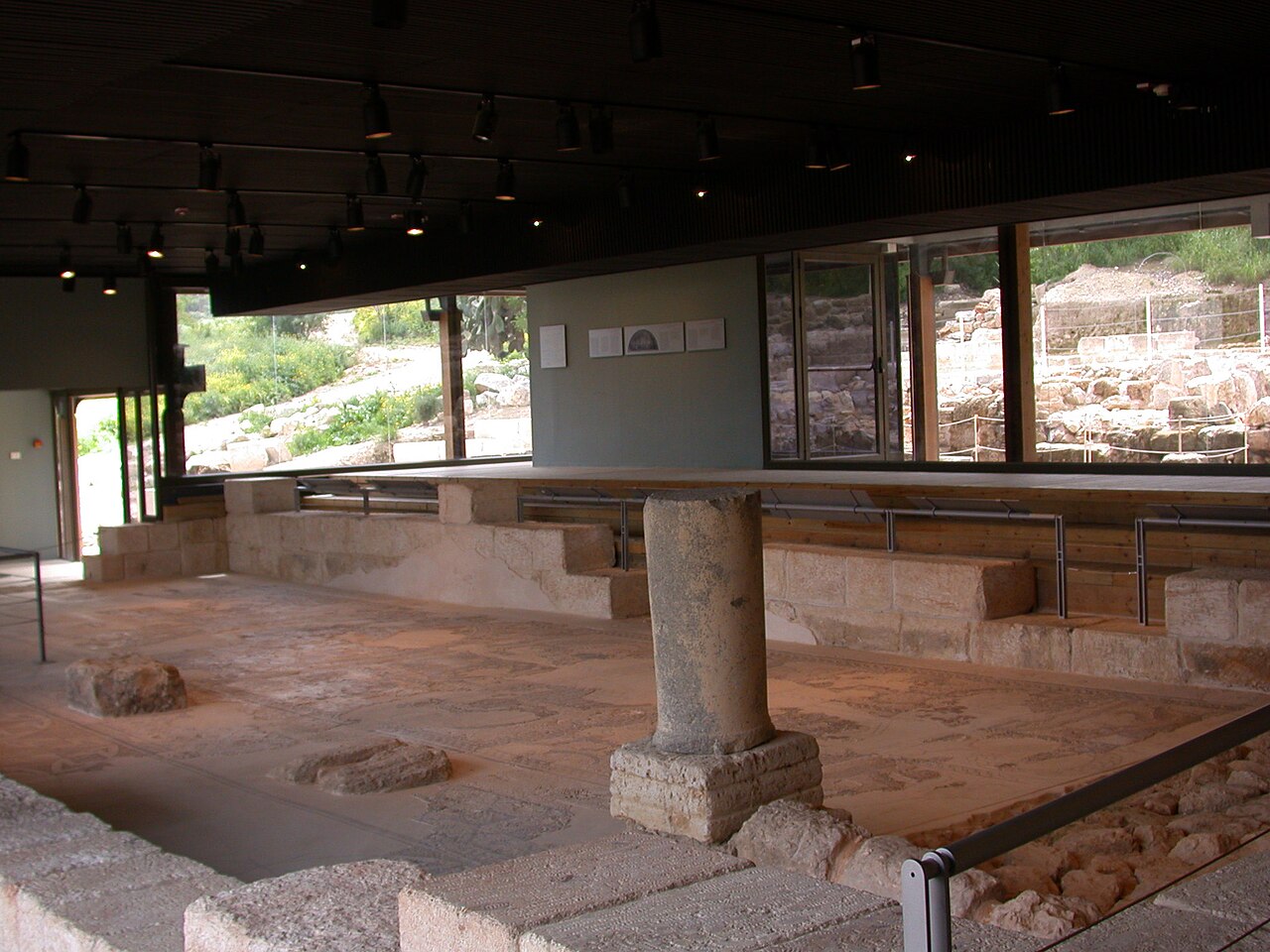

An hour's walk from Nazareth, Antipas was rebuilding Sepphoris into a proper Roman city just as Jesus was growing up — a plausible worksite for a village craftsman (tektōn). The excavations also settle an old argument: pre-70 Sepphoris was thoroughly Jewish and observant (dozens of ritual baths, stone purity vessels, no pig bones), not the pagan “Cynic” town some had imagined shaping Jesus' thought.
- What it is
- A Greco-Roman district capital rebuilt by Herod Antipas, with a theatre, colonnaded streets, many ritual baths and (later) fine mosaics
- Date of artifact
- rebuilt from the early 1st century AD
- Discovered
- Zippori, Lower Galilee, about 6 km from Nazareth (excavations from the 1930s and, intensively, the 1980s onward)
- Where it is now
- Zippori National Park, Israel
- Related to
- The city on Nazareth's doorstep — context for Jesus the builder
- Scripture
- Matthew 13:55 · Mark 6:3
What this find showsThat Jesus grew up beside a real, busy Roman-era city — and that first-century Galilee was observantly Jewish while still tied into the wider Roman world.
What it does not proveThere is no evidence Jesus ever worked or taught at Sepphoris; the “carpenter next door” link is a reasonable inference, not a fact.
Contested: Whether the theatre was standing in Jesus' lifetime is disputed. Evans and most historical-Jesus scholars reject the older “Jesus as Cynic philosopher” theory that leaned on Sepphoris.
Sources & further reading