.jpg)
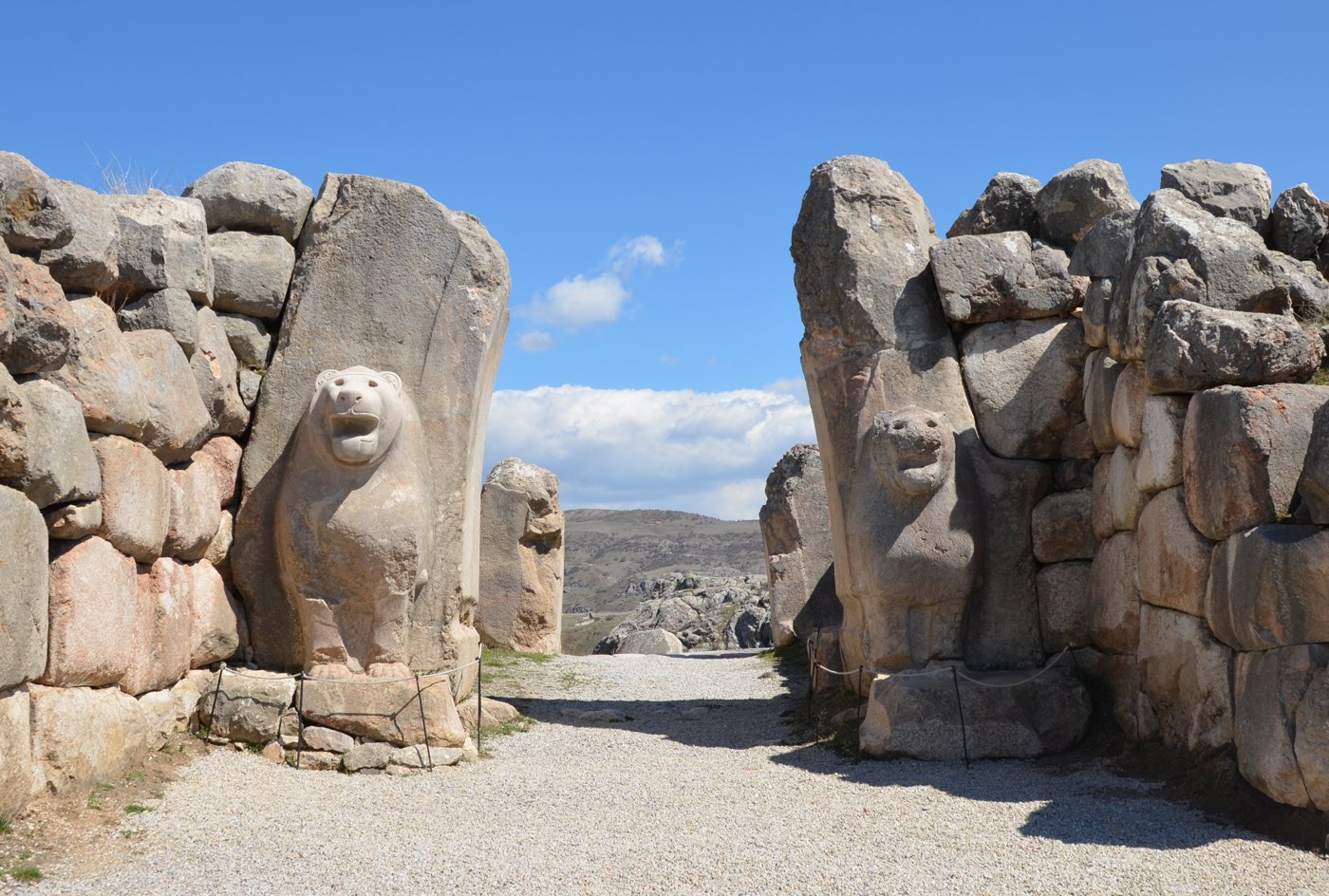
The Bible mentions Hittites dozens of times — Abraham buys a burial cave from them; Uriah the Hittite serves in David's army. For much of the nineteenth century critics treated them as legend, since no independent trace had turned up. Then excavations at Boğazköy in Anatolia uncovered a vast walled capital and a royal archive of thousands of clay tablets: the Hittites had been one of the great empires of the ancient world, rivals of Egypt. A people the text had named, and scholars had written off, walked out of the ground.
- What it is
- The capital and cuneiform archives of the Hittite Empire — a people known for centuries only from the Bible, and doubted by early critics
- Date of artifact
- empire c. 1650–1180 BC (archives excavated from 1906)
- Discovered
- Boğazköy / Hattusa, central Anatolia (modern Turkey), 1906 (Hugo Winckler and the German Oriental Society)
- Where it is now
- Tablets in Istanbul, Ankara and Berlin
- Related to
- The Hittites of Genesis and 2 Samuel — once dismissed, then unearthed
- Scripture
- Genesis 23:10 · 2 Samuel 11:3
What this find showsThe Hittites were a real and powerful civilization of the second millennium BC — a striking case where the biblical text preserved the memory of a people mainstream scholarship had dismissed as fiction.
What it does not proveThe great Anatolian empire is not obviously identical to the local 'sons of Heth' Abraham deals with in Canaan; the discovery vindicates the name, not every detail.
Contested: How the imperial Hittites of Anatolia relate to the biblical Hittites living in Canaan is genuinely debated.
Sources & further reading