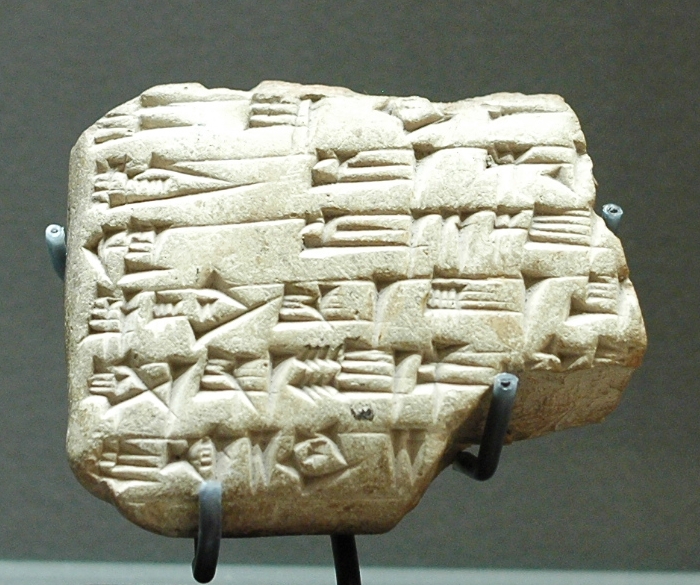

For a while these archives were the backbone of a confident argument: their laws and customs — adopting an heir when childless, a barren wife giving her maid as surrogate, the value of household gods — seemed to match Abraham, Isaac and Jacob so closely that the patriarchs looked pinned to the second millennium BC. They remain a stunning window into the Bronze Age Near East, and they show that names and practices like those in Genesis were genuinely at home there. But the tight fit did not hold up.
- What it is
- Three great cuneiform archives — tens of thousands of tablets — from Bronze Age Mesopotamia and Syria
- Date of artifact
- Ebla c. 2300 BC; Mari 18th century BC; Nuzi 15th century BC
- Discovered
- Tell Mardikh (Ebla), Syria; Tell Hariri (Mari), Syria; Yorghan Tepe (Nuzi), Iraq (Paolo Matthiae, André Parrot, and the Harvard/ASOR expeditions)
- Where it is now
- Louvre, and museums in Syria and Iraq
- Related to
- The world and customs behind the Genesis patriarchs
- Scripture
- Genesis 12–50
What this find showsThat the personal names, legal customs and social world depicted in the patriarchal stories are authentically ancient Near Eastern, not the invention of a much later age.
What it does not proveThey mention no biblical person or event; they supply background colour, not the patriarchs themselves.
Contested: This is a case where careful scholarship walked a claim back. Since the 1970s most scholars (and even conservative writers) concede that the once-famous Nuzi and Mari “patriarchal parallels” are looser than advertised and occur across many centuries — so they no longer date the patriarchs. The early Ebla sensations (Sodom, the name Yahweh) were retracted outright.
Sources & further reading