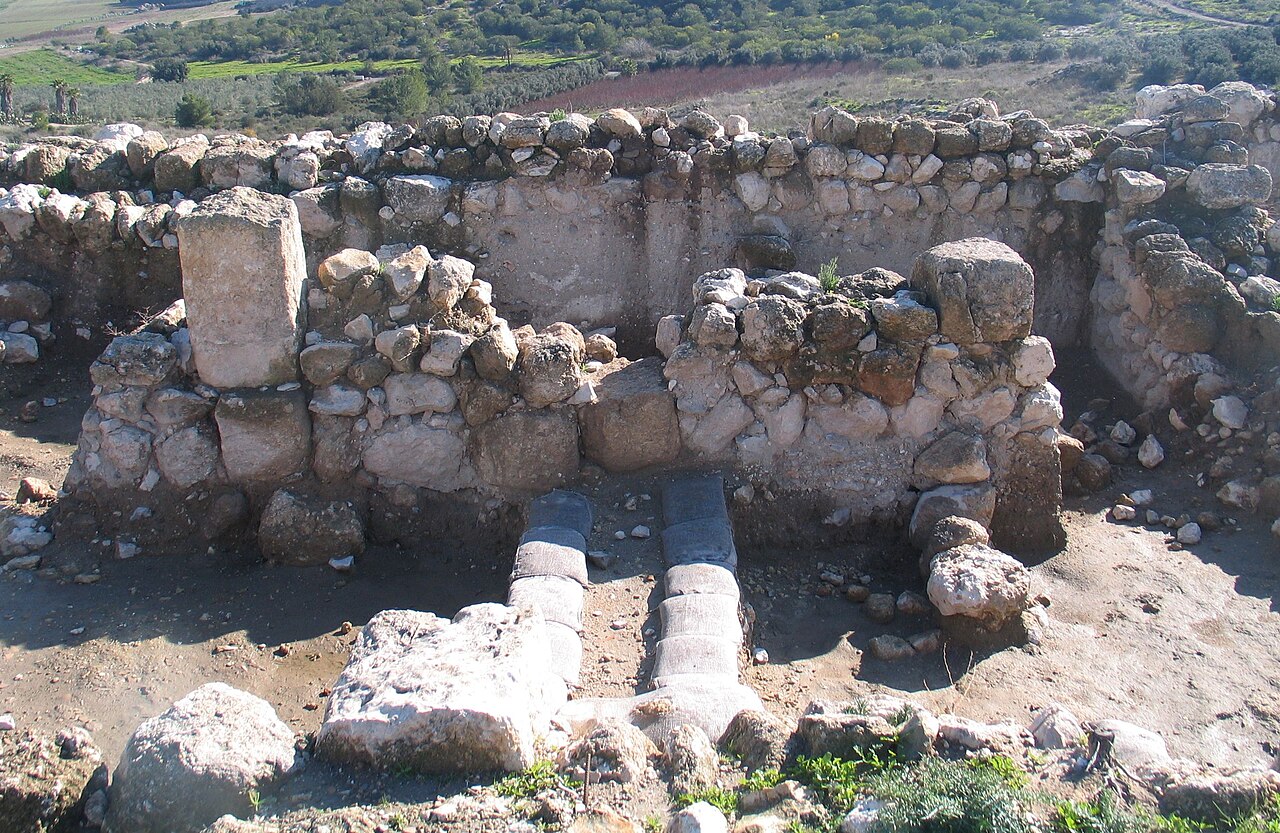

1 Kings 9:15 says Solomon conscripted labour to build the walls of Hazor, Megiddo and Gezer. Yadin noticed that all three cities had nearly identical six-chambered gates, and argued they were the work of one royal builder — Solomon. It became the central archaeological case for a real, centralised united monarchy. We include it precisely because it is contested: the date of these gates is one of the hottest arguments in the field.
- What it is
- Three closely matching monumental six-chambered, four-entry city gates with flanking towers
- Date of artifact
- 10th–9th century BC (the exact date is the whole debate)
- Discovered
- Hazor, Megiddo and Gezer (excavations synthesised by Yigael Yadin)
- Where it is now
- In situ, Israel
- Related to
- Solomon's building program — and the fierce debate over the united monarchy
- Scripture
- 1 Kings 9:15
What this find showsThat three of the cities named in a single biblical verse share a monumental gate design, pointing to centralised royal construction.
What it does not proveNothing on the gates names Solomon, and the whole argument stands or falls on the 10th-century date.
Contested: This is a live, unresolved debate. Some archaeologists (following Finkelstein's “low chronology”) down-date the gates and see no grand Solomonic state; others defend the traditional date. Even the association of the Megiddo gate with its wall has been questioned. We flag it as genuinely disputed.
Sources & further reading