Encounters with Christ in India
Two thousand years told in three honest voices — “according to tradition…,” “in their own words…,” and “documented history records….” From the apostle Thomas to the twentieth century, here are people remembered for meeting Christ on Indian soil, and for the moment that turned them.
- Tradition
- Sacred community memory — treasured, but not outwardly verifiable.
- Testimony
- A personal conversion account, in the person's own words or a close biography — widely accepted, but a first-person witness, not external proof.
- Documented
- Supported by records that historians broadly accept.
Apostolic & Early
1st–4th centuryThe oldest layer — carried mostly by the memory of the Saint Thomas Christians, with a few early written witnesses from the wider church.
 c. AD 52 (traditional)
The Apostle Thomas & the Brahmins of Palayur
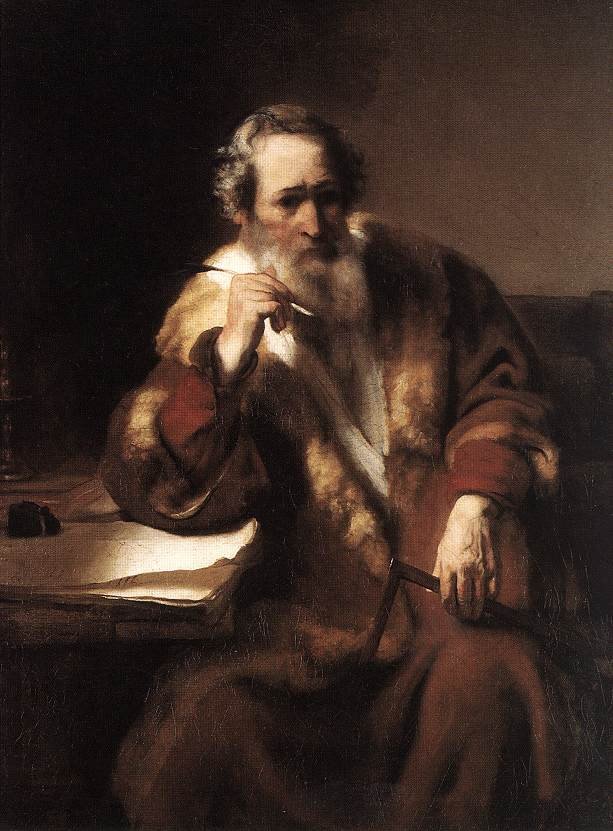
Tradition holds that the apostle Thomas came ashore on the Malabar coast around AD 52 and, at Palayur, met Brahmin priests casting water toward the sun as an offering. He is said to have thrown water into the air that hung there as a sign, and many were baptised. It endures as the founding memory of one of the oldest Christian communities on earth.
 1st century
King Gundaphar & the Palace in Heaven
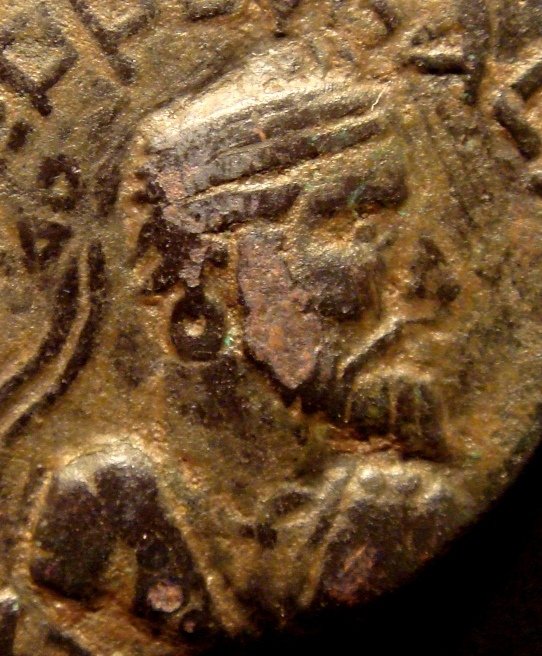
The apocryphal Acts of Thomas tells of the apostle hired to build a palace for a northern king, Gundaphar, who gives the building fund to the poor and tells the king a palace has been raised for him in heaven. Long dismissed as fable — until the king's name turned up on real coins and a dated stone inscription. Gondophares was a genuine Indo-Parthian ruler of exactly the right era: a true historical name inside a legendary tale.
 traditional c. AD 345
Thomas of Cana (Knai Thoma)
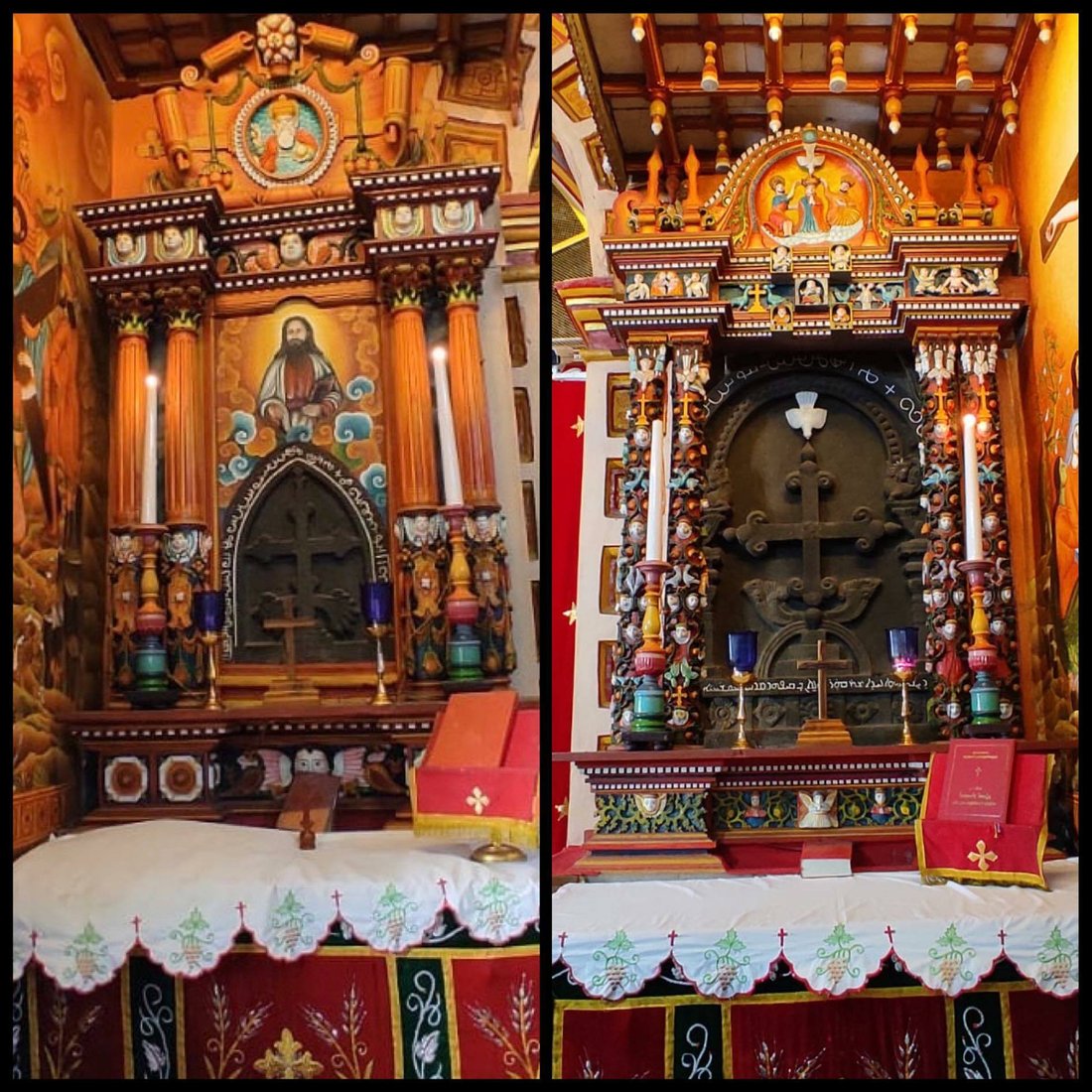
The Southist (Knanaya) branch of the Kerala church remembers a Syriac merchant, Thomas of Cana, leading dozens of Christian families from Persia to Kodungallur and receiving privileges from a local ruler — knitting the ancient Indian church more closely to the Church of the East. The traditional date is AD 345, though a number of scholars place the migration centuries later.
c. AD 180Pantaenus of Alexandria
The early historian Eusebius records that Pantaenus, head of the famous catechetical school of Alexandria, travelled east around AD 180 to preach “to the Indians,” and found believers already there. Ancient writers sometimes used “India” loosely, so the exact land is debated — but the report itself is one of the earliest written witnesses to Christianity reaching the East.
c. AD 849The Kollam Copper Plates
Around AD 849 a governor of Kollam had a set of copper plates engraved, granting land, revenue and protections to a church and its Christian community on the Malabar coast. Signed by Christian, Jewish and Muslim witnesses in several scripts, the plates are the oldest dated documents in India that name its ancient Christians — hard evidence, in metal, of a settled and respected church centuries before any European mission arrived.
c. AD 883King Alfred's Alms to the Shrine of Thomas
The Anglo-Saxon Chronicle records that around AD 883 King Alfred of Wessex sent gifts to Rome and, remarkably, on “to India, to Saint Thomas.” Whether the envoys ever reached the Malabar coast is debated, but the entry shows that even far-off England took it for granted that a shrine of the apostle stood in India — the Thomas tradition reaching, in writing, to the other end of the known world.
Medieval
6th–14th centuryTravellers, monks and friars who saw India's Christians with their own eyes and wrote it down.
 c. AD 550
Cosmas Indicopleustes
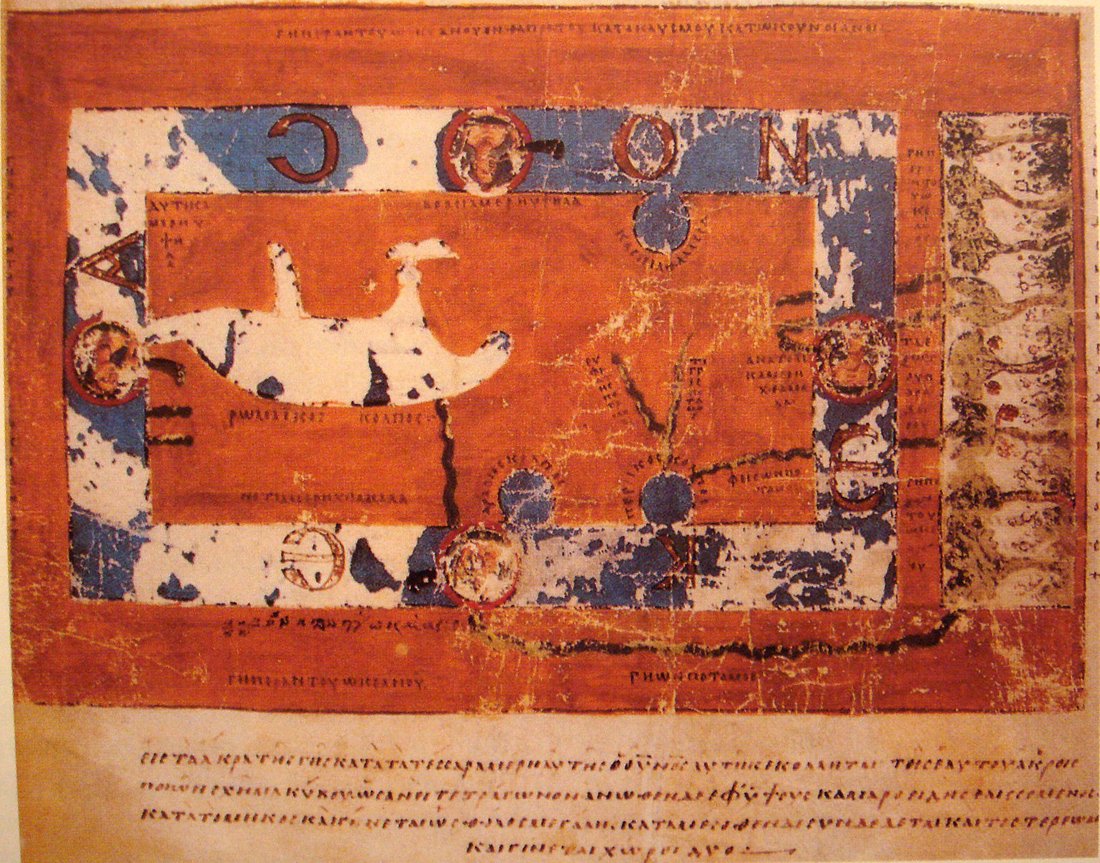
Around AD 550 an Alexandrian merchant-turned-monk, remembered as Cosmas the “India-sailor,” described organised Christian congregations — complete with clergy and a bishop — on the Malabar coast and in Ceylon. His account is among the earliest outside evidence that a functioning church already existed in India centuries before any European mission.
1329Jordanus of Séverac
In 1329 Pope John XXII named the Dominican friar Jordanus of Séverac the first Latin Catholic bishop in India, seated at Quilon (Kollam) on the Kerala coast. His letters back to Europe are some of the earliest first-hand European descriptions of the land, its peoples and its long-established Christians.
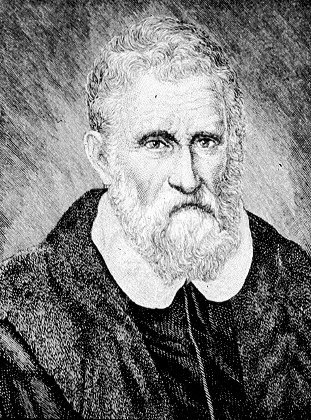 c. 1292
Marco Polo at the Shrine of Thomas
On his long voyage home from China around 1292, the Venetian traveller Marco Polo recorded stopping near Mylapore, where the tomb of the apostle Thomas was venerated. He noted the pilgrims — Christian and non-Christian alike — who came to the shrine seeking healing, a rare medieval glimpse of the living Thomas tradition.
c. 1291John of Montecorvino on the Coromandel Coast
On his long road to the court of the Great Khan, the Franciscan John of Montecorvino halted for months near Mylapore around 1291 and buried a travelling companion beside the reputed tomb of the apostle Thomas. His letters give one of the earliest Latin descriptions of the Coromandel coast and its Christians — written by the friar who would go on to become the first Catholic archbishop in China.
1321The Martyrs of Thana
In 1321 four Franciscan friars, led by Thomas of Tolentino, were put to death near Thana on the west coast after a disputation over the faith turned against them. Jordanus of Séverac, who had journeyed with them, gathered their remains — and stayed on in India, becoming a few years later its first Latin bishop. Their deaths are among the best-documented episodes of the medieval Latin church reaching India.
Catholic & Portuguese
16th–18th centuryThe age of the great Catholic missions — Xavier, the Jesuits of Madurai, and the first Indian martyr-saints.
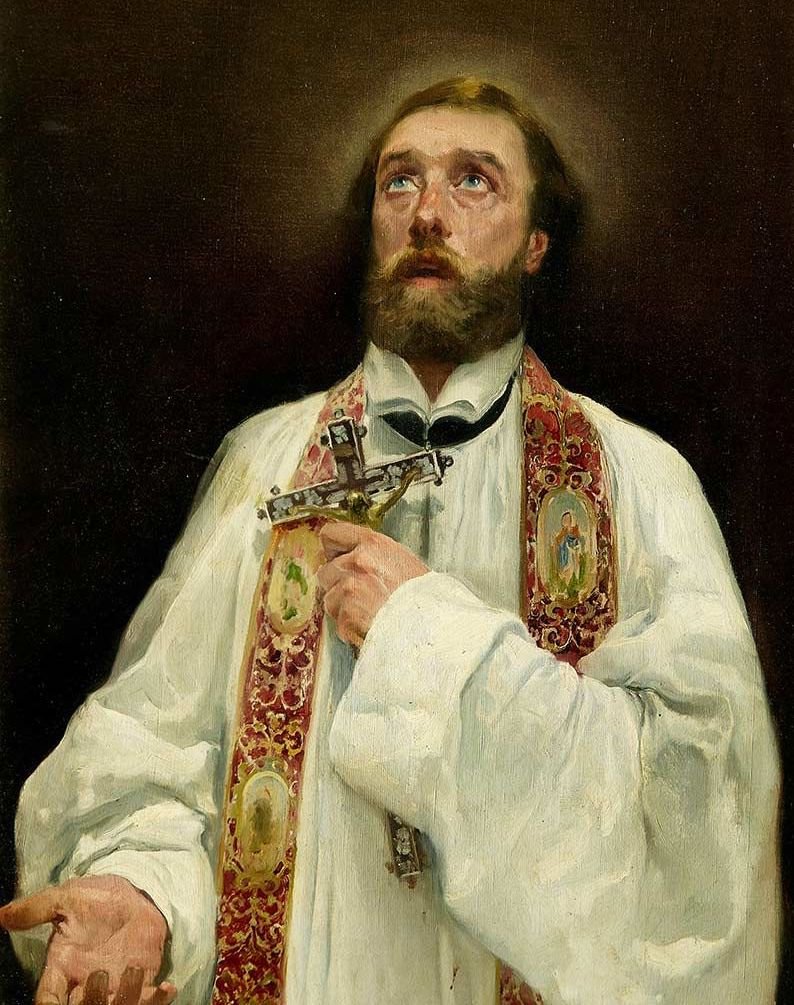 arrived Goa, 1542
Francis Xavier
The Jesuit Francis Xavier landed at Goa on 6 May 1542 and spent the next decade walking the fishing coasts of south India and beyond, baptising in great numbers and learning to teach the faith in simple local terms. His restless energy set the pattern for Catholic mission across Asia.
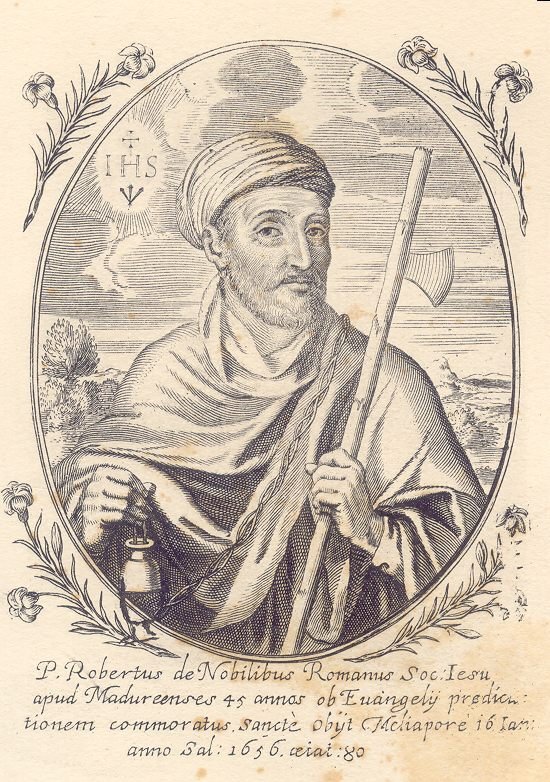 Madurai, from 1606
Robert de Nobili
Arriving in Madurai in 1606, the Italian Jesuit Robert de Nobili chose to live as a Tamil scholar-ascetic — adopting local dress, language and custom — to reach high-caste Hindus who had recoiled from the foreign-looking faith. His “accommodation” method was fiercely debated in his own day and has been studied ever since.
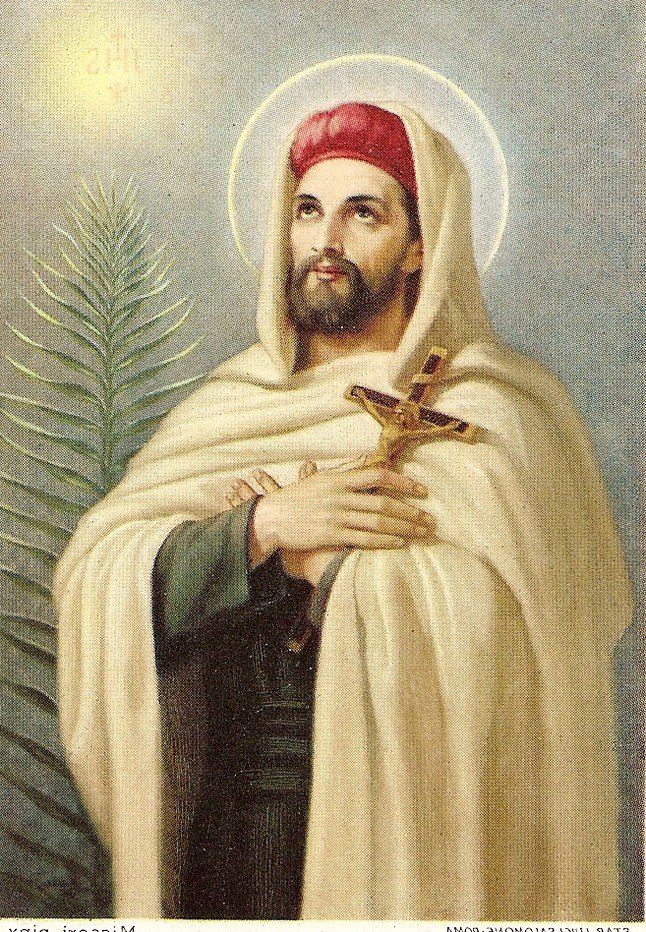 martyred 1693
John de Britto
The Portuguese Jesuit John de Britto laboured in the Madurai mission in de Nobili's style, living simply among the Tamil people, until he was put to death in 1693 for his preaching. Rome later canonised him; in India he is sometimes remembered as a second Xavier.
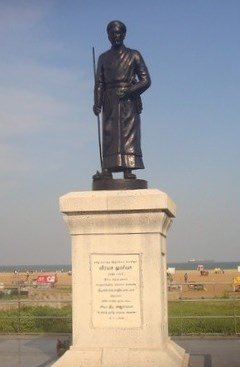 in India 1710–1747
Constanzo Beschi (Viramamunivar)
The Italian Jesuit Constanzo Beschi — known in Tamil as Viramamunivar — mastered Tamil so deeply that he composed a celebrated Christian epic, the Thembavani, and produced early Tamil dictionaries and grammars. He is remembered as much in the history of Tamil literature as in the history of the mission.
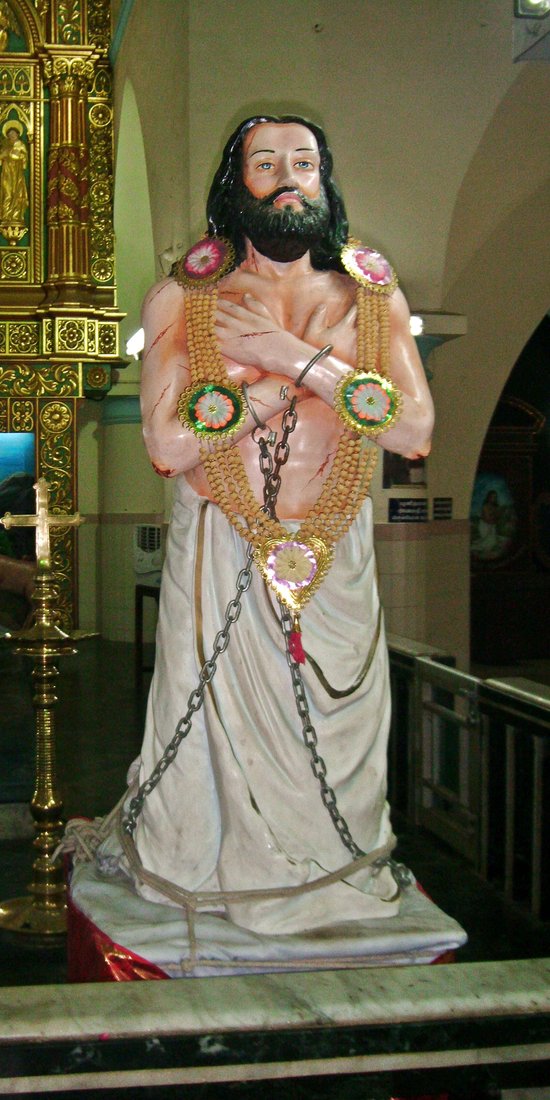 martyred 1752 · canonised 2022
Devasahayam Pillai
Devasahayam Pillai, an official at the Travancore court, converted and took a name meaning “God is my help.” Fierce opposition led to his death in 1752. In 2022 he was declared a saint of the Catholic Church — the first Indian layman to be canonised.
1535–1537The Paravas of the Fishery Coast
Squeezed between rival overlords and Arab competitors in the pearl trade, the Parava fishing communities of the far south sought Portuguese protection — and in tens of thousands accepted baptism in 1535–37, years before Francis Xavier ever arrived. It was Xavier who then walked their villages catechising a people who had come to the faith as whole communities rather than one by one. Their descendants remain Catholic to this day — a reminder that much of India's Christianity spread through communities, not lone converts.
1653The Coonan Cross Oath
Chafing under Portuguese and Jesuit efforts to bring their ancient church under Latin control, the Saint Thomas Christians gathered at Mattancherry in 1653 and — so many that they could not all touch the great stone cross — gripped ropes tied to it and swore they would not submit. The oath split the old community: most were later reconciled with Rome as the Syro-Malabar church, while others held to an independent path. It stands as the moment India's oldest Christians insisted on keeping their own identity.
Protestant Dawn
18th–19th centuryFrom the first Protestant landing at Tranquebar to a generation of high-caste converts who reasoned their way to Christ.
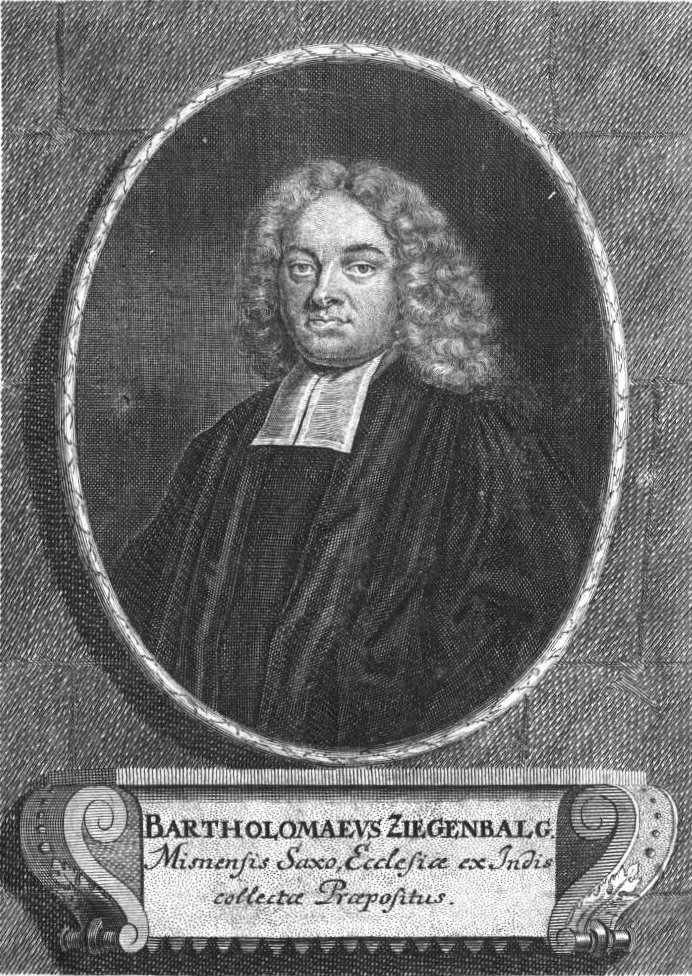 Tranquebar, 1706
Bartholomäus Ziegenbalg
On 9 July 1706 Bartholomäus Ziegenbalg stepped ashore at the Danish outpost of Tranquebar as the first Protestant missionary to India. He learned Tamil, opened schools, and translated the New Testament into Tamil — putting Scripture into an Indian language in print for the first time.
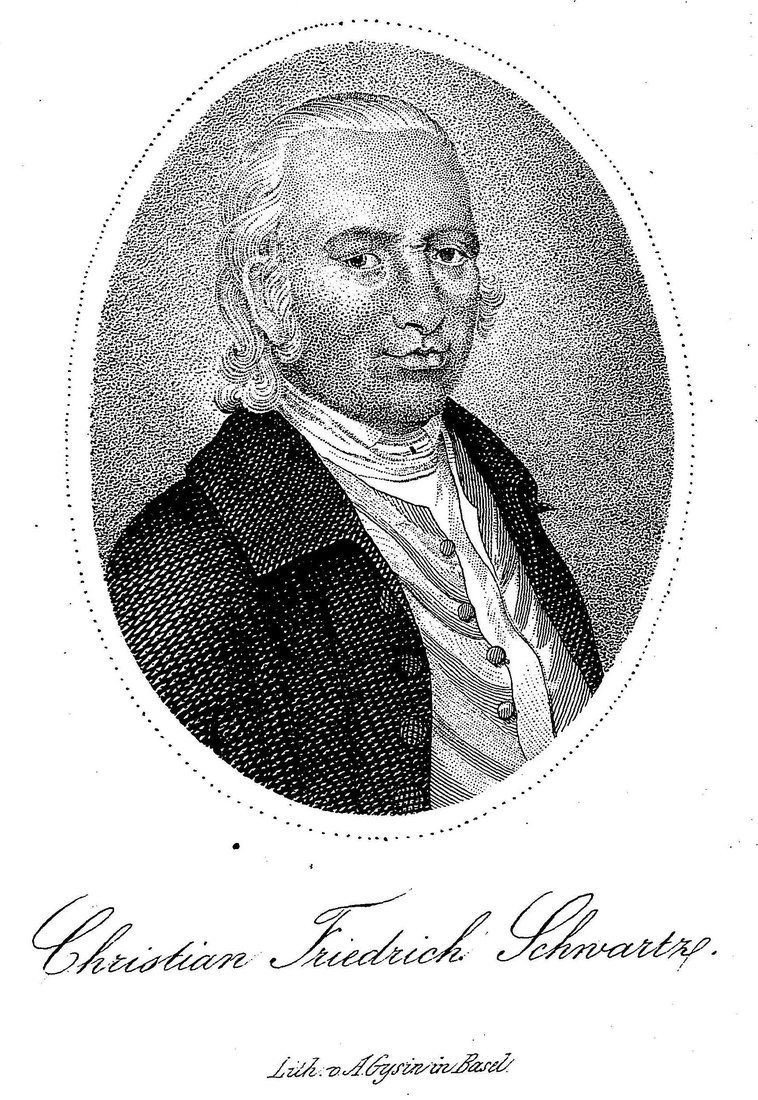 in India from 1750
Christian Friedrich Schwartz
The German Lutheran Christian Friedrich Schwartz gave nearly fifty years, from 1750, to the missions at Tranquebar, Tiruchirapalli and Tanjore. So plainly honest that Hindu and Muslim rulers trusted him as a go-between, he was even asked to tutor the young Raja Serfoji of Tanjore.
ordained 1733Aaron — the First Indian Protestant Pastor
In 1733 the Tranquebar mission ordained Aaron, a Tamil believer from near Cuddalore — the first Indian to be set apart as a Protestant pastor. For more than a decade he preached and shepherded among his own people, a quiet milestone in an Indian-led church.
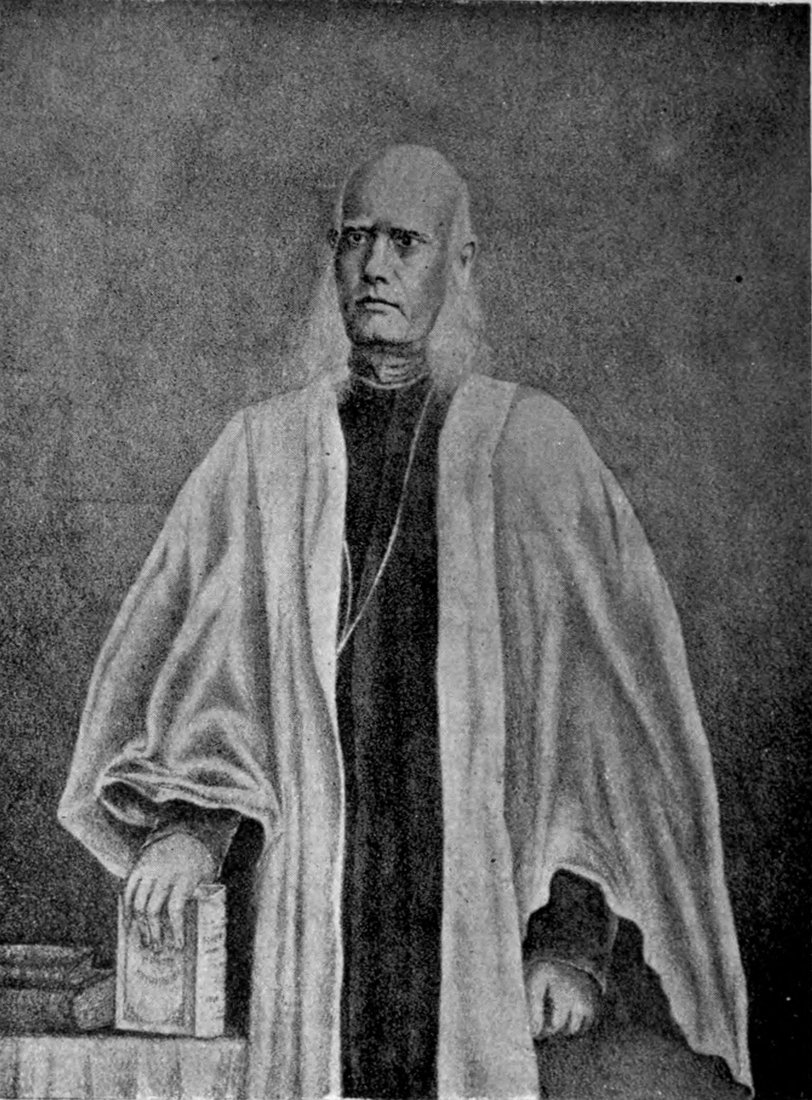 baptised 1832
Krishna Mohan Banerjee
A gifted young Bengali from a Kulin Brahmin family, caught up in Calcutta's ferment of reform, Krishna Mohan Banerjee was baptised in 1832. He became a noted scholar and one of the first Indians ordained in the Anglican church in Bengal, arguing that Christ answered the deepest longings already present in India's own scriptures.
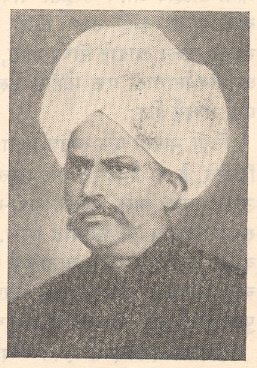 baptised 1854
Baba Padmanji
Baba Padmanji, a Marathi writer, came to faith after a long inward struggle that he later set down in his own autobiography — a book counted among the first works of Marathi Christian literature. He was baptised in 1854 and spent his life writing for ordinary readers in his own tongue.
baptised 1848Nehemiah (Nilakantha) Goreh
A Chitpavan Brahmin scholar from Benares, Goreh set out to refute Christianity and defend Hindu philosophy on paper — and found his own arguments turning against him under his honest scrutiny. He was baptised in 1848 and became one of India's most respected Christian thinkers: the apologist undone by the rigour of his own inquiry.
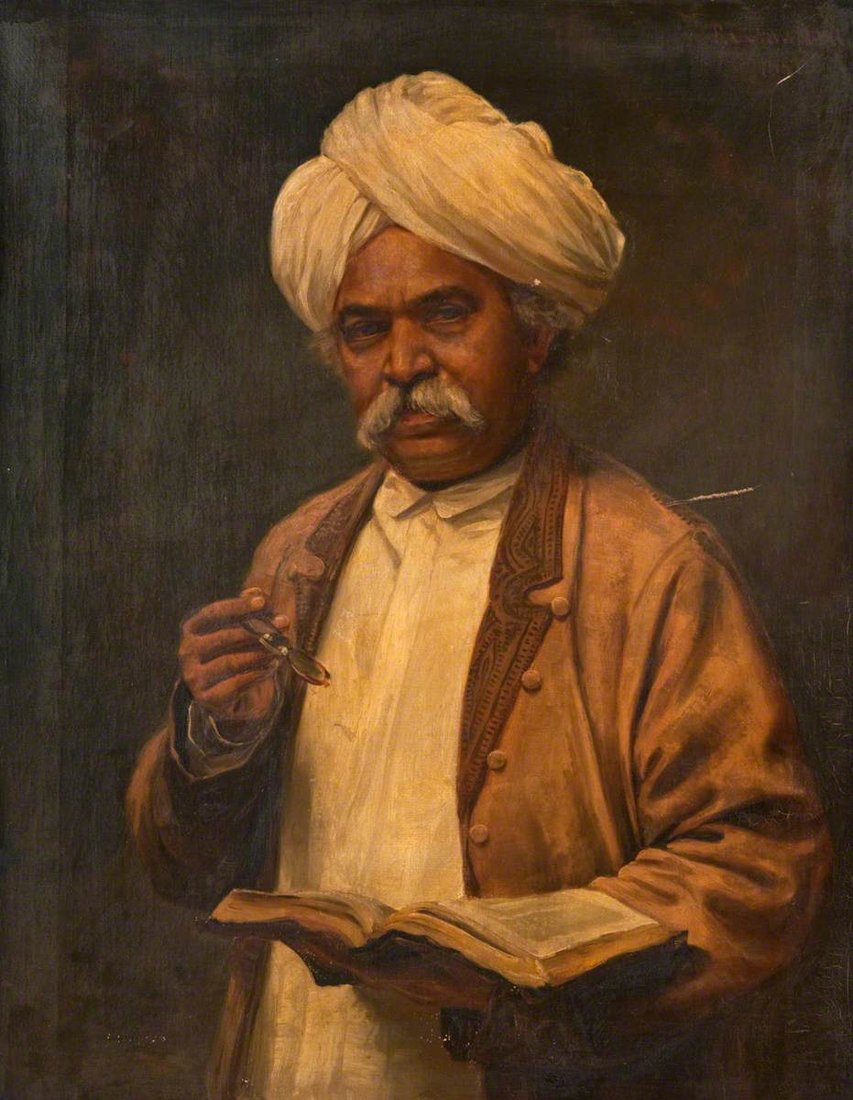 baptised 1843
Narayan Sheshadri
Narayan Sheshadri, a Deccani Brahmin educated in Bombay, was baptised in 1843 and gave his life to preaching among the Marathi people and to rescuing outcaste and famine-struck families. His long labour earned him the affectionate title “Apostle of the Marathas.”
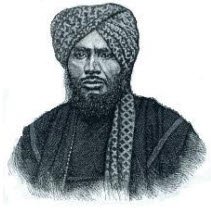 baptised 1866
Imad-ud-din Lahiz
Imad-ud-din Lahiz, a Punjabi Muslim maulvi who had once helped argue the Islamic case against Christianity, was baptised in 1866 after his own searching changed his mind. He became a CMS Anglican priest and a prolific Urdu author — even producing an Urdu translation of the Qur'an for study.
baptised 1858H. A. Krishna Pillai
H. A. Krishna Pillai, a Tamil poet steeped in classical Hindu literature, was baptised in 1858 after years of hesitation. He poured his gifts into a great Tamil devotional epic, the Rakshanya Yatrikam — a retelling of the Christian pilgrimage in the music and metre of his own language.
baptised 1800Krishna Pal — the First Serampore Convert
A Bengali carpenter, Krishna Pal dislocated his arm and came to the Serampore missionaries for help — and left having found their faith. In December 1800, after William Carey's mission had laboured seven years without a single Indian convert, Krishna Pal was baptised in the Hooghly, crossing caste lines to do it. He became a preacher and a writer of Bengali hymns — the long-awaited first fruit of the Baptist mission in Bengal.
The Indian Awakening
19th–20th centuryIndian voices — poets, scholars, a wandering sadhu, the first Indian bishop — making the faith their own.
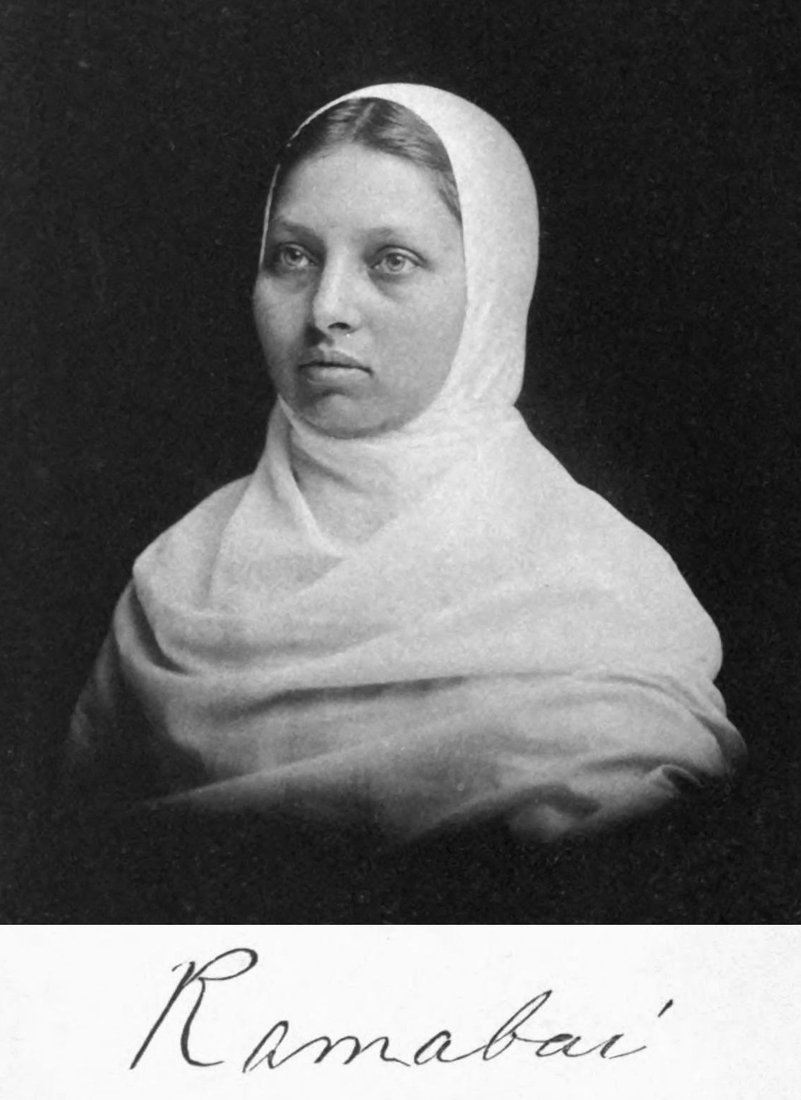 baptised 1883 · revival 1905
Pandita Ramabai
A Sanskrit scholar and high-caste widow honoured across India for her learning, Ramabai was baptised in 1883 and founded the Mukti Mission near Pune to shelter widows and famine orphans. In 1905 a remarkable prayer revival broke out there. She set down her own account of the long road that brought her to Christ.
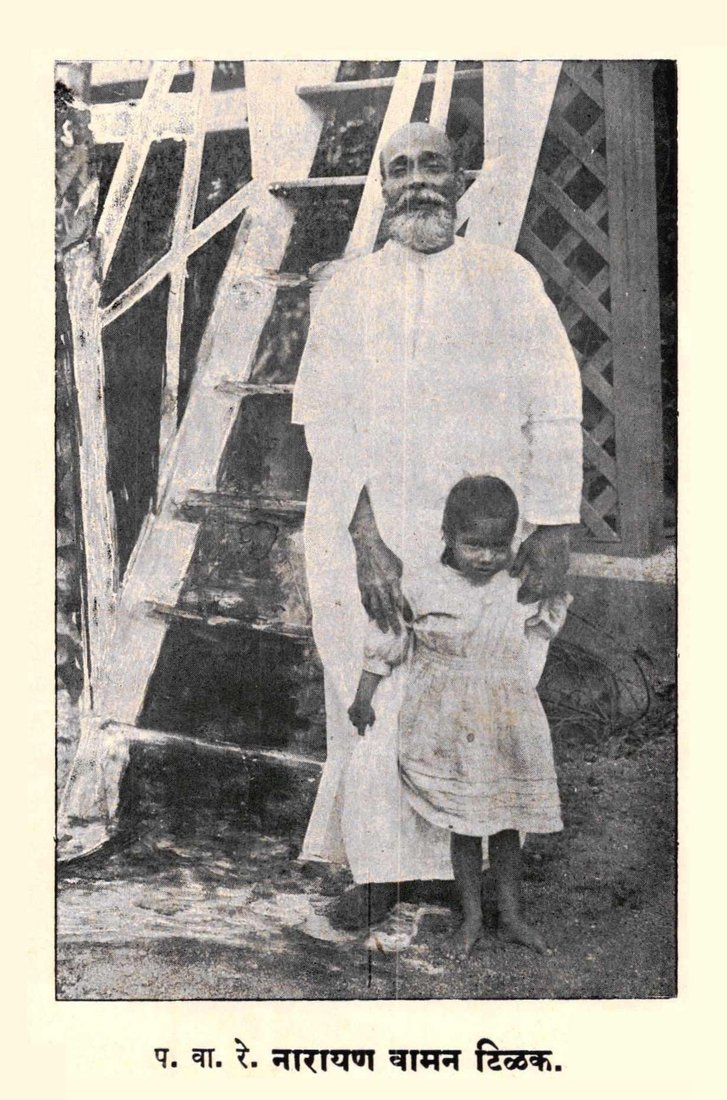 baptised 1895
Narayan Vaman Tilak
A proud Marathi Brahmin poet, Tilak was handed a New Testament by a stranger on a train who dared him to read it through for a year. He did — and by the end Christ had won him. Baptised in 1895, he insisted an Indian pastor perform the rite, and became one of India's finest Christian poets, setting the gospel to hundreds of Marathi hymns.
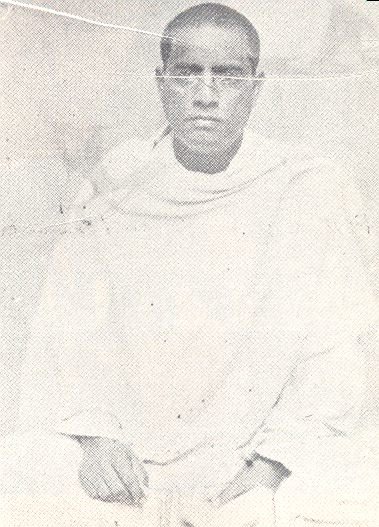 baptised 1891
Brahmabandhab Upadhyay
Brahmabandhab Upadhyay, a Bengali thinker and Hindu ascetic, was baptised in 1891 and set himself to express Christian faith in the language of Vedanta, living as a Christian sannyasi. His bold, contested project — to make the gospel at home in Indian philosophy — still stirs debate a century on.
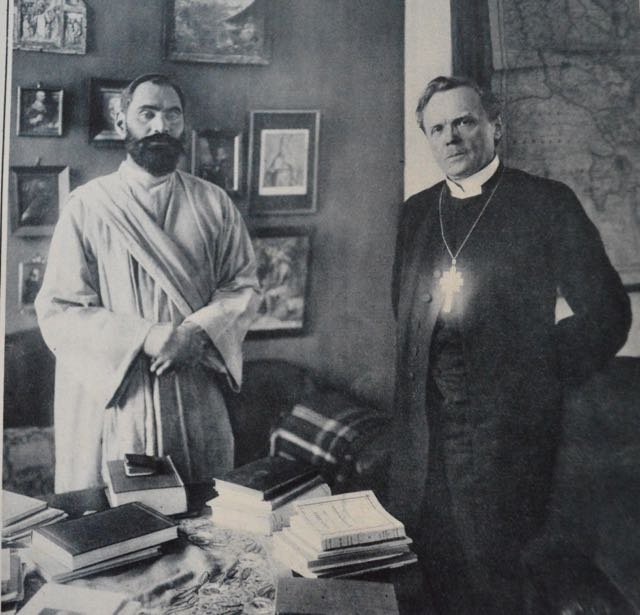 vision 1904 · baptised 1905
Sadhu Sundar Singh
Grieving his mother and bitter toward the missionaries' faith, the teenage Sikh Sundar Singh burned a Gospel in protest, then resolved to throw himself under the morning train unless God showed him the truth. He said a vision of the living Christ met him before dawn in December 1904. Baptised the next year, he spent his life as a wandering Christian sadhu in a saffron robe.
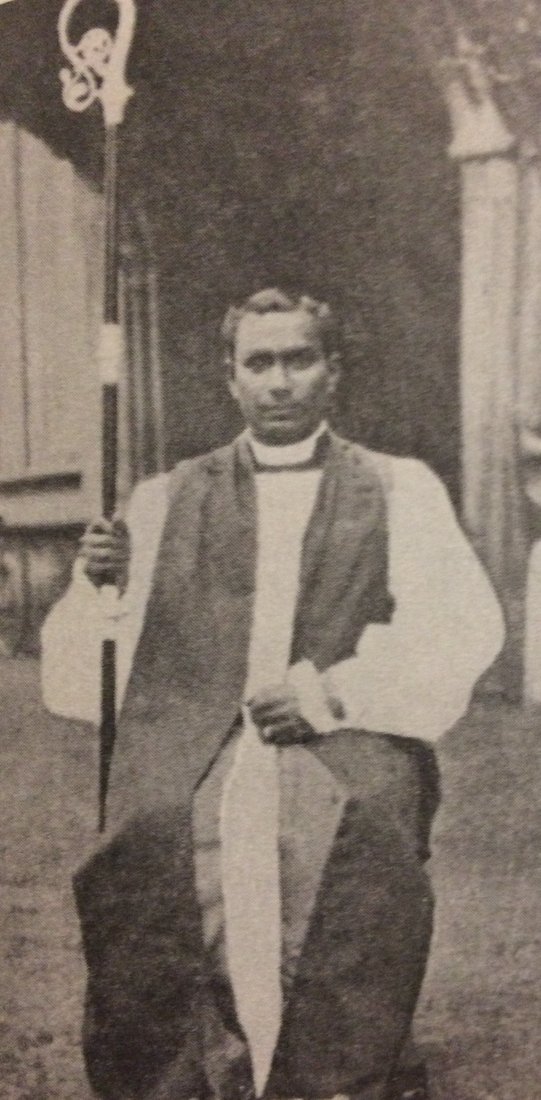 first Indian Anglican bishop, 1912
V. S. Azariah
Convinced that Indians themselves should carry the gospel, Azariah helped found indigenous mission societies and, on the last day of 1912, was consecrated the first Indian bishop in the Anglican Communion, at Dornakal. His life answered the charge that Christianity in India was merely a foreign import.
1866–1878The Telugu Mass Movement — Ongole and the Great Famine
The American Baptist mission among the Telugus was so nearly abandoned that it was nicknamed the “Lone Star.” Then came the catastrophic famine of 1876–78. At Ongole, John E. Clough set converts and enquirers to work for famine wages on the Buckingham Canal, carrying thousands through the disaster; when the rains returned, Telugus of the poorest castes turned to the faith in extraordinary numbers — some two thousand baptised on a single day in 1878, and tens of thousands within a few years. It was one of the first great mass movements of India's most marginalised people, and it grew straight out of famine relief.
from 1845The Kols of Chotanagpur
When missionaries of the Gossner mission reached Ranchi in 1845, response was slow — until, through the 1850s, whole villages of the Oraon, Munda and Ho peoples began turning to Christ together. Persecution and the upheavals of 1857 scattered the young church, yet it regathered and grew into one of the largest Christian populations in India. It is the story of tribal peoples, long pushed to the margins, embracing the faith as communities and finding in it a new dignity.
founded 1905The National Missionary Society
On Christmas Eve 1905 a group of Indian Christians — among them V. S. Azariah and K. T. Paul — founded the National Missionary Society, run and paid for entirely by Indians to carry the gospel across their own land. Its principle was simple and pointed: Indian money, Indian workers, Indian leadership. It marked the moment the Indian church set out to evangelise India itself, no longer as the junior partner of a foreign mission.
The Northeast
19th century onwardThe hill peoples of the north-east, among whom the gospel took root and spread with remarkable speed.
Thomas Jones & the Khasi Hills
The Welsh missionary Thomas Jones reached the Khasi Hills of the north-east in 1841 and gave the Khasi language a written form in Roman script — the foundation of Khasi literacy and letters. He is still honoured there as a father of the Khasi alphabet.
1894–1899The First Mizo Believers
Welsh and Baptist missionaries entered the Lushai (Mizo) Hills in 1894, and in 1899 the first two Mizo believers, Khuma and Khara, were baptised. Within a few generations these once-remote hills became one of the most thoroughly Christian regions of India.
 1872
1872
The Naga Awakening (E. W. Clark)
In December 1872 the American Baptist E. W. Clark reached the Ao Naga village of Molungkimong and helped gather its first church. It was the seed of a movement that, over the century that followed, would make Nagaland one of the most Christian places on earth.
from 1836Nathan Brown, Miles Bronson & the Assam Mission
American Baptists Nathan Brown and Miles Bronson reached Assam in the late 1830s and threw themselves into its languages — printing the first Assamese Scriptures and compiling a dictionary that helped Assamese survive and flourish as a written tongue when officials had tried to replace it with Bengali. Their mission, and the Welsh and Baptist work that followed across the north-eastern hills, planted churches whose descendants are largely Christian today.
The Twentieth Century
20th centuryBridge-builders, indigenous evangelists, and witnesses whose lives — and in some cases deaths — reached far beyond India.
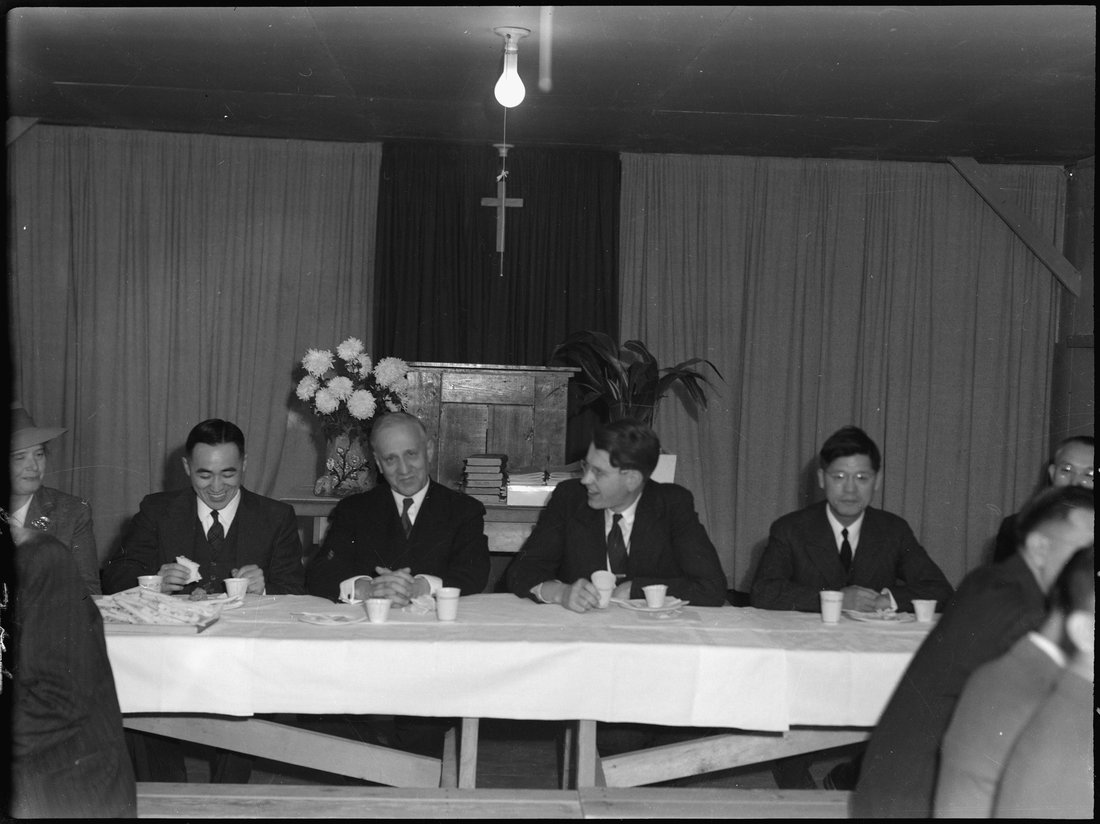 from 1907
E. Stanley Jones & the Round Table
Rather than attack other faiths, the American missionary E. Stanley Jones invited India's Hindu, Muslim and Sikh leaders to a “round table” to share their own deepest experience — and then lifted up the person of Christ. His 1925 book The Christ of the Indian Road carried that approach around the world, and he counted Gandhi among his friends.
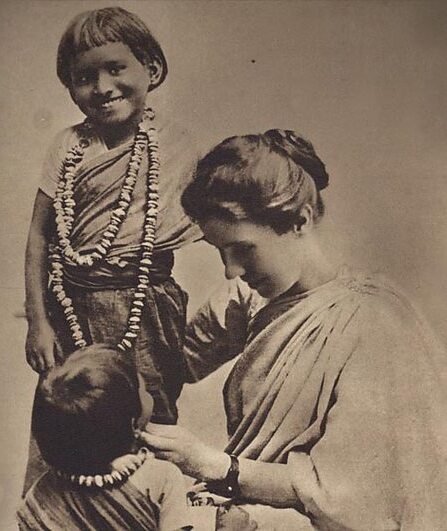 Dohnavur, from 1901
Amy Carmichael
The Irish missionary Amy Carmichael settled at Dohnavur in the Tamil south and built a family of refuge for children rescued from temple servitude, staying in India for over fifty years without a single furlough. Her early book Things as They Are told the hard truth of that work to readers back home.
baptised 1932Bakht Singh
A Sikh engineering student, Bakht Singh once threw a Bible into a fire — only to find himself drawn to Christ while studying abroad, and was baptised in 1932. He returned to India as one of the century's great indigenous evangelists, gathering vast assemblies and planting hundreds of self-supporting Indian churches that leaned on no foreign funds.
 in India 1936–1974
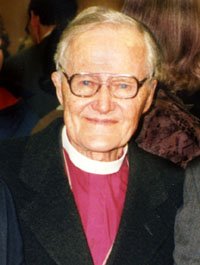
Lesslie Newbigin
The British missionary Lesslie Newbigin gave nearly forty years to India, becoming a bishop in the newly united Church of South India. His later writings on the gospel and modern culture made him one of the most influential mission thinkers of the twentieth century.
 1946
1946
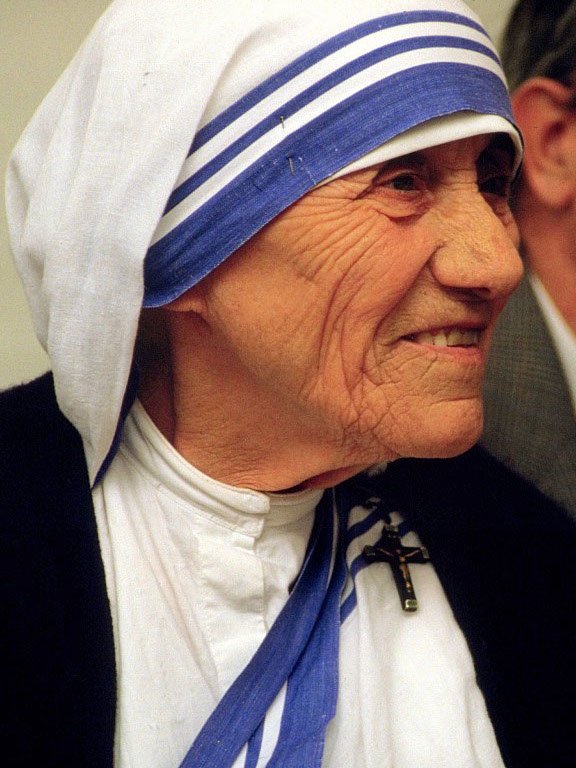
Mother Teresa — the “call within a call”
Already a nun and schoolteacher in Kolkata, Mother Teresa described a “call within a call” on a train to Darjeeling in September 1946 — to leave the convent and serve the poorest of the poor. Four years later she founded the Missionaries of Charity. She was canonised in 2016.
1999Graham Staines
Graham Staines, an Australian who had cared for leprosy patients in Odisha for decades, was burned to death with his two young sons in January 1999. His widow, Gladys, publicly forgave the killers and chose to stay on — a witness of grief and grace that moved the whole nation.
Vellore, from 1900Ida Scudder & the Night of Three Deaths
Home in India from her studies in America, Ida Scudder — born into a long line of medical missionaries — was called on in a single night by three men whose wives lay dying in childbirth; each refused a male doctor, and by morning all three women were dead. She said that night decided her life. She trained as a physician, opened a one-room clinic at Vellore in 1900, and built it into the Christian Medical College — one of Asia's great hospitals, born of care for the sick in an age of famine and epidemic.
27 September 1947The Church of South India
Six weeks after India's independence, on 27 September 1947, Anglicans, Methodists and the Reformed churches of the south set down three centuries of separation and united as the Church of South India — the first union in modern times to join episcopal and non-episcopal traditions in a single church. Long prepared by Indian and missionary leaders together, it was a landmark the wider Christian world watched closely, and a sign of a church learning to stand as one on Indian soil.