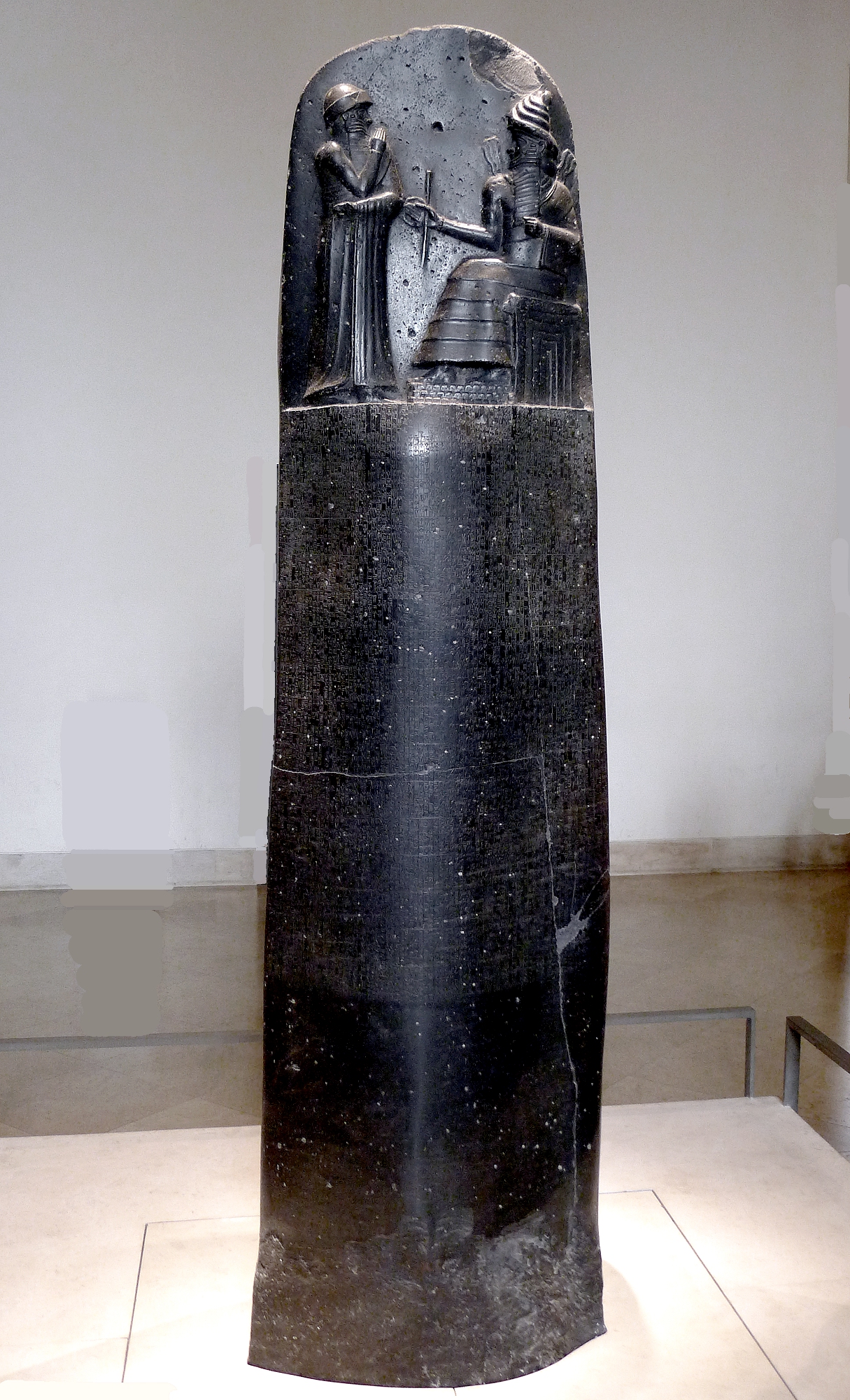

Centuries before Moses, a Babylonian king had his laws carved on a two-metre pillar and set up for all to see. Many of its rulings run remarkably close to biblical law — a goring ox, a collapsed house, a shepherd's liability for animals lost to predators — showing that Israel's legal tradition was written in a language its neighbours already spoke. Yet the differences are just as telling: biblical law frames itself as covenant with God and drops many of Hammurabi's class-based penalties.
- What it is
- A tall black basalt stela carrying about 282 Babylonian laws, topped by a relief of the king before the sun-god
- Date of artifact
- c. 1750 BC
- Discovered
- Susa, Iran (carried there as war booty from Babylon), 1901 (Jacques de Morgan's French expedition)
- Where it is now
- Louvre, Paris
- Related to
- The legal world that lies behind the laws of Moses
- Scripture
- Exodus 21–23 · Deuteronomy
What this find showsThat written law codes with strong parallels to the Torah existed long before Moses — biblical legislation fits a real, documented Near Eastern legal culture.
What it does not proveIt does not show the Bible copied Hammurabi; the parallels reflect shared convention, and the two bodies of law also differ sharply in spirit.
Sources & further reading