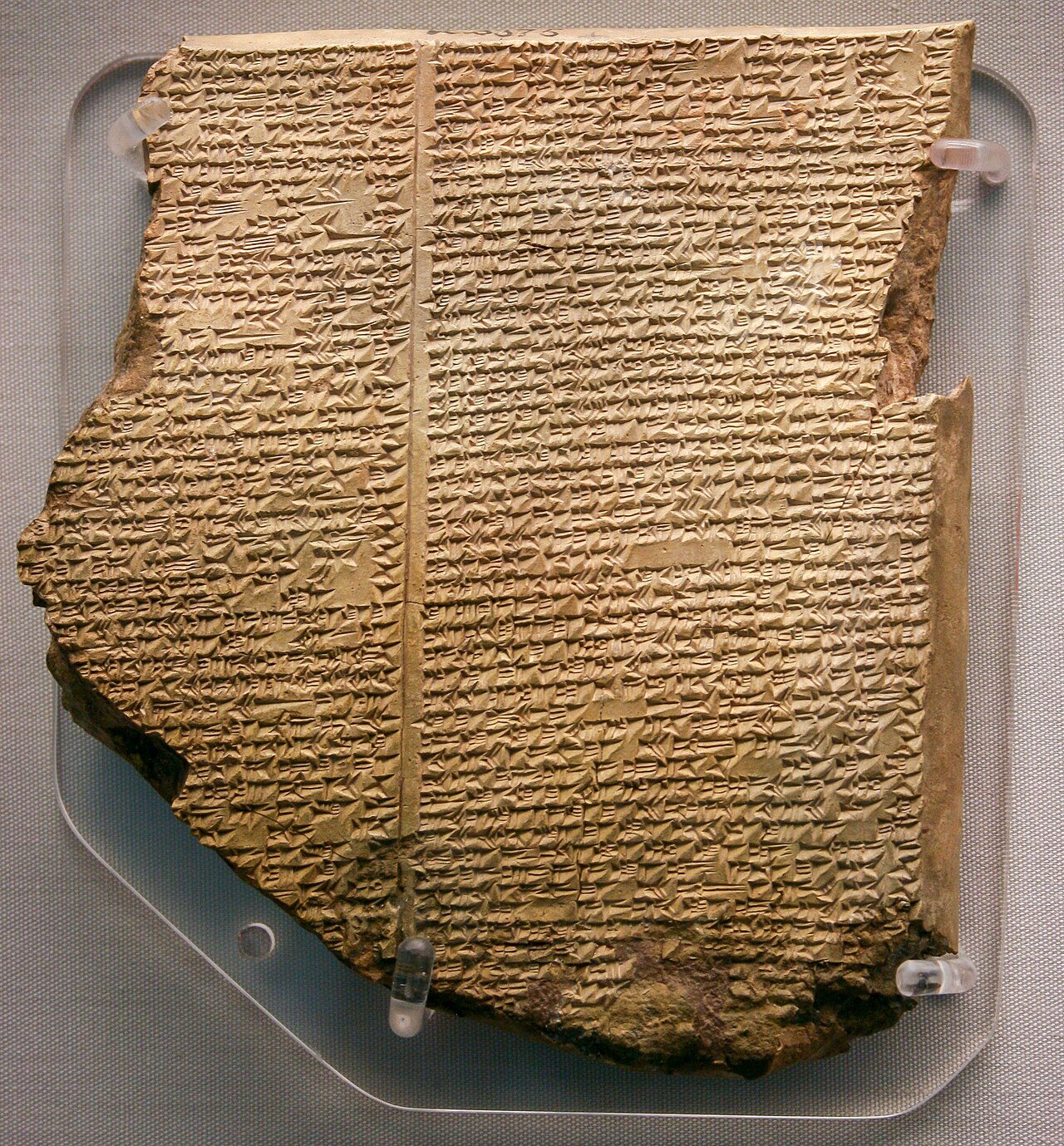

When George Smith first read this tablet in 1872 and found a Babylonian flood hero building a great boat, riding out a deluge, and sending out birds to find dry land, it caused a public sensation. The parallels with Noah are real and close. What they show, though, is debated — and worth stating carefully.
- What it is
- A clay tablet (Tablet XI of the Epic of Gilgamesh) carrying a Babylonian flood story, in Akkadian cuneiform
- Date of artifact
- 7th-century BC copy of a much older tradition
- Discovered
- the library of Ashurbanipal, Nineveh, Iraq, 1853 (excavated by Hormuzd Rassam; the flood text read by George Smith in 1872)
- Where it is now
- British Museum, London
- Related to
- The flood of Noah
- Scripture
- Genesis 6–9
What this find showsThat a flood story with striking Noah-like details circulated across the ancient Near East, older than the earliest copies of Genesis we possess.
What it does not proveIt does not prove a literal worldwide flood, nor that Genesis is history; the Babylonian version is polytheistic, and most scholars see the two as branches of one shared Mesopotamian flood tradition rather than independent reports.
Contested: Whether Genesis draws on this tradition, or both draw on a common memory, is genuinely disputed. What the tablet establishes is a shared story, not a verified event.
Sources & further reading