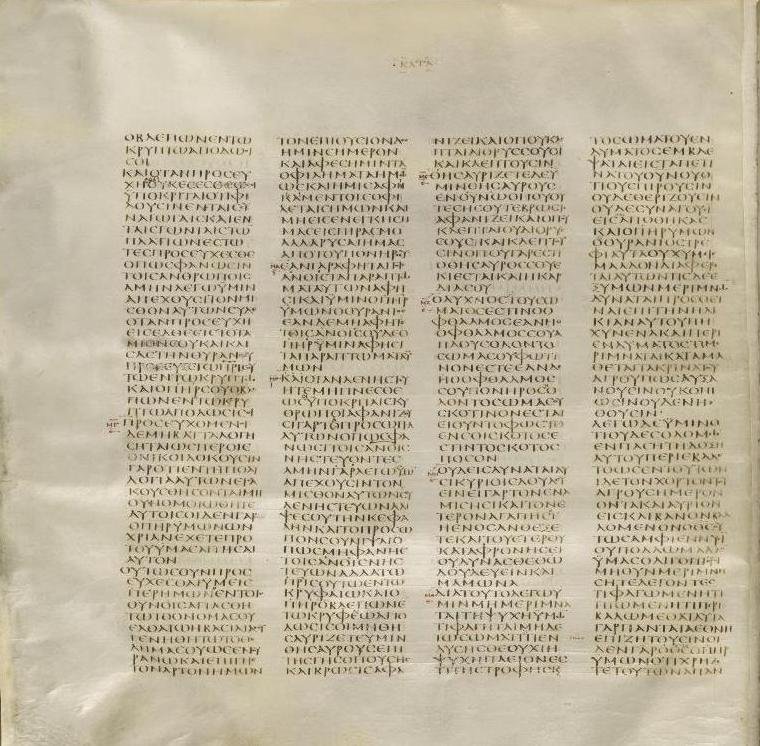

The oldest near-complete Greek Bibles are two magnificent fourth-century manuscripts: Codex Sinaiticus and Codex Vaticanus, both from around AD 325–360. Between them they preserve almost the whole Bible in one place for the first time. They are also honest witnesses to the messiness of copying: Sinaiticus even includes two early works — the Epistle of Barnabas and the Shepherd of Hermas — that did not make the final canon, and the two codices differ from each other in thousands of small details.
- Codex Sinaiticus and Codex Vaticanus date to ~AD 325–360 — the earliest near-complete Greek Bibles.
- Sinaiticus includes the Epistle of Barnabas and the Shepherd of Hermas.
What the evidence showsBy the mid-300s the church possessed complete, carefully-made Greek Bibles — a fixed point against which the whole earlier manuscript tradition can be checked.
Where it stopsThey still sit some three centuries after the New Testament was written, and they disagree with each other in thousands of places, most of them minor.
Sources & further reading