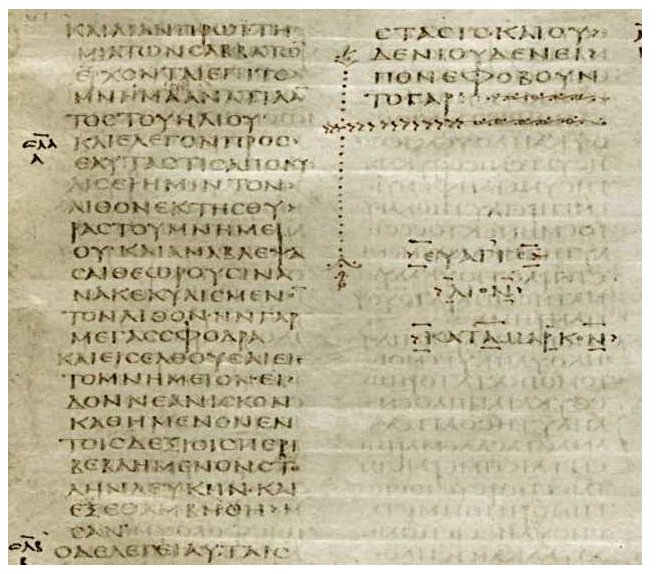

A handful of familiar passages are missing from the earliest and best manuscripts, and textual scholars broadly agree they were added later: the long ending of Mark (16:9–20), the moving story of the woman caught in adultery (John 7:53–8:11), and the explicitly Trinitarian 'Comma Johanneum' (1 John 5:7–8). This is no secret — open almost any modern Bible and you will find these passages footnoted or bracketed. Honesty here is a strength, not an embarrassment.
- Mark 16:9–20, John 7:53–8:11, and the Comma Johanneum (1 John 5:7–8) are absent from the earliest manuscripts.
- Modern Bibles footnote or bracket them rather than remove them.
What the evidence showsThe scholarly consensus, reflected openly in modern Bibles, is that these particular passages are later additions to the text.
Where it stops'Later addition' is a claim about textual origin, not about truth: the story in John 8 may still preserve a genuine early memory, and Bibles flag these passages rather than delete them.
Sources & further reading