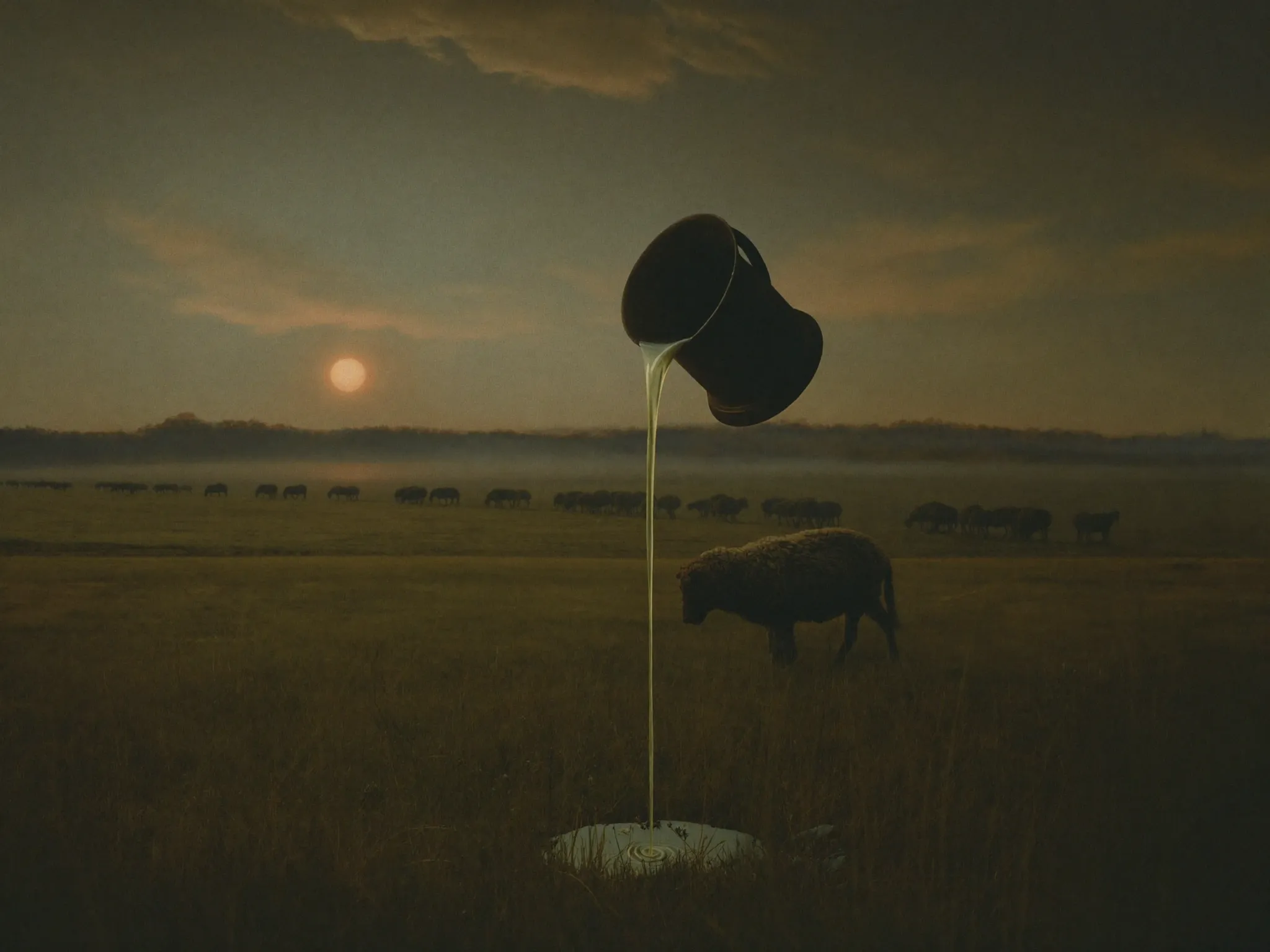
1 Samuel 26 — The Spear and the Cruse of Water
The Ziphites come to Gibeah a second time: David hides in the hill of Hachilah. Saul comes down with three thousand chosen men and pitches by the way; David's spies confirm it. By night David and Abishai go down into the camp. Saul lies sleeping in the trench, his spear stuck in the ground at his bolster, Abner and the people round about him. Abishai asks to pin him to the earth with one stroke; David refuses — who can stretch forth his hand against the LORD's anointed and be guiltless? The LORD shall smite him, or his day shall come, or he shall fall in battle. They take the spear and the cruse of water and go, for a deep sleep from the LORD is on the camp. From a hilltop David taunts Abner: ye are worthy to die; see where the king's spear is. Saul knows the voice: Is this thy voice, my son David? David pleads — what have I done? if the LORD have stirred thee up, let him accept an offering; the king is come out to seek a flea. Saul confesses: I have sinned; I have played the fool. The spear is sent back; Saul blesses him; each goes his way, and they never meet again.
“And David said to Abishai, Destroy him not: for who can stretch forth his hand against the LORD’s anointed, and be guiltless?”
— 1 Samuel 26:9
- v.1-5 The Ziphites again; Saul at Hachilah; David sees where the king lies
- v.6-12 Abishai in the camp; the spear and the cruse of water; a deep sleep from the LORD
- v.13-16 From the far hill — Answerest thou not, Abner? ye are worthy to die
- v.17-20 Is this thy voice, my son David? — a flea, a partridge in the mountains
- v.21-25 I have sinned; I have played the fool — the spear returned; the last parting
Abishai, son of David's sister Zeruiah (1 Chronicles 2:16) and brother of Joab, steps into the book here — the first of the fierce nephews who will serve and trouble David to the end. His offer is blunt and professional: one thrust, and I will not smite him the second time. And he gives it God's name, as the men in the cave did (24:4): God hath delivered thine enemy into thine hand this day. Opportunity is read as permission; it is the most natural error in the chapter, and David names it.
The scene itself is extraordinary. Saul lies in the trench — the camp's inner ring, as the word is usually taken — with his spear, the weapon he has thrown at David twice (18:11; 19:10), stuck in the ground at his bolster (v. 7), and Abner, the captain of his host (v. 5), beside him. Two men stand in the middle of three thousand. The spear is within reach for the third time in the book, and this time it is David whose hand is near it.
Who can stretch forth his hand against the LORD's anointed, and be guiltless? — the second time David says it (24:6), and the form is now a question with only one answer. Guilt here is before God, not before Saul; the man who struck would carry blood (25:31) into his reign. David does not claim Saul deserves to live. He claims that the oil of 10:1 is God's property, and that neither his own anointing (16:13) nor Abishai's sword changes whose hand may remove it.
The church has read the verse as teaching a reverence for God's ordering of authority that does not depend on the worth of the man who holds it (Romans 13:1-2; 1 Peter 2:17) — while noting that David also refuses Saul's murderous orders, flees him, and tells him to his face that he is wrong. Honouring the anointed is not the same as doing his will. The verse is about the hand, and David will hold the Amalekite to it (2 Samuel 1:14-16).
David lays out the only three ways Saul may die that leave David clean: the LORD shall smite him (as He smote Nabal, 25:38), his day shall come to die (a natural death), or he shall descend into battle, and perish. He has just seen the first; the third is what will happen on Gilboa (31:3-6). Readers should notice that David is not prophesying — he is listing possibilities and ruling out a fourth. He waits for whichever God chooses, and he does not know which.
Verse 11 repeats the oath of the cave almost verbatim — the LORD forbid — and then does something the cave did not: David takes trophies that prove he could have killed. The spear is the sign of Saul's kingship and his violence; the cruse of water is his life in the desert. David takes the king's power and the king's life in his hands and gives both back (v. 22). The gesture says more than the robe did, and this time his heart does not smite him.
A deep sleep from the LORD — the word used when God made Adam sleep (Genesis 2:21) and when darkness fell on Abram (Genesis 15:12). The narrator explains how two men walked through a camp of three thousand untouched: not by stealth alone, but because God put the army to sleep. The text does not present this as David's cunning (though no man saw it also credits care); it presents the LORD as present in the camp of the man He has abandoned, keeping the one He has chosen.
That is the chapter's quiet theology. God does not strike Saul; He does not need to. He protects David, and leaves Saul to his own course — asleep, with his spear gone. Readers have seen in the sleeping camp a picture of a kingdom no longer under God's wakefulness: he that keepeth Israel shall neither slumber nor sleep (Psalm 121:4), but the king's guard slept. Abner, awake, will be asked to answer for it.
David's taunt from the far hill is addressed to Abner, not Saul, and it is biting: Art not thou a valiant man? and who is like to thee in Israel? (v. 15) — the greatest soldier in the kingdom has let a stranger walk to the king's pillow. Ye are worthy to die turns Saul's own sentence on David back on the men who should have guarded Saul. There is humour in it, and a lesson: the man accused of seeking the king's life is the one who has just kept it.
Abner is a figure to watch. He will carry Saul's house for years after Gilboa, make Ishbosheth king (2 Samuel 2:8-9), and die at Joab's hand — brother of the Abishai who was in the camp tonight (2 Samuel 3:27-30). The narrator introduces the two captains facing each other across a valley, one holding the king's spear. David will mourn Abner as a prince and a great man (2 Samuel 3:38); here he mocks him, and both are true.
The heart of David's plea, and its most searching idea. If the LORD have stirred thee up against me — if this persecution is somehow God's doing, as discipline — then let him accept an offering: David will seek God's face and make it right. But if the children of men have done it, the courtiers and informers, cursed be they. He leaves open that God may have a hand in his suffering; he does not leave open that he will stop bringing it to God. Job and the psalms reason the same way.
They have driven me out... from abiding in the inheritance of the LORD, saying, Go, serve other gods. No one has said those words; David means that exile from Israel is, in effect, exile from the place of the LORD's worship, and that his pursuers push him toward Philistine gods whether they intend it or not. The next chapter will show how real that pressure was (27:1). Verse 20's a flea... a partridge in the mountains is the self-abasement of 24:14 repeated: the king hunts something not worth the hunt.
I have sinned... I have played the fool, and have erred exceedingly. Saul's last words to David are a confession fuller than the tears of the cave, and the reader by now knows how to weigh them. He said I have sinned to Samuel too (15:24, 30), and it changed nothing. The word fool — Saul's own verdict on himself — comes in the chapter after Nabal's; the narrator does not need to draw the line. Yet the words are true, and Scripture records them as true: Saul knew.
Return, my son David — the invitation David does not accept. He sends the spear back by a young man (v. 22) rather than carry it himself, keeping the great space of verse 13 between them. This is not hardness; it is 24:22 learned. He answers Saul's confession with a prayer to God, not a promise to Saul: the LORD render to every man his righteousness (v. 23), let him deliver me out of all tribulation (v. 24). He commits himself to the Judge, as Peter will say of Christ (1 Peter 2:23).
Saul's farewell is a blessing and, in its way, a prophecy: thou shalt both do great things, and also shalt still prevail. The man who has fought God's choice since Gilgal pronounces it with his own mouth, as at Engedi (24:20). Then David went on his way, and Saul returned to his place — the sentence of 24:22 again, each man to his road. They never meet again. The next David hears of Saul will be from an Amalekite carrying his crown (2 Samuel 1:10).
The chapter leaves Saul blessing and David unconvinced, and the reader should feel the sorrow of it rather than tidy it. A man can see the truth, say it, bless the one he has wronged — and go home to his place unchanged. David, for his part, has twice kept his hand down, and will now lose heart (27:1). Faithfulness in one chapter does not guarantee it in the next; what holds the story together is not David's steadiness but the LORD who put the camp to sleep and kept the spear from falling.
The second time is harder than the first. You spared them once, they wept, and now they are back on the hill with the same three thousand — and someone beside you says, God hath delivered thine enemy into thine hand. Learn David's answer by heart: opportunity is not permission, and the hand that strikes is not guiltless because the cause was good. List the ways God may settle it without you, and wait for whichever He chooses. Take the spear if you must — the proof that you could have — and give it back. When they say I have sinned again, pray for them and keep the space; a confession is not a reason to go home with the man who made it. And if their persecution has driven you to the edge of other gods, say so to the LORD, as David did, and bring an offering rather than a sword.
A king asleep in his own camp, his guard asleep around him, and the anointed one standing over him with every reason to strike and refusing — the church has read Hachilah beside Gethsemane, where the disciples slept and the true King said put up again thy sword into his place and would not call the legions. Who can stretch forth his hand against the LORD's anointed, and be guiltless? is for Christian readers a question that was answered at Calvary, where hands were stretched forth against the Anointed and the guilt was borne by Him. David's the LORD render to every man his righteousness, committing judgment entirely to God, is the posture Peter ascribes to Jesus; and Saul's I have played the fool, true and fruitless, is the confession the gospel calls men beyond — to the return that David could not trust and Christ can receive.
The Ziphites inform a second time (23:19) in nearly the same words, and Saul comes with the same three thousand (24:2). Readers have long noticed how closely this chapter mirrors chapter 24 — informers, David within reach, restraint, the LORD's anointed, Is this thy voice, my son David? Some hold the two to be variant tellings of one event; others, that Saul relapsed and the same thing happened twice, which is how the book presents it and which the differences support — cave against camp, robe against spear, day against night. The study tells the chapter as the book tells it and notes the question.
What the repetition means, on any reading, is that Saul's repentance at Engedi did not hold (24:16-22). Hachilah... before Jeshimon — a hill facing the desert waste south-east of Hebron. The chapter opens in the geography of the earlier chase so that the reader will feel what David felt: it is all beginning again, after the oath and the tears. Verse 4's in very deed is David making sure; he did not believe Saul had come until his spies said so.