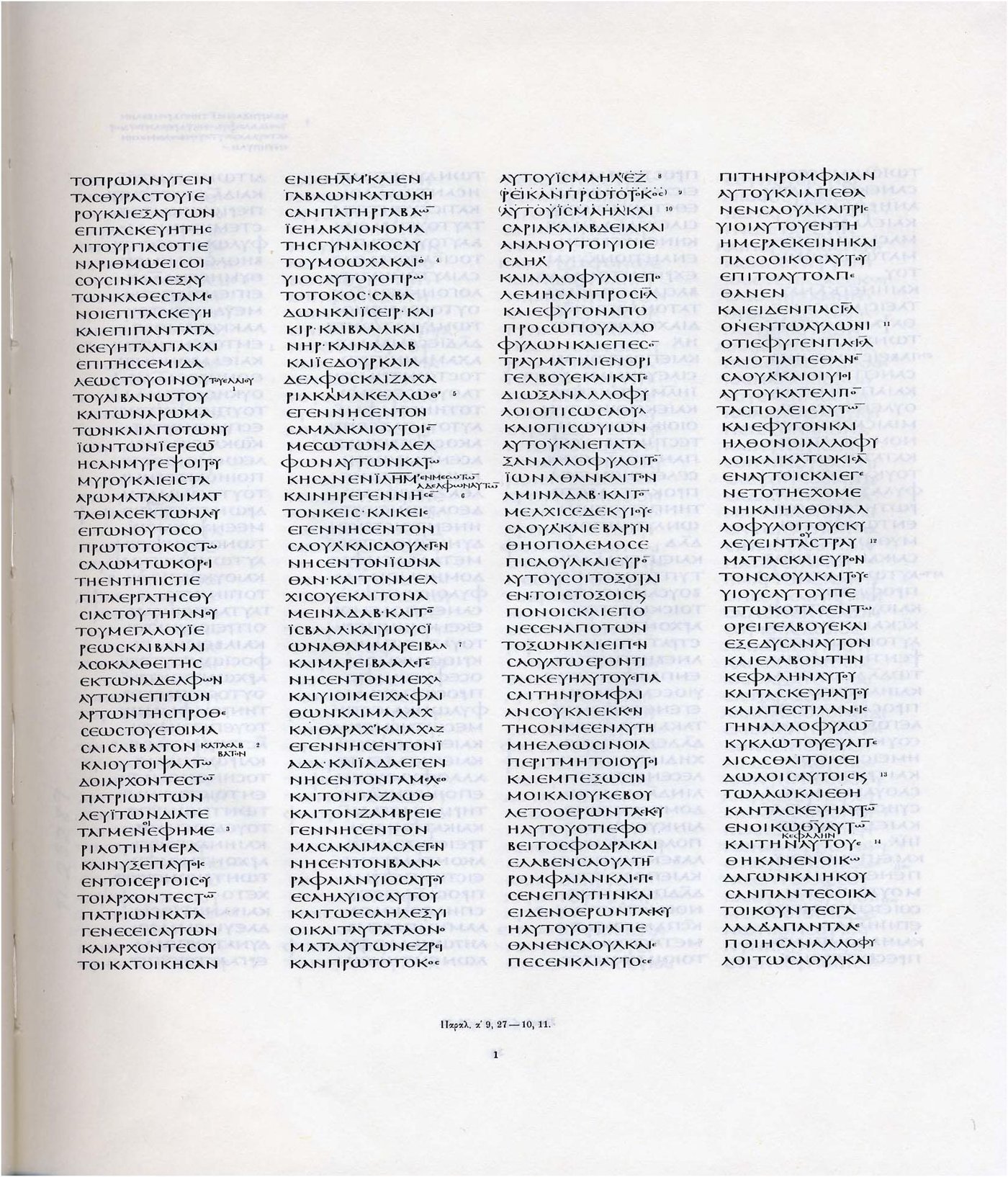

The Bible's very first translation was the Old Testament into Greek — the Septuagint (often written 'LXX'), made in Alexandria from about the third century BC for Greek-speaking Jews. It mattered enormously: it became the Bible of the early church, and when the New Testament quotes the Old, it very often quotes the Septuagint rather than the Hebrew. Because it was translated from Hebrew manuscripts older than any that now survive, it is also a window onto an earlier stage of the text — and where it differs from the later standard Hebrew, scholars take those differences seriously.
- Hebrew Old Testament → Greek, in Alexandria, from about the 3rd century BC.
- 'LXX' ('seventy') after the tradition of about seventy translators.
- The Bible of the early church; the New Testament often quotes it, and it reflects a pre-Masoretic Hebrew text.
What the evidence showsThe Septuagint is a documented, datable translation that shaped the early church and is quoted throughout the New Testament — a real bridge between the Hebrew scriptures and the Greek-speaking world.
Where it stopsWhere the Septuagint and the Hebrew differ, which preserves the older reading is argued case by case; the translation is a valuable witness, not automatically the original.
Sources & further reading