मसौदा अनुवाद. मातृभाषी ईसाइयों के सुधार स्वागत हैं। पद-पाठ KJV (अंग्रेज़ी) में रहता है।
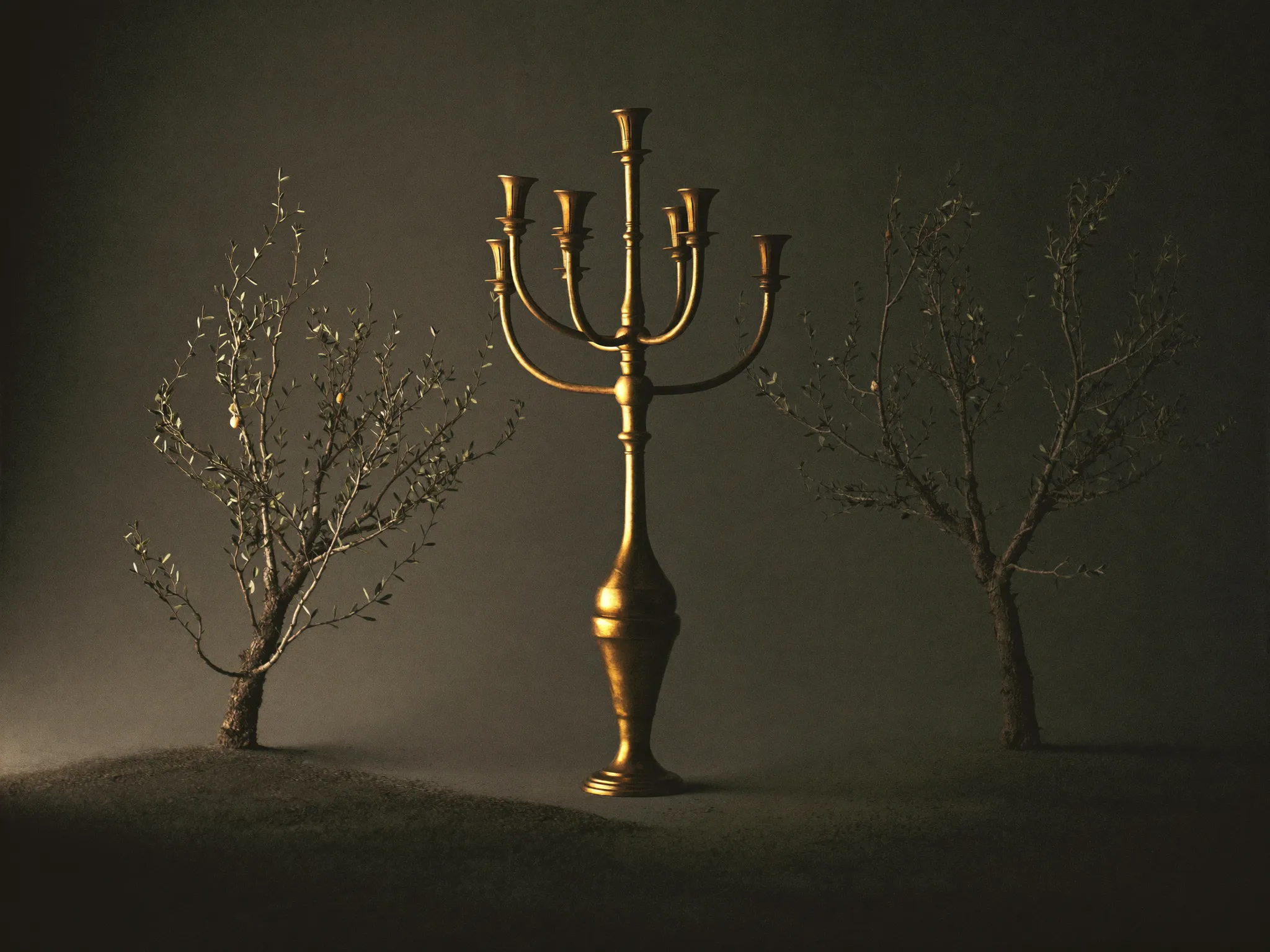
जकर्याह 4 — सोने की दीवट और दो जैतून के वृक्ष
पाँचवाँ दर्शन: सारी की सारी सोने की एक दीवट, जिसके ऊपर एक कटोरा, सात दीपक और सात नालियाँ हैं — और उसके पास दो जैतून के वृक्ष, जो अपने में से सुनहला तेल उण्डेलते हैं। इसकी व्याख्या जरुब्बाबेल के लिये वचन है: न तो बल से, और न शक्ति से, परन्तु मेरे आत्मा के द्वारा होगा, सेनाओं के यहोवा का यही वचन है। हे बड़े पहाड़, तू क्या है? जरुब्बाबेल के सामने तू मैदान हो जाएगा; और वह चोटी का पत्थर यह पुकारते हुए निकालेगा, उस पर अनुग्रह हो, अनुग्रह! जरुब्बाबेल ने अपने हाथों से इस भवन की नींव डाली है; वही अपने हाथों से उसको तैयार भी करेगा। क्योंकि किसने छोटी बातों का दिन तुच्छ जाना है? यहोवा की सातों आँखें सारी पृथ्वी पर दृष्टि करती हैं। दो अभिषिक्त जन सारी पृथ्वी के प्रभु के पास हाजिर रहते हैं।
“तब उसने मुझे उत्तर देकर कहा, जरुब्बाबेल के लिये यहोवा का यह वचन है: न तो बल से, और न शक्ति से, परन्तु मेरे आत्मा के द्वारा होगा, मुझ सेनाओं के यहोवा का यही वचन है।”
— जकर्याह 4:6
- v.1-5 दीवट और जैतून के वृक्षों का दर्शन
- v.6-10 मेरे आत्मा के द्वारा; पहाड़ मैदान बना
- v.11-14 दो अभिषिक्त जन
पहाड़ — काम के विरुद्ध खड़ी की गई हर रुकावट: शोमरोन का विरोध, साम्राज्य की नौकरशाही, लोगों की हताशा — को तिरस्कार के साथ सम्बोधित किया जाता है: तू क्या है? आत्मा के सहारे चलनेवाले सेवकों के सामने पहाड़ भविष्य के मैदान हैं।
उस पर अनुग्रह हो, अनुग्रह! — अन्तिम पत्थर पर जयघोष। जो भवन अनुग्रह से आरम्भ हुआ, वह अनुग्रह से ही पूरा होता है; नींव से लेकर चोटी के पत्थर तक किसी भी चरण पर कोई और व्याख्या स्वीकार्य नहीं।
जिन हाथों ने आरम्भ किया, वही पूरा करेंगे — सोलह वर्षों के ठहराव के बावजूद। परमेश्वर जो किसी सेवक के द्वारा आरम्भ करता है, उसी के द्वारा पूरा करता है; छोड़ दी गई नींवें उसके खाते में नहीं हैं।
यह पद फिलिप्पियों 1:6 के साथ गूँजता है: जिसने तुम में अच्छा काम आरम्भ किया है, वही उसे... पूरा करेगा। अधूरे काम के लिये भरोसा — मन्दिरों में हो या प्राणों में — पूरा करनेवाले पर टिका है, गति पर नहीं।
बूढ़े लोग दूसरे मन्दिर की छोटाई पर रोए थे (एज्रा 3:12); स्वर्ग पूछता है कि तुच्छ जानने की अनुमति किसने दी। परमेश्वर के सबसे बड़े काम साधारण-से दिखनेवाले चरणों से होकर गुज़रते हैं — एक राई का दाना, एक चरनी, एक अटारी में एक सौ बीस लोग।
सातों आँखें जो सारी पृथ्वी पर दृष्टि करती हैं एक साधारण कार्य-दिवस पर हाथ में साहुल लिये एक मनुष्य को देखकर आनन्दित होती हैं। सर्वज्ञता विश्वासयोग्य छोटे श्रम में आनन्द लेती है; छोटी बातों के दिन के दर्शक सबसे अधिक हैं।
दो जैतून के वृक्ष — शब्दशः तेल के पुत्र — उस घड़ी के अभिषिक्त पद हैं: यहोशू याजक और दाऊद के वंश का अधिपति जरुब्बाबेल, जो राष्ट्र की दीवट तक आत्मा की आपूर्ति पहुँचाने के माध्यम हैं।
याजक और राजा, दोनों अभिषेक, अन्ततः एक व्यक्ति में मिलते हैं — वह शाख जो अपने सिंहासन पर याजक होगा (6:13)। प्रकाशितवाक्य 11:4 इन वृक्षों को दो गवाहों के लिये उधार लेता है: यह रूपक वहाँ-वहाँ काम आता रहता है जहाँ आत्मा से पोषित गवाही जलती है।
परमेश्वर ने आपको जो भी सौंपा है जो आपके संसाधनों से बढ़कर है, उसके ऊपर पद 6 लिख दें — वह अन्तर जान-बूझकर रखा गया है, क्योंकि तेल वहीं बहता है जहाँ बल का त्याग कर दिया गया हो। अपने पहाड़ को पद 7 के तिरस्कार के साथ ऊँची आवाज़ में सम्बोधित करें, और अपने श्रम में छोटी बातों के दिन को तुच्छ जानने से इनकार करें: सातों आँखों के नीचे की छोटी आज्ञाकारिताएँ मानवीय आँखों के नीचे के बड़े प्रदर्शनों से भारी हैं।
दो अभिषेक — याजक और राजा — जो सारी पृथ्वी के प्रभु के पास हाजिर रहते थे, मसीह में एक हो जाते हैं, जो अभिषिक्त जन हैं, अपने सिंहासन पर याजक। वे ही सच्चे मन्दिर-निर्माता हैं, जिन्होंने अपने क्रूस में नींव डाली है और निश्चय ही चोटी का पत्थर निकालेंगे — और उनकी कलीसिया के पूरा होने पर जयघोष होगा: उस पर अनुग्रह हो, अनुग्रह!
इस पृष्ठ पर आपकी भाषा में पवित्रशास्त्र का पाठ: इंडियन रिवाइज़्ड वर्ज़न (IRV), © 2017, 2019 ब्रिज कनेक्टिविटी सॉल्यूशंस — बिना बदलाव के इस लाइसेंस के अंतर्गत प्रयुक्त: CC BY-SA 4.0 · eBible.org
परमेश्वर के हर निर्माण-कार्य का आदर्श-वाक्य। जरुब्बाबेल के पास न सेना थी, न खज़ाना, न किसी साम्राज्य की कृपा — और खड़ा करने को एक मन्दिर था। परमेश्वर के काम के संसाधन मानवीय बल या भीड़ नहीं, परन्तु आत्मा है, जो दर्शन के तेल की तरह बहता है — बिना मोल और बिना रुके।
दीवट बिना मानवीय ईंधन-भराई के जलती थी — जैतून के वृक्ष नालियों से होकर सीधे सुनहला तेल पहुँचाते थे। स्वयं-पोषित ज्वाला यह चित्र है: ऐसी गवाही जो जीवित स्रोत से आनेवाली आपूर्ति से टिकी रहती है, संस्थागत प्रयास से नहीं।