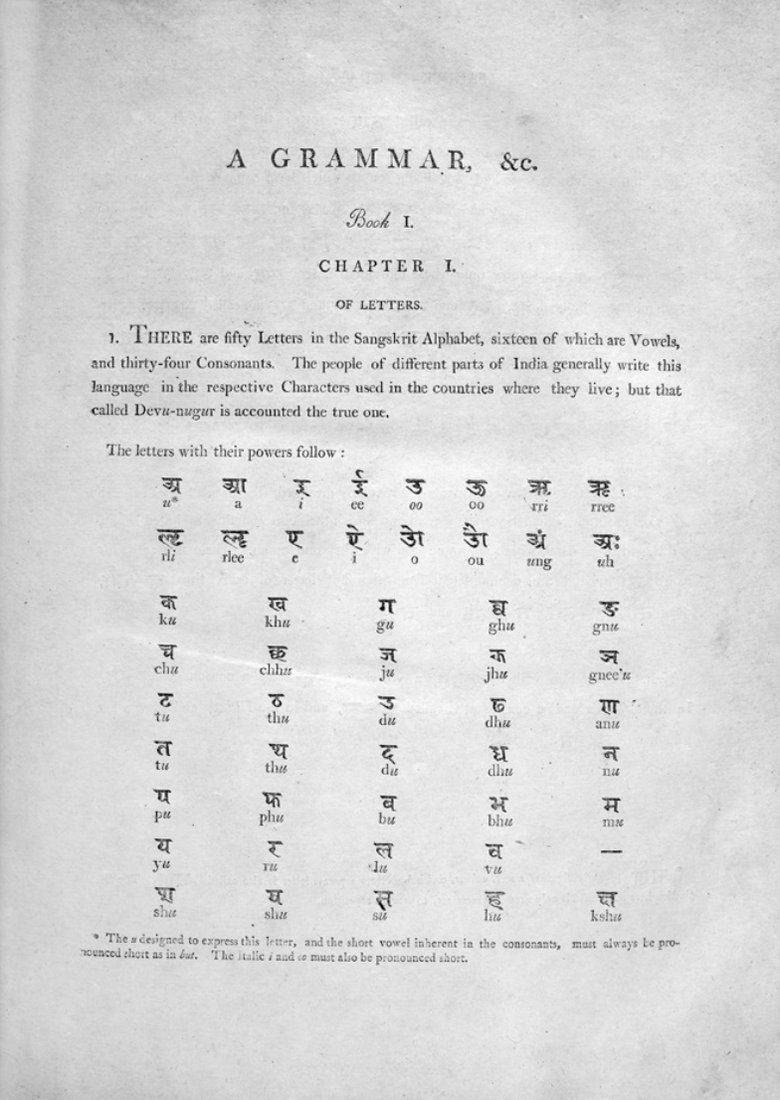

In setting out to translate the Bible, missionaries became some of India's earliest linguists and printers. The first printing press in India was set up by Jesuits at Old Goa in 1556; the Serampore Mission Press, from 1800, poured out Scripture and schoolbooks in dozens of tongues. William Carey is remembered as a father of Bengali prose. Missionaries gave written form to languages that had none — Thomas Jones created the Khasi alphabet, and others did the same for Mizo and more. Hermann Gundert produced a landmark Malayalam grammar and dictionary; Robert Caldwell's 1856 comparative grammar established that the Dravidian languages form a family of their own.
- India's first printing press: Jesuits at Old Goa, 1556. (The Serampore Mission Press, from 1800, was a separate, later press.)
- Robert Caldwell's Comparative Grammar (1856) established the Dravidian language family.
- Hermann Gundert's Malayalam grammar (1859) and dictionary (1872) were landmark works — though Benjamin Bailey's 1846 dictionary came first.
- In The Discovery of India, Nehru credited missionary printing and translation with helping India's vernaculars step out from the shadow of Sanskrit and Persian.
Shared creditThe vernacular renaissance was a shared labour: Indian pandits, scribes and printers worked beside the missionaries, and Hindu reformers championed the mother tongues just as vigorously.
The honest complexity: Translation served evangelism, and standardizing a language inevitably privileges some dialects and communities over others. The linguistic gift was real; it was not neutral.
Sources & further reading