Jonah 1 — But Jonah Rose Up to Flee
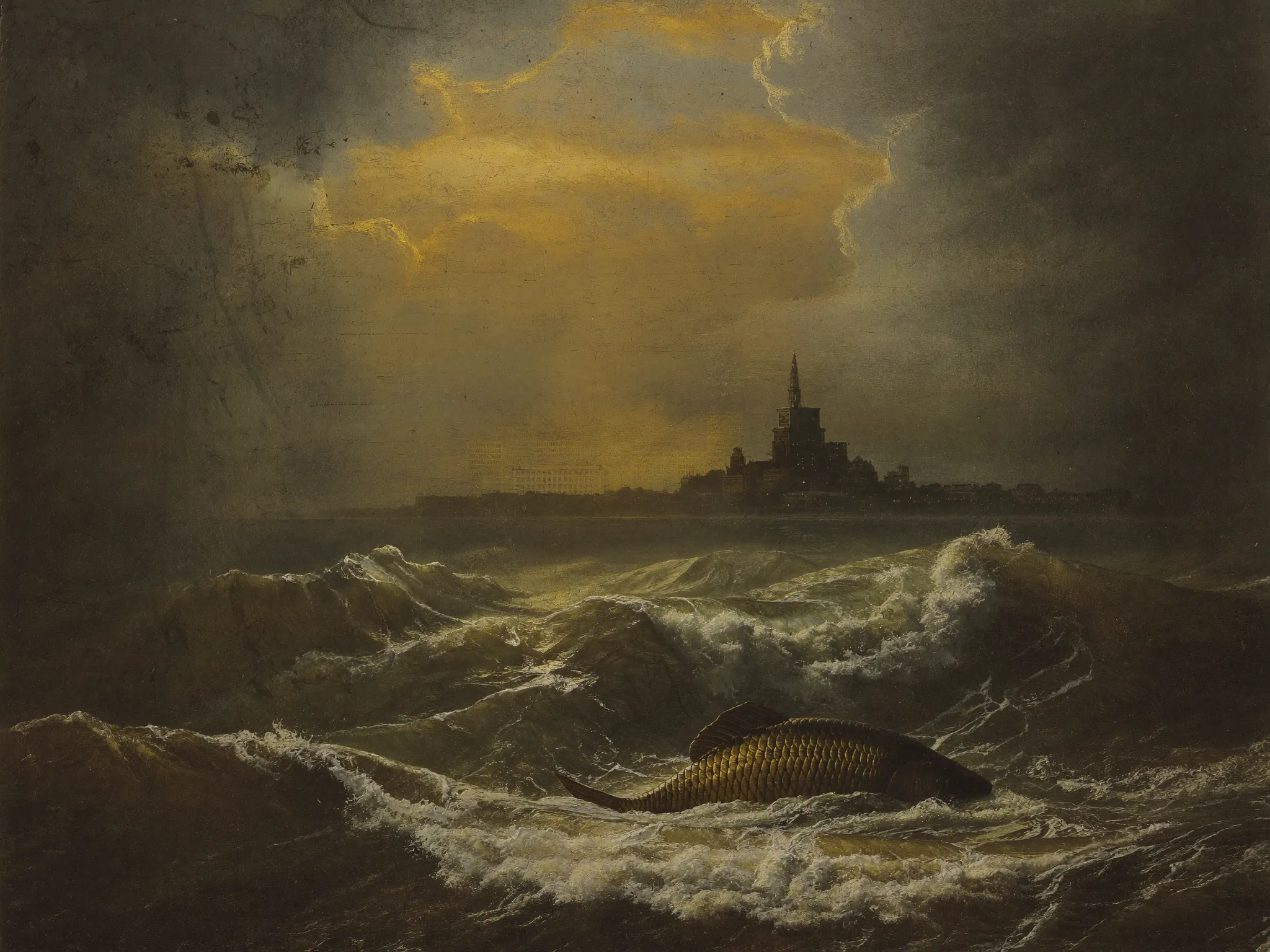
God commands Jonah to preach against Nineveh. Instead Jonah flees toward Tarshish, the opposite direction. A great storm threatens the ship. The pagan sailors cry to their gods while Jonah sleeps. Lots are cast; Jonah is identified. He confesses he flees the Lord. At his own request he is thrown into the sea, and the storm ceases. A great fish swallows him.
“But Jonah rose up to flee unto Tarshish from the presence of the Lord.”
— Jonah 1:3
- v.1-3 The call and the flight
- v.4-10 The storm; the sailors' fear; Jonah found out
- v.11-16 Jonah cast into the sea; the storm stilled
- v.17 The great fish
Notice the downward motion that will run through the chapter — went down to Joppa, went down into it, and later down into the sea and the fish. Disobedience is always a descent.
From the presence of the Lord. Jonah knew better than this theologically. Psalm 139:7 — Whither shall I go from thy spirit? or whither shall I flee from thy presence? No one outruns God. But the disobedient heart attempts it anyway.
The Lord sent out a great wind. God pursued His fleeing prophet with a storm. The same God who commanded also corrected. The disobedience of His servant was not allowed to proceed unhindered.
A mercy in disguise. The storm that terrified Jonah was God refusing to let him escape his calling. Sometimes the storms in a believer's life are God's pursuit of a runaway.
A startling contrast. The pagan sailors pray; the prophet sleeps. The man who should be interceding is unconscious in the hold. Disobedience deadens the spiritual senses.
The sleeping prophet during a storm anticipates the sleeping Christ in another storm, who slept in peace because He was in the Father's will (Mark 4:38). Jonah slept in flight; Christ slept in faith. The same posture, opposite hearts.
Jonah finally takes responsibility. For my sake this great tempest is upon you. He offers himself to be thrown overboard to save the crew.
A faint type of Christ. One man cast into the deep that others might be saved. But Jonah was guilty and Christ innocent; Jonah was thrown for his own sin, Christ gave Himself for the sin of others. The shadow points to a greater substance.
The pagan sailors are converted. They began the chapter crying to their own gods; they end it fearing the Lord, sacrificing, and making vows. Even Jonah's disobedience became, in God's providence, the occasion of pagan conversion.
A theme of the book — God's mercy reaches the Gentiles. The sailors here, the Ninevites in chapter 3. The reluctant prophet keeps producing the conversions he was trying to prevent.
The Lord had prepared a great fish. The fish was not a punishment but a rescue. Without it, Jonah drowns. God's provision often arrives in frightening forms.
Jesus made this the great sign of His own death and resurrection — as Jonas was three days and three nights in the whale's belly; so shall the Son of man be three days and three nights in the heart of the earth (Matthew 12:40). The fish-belly prefigures the tomb.
Where are you running from a clear assignment? Jonah knew exactly what God wanted and went the opposite way. The storm came not to destroy him but to turn him. If your life feels like a storm right now, ask honestly — is there a Nineveh you have refused to go to? Sometimes the way out of the storm is to stop fleeing the call.
Jesus claimed Jonah as the only sign He would give that generation. The three days in the fish prefigured His three days in the tomb. But the contrast is as important as the comparison — Jonah went down for his own disobedience; Christ went down for ours. Jonah was an unwilling prophet; Christ gave Himself willingly. The reluctant prophet points to the willing Savior.
God commissions a Hebrew prophet to preach to Israel's most feared enemy. Nineveh, a great Assyrian city (later the empire's capital), was associated with Assyria's notorious cruelty. Jonah's reluctance is not cowardice — chapter 4 reveals it was resentment at the possibility of their mercy.
God's concern reaches beyond the covenant people to the pagan nations. The whole book of Jonah is a rebuke to the narrowness that wants God's mercy reserved for one's own kind.