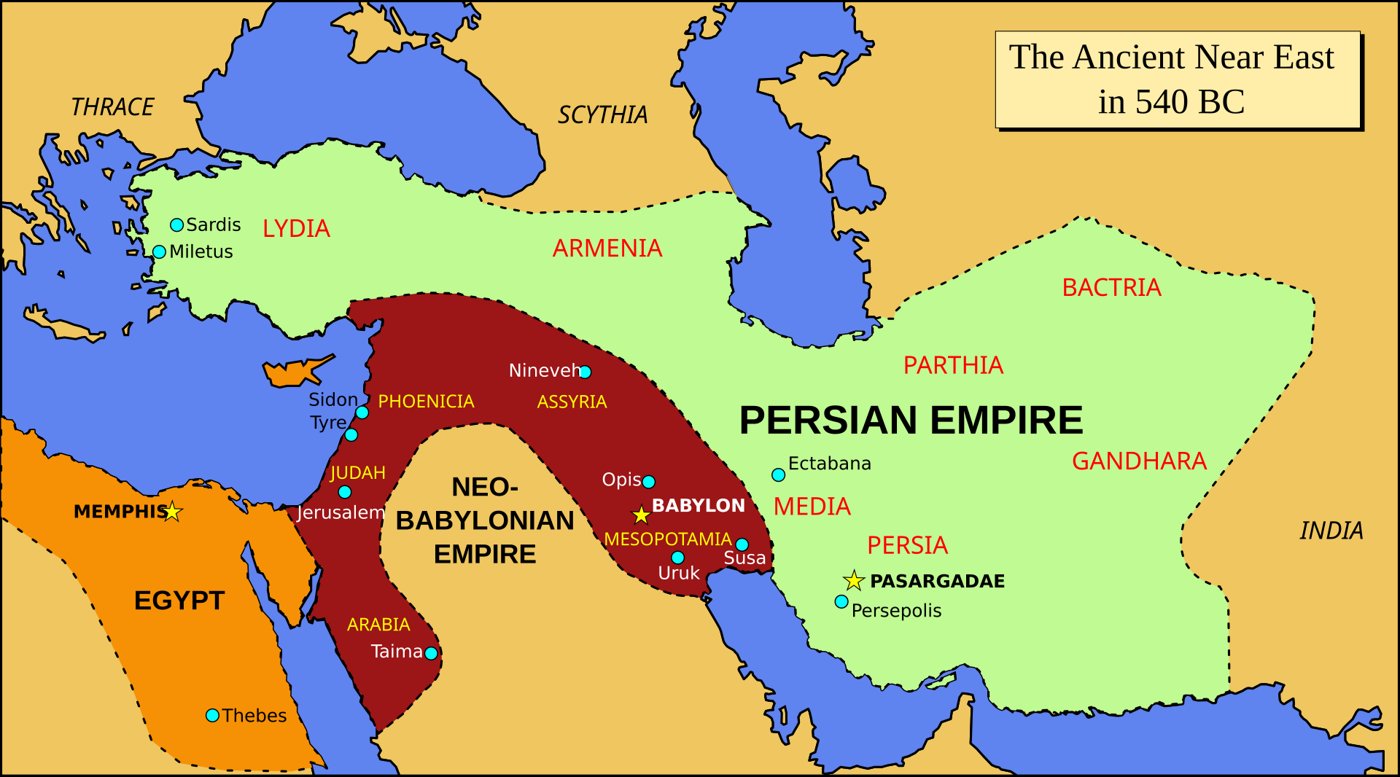

The Bible's languages track the empires that swept over its world. Ancient Israel spoke and wrote Hebrew. After the Babylonian exile, under the Persian empire, Aramaic became the everyday language of the region — which is why Jesus spoke it centuries later. Alexander the Great then spread Greek across the East, giving the New Testament its language and carrying it across the Mediterranean. Finally, as the church moved west into the Roman world, Latin took over, and Jerome's Vulgate ruled Western Christianity for a thousand years. Read this way, the Bible's languages are a map of ancient history.
- Hebrew (ancient Israel) → Aramaic (after the exile, Persian era) → Greek (from Alexander) → Latin (the Vulgate, Western church).
- Each shift follows an empire — Babylon/Persia, Greece, Rome.
- The languages coexisted; the arc is gradual, not a clean switch.
What the evidence showsThe shift Hebrew → Aramaic → Greek → Latin is well documented and lines up precisely with the succession of empires (Babylon and Persia, Greece, Rome) — the language of the text follows the politics of the age.
Where it stopsThe languages overlapped and coexisted rather than switching cleanly on a date; this is the broad arc, not a set of sharp boundaries.
Sources & further reading