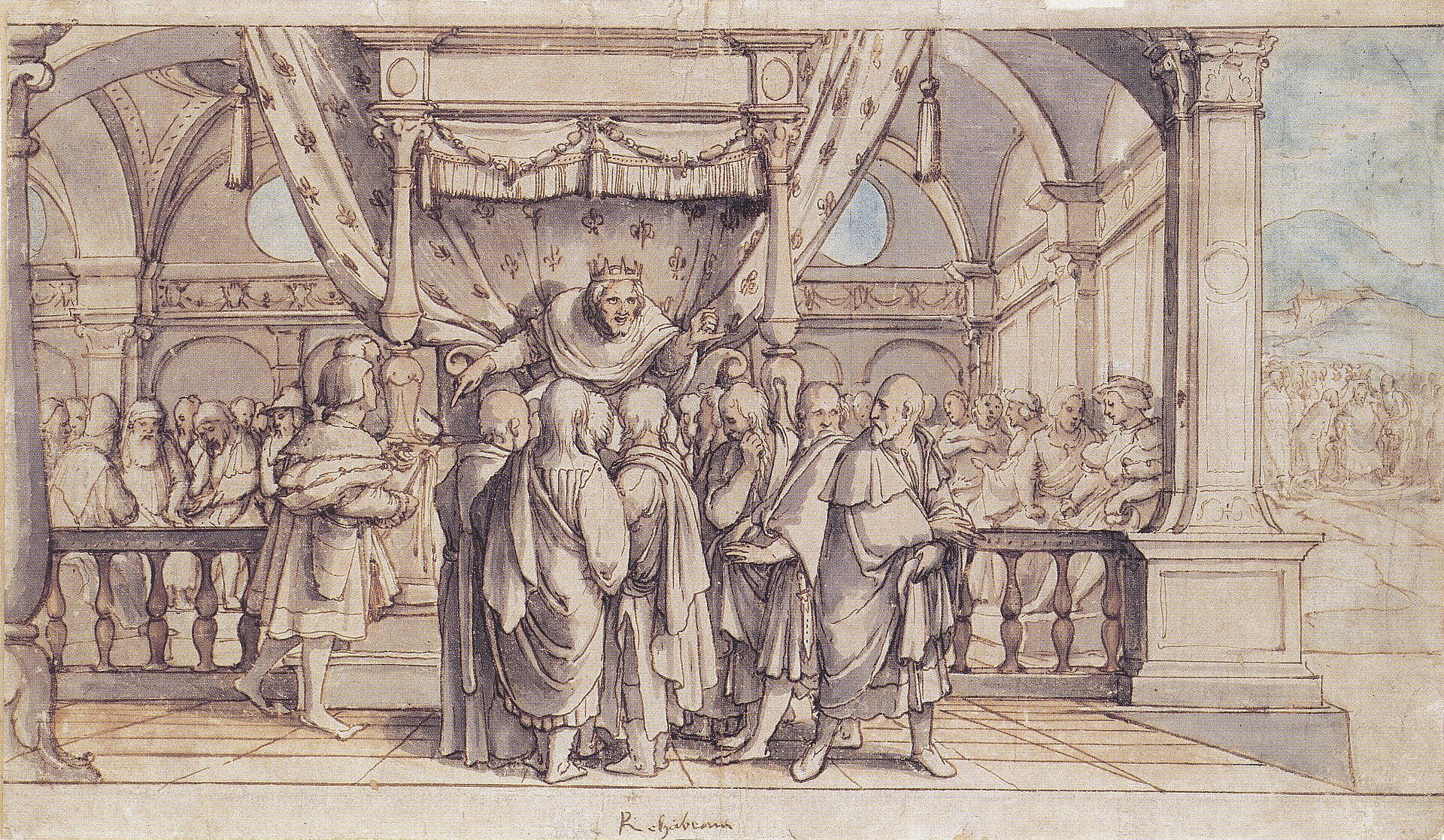

একজন নতুন রাজা উত্তরাধিকারে পান ক্লান্ত একদল শ্রমিক আর একটিমাত্র প্রশ্ন: তোমার বাবা আমাদের ওপর যে বোঝা চাপিয়েছিলেন, তুমি কি তা হালকা করবে? প্রবীণ পরামর্শদাতারা বলেন — হ্যাঁ, হালকা করো, ওরা আজীবন তোমার সেবা করবে। তরুণেরা উল্টোটা বলে — দেখিয়ে দাও মালিক কে। রহবিয়াম ভুল ঘরের কথা শোনেন, আর একটিমাত্র আলাপের শেষে এক অখণ্ড রাজ্য দুই হয়ে যায়। সাম্রাজ্য সাধারণত প্রজন্ম ধরে ভাঙে; এটা একটি শ্রম-বিরোধে, এক বিকেলে ফেটে যায়।
কাহিনিতে এটি কোথায়: এটি পুরাতন নিয়মের মাঝখানের বড় ফাটল। এর আগের সবকিছু দায়ূদ ও শলোমনের অখণ্ড রাজ্যের দিকে ওঠে; এর পরের সবকিছু দুটি ছোট রাজ্যের — উত্তরে ইস্রায়েল, দক্ষিণে যিহূদা — দুটি বন্দিত্বের দিকে দীর্ঘ, বিষণ্ণ পতন। এখান থেকে ইতিহাসের বইগুলি, গীতসংহিতা আর প্রায় সব ভাববাদী এই অধ্যায়ের তৈরি জগতেই কথা বলেন।
এই অধ্যায় কী করছে: একটি রাজ্য কীভাবে দুটি হলো তা ব্যাখ্যা করা, আর এই ভাঙনকে একই সঙ্গে একটি রাজনৈতিক ভুল এবং (পাঠ যেমন জোর দিয়ে বলে) আগে ঘোষিত একটি বিচারের পূর্ণতা হিসেবে দেখানো: একটি মানবিক কারণ আর একটি ঘোষিত ঐশ্বরিক কারণ, একসঙ্গে।
- 12:1–15 — শিখিমে দরকষাকষি। রহবিয়াম তরুণদের পরামর্শ নেন — 'আমার কড়ে আঙুল আমার বাবার কোমরের চেয়েও মোটা।' রাজাবলি ঈশ্বরতাত্ত্বিক মন্তব্য যোগ করে: এই মোড় 'সদাপ্রভুর কাছ থেকে' এসেছিল, যারবিয়ামকে দেওয়া ভবিষ্যদ্বাণী পূর্ণ করে।
- 12:16–24 — উত্তর বেরিয়ে যায়: 'দায়ূদে আমাদের কী অংশ?' দশ বংশ যারবিয়ামকে অনুসরণ করে; কেবল যিহূদা দায়ূদের বংশের সঙ্গে থাকে। একজন ভাববাদী রহবিয়ামকে তা উল্টাতে গৃহযুদ্ধ শুরু করা থেকে থামান।
- 12:25–33 — প্রজারা আরাধনার জন্য যিরূশালেমে ফিরে যাবে এই ভয়ে যারবিয়াম বৈথেল ও দানে দুটি সোনার বাছুর বসান। রাজনৈতিক ভাঙন ধর্মীয় ভাঙন হয়ে যায় — সেই পাপ যার নাম রাজাবলি পরের দুই শতাব্দী বারবার নেবে।
মূল পদ: 1 রাজাবলি 12:16 · তাতে কী: একটি আলাপের অহংকার প্রজন্মের গড়া জিনিস ভেঙে দিতে পারে। অধ্যায়টি আপনাকে একটিমাত্র কারণ বেছে নিতে দেয় না — এটা রহবিয়ামের ঔদ্ধত্যও ছিল, আবার অনেকদিন ধরে আসতে থাকা হিসাবও। আসল ইতিহাস সাধারণত এমনই: মানুষের মূর্খতা আর গভীর পরিণতি, একই লাইনে চলে।