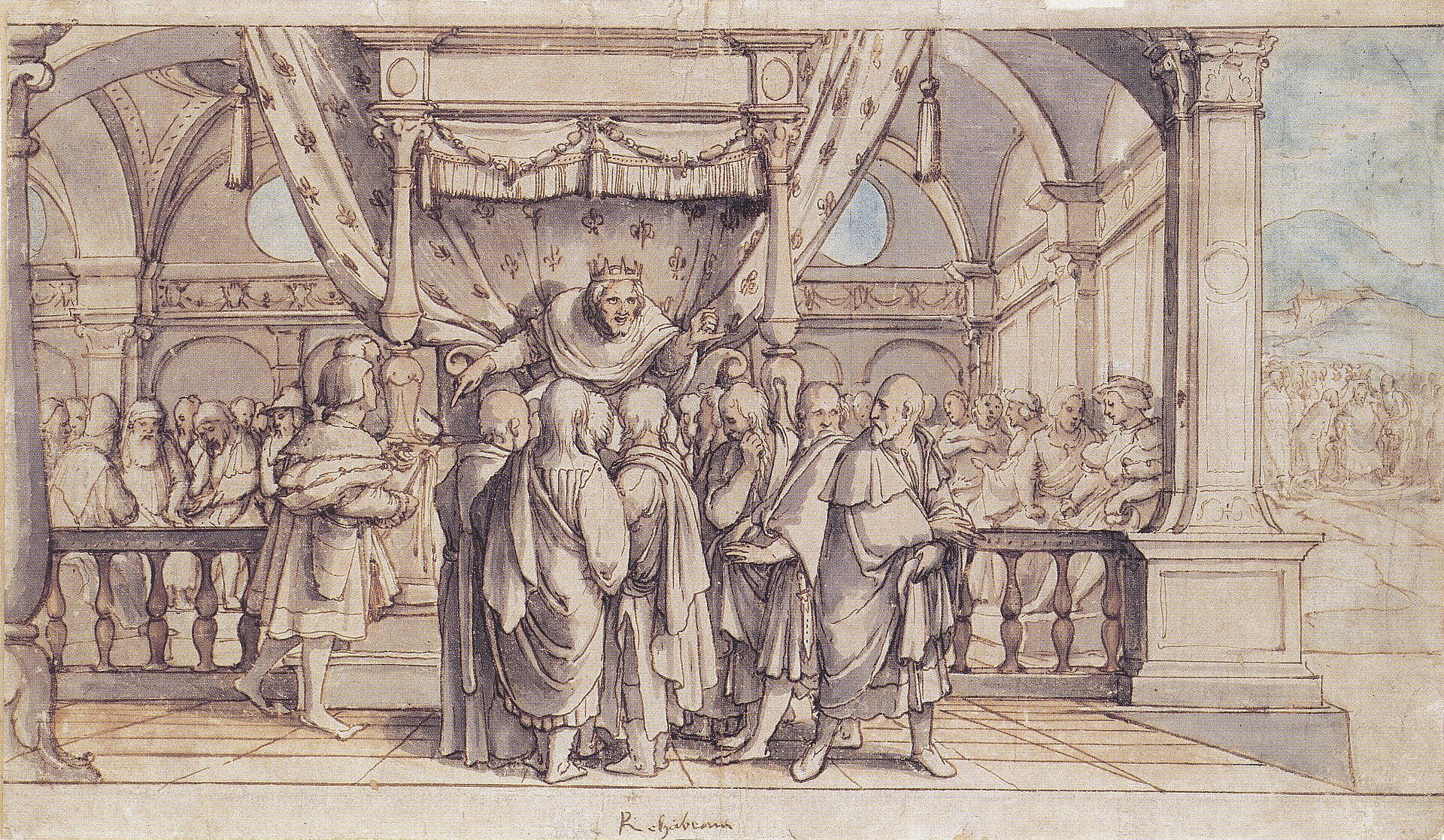

A new king inherits a tired workforce and one question: will you ease the load your father laid on us? The old advisors say yes, lighten it, and they will serve you for life. The young ones say the opposite — show them who is boss. Rehoboam listens to the wrong room, and by the end of a single conversation a united kingdom is two. Empires usually fracture over generations; this one cracks in an afternoon, over a labour dispute.
Where it sits in the story: This is the great fault line of the Old Testament's middle. Everything before it climbs toward the united kingdom of David and Solomon; everything after it is the long, sad slide of two smaller kingdoms — Israel in the north, Judah in the south — toward two exiles. From here on, the history books, the Psalms, and almost all the prophets are speaking into the world this chapter creates.
What this chapter is doing: To explain how one kingdom became two, and to frame the split as both a political blunder AND (the text insists) the outworking of a judgment already announced — a story with a human cause and a stated divine one, held together.
- 12:1–15 — The negotiation at Shechem. Rehoboam takes the young men's advice — 'my little finger is thicker than my father's waist.' Kings adds the theological note: this turn of events was 'from the LORD,' fulfilling a prophecy to Jeroboam.
- 12:16–24 — The north walks out: 'What share do we have in David?' Ten tribes follow Jeroboam; only Judah stays with David's line. A prophet stops Rehoboam from starting a civil war to reverse it.
- 12:25–33 — Jeroboam, afraid his people will drift back to Jerusalem to worship, sets up two golden calves at Bethel and Dan. The political split becomes a religious one — the sin that Kings will name again and again for the next two centuries.
Key verse: 1 Kings 12:16 · So what: Pride in a single conversation can undo what generations built. The chapter refuses to let you pick just one cause — it was Rehoboam's arrogance AND a reckoning long in coming. Real history usually reads like that: human folly and deeper consequence, running on the same track.