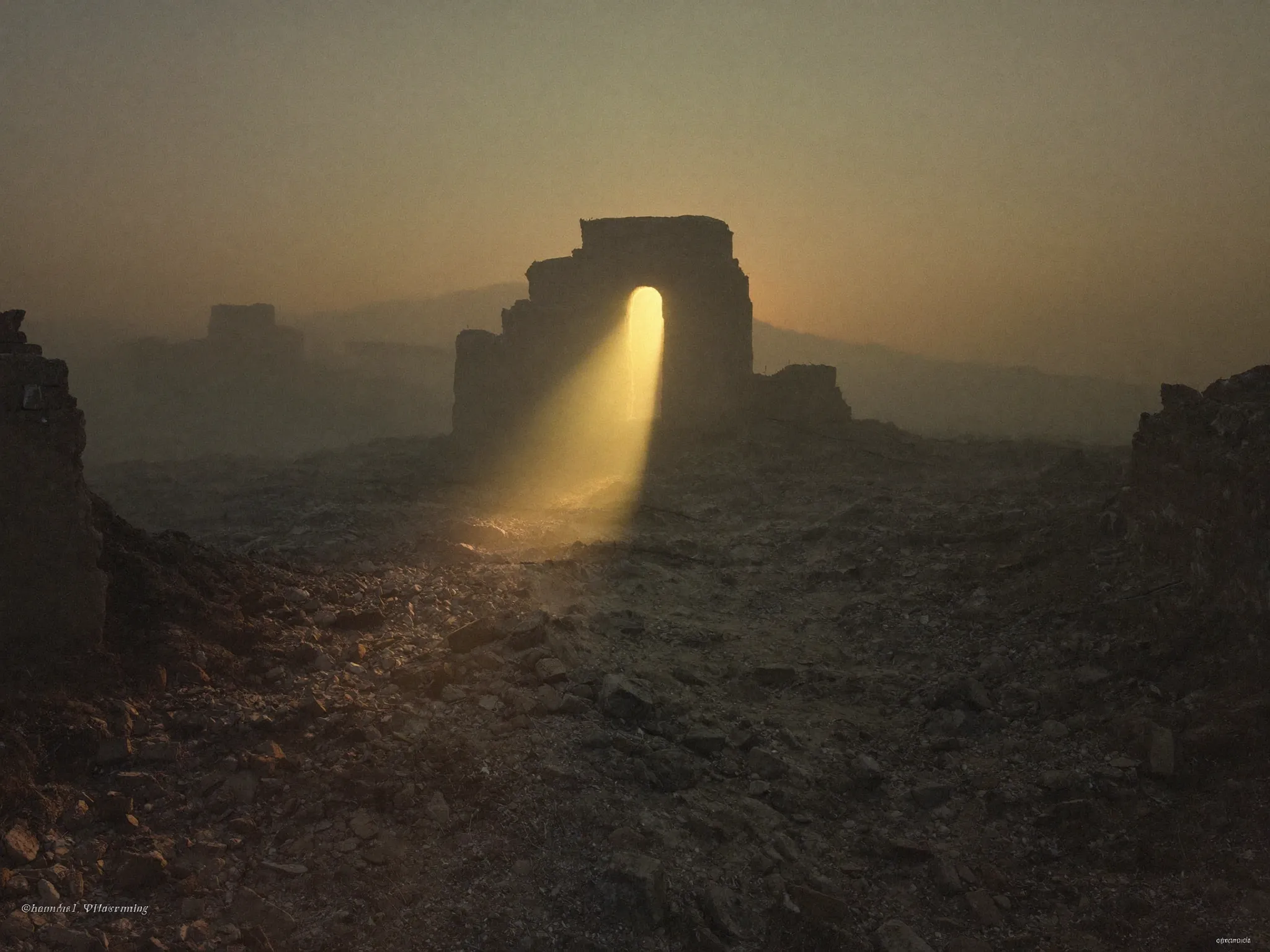
Lamentations 1 — The Widowed City
The five funeral poems for Jerusalem, traditionally ascribed to Jeremiah, open with the picture of a once-great city sitting solitary — a widow, a princess become tributary. The acrostic Hebrew form (each verse beginning with a successive letter of the alphabet) restrains the wild grief: even sorrow has an order. The chapter alternates between the prophet's lament and the city's own voice. The cry "Is it nothing to you, all ye that pass by?" rises from the rubble.
“Is it nothing to you, all ye that pass by? behold, and see if there be any sorrow like unto my sorrow, which is done unto me, wherewith the LORD hath afflicted me in the day of his fierce anger.”
— Lamentations 1:12
- v.1-7 The prophet describes the desolate city
- v.8-11 Her sin laid bare; her pleasant things gone
- v.12-19 The city herself cries out
- v.20-22 A prayer for the Lord to see, and for the enemies to be judged
The hardest line of all: the LORD hath afflicted her. The Babylonians wielded the sword, but Jeremiah names the true Hand behind it. The city's catastrophe was not abandonment — it was discipline.
A theology of suffering Israel could not escape: covenant blessings and curses, set out centuries earlier in Deuteronomy 28, were now visibly in force.
The verse names the cause with surgical honesty. No blame is shifted to circumstance or geopolitics. Sin is identified as the root.
Sigheth, and turneth backward — the first hint of contrition. The city is not just suffering; she is beginning to turn her face toward God.
The chapter's most quoted verse. In the city's mouth it is a cry for pity from indifferent travelers; in Christian tradition it has been applied to Christ on the cross, where one greater than Jerusalem cries the same to passersby.
A verse that diagnoses the human heart's default mode: indifference to the world's sorrow until it intrudes upon ours.
Five times in this chapter we hear that she has no comforter (vv.2, 9, 16, 17, 21). The absence of comfort is named again and again — Jerusalem will not minimize her loneliness.
It is to this exact emptiness that the New Testament answers: Blessed are they that mourn: for they shall be comforted (Matt 5:4), and the Comforter, which is the Holy Ghost (John 14:26).
In the depth of ruin, the city does not blame God. The LORD is righteous. True repentance vindicates God before it asks anything from Him.
This is the verse that turns the corner. From lament to confession, from grievance to ownership of sin.
Two evils — sword outside, plague-like death inside. Nowhere is safe. The verse names the totality of judgment without poetic exaggeration; it was historically the case in 586 BC.
Behold, O LORD — the prayer of the desperate. When no one else will look, He still does.
Few of us know national catastrophe. Most of us know personal ruin in some private form. Lamentations gives us permission to weep without rushing to resolution — but also requires us, eventually, to say with the city, the LORD is righteous; for I have rebelled. Bring one undealt-with grief to God today in the order this chapter teaches: lament honestly, confess truthfully, ask Him to see.
Verse 12 has long been sung in Holy Week liturgy and applied to the crucified Christ — Is it nothing to you, all ye that pass by? The greater Jerusalem, Christ Himself, cried something kindred from the cross. He became the City reduced to nothing, the One the passersby mocked, so that we who pass by would not pass by Him.
"How" (Hebrew eikhah) — the title of the book in Hebrew; it opens the verse once, and the KJV repeats "how" twice more for force. The whole poem is one extended cry of disbelief at what God has allowed to happen to His own chosen city.
As a widow — not actually widowed (the LORD is not dead), but acting like one. The image is severance, not divorce. Hosea's warning has come due.