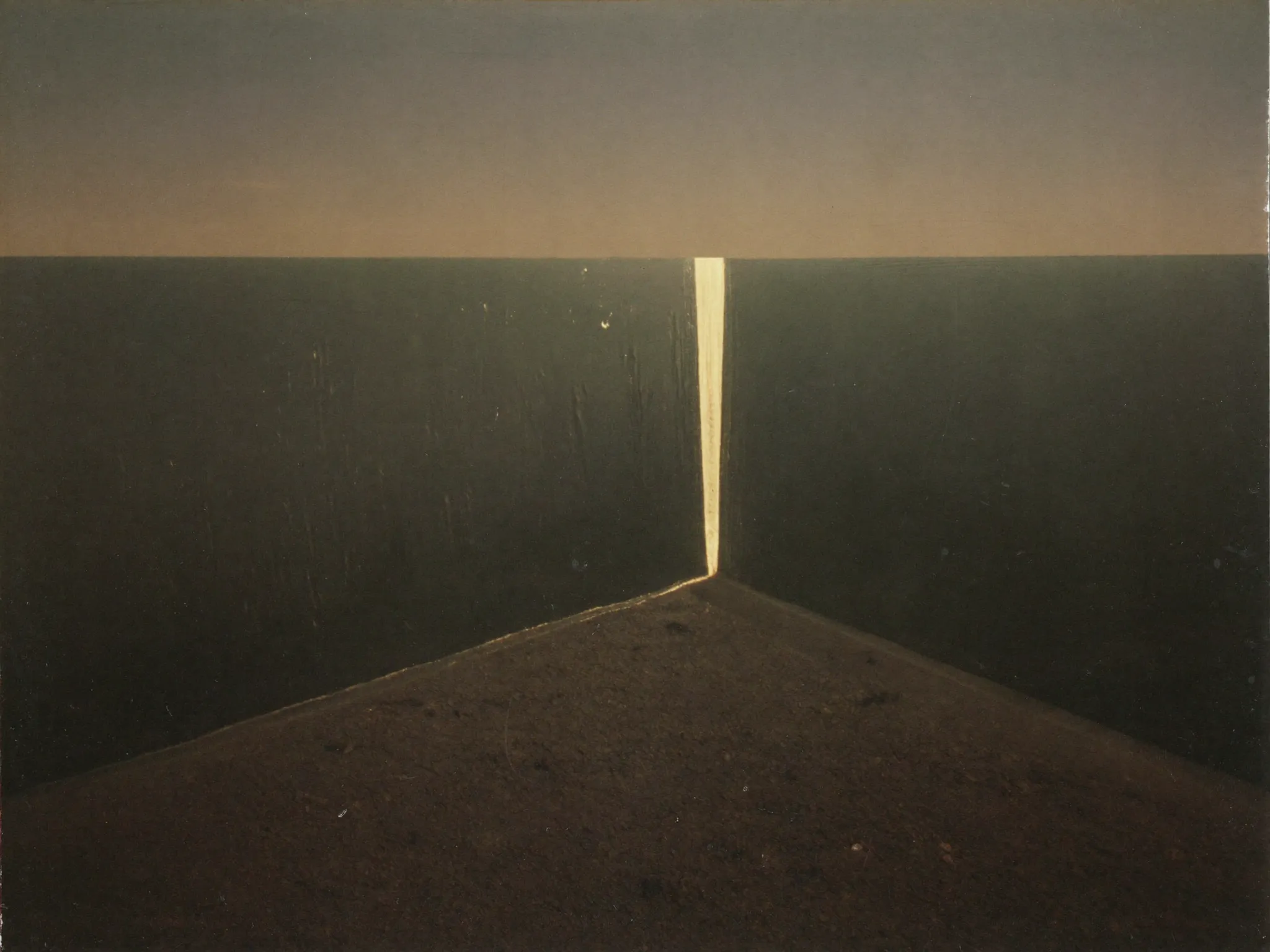
Exodus 10 — Darkness Which May Be Felt
The locusts come and consume what the hail had spared. Pharaoh offers another compromise — only the men may go. The plague follows. Then a darkness so deep it can be felt covers Egypt for three days, while in Goshen there is light. Pharaoh offers one last compromise — leave the flocks behind. Moses refuses.
“They saw not one another, neither rose any from his place for three days: but all the children of Israel had light in their dwellings.”
— Exodus 10:23
- v.1-11 The threat of locusts; Pharaoh's third compromise — only the men
- v.12-20 The locusts come; Pharaoh's false confession
- v.21-23 The three days' darkness; light in Goshen
- v.24-29 Pharaoh's fourth compromise — leave the flocks; Moses refuses
Pharaoh's third compromise — only the men go. The strategy is to separate the family. Leave the women and children behind; come back when you have had your religious experience.
A familiar tactic. Religion is fine — for the men, in a private hour, away from the household. The world will give space to faith if faith is detached from family. Moses refused the bargain.
Darkness which may be felt. A darkness that has substance. The text gives one of the most haunting phrases in the Bible. Not just absence of light — presence of an oppressive nothing.
Many interpreters see this plague as aimed at Ra, the sun god of Egypt. The chief deity of the nation was blacked out by Yahweh's hand. The supreme symbol of Egyptian theology was extinguished for three days.
Revelation 16:10 echoes this — the bowl of darkness poured on the throne of the beast. The final eschatological darkness is the same kind of judgment.
A perfect line of demarcation. Total darkness over Egypt; light in every Hebrew home. The same geography, the same time, but two different conditions.
For the believer in dark times: the world may be in darkness, but light remains in the dwelling of the saint. The path of the just is as the shining light (Proverbs 4:18). What the world cannot see by, the believer still walks by.
Pharaoh's fourth compromise — keep the flocks behind. Bring the family but leave the substance. He still wants leverage to make Israel return.
The world's last compromise with believers is similar. Take your faith, take your family — but leave your wallet, your career, your investments under our control. Christ wants all (Matthew 6:33). No piece of the believer's life is outside His claim.
There shall not an hoof be left behind. Moses gives one of the great quotable lines in Exodus. Total surrender, no negotiation, every detail of life belongs in the worship of God.
We know not with what we must serve the Lord, until we come thither. You cannot pick which resources will be needed for obedience. You bring everything; God assigns from the full inventory.
There shall not an hoof be left behind. What in your life have you been intending to keep back from the service of God? A relationship, a possession, a time block, a habit? Moses' standard is total. The whole life is brought; God assigns from the inventory. The piece you reserve is the piece that will hold you back.
The three days of darkness over Egypt anticipates the three hours of darkness at Calvary (Matthew 27:45) — and the three days of Christ's tomb (Matthew 12:40). The pattern of three is consistent. The darkness Egypt could feel was a foretaste of the darkness Christ would bear so that we might be the children of light (1 Thessalonians 5:5).
The plagues had a teaching purpose for the next generation. Israel's grandchildren would need to hear what God did in Egypt. The faith of the fathers is preserved by being retold to the sons.
Psalm 78:5-7 makes this the explicit pattern. The current generation tells what God has done; the next generation tells the one after. Every grandparent has a duty here. The covenant is preserved by speech across generations.