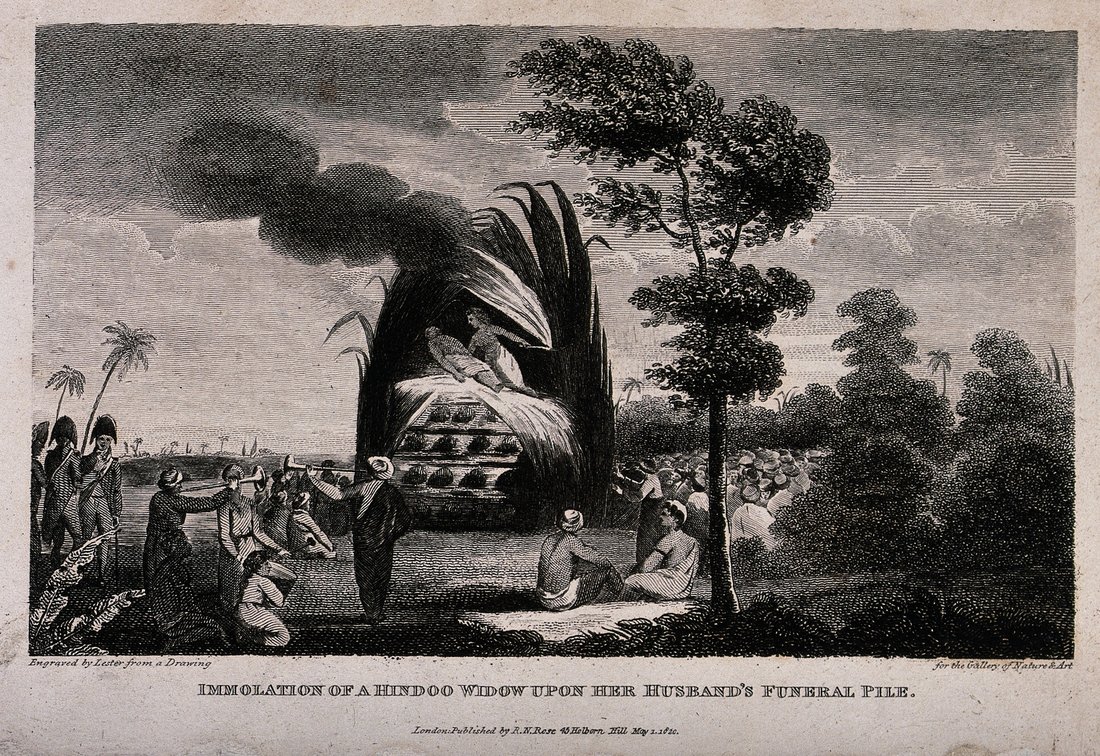

Beyond sati, missionary and colonial pressure helped end other cruelties. The Meriah human sacrifice practised by the Khonds of Odisha was suppressed by a campaign from the 1840s, with Baptist missionaries taking in rescued intended victims. Evangelical abolitionists helped push through the Indian Slavery Act of 1843, which outlawed slavery across British India. And the campaign against the devadasi system — the dedication of girls to temples — drew on the same reforming energy, carried to law decades later by the Indian reformer Muthulakshmi Reddy.
- Slavery was outlawed across British India by the Indian Slavery Act (Act V of 1843) — not 1807, which was Britain's separate slave-trade ban.
- Meriah human sacrifice among the Khonds was suppressed by a campaign from the 1840s (Act XXI of 1845).
- The Madras Devadasis (Prevention of Dedication) Act passed in 1947, led by Dr. Muthulakshmi Reddy.
Shared creditIndian reformers led much of this — Muthulakshmi Reddy on the devadasi system especially — and the anti-slavery and anti-sacrifice campaigns were as much colonial-administrative as missionary.
The honest complexity: These reforms rode on colonial power and its self-justifications, and 'civilizing' rhetoric was often used to excuse empire itself. The evils were real, and so was the entanglement.
Sources & further reading