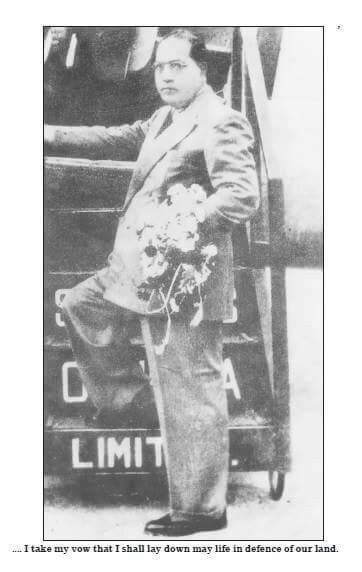

The influence reached even into leaders who never became Christian. In an article published in the Bombay Sentinel in 1941, Dr. B. R. Ambedkar — architect of India's constitution and champion of the Dalits — held up the story of Moses leading Israel out of bondage as a source of perennial inspiration and hope for his own struggle to emancipate the depressed classes. The biblical picture of a people led out of slavery fed the moral imagination of Indian reform, even though Ambedkar himself, seeking a way out of caste, finally embraced Buddhism in 1956.
- In a 1941 Bombay Sentinel article ('Moses and His Significance'), Ambedkar praised the Exodus as a source of inspiration and hope for emancipating the depressed classes.
- Ambedkar converted to Buddhism on 14 October 1956 and died that December.
Shared creditThis is Ambedkar's own reading, not a missionary achievement — an Indian reformer drawing freely on a biblical story for his own ends.
The honest complexity: It would be dishonest to claim Ambedkar for Christianity: he weighed it, criticized organized religion, and chose Buddhism. The Exodus gave him a metaphor for liberation, and that is enough to be worth telling. (The phrasing sometimes quoted — 'a moving tale' — is not his documented wording; the sentiment of inspiration and hope is.)
Sources & further reading