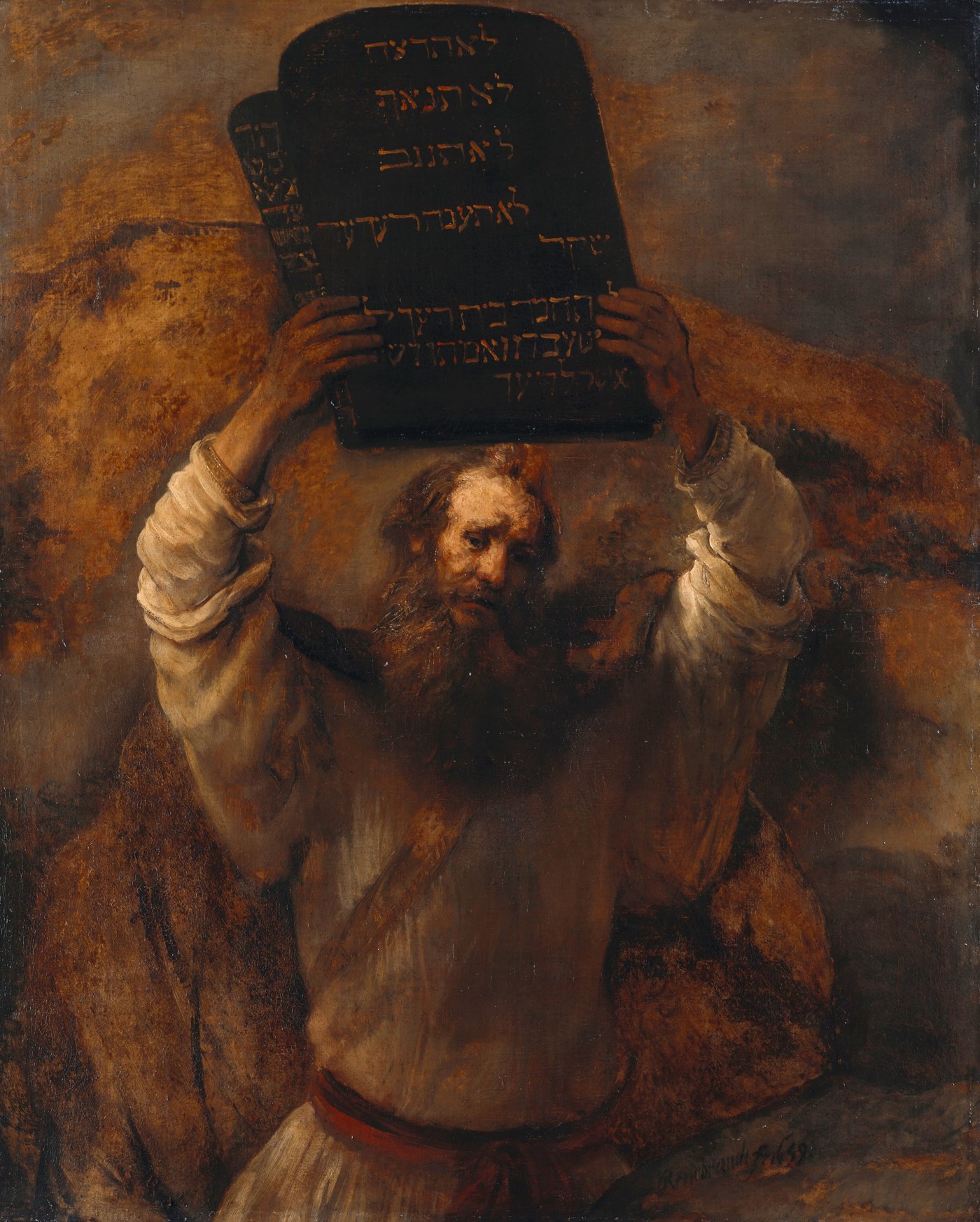

At Sinai, God binds a whole people to himself by law. The Mosaic covenant makes Israel a nation with a constitution — the Ten Commandments and the wider Law — and it is conditional: blessing for faithfulness, consequences for breaking it. Strikingly, its very form mirrors the treaties of the age: ancient Near-Eastern suzerain–vassal treaties (Hittite and later Assyrian) follow the same pattern of preamble, history, stipulations, witnesses and curses that the biblical covenant uses.
- Establishes Israel as a covenant nation, with the Ten Commandments at its core.
- Conditional — unlike the Noahic and Abrahamic promises.
- Its structure parallels Hittite and Assyrian suzerain–vassal treaties (preamble, stipulations, witnesses, curses).
What the evidence showsThe Sinai covenant's literary shape matches well-documented ancient treaty forms — a real, datable feature of the text that roots it in its ancient world rather than a later invention out of nowhere.
Where it stopsThe treaty parallel shows the form is authentically ancient; it does not by itself fix the date of the exodus or prove the Sinai events, which remain debated.
Sources & further reading