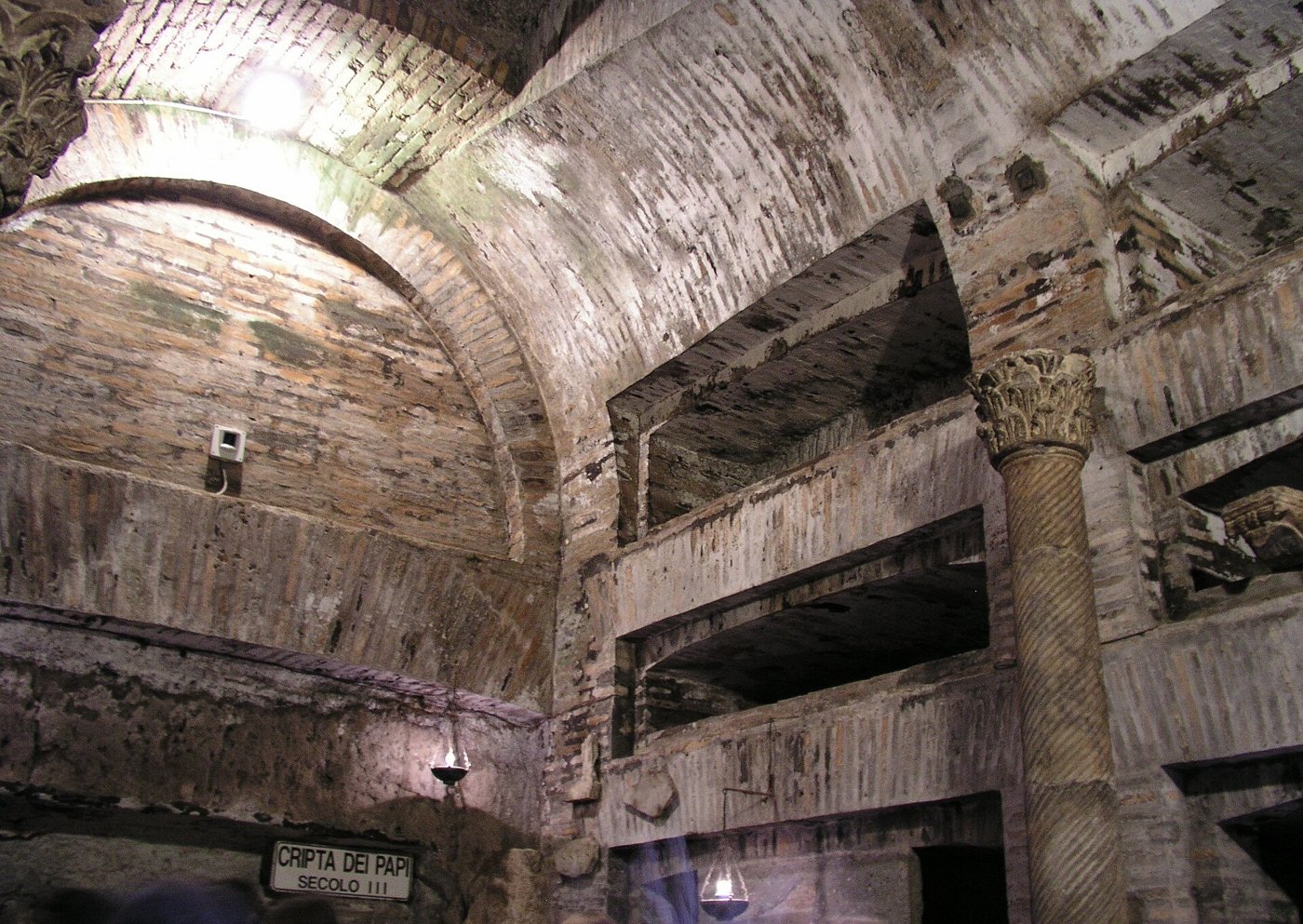

रोमखाली आणि रोमभोवती मऊ खडकात कोरलेल्या ख्रिस्ती कबरींच्या दालनांचे जाळे पसरलेले आहे — आरंभीच्या शतकांत झालेली लाखो दफने. त्यांच्या रंगवलेल्या भिंतींवर ख्रिस्ती कलेची पहिली शब्दसंपदा आहे: चांगला मेंढपाळ, योना, लाजराचे उठवले जाणे, हात उंचावून प्रार्थना करणाऱ्या आकृती — मृत्यूच्या नव्हे तर सुटकेच्या आणि पुनरुत्थानाच्या प्रतिमा. दंतकथेच्या विरुद्ध, ती स्मशाने होती, छळाच्या काळातील लपण्याची ठिकाणे नव्हे, आणि त्यांपैकी सर्वात जुन्या स्मशानांत बिशप आणि गरीब यांना कोणताही भेद न करता सारखेच पुरले आहे. मृतांविषयी आरंभीची रोमन मंडळी काय विश्वास ठेवत होती याची ती सर्वात मोठी भौतिक नोंद आहेत.
- हे काय आहे
- रोमखालील, खडकात कोरलेली मैलोन्मैल पसरलेली भुयारी ख्रिस्ती स्मशाने, ज्यांत सर्वात जुनी ख्रिस्ती अंत्यविधी-कला आहे
- वस्तूचा काळ
- इ.स. दुसऱ्या शतकाच्या उत्तरार्धापासून
- शोध लागला
- रोमच्या भिंतींबाहेर, इटली (16 व्या शतकापासून शोध घेतला गेला; 19 व्या शतकापासून पद्धतशीर अभ्यास)
- आता कोठे आहे
- मूळ जागीच; अनेक पर्यटकांसाठी खुली
- कशाशी संबंधित
- आरंभीच्या रोमन मंडळीची दफनप्रथा आणि तिची पुनरुत्थानाची आशा
- पवित्र शास्त्र
- करिंथकरांस पहिले पत्र 15:42–44 · थेस्सलनीकाकरांस पहिले पत्र 4:13–14
हा शोध काय दाखवतोदुसऱ्या शतकाच्या उत्तरार्धापासून रोममधील एक मोठा, संघटित ख्रिस्ती समुदाय, जो आपल्या मृतांना पुनरुत्थानाच्या आशेने पुरत होता आणि ज्याने पहिली ख्रिस्ती प्रतिमाकला निर्माण केली.
हा काय सिद्ध करत नाहीही कला भक्तिपर आहे, दस्तऐवजी नव्हे; ख्रिस्ती लोकांनी कशाची आशा बाळगली आणि काय चित्रित केले हे ती दाखवते, इतिहास पडताळू शकेल अशा घटना नव्हे.
वादग्रस्त: छळाच्या काळात ख्रिस्ती लोक भुयारी स्मशानांत लपले किंवा तेथे उपासना करत, ही रम्य कल्पना नंतरची दंतकथा आहे; ती दफनस्थळे होती.
स्रोत व अधिक वाचन