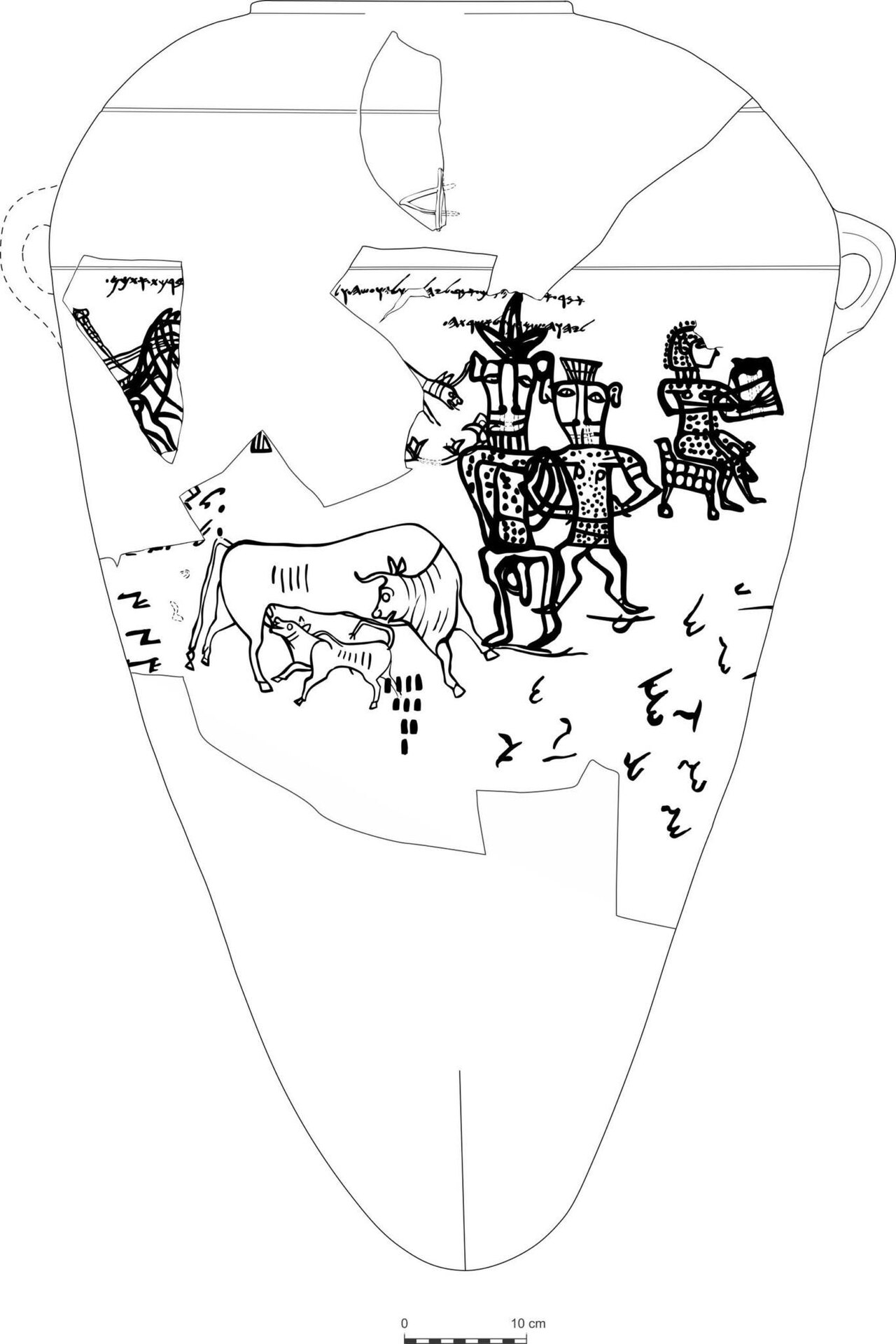

മരുഭൂമിയിലെ ഒരു വ്യാപാരപാതയിലെ ഏകാന്തമായ ഒരു താവളത്തിൽ, യാത്രക്കാർ സംഭരണഭരണികളിൽ അനുഗ്രഹവചനങ്ങൾ വരച്ചിട്ടു — അവയിൽ പലതും യഹോവയെ മാത്രമല്ല, “യഹോവയെയും… അവന്റെ അശേരയെയും” വിളിച്ചപേക്ഷിക്കുന്നു. ഇതേ തരത്തിലുള്ള രണ്ടാമതൊരു ലിഖിതം ഖിർബെത് എൽ-ഖോമിലെ ഒരു യെഹൂദ്യ കല്ലറയിൽ കണ്ടെത്തി. ബൈബിൾ പ്രവാചകന്മാർ തുടർച്ചയായി കുറ്റം വിധിച്ച ജനകീയ മതത്തിലേക്ക് ഇവ ഒരുമിച്ച് ഒരു ജാലകം തുറക്കുന്നു: സാധാരണ ഇസ്രായേല്യർ യഹോവയോടൊപ്പം ഒരു ദേവിയെയോ അവളുടെ പ്രതീകത്തെയോ ചേർത്തു വച്ചിരുന്നു — ബൈബിൾ ഇല്ലാതാക്കാൻ കഠിനമായി ശ്രമിക്കുന്ന ഒരു ആചാരം.
- ഇത് എന്താണ്
- വിദൂരമായ ഒരു മരുഭൂമി-വഴിയമ്പലത്തിൽനിന്ന്, രണ്ടു വലിയ സംഭരണഭരണികളിലും ചുവർ-കുമ്മായത്തിലുമുള്ള എബ്രായ മഷി-ലിഖിതങ്ങളും ചിത്രങ്ങളും
- വസ്തുവിന്റെ കാലം
- ഏകദേശം ക്രി.മു. 800
- കണ്ടെത്തിയത്
- കുന്തില്ലെത് അജ്രൂദ്, വടക്കുകിഴക്കൻ സീനായിയിലെ ഒരു മരുഭൂമി-പാതയിൽ, 1975 (സെയേവ് മെഷെലിന്റെ ഖനനം)
- ഇപ്പോൾ എവിടെ
- ഇസ്രായേൽ
- ബന്ധപ്പെട്ടത്
- ജനകീയ ഇസ്രായേല്യ മതം — “യഹോവയാലും അവന്റെ അശേരയാലും” എന്ന അതിലെ അനുഗ്രഹവചനങ്ങൾ
- തിരുവെഴുത്ത്
- 2 രാജാക്കന്മാർ 23 · ആവർത്തനപുസ്തകം 16:21
ഈ കണ്ടെത്തൽ കാണിക്കുന്നത്ചില ഇസ്രായേല്യർ യഹോവയോടൊപ്പം “അശേര”യെയും ആരാധിച്ചിരുന്നു — പ്രവാചകന്മാർ അപലപിക്കുന്ന അതേ സമ്മിശ്രാരാധന; ബൈബിളിന്റെ സ്വന്തം പരാതി, മണ്ണിൽനിന്നു സ്ഥിരീകരിക്കപ്പെട്ടത്.
ഇതു തെളിയിക്കാത്തത്ഇത് ഔദ്യോഗിക മതമോ ഭൂരിപക്ഷത്തിന്റെ മതമോ ആയിരുന്നുവെന്ന് ഇതു കാണിക്കുന്നില്ല; ഈ സ്ഥലം വിദൂരവും ചുരുങ്ങിയ കാലം മാത്രം ഉപയോഗിച്ചതുമായ ഒരു വഴിയമ്പലമാണ്; “അവന്റെ അശേര” എന്നത് ഒരു ദേവിയെയാണോ ഒരു മരനിർമ്മിത ആരാധനാപ്രതീകത്തെയാണോ അർഥമാക്കുന്നത് എന്നതുതന്നെ ചർച്ചയിലാണ്.
തർക്കവിഷയം: ഇവിടെ അശേര ഒരു സഹധർമ്മിണി-ദേവിയാണോ ഒരു ആരാധനാവസ്തുവാണോ എന്നതിലും, ഈ സ്ഥലം എന്തിനുവേണ്ടിയായിരുന്നു എന്നതിലും പണ്ഡിതർ യഥാർഥത്തിൽ വിയോജിക്കുന്നു. വ്യക്തമായിട്ടുള്ളത്, ജനകീയ മതം ചിട്ടയായ ഒരു ഏകദൈവവിശ്വാസത്തെക്കാൾ കുഴഞ്ഞുമറിഞ്ഞതായിരുന്നു എന്നതാണ്.
സ്രോതസ്സുകളും കൂടുതൽ വായനയും