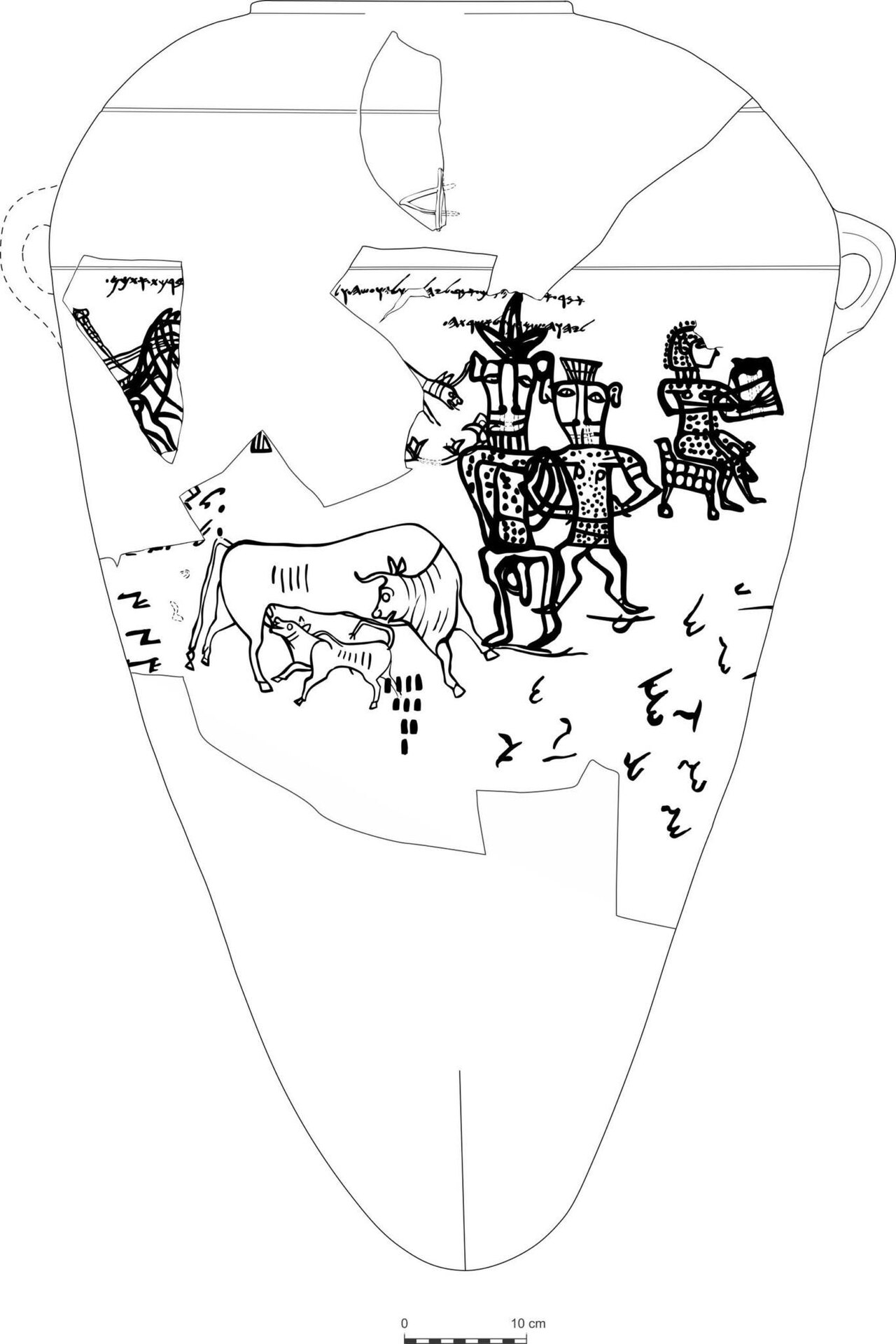

ಮರುಭೂಮಿಯ ಒಂದು ವ್ಯಾಪಾರ ಮಾರ್ಗದ ನಿರ್ಜನ ತಂಗುದಾಣದಲ್ಲಿ, ಪ್ರಯಾಣಿಕರು ಸಂಗ್ರಹ-ಜಾಡಿಗಳ ಮೇಲೆ ಆಶೀರ್ವಾದಗಳನ್ನು ಬರೆದು ಬಿಟ್ಟುಹೋದರು — ಅವುಗಳಲ್ಲಿ ಹಲವು ಯೆಹೋವನನ್ನು ಮಾತ್ರವಲ್ಲ, 'ಯೆಹೋವ… ಮತ್ತು ಅವನ ಅಶೇರ'ಳನ್ನು ಕರೆಯುತ್ತವೆ. ಇದೇ ರೀತಿಯ ಎರಡನೆಯ ಶಾಸನವು ಖಿರ್ಬೆತ್ ಎಲ್-ಕೋಮ್ನಲ್ಲಿನ ಯೆಹೂದದ ಒಂದು ಸಮಾಧಿಯಲ್ಲಿ ಸಿಕ್ಕಿತು. ಇವೆರಡೂ ಸೇರಿ, ಬೈಬಲಿನ ಪ್ರವಾದಿಗಳು ಪದೇಪದೇ ಖಂಡಿಸುತ್ತಿದ್ದ ಜನಪದ ಧರ್ಮದೊಳಗೆ ಒಂದು ಕಿಟಕಿಯನ್ನು ತೆರೆಯುತ್ತವೆ: ಸಾಮಾನ್ಯ ಇಸ್ರಾಯೇಲ್ಯರು ಯೆಹೋವನನ್ನು ಒಂದು ದೇವತೆಯೊಂದಿಗೆ ಅಥವಾ ಅವಳ ಪವಿತ್ರ ಚಿಹ್ನೆಯೊಂದಿಗೆ ಜೋಡಿಸುತ್ತಿದ್ದರು — ಬೈಬಲ್ ನಿರ್ಮೂಲಗೊಳಿಸಲು ಬಹಳ ಶ್ರಮಿಸುವ ಆಚರಣೆ.
- ಇದು ಏನು
- ದೂರದ ಮರುಭೂಮಿಯ ಒಂದು ತಂಗುದಾಣದಿಂದ ಬಂದ, ಎರಡು ದೊಡ್ಡ ಸಂಗ್ರಹ-ಜಾಡಿಗಳ ಮೇಲೆ ಮತ್ತು ಗೋಡೆಯ ಗಾರೆಯ ಮೇಲೆ ಶಾಯಿಯಲ್ಲಿ ಬರೆದ ಹೀಬ್ರೂ ಶಾಸನಗಳು ಮತ್ತು ಚಿತ್ರಗಳು
- ವಸ್ತುವಿನ ಕಾಲ
- ಸು. ಕ್ರಿ.ಪೂ. 800
- ಪತ್ತೆಯಾದದ್ದು
- ಕುಂಟಿಲೆಟ್ ಅಜ್ರುದ್, ಈಶಾನ್ಯ ಸಿನೈಯ ಒಂದು ಮರುಭೂಮಿ ದಾರಿಯಲ್ಲಿ, 1975 (ಜೀವ್ ಮೆಶೆಲ್ ಅವರ ಉತ್ಖನನ)
- ಈಗ ಎಲ್ಲಿದೆ
- ಇಸ್ರೇಲ್
- ಸಂಬಂಧಿಸಿರುವುದು
- ಜನಪ್ರಿಯ ಇಸ್ರಾಯೇಲ್ಯ ಧರ್ಮ — ಮತ್ತು 'ಯೆಹೋವ ಮತ್ತು ಅವನ ಅಶೇರಳ ಮೂಲಕ' ಎಂಬ ಅದರ ಆಶೀರ್ವಾದಗಳು
- ಶಾಸ್ತ್ರಗ್ರಂಥ
- 2 ಅರಸುಗಳು 23 · ಧರ್ಮೋಪದೇಶಕಾಂಡ 16:21
ಈ ಶೋಧವು ತೋರಿಸುವುದುಕೆಲವು ಇಸ್ರಾಯೇಲ್ಯರು ನಿಜವಾಗಿಯೂ ಯೆಹೋವನೊಂದಿಗೆ 'ಅಶೇರ'ಳನ್ನೂ ಆರಾಧಿಸುತ್ತಿದ್ದರು — ಪ್ರವಾದಿಗಳು ಖಂಡಿಸುವ ಬೆರಕೆ ಆರಾಧನೆಯೇ ಇದು; ಬೈಬಲಿನದೇ ಆಕ್ಷೇಪಣೆ, ನೆಲದಿಂದ ದೃಢಪಟ್ಟದ್ದು.
ಇದು ರುಜುವಾತುಪಡಿಸದಿರುವುದುಇದು ಅಧಿಕೃತ ಅಥವಾ ಬಹುಸಂಖ್ಯಾತರ ಧರ್ಮವಾಗಿತ್ತು ಎಂದು ಇದು ತೋರಿಸುವುದಿಲ್ಲ; ಈ ಸ್ಥಳವು ದೂರದ, ಅಲ್ಪಕಾಲ ಬಳಸಲಾದ ತಂಗುದಾಣ, ಮತ್ತು 'ಅವನ ಅಶೇರ' ಎಂಬುದರ ಅರ್ಥ ಒಂದು ದೇವತೆಯೋ ಅಥವಾ ಮರದ ಆರಾಧನಾ-ಚಿಹ್ನೆಯೋ ಎಂಬುದೇ ಚರ್ಚಾಸ್ಪದ.
ವಿವಾದಿತ: ಇಲ್ಲಿ ಅಶೇರ ಒಬ್ಬ ಸಂಗಾತಿ-ದೇವತೆಯೋ ಅಥವಾ ಒಂದು ಆರಾಧನಾ-ವಸ್ತುವೋ ಎಂಬುದರ ಬಗ್ಗೆ, ಮತ್ತು ಈ ಸ್ಥಳ ಯಾವುದಕ್ಕಾಗಿ ಇತ್ತು ಎಂಬುದರ ಬಗ್ಗೆ ವಿದ್ವಾಂಸರು ನಿಜವಾಗಿಯೂ ಭಿನ್ನಾಭಿಪ್ರಾಯ ಹೊಂದಿದ್ದಾರೆ. ಸ್ಪಷ್ಟವಾದದ್ದು ಏನೆಂದರೆ, ಜನಪ್ರಿಯ ಧರ್ಮವು ಅಚ್ಚುಕಟ್ಟಾದ ಏಕದೇವತಾವಾದಕ್ಕಿಂತ ಹೆಚ್ಚು ಗೊಂದಲಮಯವಾಗಿತ್ತು.
ಮೂಲಗಳು ಮತ್ತು ಹೆಚ್ಚಿನ ಓದು