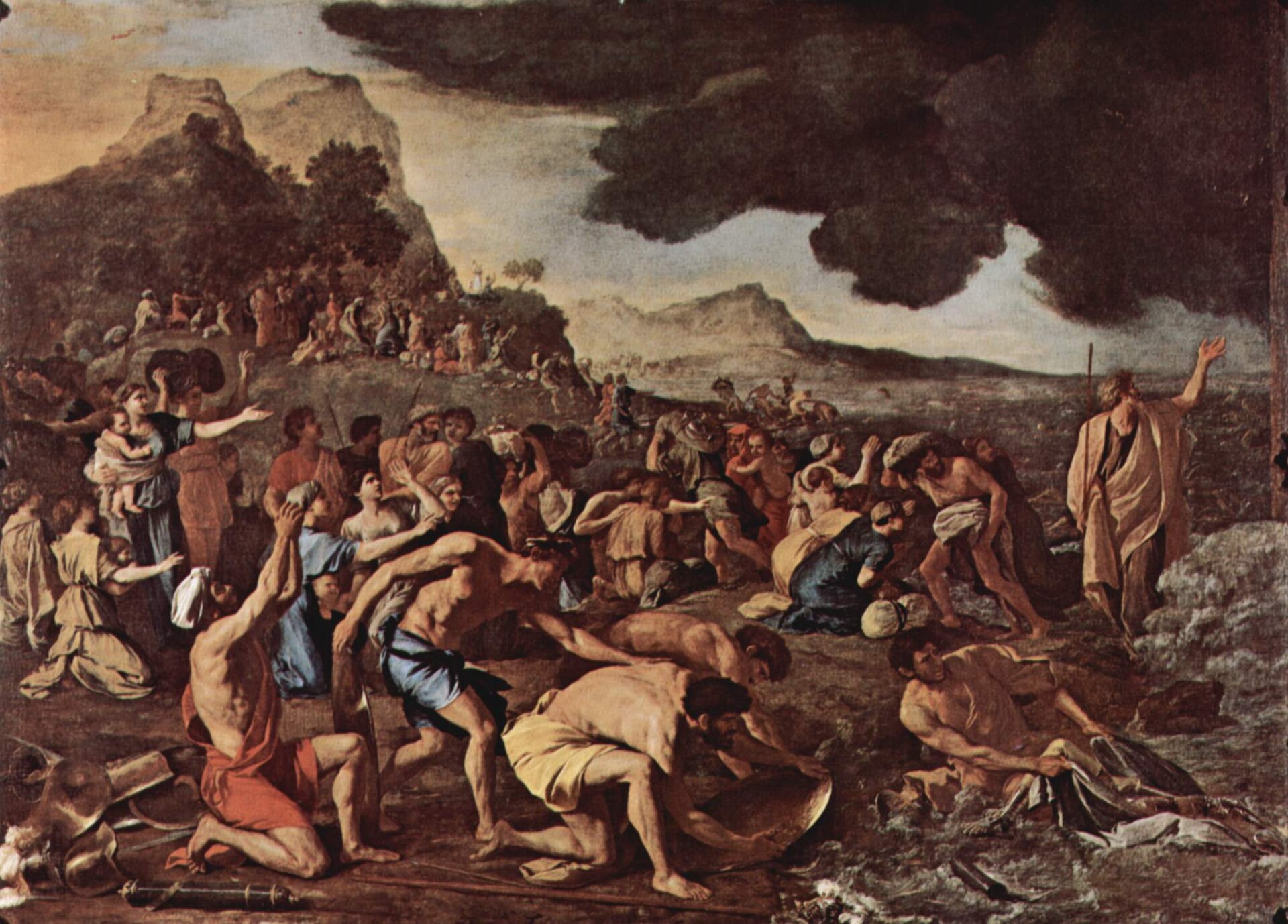

এক বিশেষ রকমের ফাঁদ আছে, যেখানে পেছনের জিনিস সামনের চেয়েও খারাপ, আর বেরোনোর একমাত্র পথ অসম্ভবের মধ্য দিয়ে সোজা। ইস্রায়েল ঠিক এমন ফাঁদে দাঁড়িয়ে: পেছন থেকে ফরৌণের রথ এগিয়ে আসছে, সামনে গভীর জল, কোনো রাস্তা নেই। যাত্রা এদিকেই গড়িয়ে এসেছে — আঘাতের পর আঘাত, মধ্যরাতে তাড়াহুড়োর যাত্রা — আর সব এসে ঠেকে সমুদ্রের এক টুকরো তীরে আর একটিমাত্র আদেশে: এগিয়ে চলো।
কাহিনিতে এটি কোথায়: কাহিনির তৃতীয় অঙ্ক শুরু হচ্ছে — ঈশ্বর একটি উদ্ধারপ্রাপ্ত জাতি গড়ছেন। মিশর থেকে উদ্ধার পুরাতন নিয়মে পরিত্রাণের প্রধান চিত্র হয়ে ওঠে; পরের প্রত্যেক লেখক ফিরে তাকান 'সেই ঈশ্বরের দিকে যিনি তোমাদের মিশর থেকে বের করে এনেছেন।' ক্রমে পড়লে লোহিত সাগর সেই মুহূর্ত যার প্রতিধ্বনি পরের সবকিছুতে — বন্দিত্ব থেকে ফেরা, আর নতুন নিয়মে মুক্তির ভাষা পর্যন্ত।
এই অধ্যায় কী করছে: পালিয়ে যাওয়া একটি ভিড়কে এমন জাতিতে পরিণত করা যারা গভীরতম স্তরে জানে যে তাদের অস্তিত্ব সম্পূর্ণ উদ্ধারের কাছে ঋণী — আর জলের ধারে তিনি কী করেন, তা দিয়েই তাদের ঈশ্বর কে তা সংজ্ঞায়িত করা।
- 14:1–14 — ইচ্ছে করেই আটকানো: ঈশ্বর তাদের একটি কানাগলিতে নিয়ে যান, যাতে উদ্ধার নিঃসন্দেহে তাঁর হয়, তাদের নয়। লোকেরা আতঙ্কিত; মোশি বলেন, 'স্থির হয়ে দাঁড়াও আর দেখো' — তারপর ঈশ্বর মোশিকে উল্টো উত্তর দেন, 'তাদের এগিয়ে যেতে বলো।' এখানে বিশ্বাস একটি পদক্ষেপ, থেমে থাকা নয়।
- 14:15–25 — পূবের বাতাস, জলের দেয়াল, শুকনো মাটি, মিশরীয় বাহিনীর বিশৃঙ্খলা। পাঠ সাবধানে একটি উপায়ের কথা বলে (একটি বাতাস, সারা রাত), কিন্তু সময়টাকে অলৌকিক ছাড়া আর কিছু হতে দেয় না।
- 14:26–31 — জল ফিরে আসে; বাহিনী মিলিয়ে যায়। কাহিনির জন্য জরুরি দুটি ফলে অধ্যায় শেষ হয়: লোকেরা 'সদাপ্রভুকে ভয় করল' এবং তাঁর ওপর 'বিশ্বাস রাখল'। যাত্রা কেবল পালানো নয় — এটি একটি ভরসার জন্ম।
- প্রথম তারিখ (আনু. খ্রিস্টপূর্ব 1446): 1 রাজাবলি 6:1-কে আক্ষরিক বছর-গণনা হিসেবে নেয়; কিছু পাঠকের কাছে যিরীহো ও অমর্না-যুগের অস্থিরতার সঙ্গে 15শ শতাব্দীর বিজয় মেলে।
- পরের তারিখ (আনু. খ্রিস্টপূর্ব 1260): 480-কে প্রতীকী 12×40 হিসেবে পড়ে, আর মিশরীয় স্থাননাম ও রামেষেষ-যুগের সাধারণ প্রত্নতত্ত্বের ওপর নির্ভর করে; প্রত্নতাত্ত্বিকদের মধ্যে সংখ্যাগরিষ্ঠ মত।
- ন্যূনতমবাদী মত: একক কোনো ঐতিহাসিক যাত্রা-ঘটনা পুনরুদ্ধার করা যায় না; বিবরণটি পরবর্তী কালের একটি জাতীয় উৎস-কাহিনি।
মূল পদ: যাত্রাপুস্তক 14:13–14 · তাতে কী: এই জাতি যে সংজ্ঞায়ক স্মৃতি বহন করে, তা তাদের জেতা কোনো বিজয় নয়, বরং পাওয়া একটি উদ্ধার — পিঠে সমুদ্র, নিজেদের কোনো রাস্তা নেই। বাকি গোটা কাহিনি তাদের কাছে এই ভঙ্গিটাই চায় — আর তার শুরু জলে নামা দিয়ে।