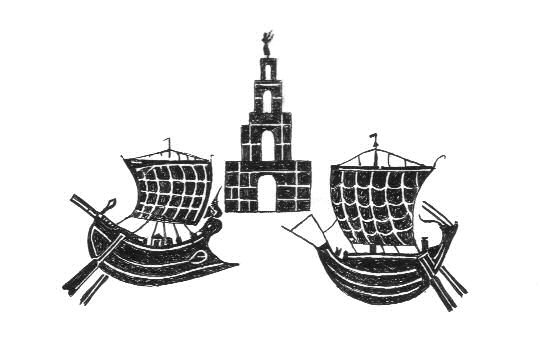

In the first century, Rome and India were joined by one of the great trade routes of the ancient world. Once Greek and Roman sailors learned to ride the monsoon winds, fleets sailed each year from Egypt's Red Sea ports across the open ocean to the coast of India and back — a round trip in a single year. The commerce was enormous: Pliny the Elder grumbled that the East drained the empire of a fortune in gold every year, and hoards of Roman coins turn up across southern India to prove the trade was real. This is the world into which, tradition says, the gospel travelled east.
- Sailors used the monsoon winds to cross from Egypt's Red Sea ports to India and back within a year.
- Pliny the Elder complained the eastern trade drained Rome of vast amounts of gold and silver.
- Roman coin hoards are found across southern India, confirming the scale of the trade.
What the evidence showsThe Roman–Indian monsoon trade is richly documented — by the eyewitness Periplus of the Erythraean Sea, by Pliny and Ptolemy, and by Roman coin hoards found across South India.
Where it stopsThe trade is beyond doubt; that it also carried Christian missionaries is a reasonable inference from the connectivity, not something the trade records themselves state.