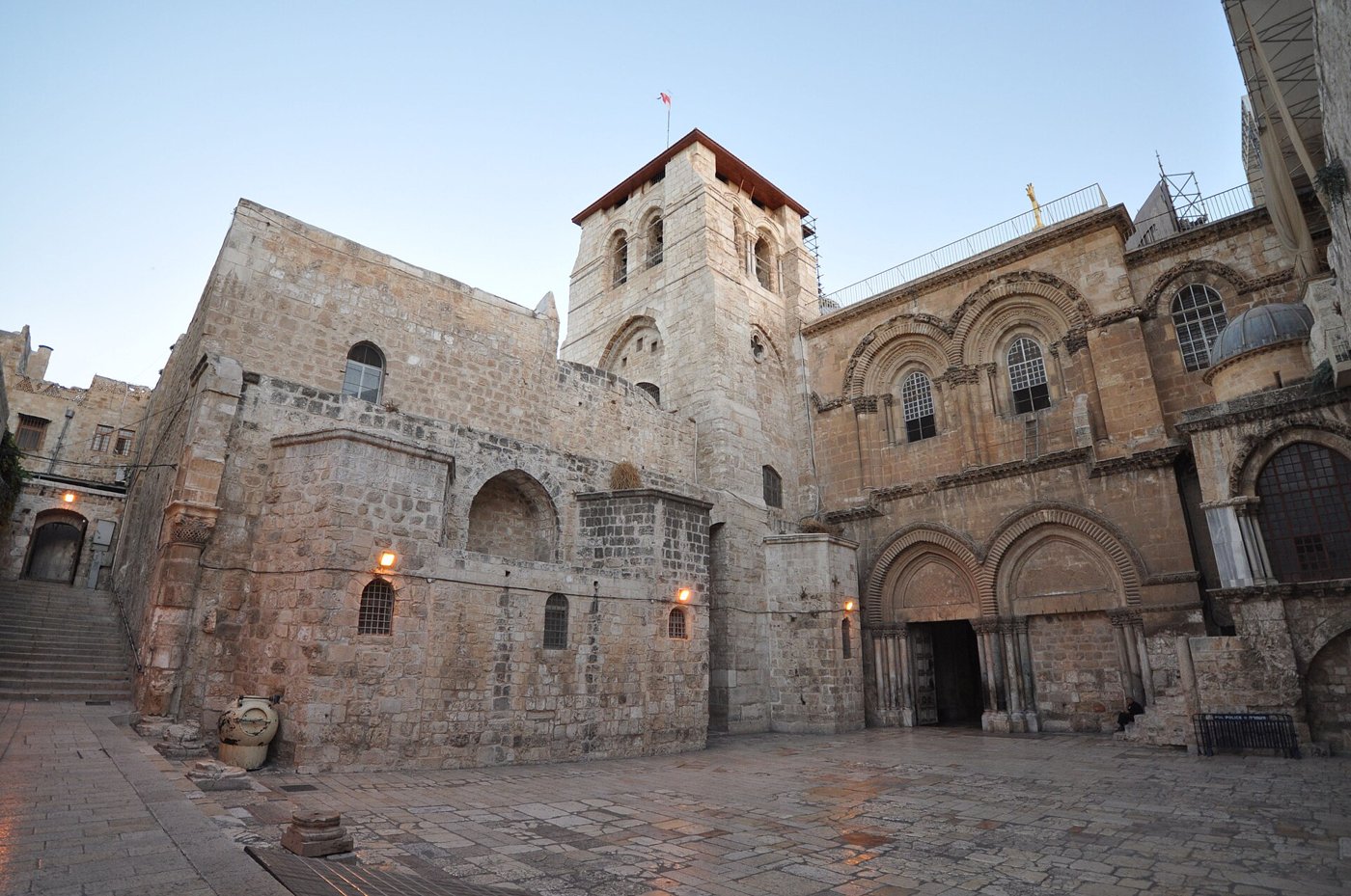

Christianity began not as a new religion but as a movement within Judaism, in Jerusalem. The book of Acts places its birth at Pentecost, in a community of Jewish believers led first by the apostles and then by James, the brother of Jesus. For a generation it worshipped at the Temple and in homes, a Jewish sect among others — until persecution scattered its members and the Roman destruction of Jerusalem in AD 70 uprooted the mother church, pushing the movement out into the wider Greek-speaking world.
- The church began as a Jewish movement in Jerusalem, led by the apostles and then James, the brother of Jesus.
- It worshipped at the Temple and in homes before spreading outward.
- The Roman destruction of Jerusalem in AD 70 scattered the mother church into the wider world.
What the evidence showsThe earliest church was a real, locatable Jewish community in first-century Jerusalem — its leaders, its setting in the Temple city, and its dispersal are attested in Acts and by the historical upheavals of the period.
Where it stopsThe internal life of that first community reaches us mainly through Christian sources (Acts); the theological claims made about it are matters of faith, not something archaeology can confirm.