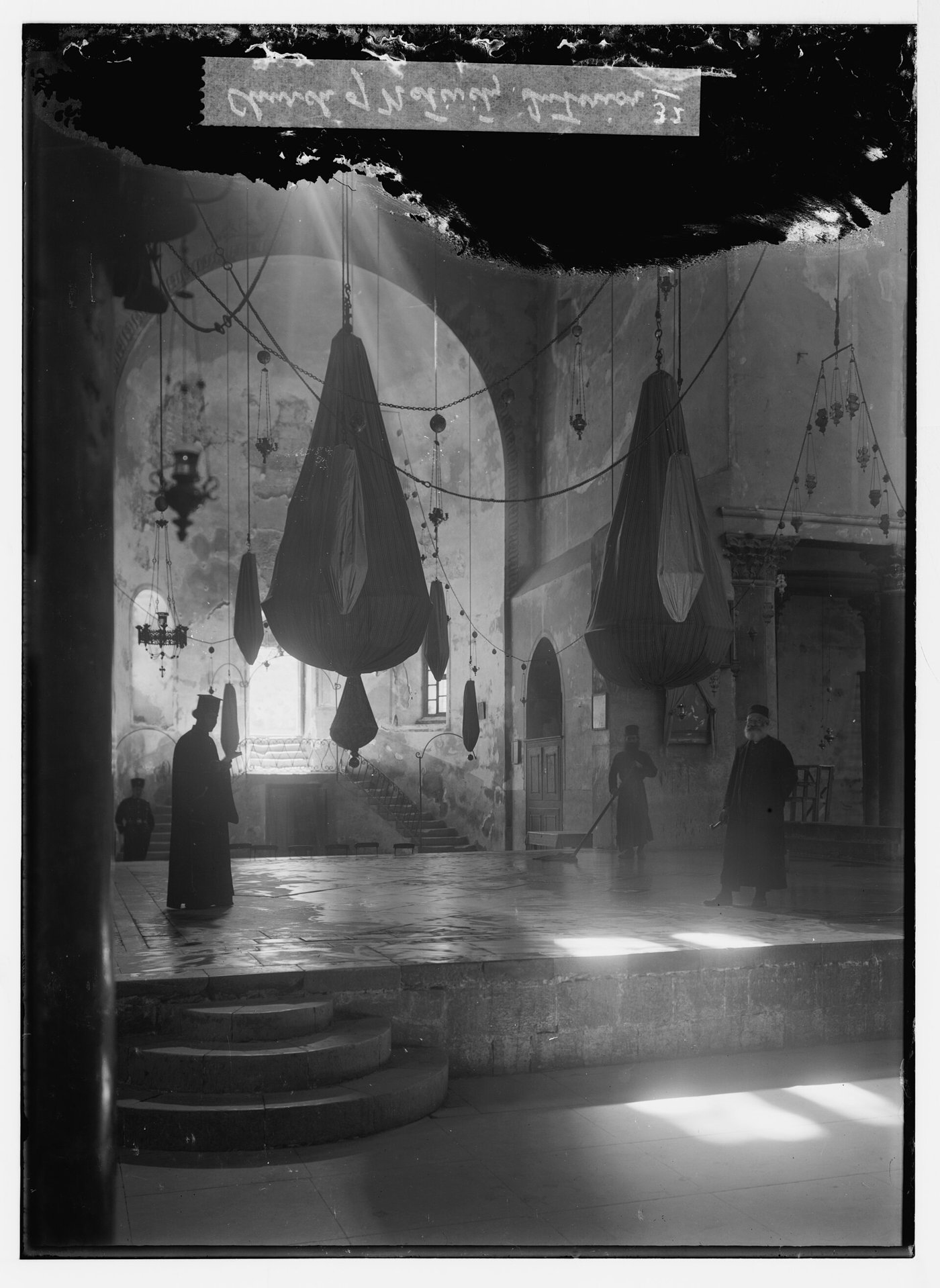

When Constantine legalised the faith in the early fourth century, the Holy Land was rediscovered as sacred geography. His mother Helena is remembered for a pilgrimage around AD 326, and great churches soon rose over the sites of memory: the Holy Sepulchre at Golgotha, the Church of the Nativity in Bethlehem, the basilica on the Mount of Olives. Pilgrims began to come — the traveller Egeria has left a vivid account from the 380s — and Byzantine Palestine filled with churches and monasteries. Some site identifications are secure and ancient; others rest on tradition, and honest guides say which is which.
- Constantine and (by tradition) his mother Helena marked the holy sites in the early 4th century.
- Great churches: the Holy Sepulchre, the Nativity in Bethlehem, the Mount of Olives.
- The pilgrim Egeria left a detailed account of Holy Land worship in the 380s.
What the evidence showsThe fourth-century building of the great holy places and the rise of Christian pilgrimage are well documented, and several sites (the Holy Sepulchre, Bethlehem) sit on genuinely early tradition.
Where it stopsNot every 'holy place' is equally well founded — some identifications are late or devotional rather than historical — and this card describes the veneration, not a proof of each event.