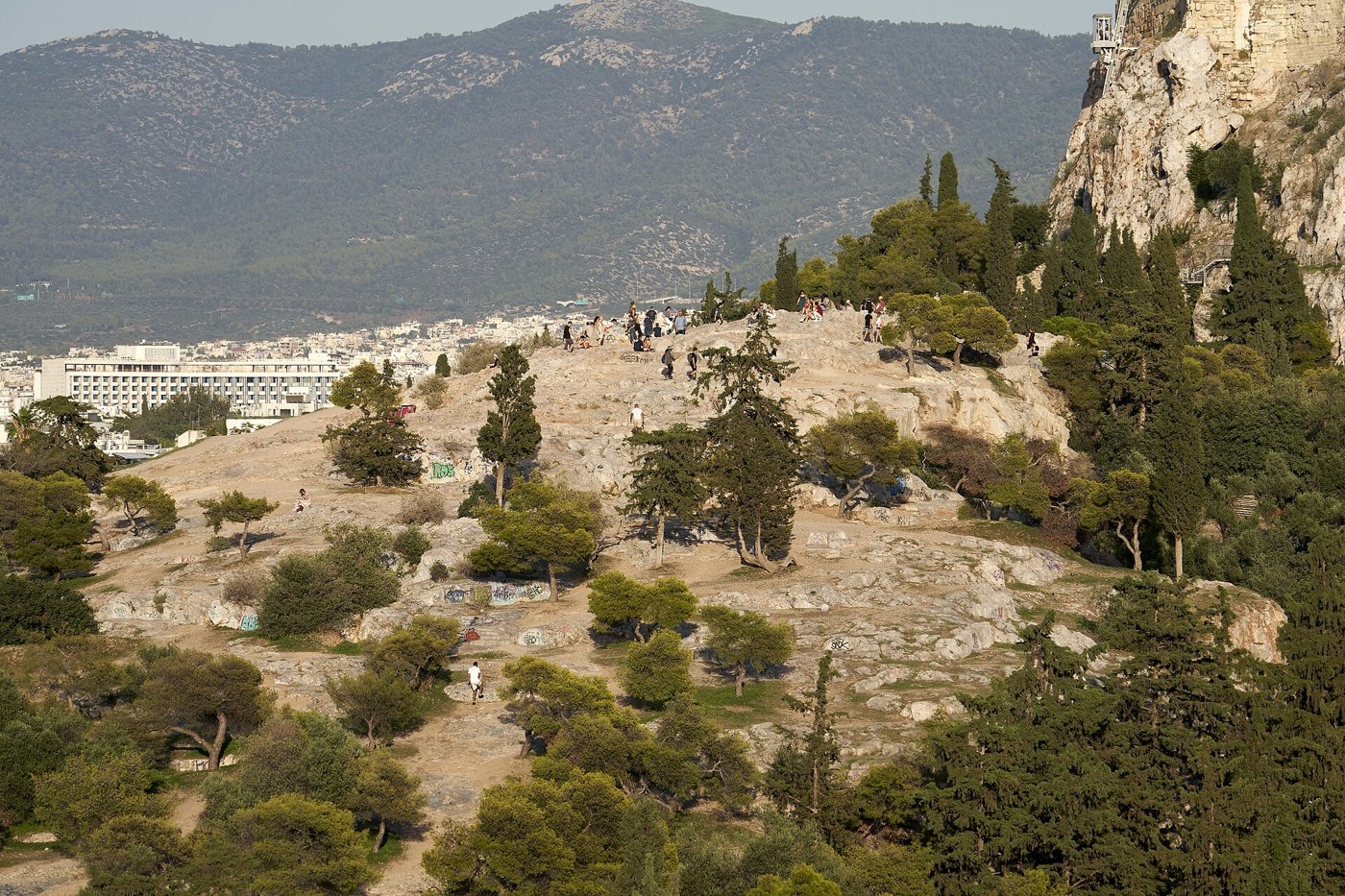

விக்கிரகங்கள் நிறைந்த ஒரு நகரத்தைக் கண்டு “மிகவும் மனம் கலங்கியவராக” பவுல் அத்தேனேயில் இருப்பதையும், தத்துவஞானிகளுடன் விவாதிப்பதையும், அரியோபாகுவில் — அக்ரோபோலிஸுக்குக் கீழே இன்றும் நிற்கும் வெறும் பாறையில் — கூடிய ஆலோசனைச் சங்கத்தின் முன் பேசுவதையும் லூக்கா காட்டுகிறார். “அறியப்படாத தேவனுக்கு” என்று பொறிக்கப்பட்ட ஒரு பலிபீடத்தைக் குறிப்பிட்டுப் பவுல் தொடங்குகிறார்; அத்தேனியரின் பக்தியைத் தாம் அறிவிக்கும் தேவனை நோக்கித் திருப்புகிறார். அந்த மேடு மெய்யானது, பெயரிடப்பட்டது; லூக்கா வரையும் மத, தத்துவ உலகம் — எப்பிக்கூரியரும் ஸ்தோயிக்கரும், பலிபீடங்களின் ஒரு காடும் — நகரத்தையும் அதன் பொதுச் சந்தையையும் அகழ்ந்தெடுத்தபோது வெளிப்படுவதே; மேலும் பெயரிடப்படாத தெய்வங்களுக்குப் பலிபீடங்கள் அமைக்கும் விசித்திரமான வழக்கத்தைக் கிரேக்க எழுத்தாளர்கள் தனியாகச் சான்றளிக்கின்றனர்.
- இது என்ன
- பலிபீடங்களும் ஆலயங்களும் நெருக்கமாக நிறைந்த ஒரு நகரத்தில், பண்டைய அத்தேனேயின் ஆலோசனைச் சங்கம் கூடிய, அக்ரோபோலிஸுக்குக் கீழே உள்ள பாறை மேடு
- பொருளின் காலம்
- பாரம்பரியக் காலம் முதல் ரோமக் காலம் வரையிலான அத்தேனே
- கண்டுபிடிக்கப்பட்டது
- அத்தேனே, கிரீஸ், அக்ரோபோலிஸுக்குச் சற்று வடமேற்கே (நெடுங்காலமாக அறியப்பட்டது; சுற்றியுள்ள பொதுச் சந்தை அமெரிக்கன் ஸ்கூலால் அகழ்வாராய்ச்சி செய்யப்பட்டது)
- இப்போது இருக்கும் இடம்
- இருந்த இடத்திலேயே
- தொடர்புடையது
- “அறியப்படாத தேவனுக்கு” என்ற ஒரு பலிபீடத்தைக் குறிப்பிட்டுப் பவுல் பிரசங்கித்த ஆலோசனைச் சங்கம்
- வேதவாக்கியம்
- அப்போஸ்தலர் 17:16–34