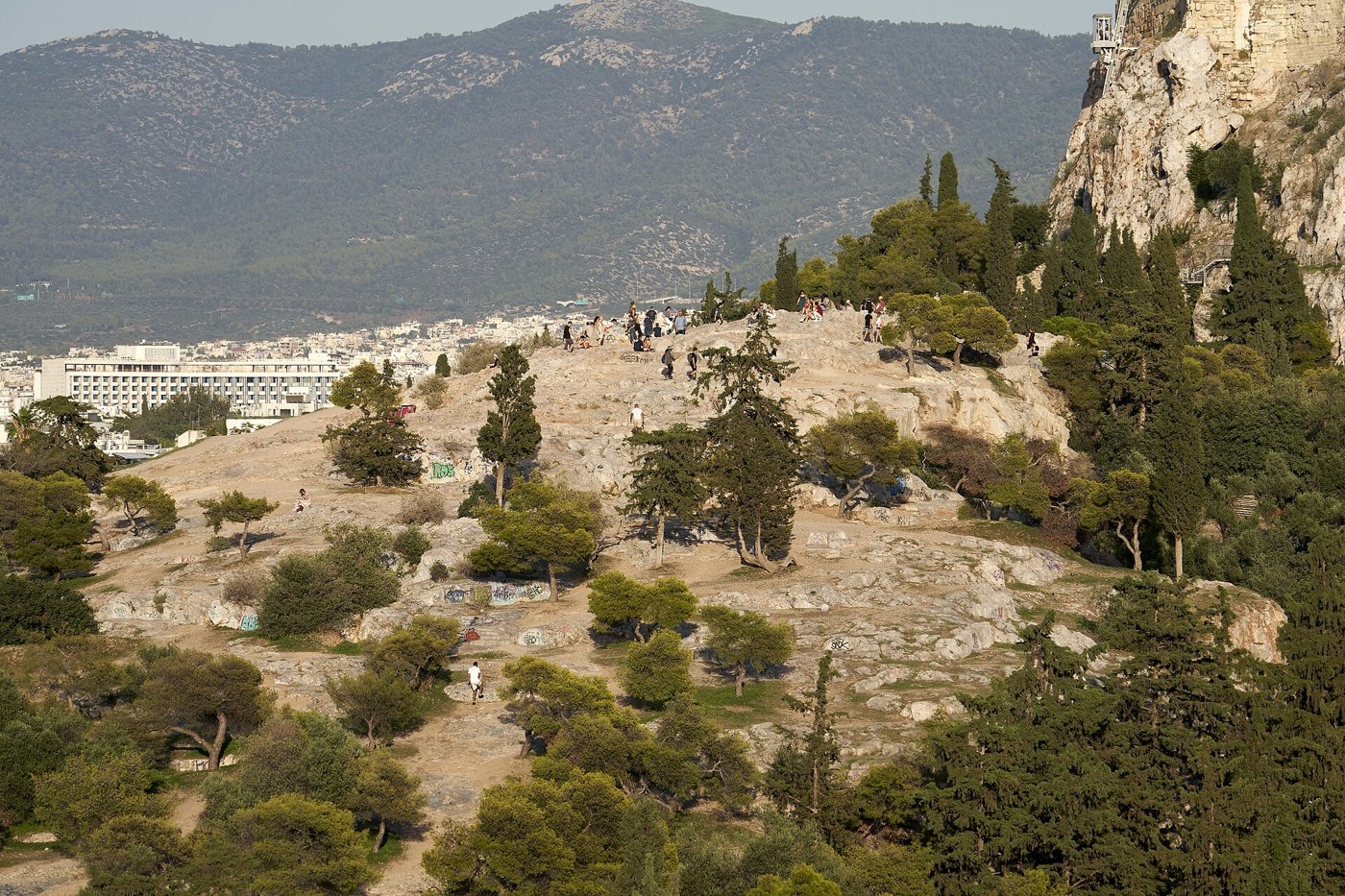

লুক পৌলকে এথেন্সে দেখান — মূর্তিতে পূর্ণ একটি নগর দেখে তিনি “অত্যন্ত ব্যথিত”, দার্শনিকদের সঙ্গে যুক্তিতর্ক করছেন এবং আরেয়পাগের পরিষদকে সম্বোধন করছেন; সেই খালি পাথরটি আজও আক্রপলিসের নিচে দাঁড়িয়ে আছে। পৌল শুরু করেন “অজানা দেবতার উদ্দেশে” খোদাই করা একটি বেদির কথা উল্লেখ করে, এথেন্সবাসীদের ধর্মনিষ্ঠাকে তিনি যে ঈশ্বরকে প্রচার করেন তাঁর দিকে ফিরিয়ে। পাহাড়টি বাস্তব ও নাম-পরিচিত; লুক যে ধর্মীয় ও দার্শনিক জগতের ছবি আঁকেন — ইপিকুরীয় ও স্তোয়িকীয়রা, বেদির এক অরণ্য — তা-ই নগর ও তার আগোরার খননকার্যে উন্মোচিত হয়; আর গ্রিক লেখকেরা স্বাধীনভাবে নামহীন দেবতাদের উদ্দেশে বেদি স্থাপনের কৌতূহলজনক প্রথার সাক্ষ্য দেন।
- এটি কী
- আক্রপলিসের নিচে একটি পাথুরে উঁচু জায়গা, যেখানে প্রাচীন এথেন্সের পরিষদ মিলিত হত — এমন এক নগরে, যা বেদি ও মন্দিরে পরিপূর্ণ
- নিদর্শনের কাল
- ক্লাসিক্যাল থেকে রোমান যুগের এথেন্স
- আবিষ্কার
- এথেন্স, গ্রিস, আক্রপলিসের ঠিক উত্তর-পশ্চিমে (দীর্ঘকাল ধরে পরিচিত; চারপাশের আগোরা আমেরিকান স্কুল খনন করেছে)
- এখন কোথায় আছে
- মূল স্থানে
- সম্পর্কিত
- যে পরিষদের সামনে পৌল প্রচার করেছিলেন, “অজানা দেবতার উদ্দেশে” উৎসর্গিত একটি বেদির কথা উল্লেখ করে
- ধর্মশাস্ত্র
- প্রেরিতদের কার্য্য 17:16–34
এই আবিষ্কার যা দেখায়আরেয়পাগ, এথেন্সের ভিড়াক্রান্ত ধর্মীয় পরিবেশ, এবং “অজানা দেবতা”-র বেদির নথিভুক্ত প্রথা — সবই লুকের বর্ণিত পটভূমির সঙ্গে মেলে।
এটি যা প্রমাণ করে নাটিকে থাকা কোনো বেদিকেই পৌল যেটি উদ্ধৃত করেছিলেন ঠিক সেটির সঙ্গে মেলানো যায়নি; তিনি যে নির্দিষ্ট শিলালিপির উল্লেখ করেছিলেন, তা উদ্ধার হয়নি।