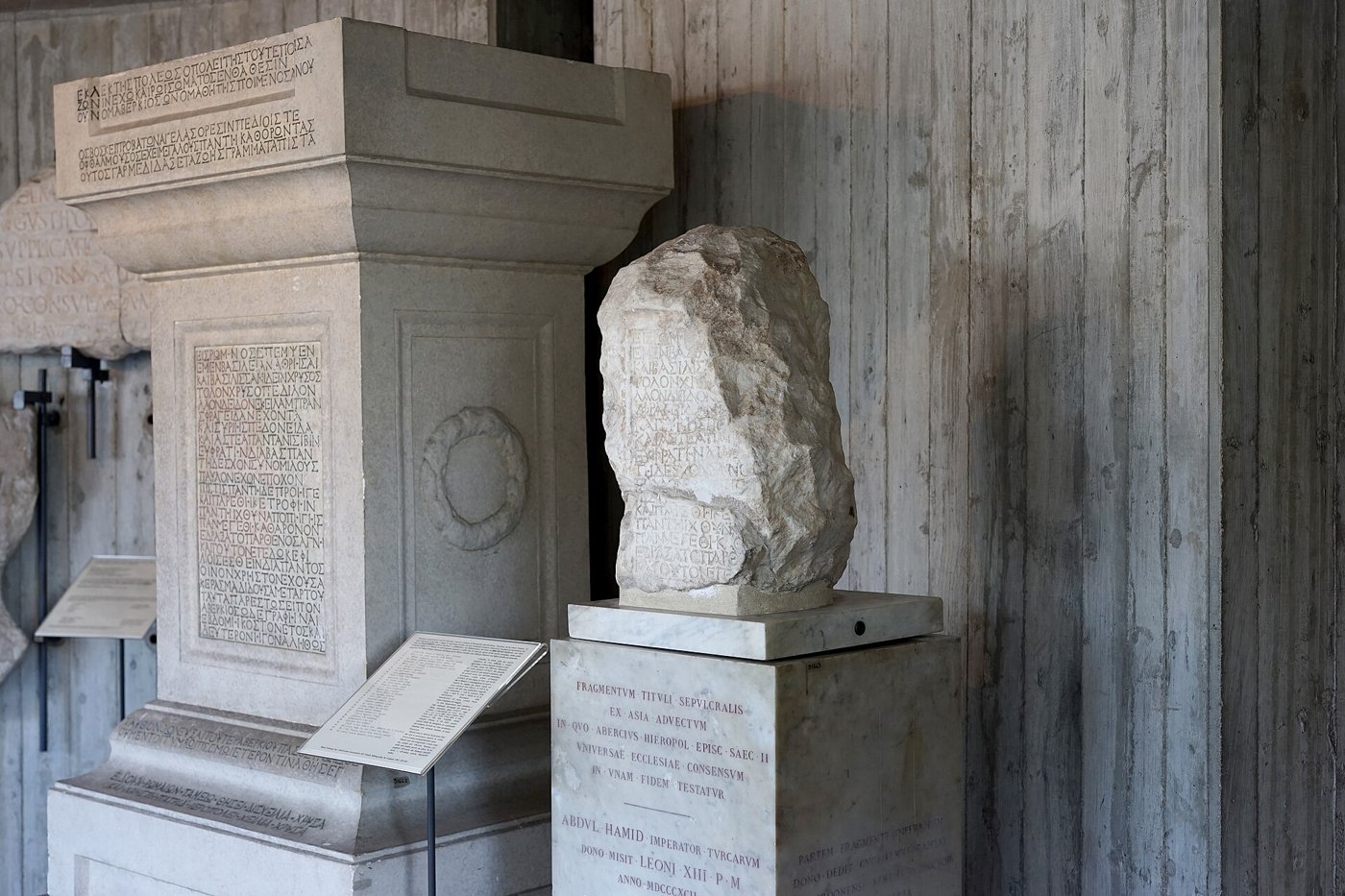

फ्रुगियातील एक बिशप अबेर्कियस याने इ.स. 216 पूर्वी स्वतःचा समाधिलेख रचला — ज्याला अनेकदा आरंभीच्या ख्रिस्ती शिलालेखांची राणी म्हटले जाते. काळजीपूर्वक झाकलेल्या भाषेत तो रोमपर्यंत आणि पूर्वेकडील प्रदेशांत केलेल्या त्याच्या प्रवासांचे, सर्वत्र भाकर आणि द्राक्षारसासह त्याच्यापुढे “झऱ्यातील मासा” ठेवणाऱ्या विश्वासाचे, आणि सोबती म्हणून “पौल” याचे वर्णन करतो. ही सांकेतिक प्रतिमा — ख्रिस्तासाठी मासा, प्रभुभोजासाठी सहभोजन — ख्रिस्ती व्यक्तीला ती स्पष्टपणे वाचू देते, तर वाटसरूला फक्त एक धार्मिक समाधिलेख दिसत असे. काळ ठरवता येणाऱ्या सर्वात जुन्या ख्रिस्ती शिलालेखांपैकी तो एक आहे — इ.स. 200 च्या सुमारासच्या, आत्मजाणीव असलेल्या, परस्परांशी जोडलेल्या मंडळीचा दगडी साक्षीदार.
- हे काय आहे
- फ्रुगियातील एका बिशपचा, इ.स. 216 पूर्वी लिहिलेला, गूढ ख्रिस्ती प्रतिमांचा वापर करणारा कोरीव समाधिलेख
- वस्तूचा काळ
- इ.स. 216 पूर्वी
- शोध लागला
- फ्रुगियातील हिएरापोलिस (केलेंद्रेसजवळ), मध्य तुर्कस्तान, 1883 (विल्यम रॅमसे)
- आता कोठे आहे
- व्हॅटिकन संग्रहालये, रोम
- कशाशी संबंधित
- आशिया मायनरमधील आरंभीच्या मंडळीची आत्मजाणीव आणि तिचे परस्परसंबंधांचे जाळे
- पवित्र शास्त्र
- इफिसकरांस पत्र 4:5 · योहान 6:35
हा शोध काय दाखवतोसुमारे इ.स. 200 पर्यंत आशिया मायनरमध्ये एक प्रस्थापित, प्रवासशील, आत्मजाणीव असलेला ख्रिस्ती समाज, जो एक समान संस्कारविषयक भाषा वापरत होता.
हा काय सिद्ध करत नाहीत्याचा अर्थ जाणीवपूर्वक प्रतीकात्मक आहे; तो ख्रिस्ती ओळख आणि परस्परसंबंधांचे जाळे प्रमाणित करतो, विशिष्ट सिद्धांत तपशीलवार नव्हे.
स्रोत व अधिक वाचन