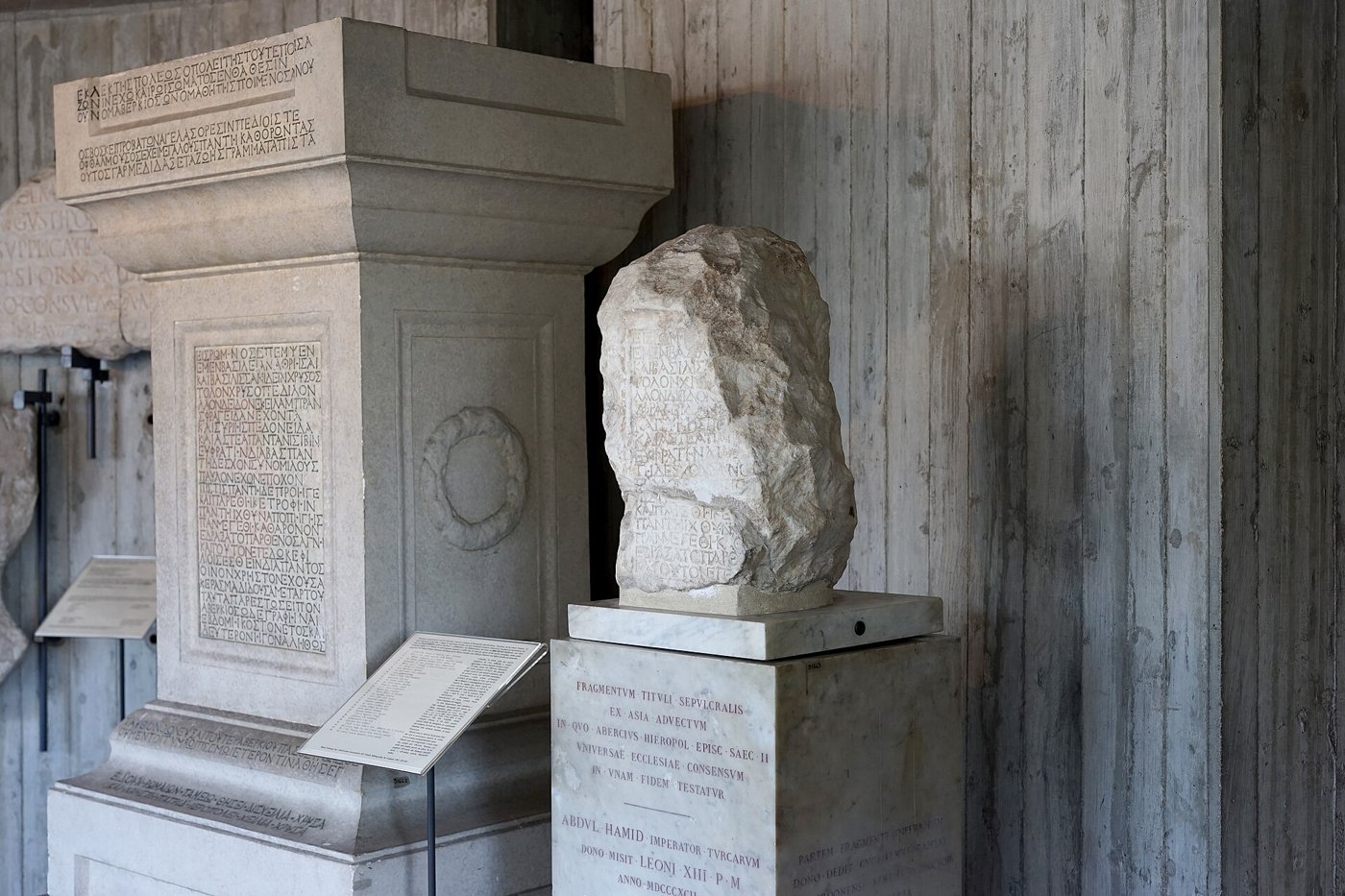

ಫ್ರುಗ್ಯದ ಬಿಷಪ್ ಅಬೆರ್ಕಿಯಸ್ ಕ್ರಿ.ಶ. 216ಕ್ಕಿಂತ ಮೊದಲು ತನ್ನ ಸ್ವಂತ ಸಮಾಧಿಶಿಲೆಯ ಲೇಖವನ್ನು ರಚಿಸಿದನು — ಇದನ್ನು ಅನೇಕವೇಳೆ ಆದಿಕ್ರೈಸ್ತ ಶಾಸನಗಳ ರಾಣಿ ಎಂದು ಕರೆಯುತ್ತಾರೆ. ಎಚ್ಚರಿಕೆಯಿಂದ ಮರೆಮಾಚಿದ ಭಾಷೆಯಲ್ಲಿ ಅದು ರೋಮ್ಗೂ ಪೂರ್ವದಾದ್ಯಂತವೂ ಅವನು ಮಾಡಿದ ಪ್ರಯಾಣಗಳನ್ನು ವರ್ಣಿಸುತ್ತದೆ — ಎಲ್ಲೆಡೆಯೂ ರೊಟ್ಟಿ ಮತ್ತು ದ್ರಾಕ್ಷಾರಸದೊಂದಿಗೆ “ಬುಗ್ಗೆಯಿಂದ ಬಂದ ಮೀನನ್ನು” ಅವನ ಮುಂದೆ ಇಟ್ಟ ಒಂದು ನಂಬಿಕೆ, ಮತ್ತು ಜೊತೆಗಾರನಾಗಿ “ಪೌಲ”. ಸಂಕೇತ ರೂಪದ ಚಿತ್ರಣ — ಕ್ರಿಸ್ತನಿಗೆ ಮೀನು, ಪ್ರಭುಭೋಜನಕ್ಕೆ ಹಂಚಿಕೊಂಡ ಊಟ — ಒಬ್ಬ ಕ್ರೈಸ್ತನು ಅದನ್ನು ಸ್ಪಷ್ಟವಾಗಿ ಓದುವಂತೆ ಮಾಡುತ್ತಿತ್ತು, ದಾರಿಹೋಕನಿಗಾದರೋ ಅದು ಕೇವಲ ಒಂದು ಭಕ್ತಿಪೂರ್ಣ ಸಮಾಧಿಲೇಖವಾಗಿ ಕಾಣುತ್ತಿತ್ತು. ಕಾಲನಿರ್ಣಯ ಮಾಡಬಹುದಾದ ಅತ್ಯಂತ ಪ್ರಾಚೀನ ಕ್ರೈಸ್ತ ಶಾಸನಗಳಲ್ಲಿ ಇದು ಒಂದು — ಸುಮಾರು ಕ್ರಿ.ಶ. 200ರ ಹೊತ್ತಿಗೆ ಸ್ವಪ್ರಜ್ಞೆಯುಳ್ಳ, ಪರಸ್ಪರ ಸಂಪರ್ಕವಿದ್ದ ಸಭೆಗೆ ಕಲ್ಲಿನ ಸಾಕ್ಷಿ.
- ಇದು ಏನು
- ಫ್ರುಗ್ಯದ ಒಬ್ಬ ಬಿಷಪ್ನ ಕೆತ್ತಿದ ಸಮಾಧಿಲೇಖ, ಕ್ರಿ.ಶ. 216ಕ್ಕಿಂತ ಮೊದಲು ಬರೆದದ್ದು, ಮರೆಮಾಚಿದ ಕ್ರೈಸ್ತ ಸಂಕೇತಗಳನ್ನು ಬಳಸುವಂಥದ್ದು
- ವಸ್ತುವಿನ ಕಾಲ
- ಕ್ರಿ.ಶ. 216ಕ್ಕಿಂತ ಮೊದಲು
- ಪತ್ತೆಯಾದದ್ದು
- ಫ್ರುಗ್ಯದ ಹಿರಿಯಾಪೊಲಿ (ಕೆಲೆಂಡ್ರೆಸ್ ಬಳಿ), ಮಧ್ಯ ಟರ್ಕಿ, 1883 (ವಿಲಿಯಂ ರಾಮ್ಸೆ)
- ಈಗ ಎಲ್ಲಿದೆ
- ವ್ಯಾಟಿಕನ್ ವಸ್ತುಸಂಗ್ರಹಾಲಯಗಳು, ರೋಮ್
- ಸಂಬಂಧಿಸಿರುವುದು
- ಏಷ್ಯಾ ಮೈನರ್ನ ಆದಿಸಭೆಯ ಸ್ವ-ಗ್ರಹಿಕೆ ಮತ್ತು ಸಂಪರ್ಕಜಾಲಗಳು
- ಶಾಸ್ತ್ರಗ್ರಂಥ
- ಎಫೆಸದವರಿಗೆ 4:5 · ಯೋಹಾನನು 6:35
ಈ ಶೋಧವು ತೋರಿಸುವುದುಸುಮಾರು ಕ್ರಿ.ಶ. 200ರ ಹೊತ್ತಿಗೆ ಏಷ್ಯಾ ಮೈನರ್ನಲ್ಲಿ ನೆಲೆಗೊಂಡ, ಸಂಚಾರಶೀಲ, ಸ್ವಪ್ರಜ್ಞೆಯುಳ್ಳ ಕ್ರೈಸ್ತತ್ವ — ಸಾಮಾನ್ಯವಾದ ಸಂಸ್ಕಾರ-ಭಾಷೆಯನ್ನು ಹಂಚಿಕೊಂಡಿದ್ದದ್ದು.
ಇದು ರುಜುವಾತುಪಡಿಸದಿರುವುದುಇದರ ಅರ್ಥ ಉದ್ದೇಶಪೂರ್ವಕವಾಗಿ ಸಾಂಕೇತಿಕ; ಇದು ಕ್ರೈಸ್ತ ಗುರುತನ್ನೂ ಸಂಪರ್ಕಜಾಲಗಳನ್ನೂ ದೃಢಪಡಿಸುತ್ತದೆ, ನಿರ್ದಿಷ್ಟ ಸಿದ್ಧಾಂತಗಳನ್ನು ವಿವರವಾಗಿ ಅಲ್ಲ.
ಮೂಲಗಳು ಮತ್ತು ಹೆಚ್ಚಿನ ಓದು