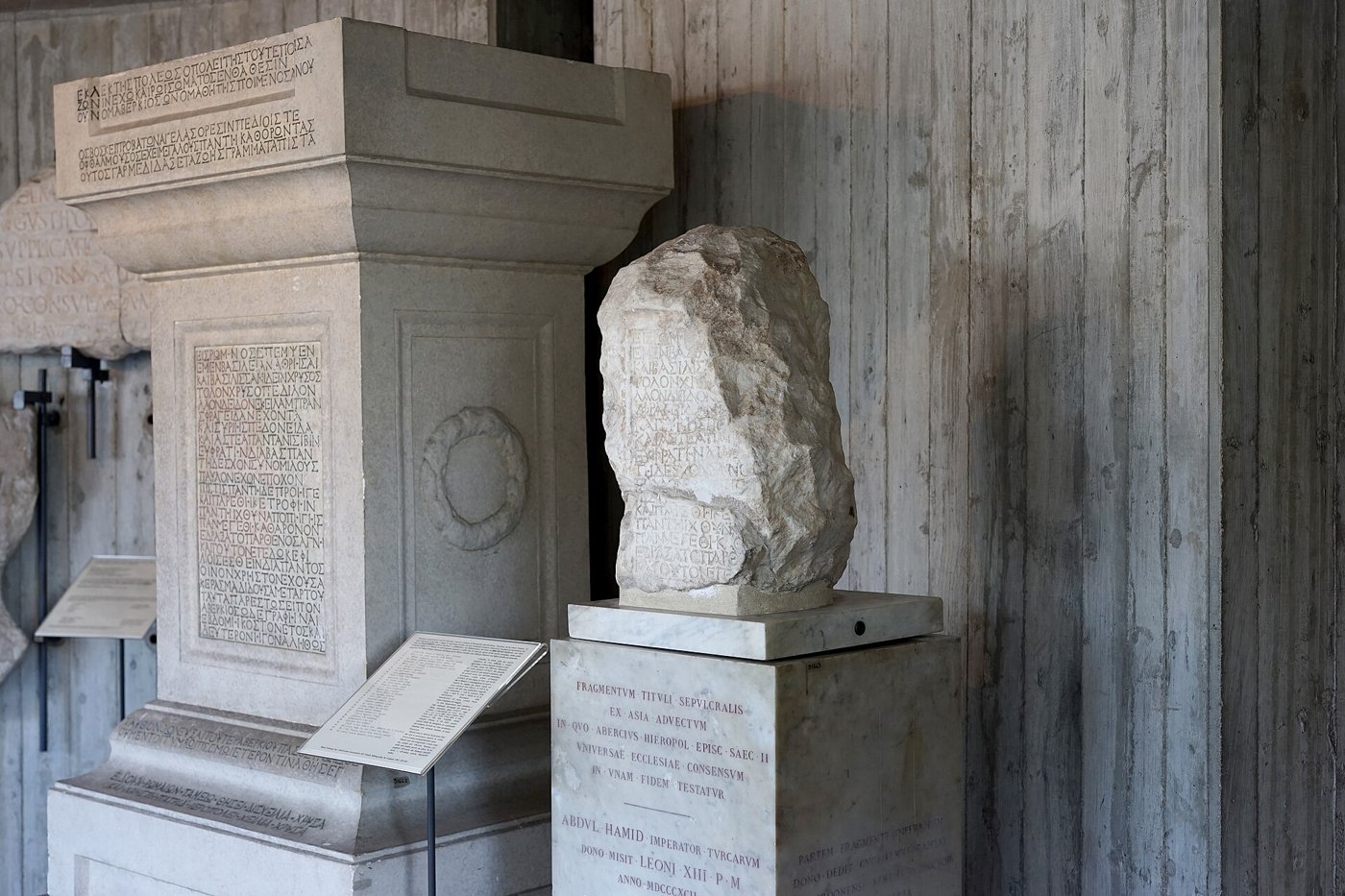

ఫ్రుగియలోని బిషప్పు అబెర్కియస్ క్రీ.శ. 216కి ముందు తన స్వంత సమాధి రాయిని రచించాడు — దీనిని తరచుగా తొలి క్రైస్తవ శిలాశాసనాల రాణి అని అంటారు. జాగ్రత్తగా గూఢపరచిన భాషలో అది రోమాకు, తూర్పు అంతటా అతని ప్రయాణాలను వర్ణిస్తుంది; ప్రతిచోటా రొట్టె, ద్రాక్షారసంతో పాటు “ఊట నుండి ఒక చేపను” అతని ముందు ఉంచిన ఒక విశ్వాసాన్ని, తన సహచరునిగా “పౌలు”ను పేర్కొంటుంది. సంకేత చిత్రణ — క్రీస్తుకు చేప, ప్రభు భోజనానికి పంచుకొనే భోజనం — ఒక క్రైస్తవుడు దానిని స్పష్టంగా చదవగలిగేలా చేస్తుంది, అదే దారిన పోయేవారికి అది కేవలం ఒక భక్తిగల సమాధి శాసనంగా కనిపించింది. తేదీ నిర్ధారించదగిన అత్యంత పురాతన క్రైస్తవ శిలాశాసనాలలో ఇది ఒకటి — సుమారు క్రీ.శ. 200 నాటి, స్వీయ-అవగాహన కలిగిన, పరస్పరం అనుసంధానమైన సంఘానికి ఒక రాతి సాక్ష్యం.
- ఇది ఏమిటి
- ఫ్రుగియ నుండి ఒక బిషప్పు చెక్కించిన సమాధి శిలాశాసనం, క్రీ.శ. 216కి ముందు వ్రాయబడింది, గూఢమైన క్రైస్తవ చిత్రణను ఉపయోగిస్తుంది
- వస్తువు తేదీ
- క్రీ.శ. 216కి ముందు
- కనుగొన్నది
- ఫ్రుగియలోని హియెరాపొలిస్ (కెలెండ్రెస్ సమీపంలో), మధ్య టర్కీ, 1883 (విలియం రామ్సే)
- ఇప్పుడు ఎక్కడ ఉంది
- వాటికన్ మ్యూజియంలు, రోమా
- దీనికి సంబంధించినది
- ఆసియా మైనర్లోని తొలి సంఘపు స్వీయ-అవగాహన, దాని పరస్పర సంబంధాలు
- లేఖనము
- ఎఫెసీ పత్రిక 4:5 · యోహాను 6:35
ఈ అన్వేషణ చూపేదిసుమారు క్రీ.శ. 200 నాటికి ఆసియా మైనర్లో స్థిరపడిన, సంచారశీలమైన, స్వీయ-అవగాహన కలిగిన క్రైస్తవ్యం — ఉమ్మడి సంస్కార భాషను పంచుకుంటూ.
ఇది రుజువు చేయనిదిదీని అర్థం ఉద్దేశపూర్వకంగా సంకేతాత్మకమైనది; ఇది క్రైస్తవ గుర్తింపును, సంబంధాలను ధృవీకరిస్తుంది, నిర్దిష్ట సిద్ధాంతాలను వివరంగా కాదు.
మూలాధారాలు & మరింత చదవడానికి