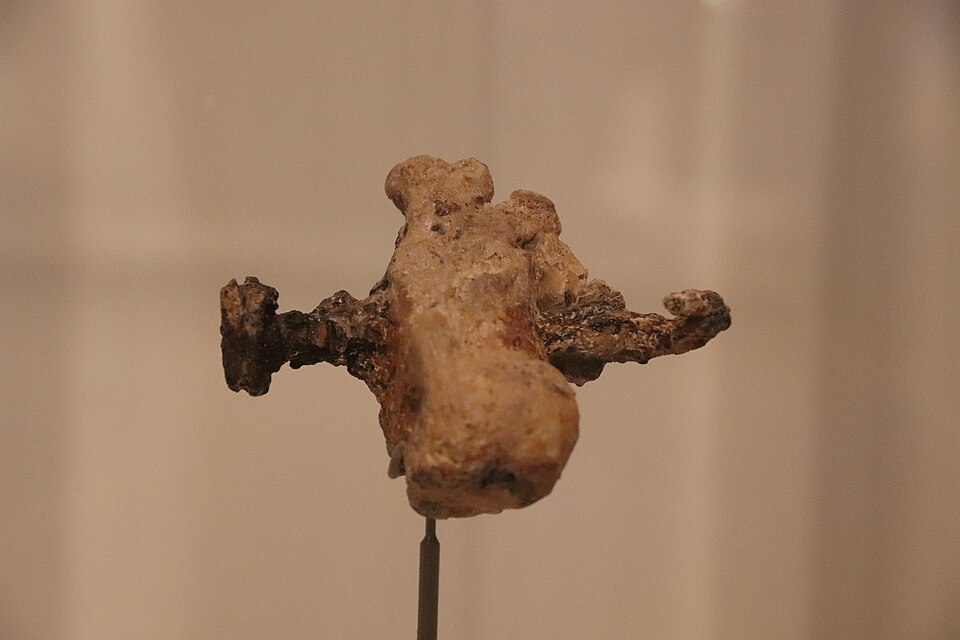

क्रूस-दण्ड प्राचीन लेखों में भरपूर प्रमाणित है, पर पुरातात्त्विक रूप से लगभग अदृश्य है — पीड़ितों को शायद ही कभी दफ़नाया जाता था, और कीलें निकालकर फिर काम में ली जाती थीं। येहोहानान नाम के एक व्यक्ति के लिए उत्कीर्ण इस अस्थि-पात्र ने अपवाद को सुरक्षित रखा: उसकी एड़ी से होकर गई कील जैतून की लकड़ी के क्रूस की एक गाँठ से टकराकर मुड़ गई थी और निकाली नहीं जा सकी, इसलिए उसे उसी के साथ दफ़नाया गया। एक कंकाल ने चुपचाप दो बहसें सुलझा दीं: यहूदिया में रोमी सचमुच अपने पीड़ितों को कीलों से ठोकते थे, और क्रूस पर चढ़ाया गया व्यक्ति फिर भी सम्मानजनक यहूदी दफ़न पा सकता था।
- यह क्या है
- पहली शताब्दी का एक अस्थि-पात्र-दफ़न, जिसमें एक एड़ी की हड्डी है जो अब भी लोहे की कील से बिंधी हुई है
- वस्तु की तिथि
- पहली शताब्दी ईस्वी
- खोज
- गिवात हा-मिवतार की एक समाधि, उत्तर यरूशलेम, 1968 (वासिलियोस त्सफ़ेरिस की खुदाई)
- अब यह कहाँ है
- इस्राएल पुरावशेष प्राधिकरण; प्रतिकृति इस्राएल संग्रहालय, यरूशलेम में प्रदर्शित
- संबंधित
- रोमी क्रूस-दण्ड, जैसा सुसमाचार उसका वर्णन करते हैं — केवल रस्सियाँ नहीं, कीलें भी
- पवित्र-वचन
- यूहन्ना 20:25 · लूका 24:39
यह खोज क्या दिखाती हैपहली शताब्दी के यरूशलेम में कीलों से क्रूस पर चढ़ाना प्रचलित था, और क्रूस-दण्ड उचित दफ़न को असंभव नहीं बनाता था — दोनों बातें सुसमाचारों के दफ़न-वृत्तांतों की विश्वसनीयता से सीधे जुड़ी हैं।
यह क्या सिद्ध नहीं करतीयह स्वयं यीशु के बारे में प्रमाण नहीं है; और आरंभिक दावे कि उस व्यक्ति की बाँहें कीलों से ठोकी गई थीं और टाँगें तोड़ी गई थीं, पुनः-परीक्षण में टिक नहीं पाए — केवल कील से बिंधी एड़ी ही सुनिश्चित है।
स्रोत एवं आगे पढ़ने के लिए