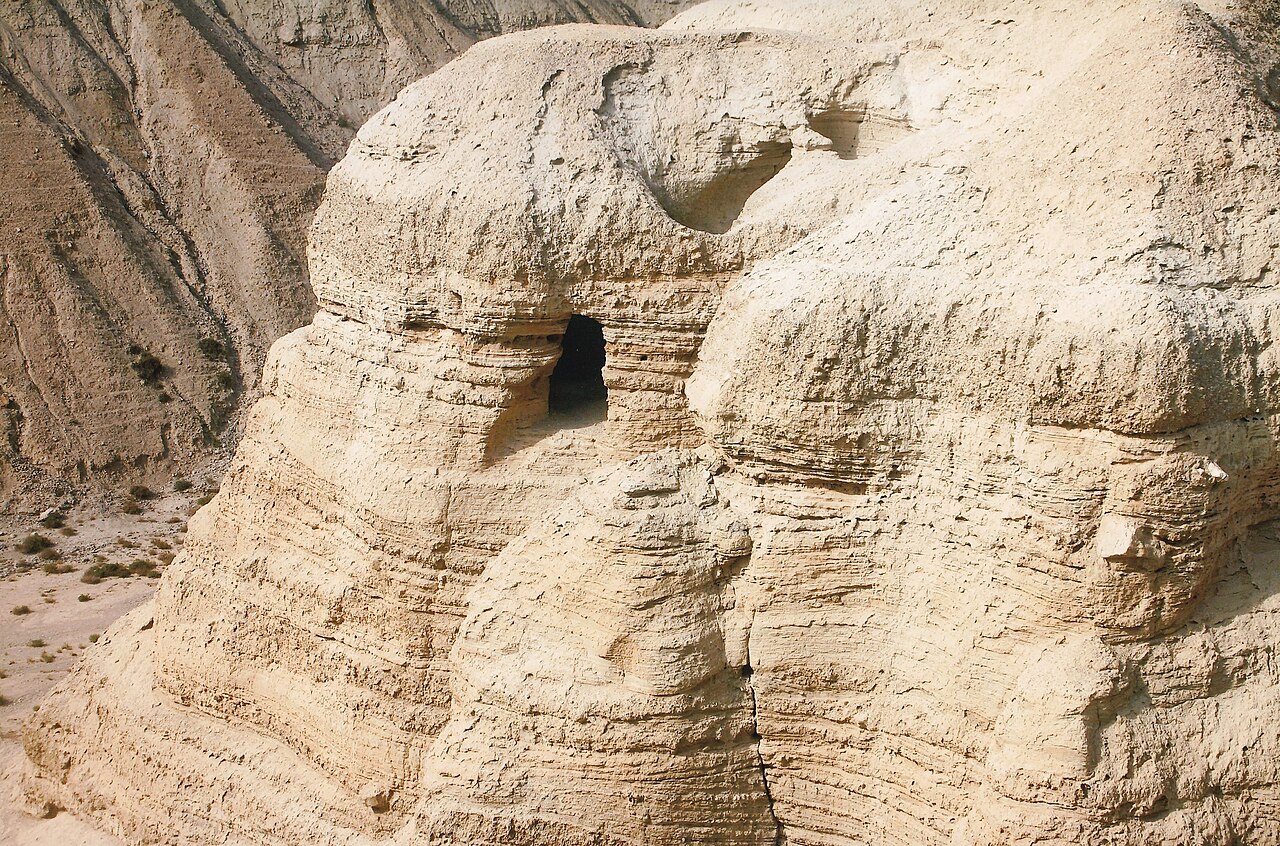

यशायाह का महान खर्रा (जिसकी यहाँ अपनी अलग प्रविष्टि है) गुफा 1 से आया था — पर वह सैकड़ों में से एक था। उसके पीछे एक पूरा पुस्तकालय है: इब्रानी बाइबल की लगभग हर पुस्तक, पहले ज्ञात किसी भी प्रति से एक हज़ार वर्ष पुरानी, और साथ में उस समुदाय के लेख जिसने उन्हें छिपाया था — एक नियम-पुस्तक, हबक्कूक पर एक सिलसिलेवार “यह-भविष्यद्वाणी-हमारे-बारे-में-है” वाली टीका, ताँबे पर खुदी एक ख़ज़ाने की सूची, और एक विशाल पुनर्लिखित मन्दिर-खर्रा। ये सब मिलकर हमें यीशु के आसपास की शताब्दियों के यहूदी धर्म का वास्तविक धार्मिक संसार सौंपते हैं।
- यह क्या है
- लगभग 900 पांडुलिपियाँ — बाइबली, अप्रामाणिक-ग्रंथ (अपोक्रिफ़ा) और पंथीय — चमड़े और पपीरस पर, और एक ताँबे पर, जो एक उजड़ी हुई मरुस्थलीय बस्ती के पास ग्यारह गुफाओं में मिलीं
- वस्तु की तिथि
- लगभग तीसरी शताब्दी ईसा पूर्व – 68 ईस्वी
- खोज
- ख़िरबेत क़ुमरान के पास की गुफाएँ, मृत सागर के उत्तर-पश्चिमी तट पर, 1947 (बद्दू चरवाहे, फिर पुरातत्त्वविद (रोलां द वो और अन्य))
- अब यह कहाँ है
- श्राइन ऑफ़ द बुक, इस्राएल संग्रहालय, यरूशलेम; ताँबे का खर्रा अम्मान, जॉर्डन में
- संबंधित
- वह यहूदी संसार जिसमें यीशु और आरंभिक कलीसिया का जन्म हुआ
- पवित्र-वचन
- यशायाह 1–66 · हबक्कूक 1–2 · भजन संहिता
यह खोज क्या दिखाती हैकि इब्रानी बाइबल एक सहस्राब्दी भर उल्लेखनीय सावधानी के साथ आगे सौंपी गई — और यह दूसरे मन्दिर के काल के विविध, आपस में विवाद करते यहूदी धर्म को खोलकर सामने रख देता है।
यह क्या सिद्ध नहीं करतीहस्तलेख यीशु, यूहन्ना बपतिस्मा देनेवाले या मसीहियों का कभी उल्लेख नहीं करते; और एक स्थिर बाइबल के बजाय, वे दिखाते हैं कि मानकीकृत होने से पहले पाठ अब भी कई संस्करणों में प्रचलित था।
विवादित: इन्हें किसने लिखा और छिपाया, यह विवादित है — अधिकांश इन्हें क़ुमरान के एस्सीनियों से जोड़ते हैं, पर कुछ तर्क देते हैं कि यह यरूशलेम से बाहर ले जाया गया एक पुस्तकालय था, और स्वयं बस्ती का उद्देश्य (धार्मिक समुदाय? जागीर? किला?) विवादित है।
स्रोत एवं आगे पढ़ने के लिए