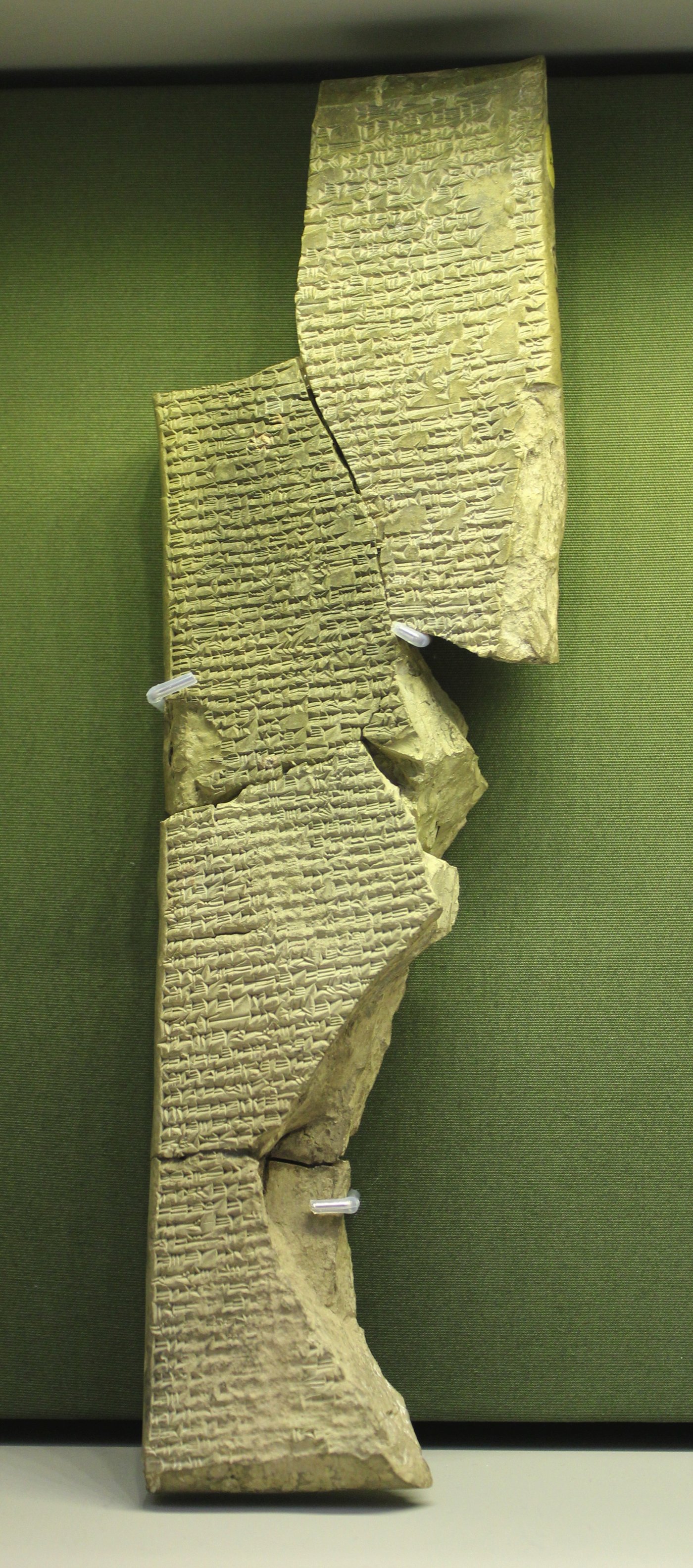

Long before the Genesis text was written down, its neighbours told their own stories of how the world and humanity began — Babylon's Enuma Elish, the flood epics of Atrahasis and Gilgamesh. Genesis clearly shares the ancient Near-Eastern furniture: a watery chaos, a flood, a garden. But the differences are pointed and deliberate. Where the myths have many gods at war and humans made to be their slaves, Genesis has one God who speaks an ordered, 'very good' world into being and makes humanity in his own image. Read side by side, Genesis looks less like a borrowed myth than a deliberate answer to them.
- Parallels: Enuma Elish (creation), Atrahasis and the Gilgamesh Epic tablet XI (flood).
- Key contrasts: monotheism, an ordered 'good' creation, and humanity in God's image rather than made to feed the gods.
- The Gilgamesh Flood Tablet is itself in this site's archaeology section.
What the evidence showsGenesis stands in a real literary world and engages it — the shared motifs are well documented, and so are the sharp theological contrasts (one God vs. many; humans as image-bearers vs. slave-labour; creation as good vs. accidental).
Where it stopsComparison shows relationship and contrast; it cannot by itself prove which text influenced which, or settle Genesis 1–11's precise genre. That a story answers the myths around it does not, on its own, decide how literally each detail was meant.
Sources & further reading