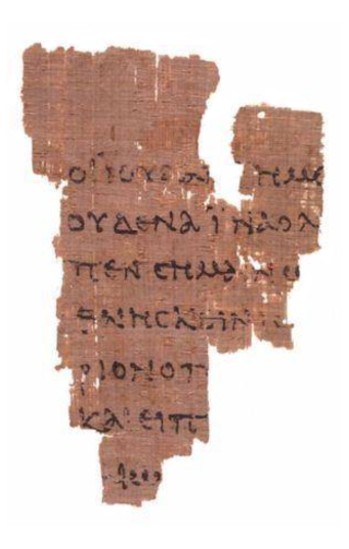

নতুন নিয়মের যে-কোনো পুস্তকের জানা প্রাচীনতম অংশটি একটি তাসের মাপের টুকরো, যাতে পীলাতের সঙ্গে যীশুর কথোপকথনের কয়েকটি ভাঙা লাইন আছে। এর গুরুত্ব পাটিগণিতের বিষয়: উনবিংশ শতাব্দীর সমালোচকেরা যোহনের রচনাকাল দ্বিতীয় শতাব্দীর শেষ দিকে ধরেছিলেন — প্রত্যক্ষদর্শীর স্মৃতির পক্ষে অনেক দেরি। কিন্তু এই প্রতিলিপিটি — আর তাও কোডেক্স আকারে, প্রাদেশিক মিশরে প্রচলিত একটি প্রতিলিপি — নিজেই মোটামুটি দ্বিতীয় শতাব্দীর প্রথম থেকে মাঝামাঝি সময়ের। তাহলে সুসমাচারটি তার অনেক আগেই লেখা, প্রকাশিত এবং বিদেশে বাহিত হয়ে থাকতে হবে।
- এটি কী
- ক্রেডিট-কার্ডের মাপের একটি প্যাপিরাস কোডেক্স-খণ্ড, যার দুই পিঠে যোহন 18-এর গ্রিক পাঠ
- নিদর্শনের কাল
- সাধারণত আনু. খ্রিস্টাব্দ 125–175 বলে তারিখ নির্ধারিত
- আবিষ্কার
- মিশর (1920-এ একগুচ্ছ প্যাপিরাসের সঙ্গে সংগৃহীত; 1934-এ শনাক্ত), 1920 (বার্নার্ড গ্রেনফেল সংগ্রহ করেন; সি. এইচ. রবার্টস শনাক্ত করেন)
- এখন কোথায় আছে
- জন রাইল্যান্ডস লাইব্রেরি, ম্যানচেস্টার
- সম্পর্কিত
- যে-কোনো সুসমাচার-পাঠের টিকে থাকা প্রাচীনতম ভৌত প্রতিলিপি — পীলাতের সামনে যীশু
- ধর্মশাস্ত্র
- যোহন 18:31–33 · যোহন 18:37–38
এই আবিষ্কার যা দেখায়যোহনের সুসমাচার দ্বিতীয় শতাব্দীর প্রথম দিকের পরে নয়, এবং বিশ্বাসযোগ্যভাবে প্রথম শতাব্দীর মধ্যেই রচিত — পুরোনো দেরি-তারিখের সংশয়বাদ মৃত, এক টুকরো প্যাপিরাস তাকে শেষ করে দিয়েছে।
এটি যা প্রমাণ করে নাহাতের লেখার তারিখ কেবল কয়েক দশকের একটি পরিসরের মধ্যে নির্ধারণ করা যায়, তাই P52 কোনো সঠিক বছর নির্দিষ্ট করতে পারে না; আর একটি প্রাচীন প্রতিলিপি পুস্তকের বয়সের সাক্ষ্য দেয়, তার বিষয়বস্তুর সত্যতার নয়।