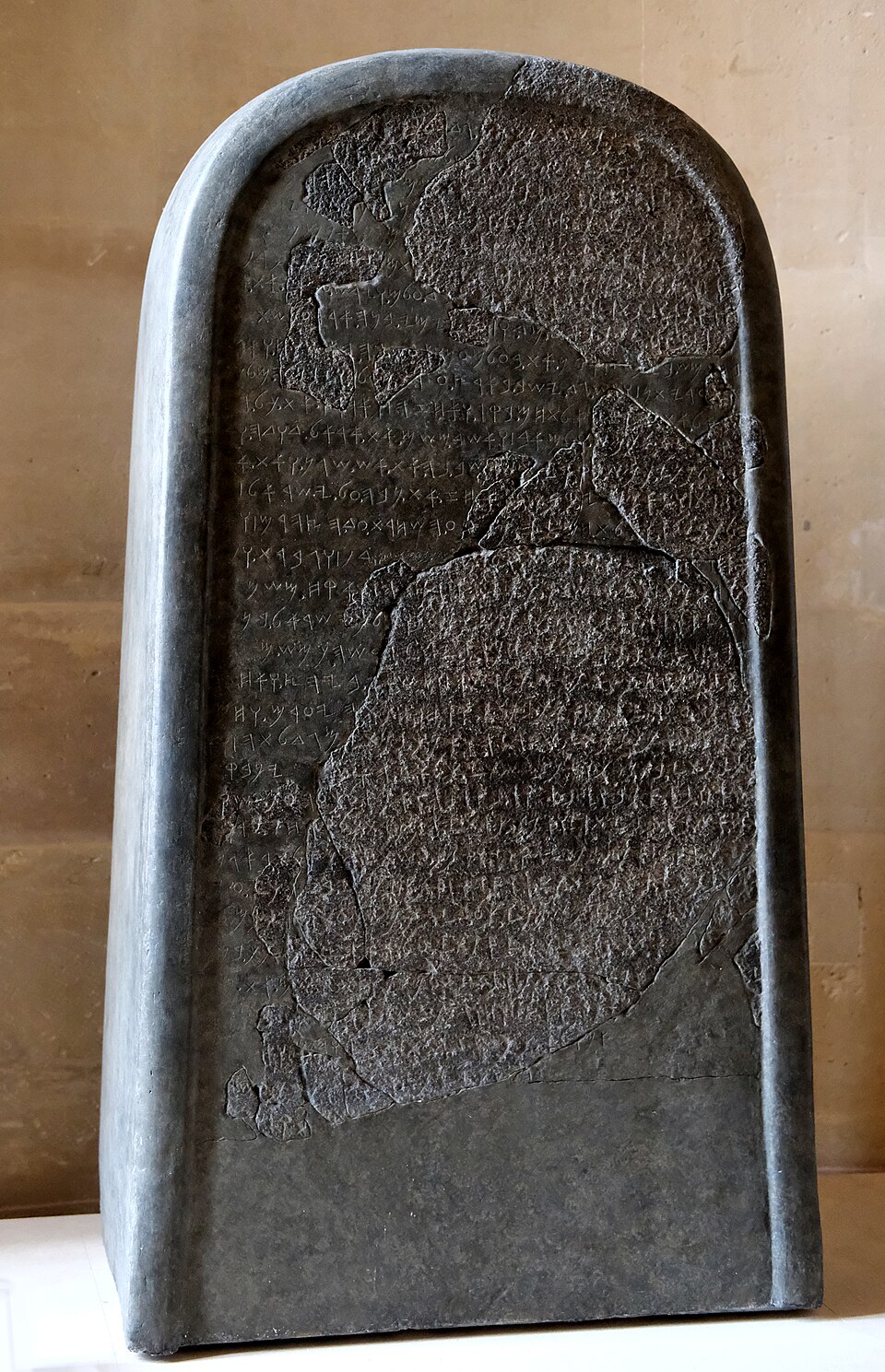

ഇസ്രായേലിന്റെ തൊട്ടടുത്ത അയൽക്കാരിൽനിന്ന് ഇന്നോളം കണ്ടെത്തിയതിൽ ഏറ്റവും നീളമുള്ള രാജകീയ ലിഖിതം, ബൈബിളും രേഖപ്പെടുത്തുന്ന ഒരു യുദ്ധത്തിന്റെ മോവാബിന്റെ പക്ഷമാണ്. മോവാബിനെ കീഴ്പ്പെടുത്തിയിരുന്ന ഇസ്രായേൽ രാജാവായി മേശ ഒമ്രിയെ പേരെടുത്തു പറയുന്നു, ആ നുകം തള്ളിക്കളഞ്ഞതിന്റെ കീർത്തി തന്റെ ദേവനായ കെമോശിനു നൽകുന്നു, താൻ തിരിച്ചുപിടിച്ച പട്ടണങ്ങളുടെ പട്ടിക നൽകുന്നു. കണ്ടെത്തലിനുശേഷം ഈ കല്ല് തകർക്കപ്പെട്ടു; ശകലങ്ങളിൽനിന്നും ഒരു കടലാസ് പതിപ്പിൽനിന്നും അതു വീണ്ടും കൂട്ടിച്ചേർത്തു, എങ്കിലും അതിന്റെ കാതലായ പാഠം സുരക്ഷിതമാണ് — ബൈബിളിനു പുറത്ത് ഇസ്രായേലിന്റെ ദൈവമായ YHWH-യെക്കുറിച്ചുള്ള ഏറ്റവും പഴയ പരാമർശവും അതിലുണ്ട്.
- ഇത് എന്താണ്
- മോവാബ് രാജാവായ മേശയുടെ കറുത്ത കൃഷ്ണശിലാ (ബസാൾട്ട്) സ്മാരകം, മോവാബ്യ ഭാഷയിൽ 34 വരികൾ
- വസ്തുവിന്റെ കാലം
- ഏകദേശം ക്രി.മു. 840
- കണ്ടെത്തിയത്
- ധീബാൻ (ബൈബിളിലെ ദീബോൻ), യോർദ്ദാൻ, 1868 (പ്രാദേശിക ബെദൂവിനുകൾ; എഫ്. എ. ക്ലൈൻ പണ്ഡിതരുടെ ശ്രദ്ധയിൽപ്പെടുത്തി)
- ഇപ്പോൾ എവിടെ
- ലൂവ്ര്, പാരീസ്
- ബന്ധപ്പെട്ടത്
- മോവാബ് രാജാവായ മേശ, ഇസ്രായേൽ രാജാവായ ഒമ്രി, ഇസ്രായേലിനെതിരായ മോവാബിന്റെ മത്സരം
- തിരുവെഴുത്ത്
- 2 രാജാക്കന്മാർ 3:4–5
ഈ കണ്ടെത്തൽ കാണിക്കുന്നത്ഒമ്രിയുടെ രാജവംശവും, മോവാബ് ഇസ്രായേലിനു കീഴ്പ്പെട്ടിരുന്നതും, പിന്നീടുണ്ടായ അതിന്റെ മത്സരവും എല്ലാം ഒമ്പതാം നൂറ്റാണ്ടിലെ യഥാർഥ രാഷ്ട്രീയമാണ് — ഇവിടെ ശത്രുവിന്റെ കാഴ്ചപ്പാടിൽ പറഞ്ഞിരിക്കുന്നു; YHWH എന്ന ദിവ്യനാമം കൃത്യമായി ആ കാലത്ത് ഉപയോഗത്തിലുണ്ടായിരുന്നു.
ഇതു തെളിയിക്കാത്തത്എല്ലാ രാജകീയ സ്മാരകങ്ങളെയും പോലെ ഇതും പ്രചാരണമാണ് — ഓരോ പക്ഷവും കീർത്തി സ്വന്തം ദൈവത്തിനും സ്വന്തം വിജയങ്ങൾക്കും നൽകുന്നു; അതിനാൽ യുദ്ധത്തിന്റെ വിശദാംശങ്ങളെക്കുറിച്ച് ആരുടെ വിവരണമാണ് ശരി എന്ന് ഈ കല്ലിനു തീർപ്പാക്കാനാവില്ല.
തർക്കവിഷയം: കേടുപാടു സംഭവിച്ച ഒരു വരി മറ്റൊരു 'ദാവീദിന്റെ ഗൃഹം' പരാമർശമായി ചില പണ്ഡിതർ വായിക്കുന്നു; മറ്റുള്ളവർ വ്യത്യസ്ത വായനകൾ നിർദ്ദേശിക്കുന്നു. ആ ഒരു വരി യഥാർഥത്തിൽ അനിശ്ചിതമാണ് — ഒമ്രിയെയും മോവാബിനെയും കുറിച്ചുള്ള ഭാഗം അങ്ങനെയല്ല.
സ്രോതസ്സുകളും കൂടുതൽ വായനയും